Report on the Sign Language Bill
Sign Language Bill Report.pdf (894.99 kb)
Ordered by the Committee for Communities to be published 12 February 2026.
This report is the property of the Committee for Communities. Neither the report nor its contents should be disclosed to any person unless such disclosure is authorised by the Committee.
Report: NIA 140/22-27 Committee for Communities.
Contents
List of Abbreviations and Acronyms used in this Report
Clause by Clause Scrutiny of the Bill
Appendix 1: Memoranda and Papers from the Department for Communities
Appendix 2: Minutes of Proceedings
Appendix 3: Minutes of Evidence
Appendix 4: Written submissions
Appendix 5: Research Papers
Appendix 6: Other Documents relating to the report
Appendix 7: List of Witnesses that gave evidence to the Committee
Powers and Membership
Powers
The Committee for Communities is a Statutory Departmental Committee established in accordance with Paragraphs 8 and 9 of Strand One of the Belfast Agreement and under Assembly Standing Order No 48. The Committee has a scrutiny, policy development and consultation role with respect to the Department for Communities and has a role in the initiation of legislation.
The Committee has power to:
- consider and advise on Departmental budgets and Annual Plans in the context of the overall budget allocation;
- approve relevant delegated legislation and take the Committee Stage of relevant primary legislation;
- call for persons and papers;
- initiate enquiries and make reports; and
- consider and advise on matters brought to the Committee by the Minister of Communities.
Membership
The Committee has nine members, including a Chairperson and Deputy Chairperson, and a quorum of five members. The membership of the Committee is as follows:
- Colm Gildernew MLA (Chairperson)
- Cathy Mason MLA (Deputy Chairperson) 1&2
- Andy Allen MBE MLA
- Kellie Armstrong MLA
- Maurice Bradley MLA
- Pam Cameron MLA3
- Mark Durkan MLA4
- Maolíosa McHugh MLA
- Sian Mulholland MLA
- Cathy Mason replaced Nicola Brogan on 24 November 2025
- Nicola Brogan replaced Ciara Ferguson on 3 February 2025
- Pam Cameron replaced Brian Kingston on 23 September 2025
- Mark Durkan replaced Daniel McCrossan on 8 September 2025
List of Abbreviations and Acronyms used in this Report
ALBs - Arm’s Length Bodies
BDA - British Deaf Association
BSL - British Sign Language
CODA - Child of Deaf Adult
DfC - Department for Communities
ECHR - European Convention on Human Rights
EFM - Explanatory and Financial Memorandum
ESR - Examiner of Statutory Rules
ISL - Irish Sign Language
MLA - Member of the Legislative Assembly
NDCS - National Deaf Children’s Society
RaISe - NI Assembly Research and Information Service
SLAPs - Sign Language Action Plans
SLPG - Sign Language Partnership Group
“the Bill” - The Sign Language Bill
“the Committee” - The Committee for Communities
“the Department” The Department for Communities
UNCRC - United Nations Conventions on the Rights of Children
UNCRPD - United Nations Convention on the Rights of Persons with Disabilities
VRS/VRI - Video Relay Service/Video Remote Interpreting
Executive Summary
- This report sets out the Committee for Communities' consideration of the Sign Language Bill.
- The Sign Language Bill (Northern Ireland) 2025 was introduced to the Northern Ireland Assembly on 10 February 2025 and was referred to the Committee for Communities for consideration after Second Stage, which took place on 18 February 2025.
- The purpose of the Bill, which contains 15 clauses, is to make provision for the recognition and promotion of British Sign Language and Irish Sign Language with associated duties placed on listed prescribed organisations, including to take reasonable steps to ensure that the sorts of information and services provided by it are as accessible to individuals in the deaf community as to those individuals who are not in the deaf community.
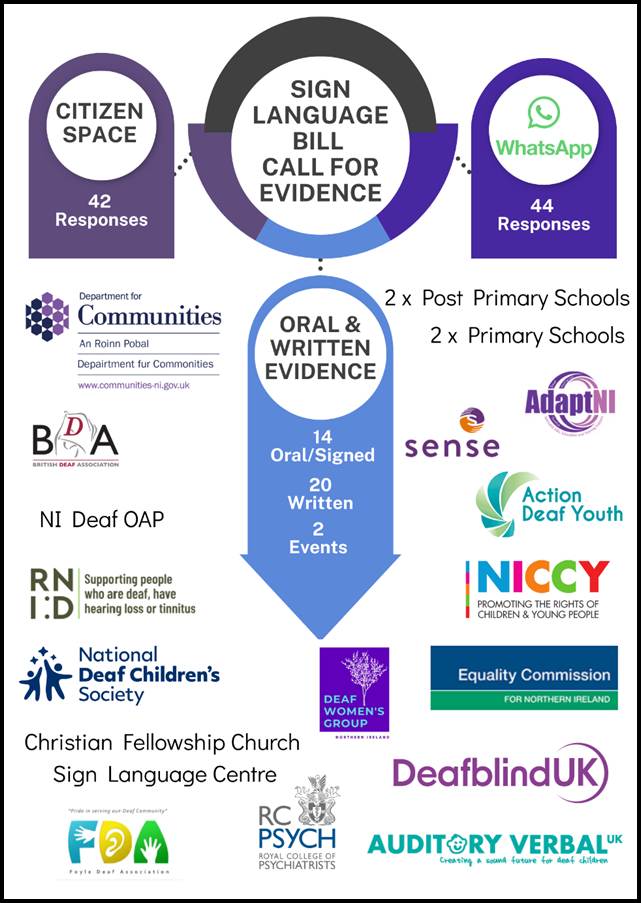
- The Committee opened its Call for Evidence on 7 March 2025, this closed on 9 May 2025. As part of this exercise, responses were received from 42 organisations or individuals via Citizen Space and 44 signed responses via WhatsApp.
- The Committee requested evidence from relevant organisations and briefings from the Department of Communities as part of its deliberations on the Bill. The Committee considered the provisions of the Bill over the course of 13 meetings. Overall the Committee heard from 18 stakeholder groups.
- Following deliberations, the Committee wrote to the Department to request clarification and amendments. This correspondence is included at Appendix 1
- At its meeting on 22 January 2026, the Committee undertook its formal clause-by-clause consideration and agreed the clauses as outlined in the ‘Clause by Clause Scrutiny of the Bill’ section of this report. This included agreeing amendments requested by the Committee and other Departmental amendments.
- After considering evidence, deliberating on the associated issues, taking advice from the Assembly Bill Office and Research and Information Service, querying a number of issues and seeking clarifications with departmental officials, the Committee has outlined a number of recommendations, both for the Department and for subsequent Committees for Communities to consider in terms of post-legislative scrutiny. These are included in the ‘Recommendations’ section of the Report.
- At its meeting on 5 February 2026, the Committee considered its Final Report on the Bill, and ordered for it to be published on the Assembly website on 12 February 2026 to allow for interpreted content to be available simultaneously.
Introduction
- The Department's website indicates:
“In March 2016, the Department for Communities consulted on a Sign Language Framework, which contained policy proposals for legislation. This consultation was referenced in the New Decade New Approach agreement in January 2020 with a commitment to introduce a Sign Language Bill.
The Department worked closely with the Deaf Community towards this commitment, with Minister Gordon Lyons introducing the Sign Language Bill to the Assembly in February 2025.” - The Sign Language Bill’s Explanatory and Financial Memorandum states: “… like many other minority and non-English language users, Sign Language users may not necessarily read or understand information on government websites or printed leaflets and various types of literature unless these are translated into their native BSL or ISL. As a comparison, most hearing English language users in Northern Ireland may not understand information provided through BSL and/or ISL.
- Therefore, BSL/ISL users in Northern Ireland can experience social exclusion as a direct result of linguistic exclusion which can adversely affect their access to education, employment, healthcare and public services generally.
- Given the range of prevalence figures, it would seem prudent to use the DCAL figures (in terms of sign language users) as a minimum; in other words, there are at least 5,000 people in Northern Ireland who use Sign Language as their preferred means of communication. It would also be reasonable to assume that there is a minimum of 3,500 people who use BSL and 1,500 who use ISL.”
- The Bill’s EFM asserts that the Bill will have no immediate financial implications but “may incur costs at a later date”; that the Bill is compatible with the provisions of the Human Rights Act 1998 and ECHR; and that it has been successfully screened for equality impact, data protection impact, regulatory impact, and rural needs impact.
- Officials from the Department provided the Committee with a written and oral briefing on the Bill as part of its pre-legislative scrutiny in formal session at the Committee meeting on 6 February 2025.
- The Sign Language Bill was introduced to the Northern Ireland Assembly on 10 February 2025 and was referred to the Committee for Communities for consideration in accordance with Standing Order 33(1) on completion of Second Stage of the Bill on 18 February 2025.
- The purpose of the Bill, which contains 15 clauses, is to make provision for:
- Official and equal recognition of British Sign Language (BSL) and Irish Sign Language (ISL) as languages of Northern Ireland.
- A statutory duty being placed on prescribed public organisations to takereasonable steps to make their services and the information they provide as accessible to individuals in the deaf community as they are to individuals who are not in the deaf community.
- A commitment to promoting the use and understanding of sign languages , including greater access to sign language education for deaf children and their families.
- A framework for accrediting sign language interpreters and teachers , ensuring professional standards and capacity building within the sector.
Further information on the background and policy objectives of the Bill can be found in the Bill’s accompanying Explanatory and Financial Memorandum.
Committee Approach
- Committee recognised from the outset that the Call for Evidence for this Bill would require a unique approach. Key stakeholders would need to be enabled to submit responses via sign language, and this was facilitated through the use of WhatsApp and interpreted for the Committee.
- Before the introduction of the Bill to the Assembly, the Committee team worked with the Department, Hands that Talk and members of the deaf community to familiarise members of the deaf community with Parliament Buildings and demystify the work that takes place within it. A Committee event was specificallydesigned and hosted in June 2024 prior to the Bill’s introduction and the period when the Committee would be proactively seeking the community’s views and input to the Committee’s scrutiny of the Bill.
- ‘Oral’/Signed evidence from key stakeholders who are deaf would also require two-way live interpreting at Committee meetings and when the Committee considered the Bill more generally. It became clear that, in order to keep the deaf community properly updated in relation to the Committee’s consideration of the Bill, that on each occasion when Committee considered the Bill, a post-meeting video of the relevant segment would need to be clipped and interpreted into both sign languages, before being uploaded to the NI Assembly Website.
- The Committee commissioned the Northern Ireland Assembly Research and Information Service (RaISe) to provide research on the content and implications of the Bill. These papers are included at Appendix 5 The Committee received an oral briefing from RaISe on 27 February 2025, which explored the provisions of the Bill (as introduced); provided comparisons with similar legislation in Great Britain and Ireland; and identified issues for the Committee's further consideration.
- As part of its scrutiny, the Committee launched a public Call for Evidence on 7March 2025, seeking views from stakeholders. This closed on Friday 9 May 2025.
- On 11 March 2025, the Assembly agreed an extension of Committee Stage until 13 February 2026. While this accounted for recess periods and the Committee’s extensive workload, importantly, this extension primarily allowed for the additional time required to manage fortnightly evidence sessions, to ensure availability of interpreters, to facilitate video clipping, interpretation and editing for upload to the Assembly’s website. This planned timeframe was developed to ensure that the deaf community was kept informed about the progress of the Bill throughout its Committee Stage.
- To help facilitate access to the consultation process,stakeholder information sessions were also held in Parliament Buildings on 10 April, in Strabane on 11April, and Banbridge on 2 May. A virtual event was held on 16 April 2025.
- As a result of its call for evidence, 42 responses were received via Citizen Space, 44 signed responses were received via WhatsApp and the Committee received 20 written responses and briefings.
- During the period covered by this Report, the Committee considered the Bill and its related issues and received oral/signed evidence from 18 stakeholder groups over 13 meetings and two events. The relevant Minutes of Proceedings and Minutes of Evidence for the meetings are included at Appendix 2 and 3. A list of individuals and organisations are included at Appendix 7.
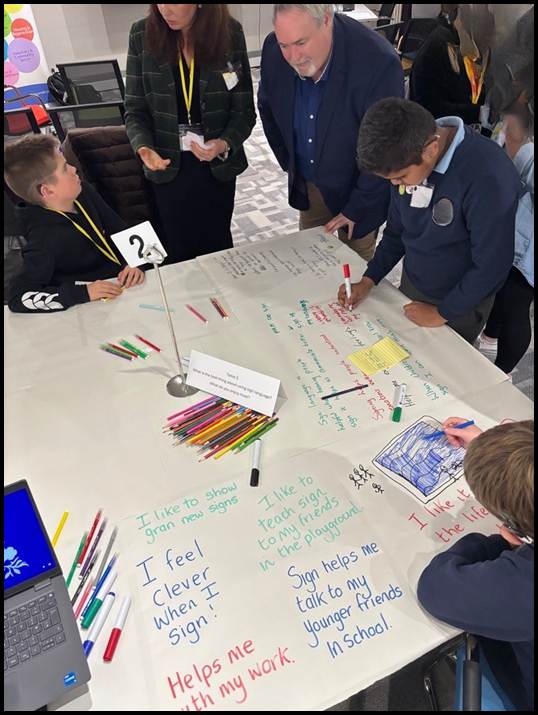
- Committee welcomed children from primary and post-primary schools on October 2025. The children were clear about where they needed organisations to provide information and services in sign language. This included at doctors’ surgeries, at swimming pools, and across mental health services. They told the Committee what they loved about using sign language, how it supports them to learn in school, socialise with friends and how it makes them feel informed and to express how they are feeling. They revealed that not being able to use sign language is tiring when they have to lip read, for example. They also told Committee Members that they want to see deaf people represented more in the media and in politics.
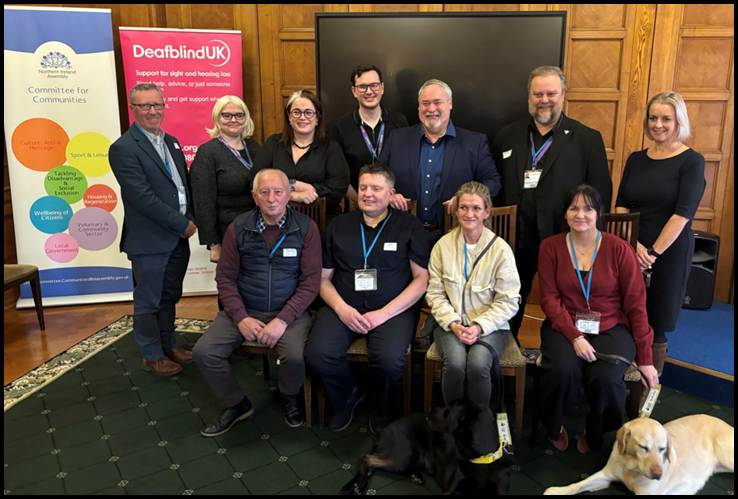
- The Committee also welcomed members from the deafblind community in October. During this event, the Committee witnessed the skill required for this particular form of sign language and learned about the need for specialist training and the lack of people able to provide this type of interpretation currently. Members also learned about the real challenges deafblind people face when they are trying to use public transport, visit friends and access services and information they need, as well as about some of the particular needs of deaf people with special or complex needs. They were clear “ there are services for blind people and services for Deaf people - but these may not be suitable for deafblind people”
- On 20 November 2025 Committee received evidence from the Assembly’s Legal Services in closed session. The Human Rights Memorandum provided to the Committee by Legal services is included at Appendix 6.
- The Committee held discussions with departmental officials on the key aspects of the Bill at its meetings on 6 February 2025, 10 April 2025, 23 October 2025, 27 November 2025, 11 December 2025 and 15 January 2026. Committee deliberations on the clauses of the Bill were conducted at a series of meetings between 6 November 2025 and 8 January 2026. The formal clause-by-clause scrutiny of the Bill was completed at the meeting on 22 January 2026. The relevant Minutes of Proceedings and Minutes of Evidence of these meetings are included at Appendix 2 and 3.
Consideration of the Bill
- The Committee's consideration and deliberation on the clauses of the Bill was informed by the research, written, oral and signed evidence it received (as outlined above). The Committee maintained ongoing engagement with Departmental Officials throughout its consideration of the Bill and explored the issues raised in evidence during oral evidence sessions with officials, as well as by correspondence.
- A summary of the key evidence points raised with the Committee on each clause is set out below (NB: where the same issues appear across clauses, the response will be outlined either in the first clause where it is raised or at the most relevant clause).
Clause 1 - Official recognition of sign languages
- Stakeholders welcomed formal recognition of BSL and ISL but warned that, without enforceable rights, clear obligations on public bodies, and dedicated funding, clause 1 risks being symbolic. Many called for stronger legal language to secure practical entitlements, recognition of sign language users as a linguistic minority, inclusion of dialects, and deafblind communication.
Departmental Responses to issues raised by Committee
(a) Enforceability – “The Sign Language Bill states that the Department must issue guidance, including on how prescribed organisations should develop their Sign Language Action Plans. This will include how organisations monitor requests for accessibility to services and information and clear signposting to each organisation’s complaints procedures. Parents of deaf children will be acting on behalf of their deaf child(ren), and organisations funded by the Department to deliver family sign language classes will have to contractually commit to conditions of funding including effective procedures and controls for monitoring and dealing with complaints. These will be reported to the Department (as the funder) by way of an agreed monitoring schedule.”
(b) Obligations on Public Bodies – “All public bodies must have "due regard" to the guidance. If they ignore the guidance, they will have broken their statutory responsibilities.”
(c) Dedicated funding – “(currently) The total cost is in the region of £1,419,000 which includes both face to face and remote interpreter support, and in some instances notetaking and lipreading. Although we anticipate an increase in demand for interpreters post enactment, it is difficult to provide an estimate for such an increase with confidence. As a working assumption to allow consideration of budget requirements, and the number of interpreters required, as well as potential translations i.e. written information to BSL and ISL, we have doubled the current cost and rounded the figure up to £3 million.”
“The Department bid for £0.5m, £3m & £3m Resource DEL over the next 3 years to cover costs associated with the Sign Language Bill. However, the outcome of the Spending Review for DfC is not known at this stage.”
RaISe also completed a summary of available information on the costs associated with sign language legislation in Great Britain, Scotland, Wales, and the Republic of Ireland. See Appendix 5.
(d) NI Dialect – “The cohort of interpreters currently working in Northern Ireland on face-to-face interpretation …are either based in Northern Ireland or — generally speaking, for ISL, up until now we have relied on interpreters coming up from the South. That is why we have invested in capacity building. It means that, for the first time, we have probably the biggest cohort of Northern Ireland-based ISL interpreters. All of those interpreters will have been taught within the Northern Ireland framework, and therefore Northern Ireland dialects will have been embedded in what they were taught. Their language models, as part of their training programme, will have been the Northern Ireland deaf community.”
(e) Deafblind inclusion – Committee accepted the Department’s clarification that deafblind people who use BSL or ISL are captured as Members of the deaf community under clause 11(1)(b) for the purposes of the legislation. The Department also confirmed that the common tactile or non-visual forms of the language as used and understood by some deafblind people, falls within the definition of different forms of BSL and ISL as set out in clause 12(b).
Clause 2 - Promotion of interests by lead department
- Stakeholders criticised perceived discretionary and vague wording in Clause 2, specifically: “Promote to such an extent (and in such manner) as the Department considers appropriate” and “other suitable persons”. Key concerns included the lack of guaranteed deaf community co-design, absence of legal rights to sign language education and services, insufficient funding and workforce planning, and ambiguity that could lead to unequal support for BSL and ISL (use of BSL “or” ISL rather than BSL “and” ISL). Strong calls were made to embed BSL/ISL across education (from early years), public services, employment, health and justice, to strengthen the interpreter and teacher workforce, and to place the Sign Language Framework at the centre of delivery, with measurable outcomes and accountability. Many also urged extending eligibility beyond under-19s to at least 21 or 25, aligning with UNCRPD standards, ensuring continuity of access during transition years. The need to open classes to adults who acquire deafness due to illness or injury was also raised. Many were concerned about the loss of Wilton House as a hub for the deaf community.
Departmental Responses to issues raised by Committee
(a) Committee asked if the Department would amend 2(1) by removing “to such extent (and in such manner) as the Department considers appropriate” – The Department rejected this stating: “It is important that the statutory duties imposed under clause 2 are guided by an organisation with a track record of promoting BSL, ISL and Deaf culture.”… “(The) Department believes it is important that it retains the scope as lead Department as drafted in clause 2 to continue to promote both languages and Deaf culture. The Department will set out how it aims to achieve its duties around promotion of BSL, ISL and Deaf culture within its Sign Language Action Plan and the refresh of the Sign Language Framework.
(b) Co-Design/Consultation – “We have the sign language partnership group. In reality, anything that our Department has oversight of will go through that group, which has representation from multiple organisations and deaf individuals. We will expect other Departments to do likewise.”
(c) Education (applies to other Departments and ALBs) – “All Departments will be prescribed. We are also looking to prescribe the Education Authority and the Council for Catholic Maintained Schools (CCMS)….the responsibilities of the Council for Catholic Maintained Schools and the Education Authority will be the same for the schools that fall under their remit (referencing that all prescribed organisations must develop a Sign Language Action Plan). I cannot specifically speak for Education, but the intention is to list all public bodies, including all arm's-length bodies (ALBs) and local councils. We need to capture all of the public bodies that offer services to the deaf community. That is the intention of the clause.”
(d) Workforce planning – “ The Department has funded remote, accredited BSL/ISL courses, with a view to increasing the pool of qualified deaf and hearing students who can follow a pathway to qualification and registration as interpreters and translators to support future legislation. The funding has evolved and increased to support a BSL/ISL interpreter training programme that is to be delivered by the Foyle Deaf Association, and successful students are due to register as accredited interpreters in the near future. In addition, the Department has developed, provided funding for and launched a two-year Master of Arts (MA) in sign language interpreting at Queen's University Belfast, comprising BSL and ISL students, both deaf and hard of hearing. That will provide an additional increase in capacity to address the current pressures for interpreters and contribute to the expected increase in demand arising from the legislation.”
(e) Use of ‘and’ rather than ‘or’ – “It is not the intention that families will be able to avail of classes in both languages. Indeed, 2(b) makes this clear by referencing that such classes are “to learn (or improve proficiency in) the Language.” Replacing ‘or’ with ‘and’ may have the unintended consequence of suggesting that providers would have to offer classes in both BSL and ISL regardless of demand or need. The Bill at clause 1 is clear that both languages have equal status, and it is on that basis that the Department intends to act.”
(f) Increasing age of children from 19 to 25 – “ The Department has received further clarification and rationale for the raising of the age for classes at 2(2) being raised from under 19 years of age to under 25 years of age from NDCS, and is content to proceed with this change.”
(g) Deaf Community Hub – “The Department has provided capital funding to Foyle Deaf Association in Derry/Londonderry to purchase and equip its sign language teaching centre and social hub. It is also awaiting the permanent appointment of a Deaf sign language officer to reinvigorate its engagement with the Deaf community on the Sign Language Framework. A Sign Language Hub remains a priority for the Deaf community and this will be reflected within the refreshed Framework, with the caveat that such a hub is subject to business case development and availability of capital funding.”
(h) Including older people in classes – “ They may not be universally available at this point, but the Department funds classes from introduction level through levels 1 to 6, and they are open to hearing people of any age. There are tailored signing classes for families that teach signage that is heavily ingrained in everyday family life. The older generation of deaf people can access those courses as part of the accredited scheme.”
(i) Meaning of ‘promote’ – “ the Department will outline actions to promote BSL/ISL and Deaf Culture in the refreshed Framework Strategy and, from this, into its Sign Language Action Plan. At clause 2(2), the introductory wording “Without prejudice to the generality of this section...” sets the context that ‘promotion’, in terms of deaf culture, is more than ensuring the availability of classes and those provisions at 2(1) also apply.” The Committee also advised the Department to state this explicitly in the Bill’s EFM.
(j) Meaning of ‘Other Suitable persons’ – “ This refers to the current cohort of Deaf BSL and ISL tutors who are not ‘accredited teachers’ as defined within the Bill as there is no scheme of accreditation currently. The Department is engaged with existing Deaf tutors to explore options for developing such a scheme. As advised in previous briefings to the Committee, this may take some time. The Department will bring forward Guidance to clarify the intent of the phrase.”
Clause 3 - Organisations to take reasonable steps
- Respondents welcomed Clause 3 as a progressive step towards equality, endorsing the duty on prescribed organisations to take reasonable steps to ensure deaf people have equal access to information and services at no additional cost, and viewing it as an improvement on existing UK legislation. However, they raised concerns that vague terms such as “reasonable steps,” “affordability,” and “practicability,” alongside limited definitions of “prescribed organisations”, risk inconsistent or minimal provision without clear guidance, enforceable standards, monitoring, and dedicated funding. Many called for the duty to extend beyond public bodies to key sectors such as health, education, justice, and the voluntary sector, for access to be delivered through qualified interpreters and culturally appropriate deaf-led services, and for deaf people to be centrally involved in defining, delivering, and evaluating access, ensuring the clause delivers real and consistent equality in practice rather than remaining symbolic.
Department Responses to issues raised by Committee
(a) Reasonable steps(Affordability and practicability) - “Although the legislation mentions the term "affordable", the guidance will set out how you approach that. The guidance will not start with, "It is unaffordable; do not do it". The opposite will be the case: your last course of action will be to deem something unaffordable. Through the guidance, we are looking at getting access to services for the deaf community. That is the best way to achieve that access to services. Due to practical issues, availability of interpreters and other reasons, we may not always be able to achieve those ends, but the guidance starts from the premise that we are looking to get access to services for the deaf community rather than looking for reasons to prevent it.”
(Whilst Committee received a basic draft of the Guidance it wasn’t at an advanced state and therefore it was unable to take a view on its potential effectiveness.)
Committee asked the Department if it would be minded to remove 3(2)(b) as ‘reasonable steps’ already factored in these considerations. This was rejected by the Department on the basis that – “A requirement on a prescribed organisation to undertake “all reasonable steps” will broadly entail it exploring reasonable paths and actions to satisfy the request made by the deaf community without requiring the prescribed organisation to overlook or adversely prejudice its own interests. This is however on the strict proviso that the subject organisation has undertaken “reasonable steps” and ideally (in anticipation of future challenge) fully documented the steps it has taken, including advising the deaf signer of the reason(s) for refusal and outlining the organisation’s appeals or complaints procedures to follow. The inclusion of the words “affordability” and “practicability” require a prescribed organisation to focus its mind in a particular way, imposing a stronger duty than simply being reasonable as it adds another layer to its decision-making process which in turn is another avenue for potential challenge. ‘Practicability’ means, when referring to a task, plan or idea as practicable, people are able to carry it out - it is capable of being effected, done or put into practice. ‘Affordability’ is not an automatic opt-out for prescribed organisations to deny accessibility to services and information through BSL and ISL.” “that is not a get-out-of-jail-free card. They have to follow the guidance. [sic] If they have not done a SLAP and looked at practicability, reasonableness and affordability, they have not followed their statutory obligations.”
(b) Application to Private and Charity Sector/Voucher Scheme – “The Department has prioritised work to progress statutory provisions to ensure access to public information and services at this stage. Although we are aware of interpreter voucher schemes for use in non-public service domains in other countries such as Finland and also Ireland, the Department has not taken forward any substantive work on this matter. Such a scheme will need to be cognisant of Personal Independence Payments (PIP) which can be used for interpreter support in day-to-day activities. In addition, the issue of how private companies could gain access to any future signed video-relay service would be a consideration under the specifications and funding model for a future NI Interpreting contract. However, the Department’s priority at this stage is to progress a service to meet public bodies’ statutory commitments under the Sign Language legislation. The Department will continue to discuss non-public service interpreter access with representatives of the Deaf community. Should such enhancements be deliverable in the future, this would not require primary legislation to facilitate.”
(c) Funding – See 33(c)
(d) Enforceability – See 33(a)
(e) Co-design/Consultation – See 34(b)
Clause 4 - Organisations to be listed in regulations
- Respondents supported Clause 4 as essential for transparency and accountability but stressed that its impact depends on a broad, inclusive and clearly defined list of prescribed organisations, developed and regularly reviewed with mandatory deaf community consultation rather than solely by the Department for Communities. Many warned that a narrow or discretionary approach, vague definitions of “public body,” and limited Assembly scrutiny could allow key organisations delivering public functions—across health, education, justice, social care, housing, and community services—to be excluded, undermining equality of access. Respondents called for clear inclusion criteria, regular reviews, accessible publication of the list, extension over time to non-statutory bodies providing essential public services, and consideration of centralised interpreting or VRS/VRI models to support consistent BSL/ISL access, particularly for vulnerable groups such as deaf children, older deaf people, and survivors of abuse. Questions were also raised about what was meant by the term “public character”.
Departmental Responses to issues raised by Committee
(a) Prescribed Organisations – “ All public bodies will be listed. That will include councils, arm's-length bodies (ALBs) and all Departments. There are exceptions in clause 7 in that some public bodies, but not Departments, can be exempted from their duties under clause 3. We will consult with all public bodies, make regulations and list those bodies. The basis of that list, however, will be whether you are defined as a public body.”
The Department agreed to amend the legislation to increase the level of Assembly scrutiny when organisations were being added to or removed from the list of prescribed organisations at clause 4.
(b) ‘Public Character’ – “ The term refers to activities that are typically performed by Departments or their public bodies. These functions are expected to be performed directly or indirectly by departments or public bodies, and they involve the use of public funds or the exercise of powers given by law – for example, councils or benefits offices. However, the inclusion of the reference to public bodies including persons or groups exercising functions of a public character seeks to capture such an entity who is not listed for the purposes of this Bill and may, in the future, provide such public functions.”
Clause 5 - Department to issue guidance
- Respondents expressed broad support for Clause 5 as a vital mechanism to ensure clarity, consistency and accountability in implementation, emphasising that clear guidance is essential to help prescribed organisations understand what constitutes “reasonable steps” and how to comply with their duties. However, there was consensus that consultation on the guidance must be meaningful, inclusive and ongoing, with concern that the requirement to consult “at least one person or group acting on behalf of the deaf community” is too narrow and risks excluding the diversity of the deaf community, including BSL and ISL users, deafblind people, children, young people and families. Many called for broader, structured consultation involving multiple deaf-led organisations and sectors, the establishment of a National Advisory Group or formalisation of the Sign Language Partnership Group, and the explicit inclusion of deaf children and families in line with article 12 of the UNCRC and article 4(3) of the UNCRPD. Respondents also supported the appointment of sign language “champions” within organisations, regular review of the guidance, greater transparency in monitoring and updating it, and the introduction of a complaints or redress mechanism for non-compliance. Concerns were raised about the perceived weakness or ambiguity of terms such as “have regard” and “reasonable steps”, and the Department’s perceived limited internal BSL/ISL expertise.
Department Responses to issues raised by Committee
(a) Guidance – (see 35 (a)) – The Department also indicated “The best practice is the priority: the first start in the phase of developing the guidance. The Committee will be aware that the final guidance will be upon enactment, when we can guide on what is actually in the Act. We are, and have been, in the process of commissioning the first draft from the British Deaf Association (BDA). We have received that and circulated it around the other deaf organisations on the sign language partnership group. We are in the process of collating and embedding their responses.”
(b) ‘At least one person or group’ – “The clause has raised questions by the committee and the Deaf sector as to its actual meaning therefore, the Department agrees to redrafting to clarify it will be more than one person or group.”
Further the Committee advised the Department to make more explicit in the Bill’s EFM what is meant by the ‘Deaf Community’ to ensure the ‘at least two persons or groups’ are not two from the same part of the Community.
(c) Department’s internal BSL/ISL expertise – “We brought in on secondment the manager of the British Deaf Association Northern Ireland…so that we had real-time input into policy development as we got closer to the Bill.”
The Department also advertised recruitment for a Sign Language Policy Officer which required “Natural fluency in British Sign Language (BSL) and/or Irish Sign Language (ISL), preferably both, and an in-depth knowledge and experience of d/Deaf culture in Northern Ireland.”
Clause 6 - Best practice to be in guidance
- Respondents broadly welcomed clause 6 as a positive step in providing guidance and Sign Language Action Plans to improve consistency, transparency and accessibility across public services, with many viewing the Department for Communities as well placed to lead this work. However, there was concern that the clause lacks legal force and risks remaining aspirational, as the guidance is non-binding, contains perceived weak “may” language, and includes no enforcement mechanisms, statutory monitoring, mandatory action plans, timeframes or reporting requirements. Many argued that without clear duties, minimum standards and oversight, the Bill could fail to deliver meaningful BSL and ISL rights and leave deaf people reliant on existing disability legislation (the Disability Discrimination Act) rather than language rights. Strong emphasis was placed on the need for co-production with the deaf community, involving diverse and underrepresented groups, deaf-led organisations and professionals, and inclusive, ongoing consultation rather than reliance on a single body. Respondents called for precise definitions of “reasonable steps”, sector-specific and culturally competent guidance, robust interpreter provision, deafblind-specific approaches, digital accessibility standards, and safeguards around the use of VRS, VRI and emerging AI tools. While there was strong support for action plans, respondents sought clarity on whether they are mandatory, publicly available, linked to a Northern Ireland–wide plan, subject to regular review and public reporting, and required to be produced in accessible BSL and ISL formats.
Department Responses to issues raised by Committee
(a) Enforcement – See also 33(a) – Committee noted a further response to Committee which overviews how the Department may make regulations. ”Clause 7(3) enables us to put guidance on reasonableness and affordability into regulations, but that is not the approach that we are taking. We are looking at co-designing statutory guidance. Reasonableness and affordability will be defined in guidance that is co-designed by the deaf community. Rather than leave the definition up to individual Departments and prescribed organisations, we will provide consistency by having statutory guidance that says, "Here is your sign language plan. If you get a request, follow these procedures and give this reply". If, for example, an area is not working or there is a dispute about it, clause 7(3) enables us to come in and create functions through regulations that organisations and Departments will be required to act on. Rather than follow the guidance, they will have to follow the regulations. The regulations in clause 7(3) are something of a safety net to enable us to address issues that may not be working through the guidance, or to address issues that may be disputed in a court and need to be rectified through regulations. We have no intention to create the duties in clause 7(3) in regulations at this point. We expect that the statutory guidance and the sign language plans developed by Departments and prescribed organisations will address all the issues around accessibility, affordability and reasonableness. That is the approach, but we need the power in clause 7(3) in case there is some dispute — a particular issue may be around affordability — and we have to come in to regulate and define what affordability is under law. If, for example, a court takes a different approach, we can correct that in regulations.”
(b) Disability Discrimination Act – While RaISe notes that the Sign Language Bill reframes access to services as a linguistic right rather than a disability accommodation. ECNI noted “while the disability discrimination legislation is not and cannot be an appropriate vehicle for cultural and linguistic recognition, it nonetheless provides for legal redress where discrimination has occurred against deaf and hard-of-hearing people.” RaISe concluded that “At present, deaf Sign Language users may have to identify as disabled to access communication services. No other linguistic minority must do this to access services in their language.”
(c) Guidance - See 37(a)
(d) Co – Design/Consultation – See 34(b)
(e) Funding – See 33(c)
Clause 7 - Department may make regulations
- Respondents offered cautious support for Clause 7’s regulation-making powers as a necessary way to future-proof the Bill and allow sign language access, technology and communication methods to evolve without repeated primary legislation, noting DfC’s long-standing experience in this area. However, concerns were raised about the breadth of the Henry VIII powers, particularly the ability to amend existing legislation without sufficient transparency, scrutiny or guaranteed community involvement, with fears that rights could be diluted rather than strengthened. Many stressed that enabling powers alone do not create enforceable rights and highlighted the absence of mandatory standards, compliance mechanisms and clear duties on public bodies and wider service providers such as banks, utilities, transport and healthcare. Respondents called for robust safeguards, including regular Assembly scrutiny, public reporting, early review of the need for regulations, and the establishment of a formal, representative, deaf-led advisory body to oversee regulation development, consultation and monitoring.
Department Responses to issues raised by Committee
(a) Guidance - See 37(a)
(b) Enforcement – 38(a)
(c) Application to Private and Charity Sector – See 35(b)
(d) Assembly scrutiny – See 40(b)
Clause 8 - Procedure for making regulations
- Respondents broadly welcomed the inclusion of a statutory consultation requirement before regulations are made, recognising the role of the Sign Language Partnership Group in previous engagement, but expressed dissatisfaction with the wording requiring consultation with “at least one person or group acting on behalf of the deaf community”, which was widely viewed as tokenistic, unrepresentative and lacking transparency. Many warned that consulting a single individual or group cannot reflect the cultural, linguistic and experiential diversity of the deaf community, including BSL and ISL users, deafblind people, young people, families and regional communities, and risks undermining the Bill’s purpose. Respondents therefore called for clause 8 to be strengthened to require consultation with a broad and representative range of deaf-led organisations, formalised advisory or elected representative structures, and accessible, inclusive engagement methods such as BSL and ISL calls for evidence and regional sessions. Strong emphasis was placed on transparency, ongoing engagement, and compliance with UNCRPD Article 4(3) and General Comment 7, alongside support for Assembly scrutiny safeguards and justification requirements where regulations modify or restrict the Act.
Department Responses to issues raised by Committee
(a) ‘At least one person or group’ – See 37(b)
(b) Assembly Scrutiny – Committee notes in relation to concerns regarding this in clause 7, clause 8 provides that any regulations in clause 7 is subject to the draft affirmative Assembly procedure which affords the Assembly a higher level of scrutiny over these regulations.
Clause 9 - Department to publish 5 yearly reports
- Respondents broadly supported the statutory requirement for the Department for Communities to publish a five-yearly report evaluating the Bill’s impact, viewing it as a key mechanism for accountability, reflection and identifying ongoing barriers, but raised concerns about the lack of scrutiny, detail and engagement in clause 9 as drafted. Respondents highlighted that reports are not required to be laid before or scrutinised by the Assembly, lack mandated consultation with the Deaf community, and risk becoming tokenistic unless they are accessible in BSL, ISL and English and underpinned by clear, outcome-focused metrics. There was consensus that the clause should specify reporting content, performance indicators and monitoring arrangements, including measures on interpreter availability, service accessibility, deafblind experiences, education, employment and quality of life measures. Most respondents felt a five-year interval was too long, particularly in the early years after implementation, and called for an initial review within 1–3 years, followed by three-yearly or interim reports to maintain momentum and address issues early, with deaf people centrally involved in evaluation and reports driving future action plans rather than serving as a purely administrative exercise. It was noted that if the clause was not commenced at Royal Assent, or shortly thereafter, the first report would take longer than five years to be published.
Departmental Responses to issues raised by Committee
(a) Change frequency of subsequent reports from 5 to 3 years – Department accepted this amendment proposal.
(b) Commencement of reporting clause on Royal assent – “ Timing should not begin until clauses are commenced rather than Royal Assent. The Department’s intention at this time is that all clauses will be commenced, except clause 3, following Royal Assent. Clause 3 cannot be commenced until the guidance is published. Therefore, the date of coming into operation is what counts irrespective of whether this is (a) by order as provided for in Cl 14(1), or (b) at Royal Assent if Cl 14(1) is amended.Every other clause will be commenced. In effect, you are talking about a day or two, because we will have a commencement order straight after Royal Assent. It is not reasonable to change the Bill for the sake of a couple of days. You are talking about a five-year report being made, so it will make no substantive difference whether it is made in five years and three days or five years and a week.”
(c) Level of Assembly scrutiny – Department accepted amendment to lay the reports before the Assembly.
(d) Co- design/consultation – See 34(b)
Clause 10 - Accreditation of teachers and interpreters
- Respondents supported accreditation as essential for quality, consistency and public confidence, but emphasised that it must be deaf-led, culturally informed and reflective of Northern Ireland’s use of both BSL and ISL, with equal recognition for each. Many stressed that only the deaf community can define acceptable standards, warning that hearing-led models risk excluding experienced deaf tutors, undermining linguistic and cultural norms, and repeating past failures, some mentioned the QUB MA in Interpreting as a cautionary example. There was broad agreement that teachers and interpreters require distinct accreditation schemes, with clear, accessible pathways, recognition of existing qualifications across the UK and Ireland, and supportive transition arrangements for experienced tutors without formal accreditation. Respondents highlighted acute workforce shortages—particularly ISL, deaf and deafblind interpreters—calling for long-term investment in education, early years provision, training routes, bursaries and career pipelines, while maintaining quality over volume. Concerns were raised about the absence of timescales, clarity on deafblind interpreting, and DfC’s in-house expertise, alongside warnings that a standalone NI scheme could undermine professional mobility if not aligned with established frameworks, leading to a clear consensus that accreditation must be developed with, by and for the deaf community to raise standards while building sustainable capacity.
Departmental Responses to issues raised by Committee
(a) Assembly scrutiny – Any delegated legislation/regulations being made about accreditation by way of an amendment to the Bill will now come through draft affirmative procedure rather than negative, which will allow for greater Assembly and stakeholder scrutiny.
(b) Accreditation Schemes – “ With regards to BSL/ISL interpreters it is a straightforward exercise to list those professional and registration bodies which BSL/ISL interpreters must be registered with currently to access work with NI public bodies. Interpreters pay a subscription fee to these bodies - for example, the National Registers of Communication Professionals Working with Deaf and Deafblind People (NRCPD). As such, there is no intent to impose additional fees upon interpreters. The intent is to ensure that interpreters meet optimum standards for their profession, which those registration bodies set and monitor. There is currently no equivalent body for BSL/ISL teachers or tutors. However, officials are exploring options with the current cohort of BSL/ISL teachers/tutors on whether it is possible to establish an equivalent professional body to ensure optimum standards of teaching and safeguarding registration.”
Clause 11 - Members of the deaf community
- Respondents broadly supported defining the community by use of BSL or ISL, emphasising that language, rather than hearing level, best reflects shared culture, identity and experience, and welcoming the inclusive approach covering deaf and deafblind signers, CODAs (Children of Deaf Adults) and hard of hearing signers. The explicit inclusion of CODAs was widely praised, though some argued the definition should go further to include parents of deaf children to prevent language deprivation and support families from point of diagnosis. Concerns were raised that terms such as “normally use” or “rely on” sign language could unintentionally exclude deafblind people, those with fluctuating access needs, adults with acquired hearing loss or individuals whose sign language use develops over time, with calls for more consistent and flexible wording across the Bill. Views were mixed on including hearing sign language users, with some suggesting a distinction between the “deaf community” and a wider “sign language community,” while respondents stressed the need to recognise deaf culture, heritage and linguistic minority status. Respondents also highlighted the importance of explicitly including people who use adapted or tactile signing and ensuring the definition is clear, simple, limited to the purposes of the Bill, and framed to reflect the evolving nature of sign language use, particularly for children.
Departmental Responses to issues raised by Committee
(a) Use of word ‘normally’ - The word ‘normally’ in (1)(b) is to ensure that only the appropriate people are benefitted i.e. whose access to information or services depends on communication by signing. The word just takes its ordinary sense and does not need defined in legislation - its every day meaning being ‘usually, or in most cases’. It is therefore appropriate and it is within this context that the clause should be read.”
(b) Addition of Parents of Deaf Children – “ The issue of accessibility is focussed on the deaf child in this context. For example, the Department funds Action Deaf Youth to deliver BSL Family Sign Language courses to deaf children and their families – including parents. However, this is conditional upon parents bringing their children to age-appropriate signing courses e.g. signing through play. It is immersive provision which is deaf child-centric to improve communication life outcomes for the deaf child. Parents with deaf children themselves do not necessarily have issues accessing services unless they rely on habitual or occasional use of BSL/ISL in which case provision is included within the Bill. Whereas it is accepted that parents act on behalf of their children, the addition of parents of deaf children may have unintended consequences as the scope of the Bill is for sign language users. Therefore, there is no need to legislate around a right of access.”
(c) Addition of people who acquire deafness – “ Extension of the definition of "the deaf community" in clause 11 is a fundamental policy matter and would certainly need to wash through the Executive. I could not make that decision; I do not think that my Minister could make that decision. It would have profound impacts on the scale of supply infrastructure that is required and on costs etc. It might look like a case of a small number of words adding a sub-subclause to a Bill, but it would have a profound impact…Sensory deprivation services in the Department of Health deal with people who become deafened. That would be an issue for them to consider.”
(d) Deafblind - See 33(e)
Clause 12 - Different forms of sign languages
- Respondents welcomed the clause for recognising both visual sign languages and tactile and non-visual forms used by deafblind people, viewing it as progressive, inclusive and reflective of lived experience, with RaISe noting Northern Ireland’s unique approach in explicitly codifying tactile sign language forms in legislation. While broadly supportive, some called for refinement of terminology to better align with recognised deafblind communication language and to avoid ambiguity, stressing that any definitions must be informed directly by deaf and deafblind communities. A key theme was the need to clearly affirm that BSL and ISL are complete, living languages with their own grammar, syntax, cultural heritage and regional dialects, rather than communication aids, and to ensure that tactile and adaptive forms are treated as fully legitimate and protected, not “add-ons”. Respondents also highlighted the importance of recognising linguistic diversity, evolving communication technologies, the needs of deaf refugees and migrants, and the central role of deaf-led expertise, emphasising that definitions should capture the cultural depth of sign language and avoid hearing-centred assumptions across the Bill. Several queries arose in relation to the inclusion of Makaton in the Bill.
Departmental Responses to issues raised by Committee
(a) Makaton – Committee sought advice and accepted that, based on a definition of Makaton on Makaton UK’s website, it would not fit within the scope of this Bill .
(b) See Deafblind – See 33(e)
Clause 13 - Everyday reliance on sign languages
- Respondents raised concerns that the clause’s wording, particularly the terms “wholly” and “substantially” reliant, was vague, hearing-centred and too narrow to reflect the diverse, situational and fluctuating ways people use BSL and ISL, creating a risk of inconsistent application and exclusion of groups such as deafblind people, CODAs, individuals with acquired hearing loss and deaf refugees. Many argued that framing sign language through concepts of necessity, convenience or “everyday reliance” risked portraying BSL and ISL as optional supports rather than full, first or preferred languages central to identity, dignity and participation across all aspects of life, not just formal services. Respondents emphasised that reliance is often context-dependent and spans employment, education, healthcare, social interaction and safety, supported by lived-experience accounts of fatigue, exclusion and withdrawal when access is denied. While some welcomed the flexibility of the definition and noted its relative sophistication compared with other jurisdictions, there was strong consensus that it should be refined to better reflect linguistic and cultural realities, include situational and occasional users, avoid hearing-centric language, and provide clearer, more inclusive wording that ensures no group is inadvertently excluded.
Departmental Responses to issues raised by Committee
(a) Language Used – “ These are not legal terminologies and the dictionary meaning are sufficient to cover the intention. The ‘relying on’ as used in Cl 6 and 7, and as found in Cl 11 as part of the meaning of the deaf community, takes its ordinary sense. Note the ‘(wholly or substantially)’ as helping. The ‘everyday activities’ takes its ordinary sense too. The ‘convenience’ as well as ‘necessity’ is also key, and the overall gist is to capture the sense of people’s communication needs in living their daily and routine lives. Hence the adoption of plain and non-technical language in Cl 13, with seemingly no identified problem for the sake of practical effect in leaving ordinary words undefined like this. There is no connection here with 4(4). Clause 13 sets out what the bill means in respect to everyday reliance on sign language. Clause 4(4) relates to functions/services.”
Clause 14 – Commencement
- RaISe noted that the Northern Ireland approach seeks to balance immediate recognition of BSL and ISL with a more managed and phased implementation of the Bill’s remaining provisions, reflecting the Bill’s complexity and the need for prescribed organisations to prepare for new duties. While this flexible approach, including the use of transitional provisions under Clause 14, may help minimise disruption, it was stated that the absence of clear deadlines for making regulations could create uncertainty and risk delay. Overall, the commencement model allows for staged implementation and aligns more closely with the approach taken in Ireland, contrasting with the immediate commencement adopted in England, Wales and Scotland. The Sign Language Act in RoI was enacted on 24 December 2017 and commenced on 23 December 2020, setting out different timeframes for specified provisions.
Departmental Responses to issues raised by Committee
(a) Commencement of clause 9 – See 41(b)
Clause 15 - Short Title
- RaISe noted that Clause 15 is a standard short title provision, consistent with equivalent sign language legislation, and effectively identifies the Act and its jurisdiction; however, a question was raised as to whether the title should be amended to “Sign Languages Bill” to better reflect the Bill’s distinctive recognition of more than one sign language.
Department Responses to issues raised by Committee
(a) Addition of ‘s’ to ‘languages – After taking advice, Committee accepted that it is not conventional to amend the short title of a Bill unless a substantial amendment has been made to the Bill itself which necessitates the change.
Clause by Clause Scrutiny of the Bill
- Having considered the written and oral evidence received in relation to the Bill, and engaged with the Department to seek clarification and amendments, the Committee undertook its formal Clause-by-Clause consideration at its meeting on 22 January 2026 — see Minutes of Proceedings in Appendix 2.
- Information on the Committee's deliberations on the individual clauses in the Bill can be found in the preceding section of this report.
Long Title
- The Committee considered the Long Title as drafted.
Agreed: The Committee agreed that it was content with the Long Title of the Bill as drafted.
Clause 1 - Official recognition of sign languages
- The Committee considered Clause 1 as drafted.
Agreed: The Committee agreed that it was content with Clause 1 as drafted.
Clause 2 - Promotion of interests by lead department
- The Committee considered the Department’s proposed amendments to Clause 2.
Clause 2, Page 2, Line 13
After ‘classes’ insert ‘free of charge’
Clause 2, Page 2, Line 15
Leave out ‘deaf children’ and insert ‘young people who are deaf’
Clause 2, Page 2, Line 17
Leave out ‘children are persons under 19’ and insert ‘young people are persons under 25’
Agreed: The Committee agreed that it was content with Clause 2 as amended by the Department.
One Member recorded dissent regarding agreement of Clause 2 as amended. They indicated that while the targeting of young people was welcome, concerns remained that those people over the age of 25 who become deaf through illness or injury are not included to be helped to learn or improve their proficiency in the language.
Agreed: The Committee also agreed that its report should emphasise that the Committee advise the Department that the EFM should be updated to make explicit what it means by the term “Promote” e.g. includes an obligation to, but not limited to, the provision of the availability of classes.
Clause 3 - Organisations to take reasonable steps
- The Committee considered Clause 3 as drafted.
Agreed: The Committee agreed that it was content with Clause 3 as drafted.
Clause 4 - Organisations to be listed in regulations
- The Committee considered the Department’s proposed amendments to Clause 4.
Clause 4, Page 3, Line 7
Leave out ‘are subject to negative resolution’ and insert ‘may not be made unless a draft of them has been laid before, and approved by a resolution of, the Assembly’
Agreed: The Committee agreed that it was content with Clause 4 as amended by the Department.
Clause 5 - Department to Issue guidance
- The Committee considered the Department’s proposed amendments to Clause 5.
Clause 5, Page 3, Line 27
Leave out ‘one person or group’ and insert ‘two persons or groups’
Clause 5, Page 3, Line 27
Leave out ‘acting on behalf’ and insert ‘representative or cognisant of the views or interests’
Agreed: The Committee agreed that it was content with Clause 5 as amended by the Department.
One Member recorded their dissent regarding agreement of Clause 5 as amended by the Department based on concerns regarding the need to ensure that “at least two persons or groups” are not two from the same language.
Agreed: The Committee also agreed that its report should emphasise that the Committee advise the Department to ensure that “at least two persons or groups” in Clause 5 are not two from the same section of the Deaf Community (BSL /ISL).
Clause 6 - Best practice to be in guidance
- The Committee considered Clause 6 as drafted.
Agreed: The Committee agreed that it was content with Clause 6 as drafted.
Clause 7 - Department may make regulations
- The Committee considered the Department’s proposed amendments to Clause 7.
Clause 7, Page 5, Line 1
Leave out ‘each Northern Ireland department in the same way’ and insert ‘one or more of the Northern Ireland departments separately or together in different or similar ways’
Clause 7, Page 5, Line 4
After ‘acting’ insert ‘on behalf or’
Clause 7, Page 5, Line 5
After ‘functions’ insert ‘on behalf or’
Clause 7, Page 5, Line 15
After ‘relevant’ insert ‘material or’
Clause 7, Page 5, Line 18
After ‘behalf’ insert ‘or in the interests’
Agreed: The Committee agreed that it was content with Clause 7 as amended by the Department.
Clause 8 - Procedure for making regulations
- The Committee considered the Department’s proposed amendments to Clause 8.
Clause 8, Page 5, Line 27
Leave out ‘one person or group’ and insert ‘two persons or groups’
Clause 8, Page 5, Line 27
Leave out ‘acting on behalf’ and insert ‘representative or cognisant of the views or interests’
Agreed: The Committee agreed that it was content with Clause 8 as amended by the Department.
One Member recorded their dissent regarding agreement of Clause 8 as amended by the Department as per comments at Clause 5.
Agreed: The Committee agreed that its report should emphasise that the Committee advise the Department to ensure that “at least two persons or groups” in Clause 8 are not two from the same section of the Deaf Community (BSL /ISL).
Clause 9 - Department to publish 5 yearly reports
- The Committee considered the Department’s proposed amendments to Clause 9.
Clause 9, Page 5, Line 38
After ‘be’ insert—
‘(a) laid before the Assembly by the Department, and (b)’
Clause 9, Page 6, Line 4
Leave out ‘5’ and insert ‘3’
Agreed: The Committee agreed that it was content with Clause 9 as amended by the Department.
Clause 10 - Accreditation of teachers and interpreters
- The Committee considered the Department’s proposed amendments to Clause 10.
Clause 10, page 6, Line 25
Leave out ‘are subject to negative resolution’ and insert ‘may not be made unless a draft of them has been laid before, and approved by a resolution of, the Assembly’
Agreed : The Committee agreed that it was content with Clause 10 as amended by the Department.
Clause 11 - Members of the deaf community
- The Committee considered a Bill Office Amendment to Clause 11.
Clause 11, page 6, line 33
Leave out “normally”
The Committee failed to reach consensus in relation to clause 11 as amended. One Member stated for the record that the reference in 11(1)(b) in reference to deaf or deafblind people who ‘normally’ use BSL or ISL communication, excludes those who will lose their hearing over the age of 25 through illness or injury, therefore was not content with the word ‘normally’ staying in.
The question was put that the Committee is content with Clause 11 as amended.
The Committee divided: Ayes 6; Noes 2; Abstain 0
AYES NOES
Mr Colm Gildernew Mrs Kellie Armstrong
Mrs Cathy Mason Mrs Sian Mulholland
Mr Andy Allen
Mr Maurice Bradley
Mrs Pam Cameron
Mr Maolíosa McHugh
Agreed: The Committee agreed that it was content with Clause 11 as drafted.
Clause 12 - Different forms of sign languages
- The Committee considered Clause 12 as drafted.
Agreed: The Committee agreed that it was content with Clause 12 as drafted.
Clause 13 - Everyday reliance on sign languages
- The Committee considered Clause 13 as drafted.
One Member recorded their dissent regarding agreement of Clause 13 as drafted. This was in relation to how clause 13 relates to clause 11 where it references ‘wholly’ or ‘substantially’ relying on BSL or ISL which they believe excludes a number of people who will be part of the deaf community.
Agreed: The Committee agreed that it was content with Clause 13 as drafted.
Clause 14 – Commencement
- The Committee considered Clause 14 as drafted.
Agreed: The Committee agreed that it was content with Clause 14 as drafted.
Clause 15 - Short title
- The Committee considered Clause 15 as drafted.
Agreed: The Committee agreed that it was content with Clause 15 as drafted.
Recommendations
- Having considered the extensive evidence presented to it during the Committee Stage of the Sign Language Bill, the Committee recommendations to aid the effective implementation of the Bill and to support a future Committee for Communities to carry out effective post legislative scrutiny, are as follows:
Formal Clause by Clause Discussion Points - At Clause 2 - the Department to update the EFM to make explicit what it means by the term “Promote” e.g. includes an obligation to, but not limited to, the provision of the availability of classes.
- At clause 5 and clause 8 - the Department to update the EFM to ensure that “at least two persons or groups” in Clause 5 are not two from the same section of the Deaf Community (BSL /ISL).
- At clause 11 and clause 13 - 11(1)(b) in reference to deaf or deafblind people who ‘normally’ use BSL or ISL and 13 in reference to relying (wholly or substantially) on the Language. The Committee remains concerned these exclude people over the age of 25, who will lose their hearing through illness or injury and would appreciate assurances that other policy areas will support such people to be able to communicate in BSL and/or ISL
Commencement and Implementation - The Department to ensure all parts of the Sign Language Bill are commenced within the timeframe indicated during scrutiny, in particular those stated to be commenced “a few days” post–Royal Assent (all but clause 3). This is considered essential, not least to provide certainty around the initial reporting period, which the Committee understands should result in the first statutory report being produced in 2031. Commencement dates should be clearly communicated, kept under review and any changes promptly reported to the Assembly.
Funding and Resources - The Department to provide clarity on long-term and sustainable funding arrangements to support implementation of the Bill, including funding for interpreting services, teaching and tutoring provision, workforce development, and the infrastructure required to deliver statutory duties effectively.
Interpreters, Tutors and Workforce Capacity - The Department to produce a clear strategy to address the supply, accreditation, regulation and retention of sign language tutors, interpreters and specifically deafblind interpreters, where the Committee understands there is a considerable gap.
Education, Mental Health and Social Work - The Department to work collaboratively with the Department of Education and the Department of Health to address barriers within education, mental health and social work services, including access to interpreters, specialist support and training, safeguarding arrangements and consistency of school-based provision for deaf children and young people as well as work which should be taken forward to increase sign language education within the curriculum in relation to promoting “greater use and understanding of BSL and ISL.
Transport - The Department to work with the Department for Infrastructure to ensure transport accessibility is explicitly addressed within implementation planning, recognising its central role in enabling access to social activity, employment, education, healthcare and public services, including effective training for transport staff.
Public Character - The Department to make clear what “persons or groups exercising functions of a public character” means in practical terms to mitigate any misunderstanding that this may mean services outside the public sector.
- Through this, address provision in residential and care settings to mitigate against the issue of loneliness among deaf residents.
- The Department to ensure these persons and groups are included in the publicly available, translated, prescribed list of organisations.
Enforcement and Complaints - The Department should ensure guidance for Sign Language Action plans includes specific guidance for prescribed organisations to develop and publish a clear enforcement and complaints mechanism, guaranteeing deaf and deafblind people accessible, effective routes to raise concerns and seek redress where statutory duties are not met.
- The Department to make full and appropriate use of its regulation-making powers under clause 7 where prescribed organisations fail to adhere to guidance, so that guidance alone should not be relied upon where there is evidence of persistent or systemic non-compliance. This would ensure that deaf and deafblind people do not need to identify as disabled to access a linguistic and cultural right.
- Where Clause 7 exempts any public bodies from the duties of the Bill, this should be communicated clearly and in a timely manner to the Committee.
Guidance, Reasonable Steps and Accessibility - The Department to make all statutory guidance publicly available, transparent and accessible in BSL, ISL and English, to enable effective scrutiny and meaningful engagement and to request Sign Language Action Plans and resulting reports from prescribed organisations are delivered within a specific timeframe and accessible in the same way.
- Within the guidance, the Department to provide greater clarity on the application of “reasonable steps”, ensuring that considerations of affordability and practicability do not result in reduced standards of access for the deaf community, and that services are as accessible to them as they are to hearing people.
Scope of Duties and Sectors - The Department to give further consideration to the inclusion of private and voluntary sector bodies delivering public-facing services, in order to promote consistency of access across society and through everyday life, which may include introducing an enhanced voucher scheme and providing access to a central VRS.
- The Department to work with relevant partners to strengthen employment support for deaf people, including consideration of reforms to Access to Work.
Technology and Innovation - The Department to consider the role of emerging AI and digital technologies as a supplement to, but not a replacement for, qualified interpreters and human-led services. Any use of such technologies should be safe, ethical and co-designed with the deaf community.
Deafblind People - The Department to ensure the specific needs and experiences of deafblind people are explicitly reflected across all aspects of implementation, including interpreting provision, social work services, access to healthcare, transport and reporting mechanisms.
Sign Language Partnership Group - The Department to ensure the Sign Language Partnership Group is fully representative of the deaf community as defined in Clause 11, including BSL users, ISL users, deafblind people, parents of deaf children, children and those who acquire deafness later in life. The Committee further recommends that the group operate in a manner consistent with the UNCRC and UNCRPD obligations, including Article 4(3) and General Comment No. 7.
Reporting - The Department to ensure reports are developed in consultation with the deaf community, and are accessible in BSL, ISL and English. Reports should be underpinned by clear, outcome-focused metrics and include information on interpreter availability, service accessibility, Deaf and Deafblind experiences, and quality-of-life measures.
Culture and Identity and Promotion - The Department to continue to recognise and support the rich linguistic and cultural identity of the deaf community as a core principle underpinning the implementation of the Bill.
Acknowledgements
- The Committee would like to thank colleagues in Information Services and Broadcasting, Bill Office, RaISe, Legal Services, Events, Education and Engagement and the interpreters for their support during the call for evidence and scrutiny of the Bill, Departmental Officials for their support and patience with its queries and members of the Deaf Community for their engagement with Committee.
- The Committee also agreed to formally acknowledge the work of the Clerking Team on the Committee Stage of the Sign Language Bill. Members regarded the team's work to make sure members of the deaf community were able to engage fully in the Call for Evidence process as particularly noteworthy and that, individually and collectively, the team had made substantial additional arrangements to communicate effectively and make this a very inclusive experience.
Links to Appendices
Appendix 1: Memoranda and Papers from the Department for Communities
View Memoranda and Papers supplied to the Committee by the Department
Appendix 2: Minutes of Proceedings
View Minutes of Proceedings of Committee meetings related to the report
Appendix 3: Minutes of Evidence
View Minutes of Evidence from evidence sessions related to the report
Appendix 4: Written submissions
View written submissions received in relation to the report
Appendix 5: Research Papers
Appendix 6: Other Documents relating to the report
View other documents in relation to the report
Appendix 7: List of Witnesses that gave evidence to the Committee
Gerard Flynn, Department for Communities
Iain Greenway, Department for Communities
Tommy McAuley, Department for Communities
Patricia Leeper, Department for Communities
Karen McCallion, RaISe
Aidan Stennett, RaISe
Dr Robert Adam, British Deaf Association
Tom Lichy, British Deaf Association
Majella McAteer, British Deaf Association
Geraldine McGahey OBE, Equality Commission for Northern Ireland
Paul Noonan, Equality Commission for Northern Ireland
Alex Leslie, Adapt NI
Laura Murphy-Sloan, Adapt NI
Teri Devine, RNID
Mariette Mulvenna, RNID
Jacqueline Melville, National Deaf Children's Society
Déirdre Vaughan, National Deaf Children's Society
Julie Graham, Action Deaf Youth
Gemma McMullan, Action Deaf Youth
Bronagh O'Connell, Action Deaf Youth
Ellie-May O'Connell, Action Deaf Youth
Rita Abernethy, Deaf OAP NI
Claire McIlwraith, Deaf OAP NI
Bobby Bailey, Deaf OAP NI
Daniel Voss, Christian Fellowship Church Sign Language Centre
You may re-use this publication (not including images or logos) free of charge in any format or medium, under the terms of the Open Northern Ireland Assembly Licence.
Find out more about the Open Northern Ireland Assembly Licence.
This Report can be made available in a range of formats including large print, Braille etc. For more information please contact:
Committee for Communities
Emer Boyle
Northern Ireland Assembly
Parliament Buildings
Ballymiscaw
Stormont
Belfast BT4 3XX
Telephone: 028 90 521895
Email: Committee.Communities@niassembly.gov.uk
X (formerly Twitter): @NIA_Communities


