Brexit and Beyond
09 November 2026

In today’s Brexit and Beyond: MLAs have requested to pull the ‘Stormont Brake’ on an EU regulation establishing the Union Customs Code, as they seek to prevent the application of the regulation in Northern Ireland under the Windsor Framework.
Tomorrow, the UK and EU will meet in the Withdrawal Agreement Joint Committee, where they are expected to agree to add the EU Forced Labour Regulation and part of the EU Artificial Intelligence Act to the Windsor Framework.
In other key developments from last week: the European Commission published its 2027 Work Programme; two reports commissioned by the Department for the Economy looked at the impact of the Windsor Framework on local businesses; and it was widely reported in the media that the UK and EU have completed negotiations on an SPS deal. We bring you up to speed and look ahead to what is on this week’s agenda.
- MLAs seek to pull Stormont Brake on the Union Customs Code
- SPS deal in sight for summit…
- …but nothing is agreed until everything is agreed
- UK to back Windsor Framework additions on forced labour and AI
- Joint Committee wraps up decision on parcels
- Department publishes Windsor Framework research
- European Commission sets out priorities for 2027
- Assembly round-up
- Westminster brief
- This week in the Assembly
- Parliamentary planner
- In case you missed it...
MLAs seek to pull Stormont Brake on the Union Customs Code
The Speaker of the Assembly has submitted a written notification signed by 34 MLAs to the Secretary of State for Northern Ireland, seeking to prevent the application of EU Regulation 2026/2108 establishing the Union Customs Code and EU Customs Authority in Northern Ireland via the ‘Stormont Brake’ process.
The Stormont Brake was introduced as part of the Windsor Framework in March 2023. Under the terms of the Brake, 30 MLAs from at least two parties in the NI Assembly can notify the UK Government of their wish to prevent the application of amended or replacement EU law in Northern Ireland under the Windsor Framework. The MLAs must explain how the conditions required for use of the Brake have been met. If the UK Government is satisfied the necessary conditions have been met, it will inform the EU in the Joint Committee.
The notification follows an inquiry into the Union Customs Code by the Windsor Framework Democratic Scrutiny Committee, which published its report on the replacement act on 22 October. The Committee concluded in its report that the replacement EU act significantly differs in part from the content and scope of the EU instrument which it replaces, but did not find that the replacement act would have a significant impact specific to everyday life of communities in Northern Ireland in a way that is liable to persist.
MLAs have attempted to use the Brake on one previous occasion in December 2024, in relation to an EU act on chemical classification, labelling and packaging. The UK Government chose not to apply the Brake in that instance, as the then Secretary of State did not consider that the necessary conditions had been met.
SPS deal in sight for summit…
It was widely reported in the media on 3 November that the UK Government and European Commission had completed negotiations on an SPS agreement ahead of the 20 November summit. The text of an agreement was circulated to EU Member states in advance of discussion in the Council of the EU.
The BBC suggested that if the deal resembles the agri-food agreement between the EU and Switzerland, it would mean that border controls on GB food products entering NI could be effectively ended. However, the article noted a deal would not impact on customs arrangements.
The agreement was also discussed in other local media, including reaction from political parties and business groups. The News Letter observed, Imminent EU-UK trade deal could soften Irish Sea border - but unionists warn of growing issues over customs. The Belfast Telegraph reported a positive response to the deal from businesses including garden centres: ‘I welcome anything that makes life easier, including my ability to import roses’.
Should it be formally agreed at the summit, the SPS deal would not be implemented until the first quarter of 2028 according to a report in the Guardian. Implementation timelines have been impacted by the delay in the summit taking place. The UK Department for Environment, Food and Rural Affairs (Defra) stated last March that its intention was that the agreement should take effect in mid-2027.
Meanwhile the Daily Mail observed that the deal would mean certain border infrastructure installed following Brexit is no longer required: Britain has 'wasted' £5bn on post-Brexit border checks that will be useless when Burnham signs deal to take EU rules on food and drink.
…but nothing is agreed until everything is agreed
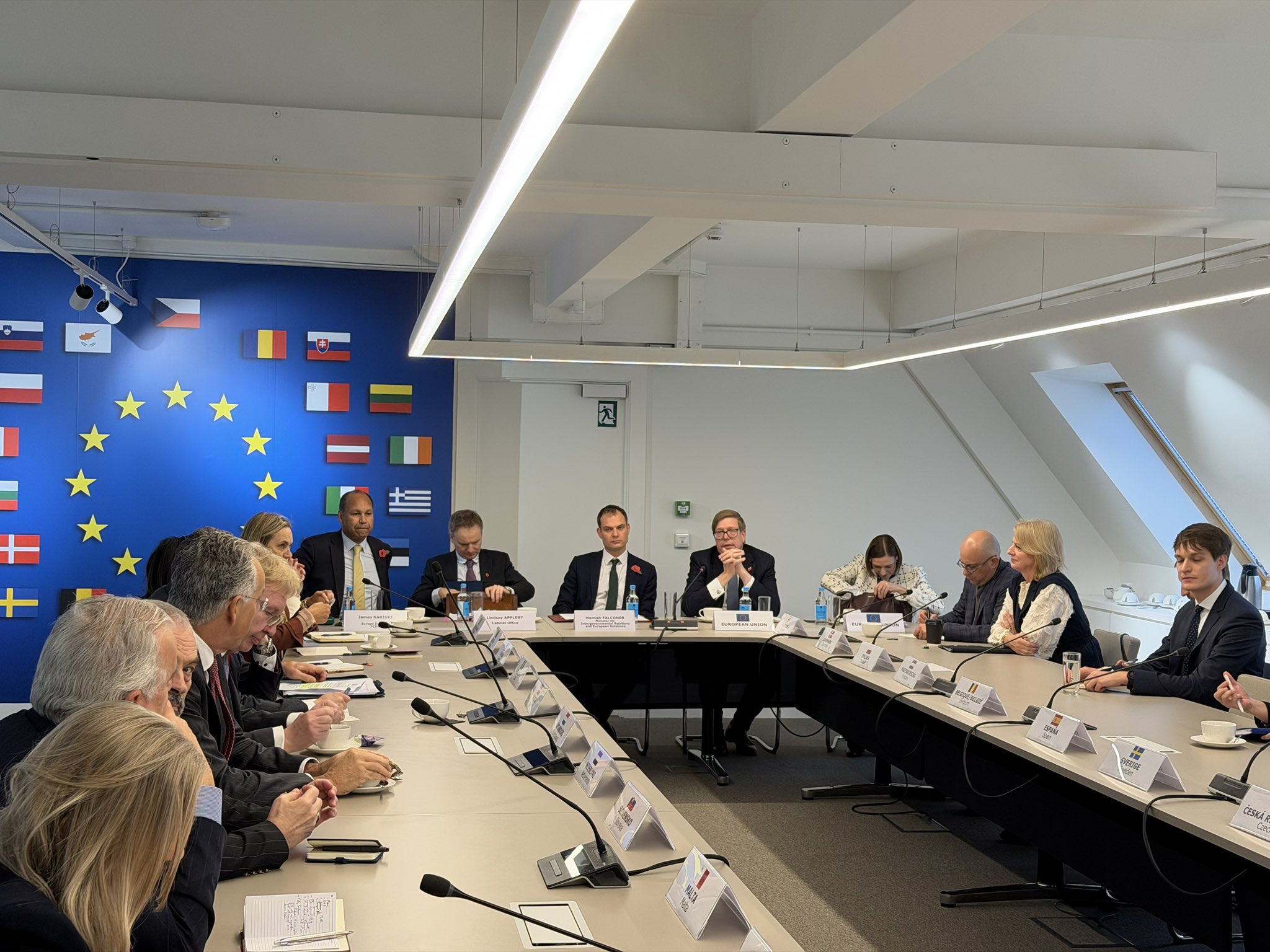
Hamish Falconer MP, UK Minister for Intergovernmental Relations and European Relations, attends a meeting of EU Ambassadors on 4 November. Source: Image shared by Jukka Salovaara, Ambassador of the European Union to the United Kingdom, via X.
SPS is one deal in a package of agreements that the UK and EU are seeking to formally agree at the summit – the others being deals to link emissions trading systems (ETS) and establish a new youth experience scheme.
Politico stated on Thursday (5 November), “Draft texts on all three main agreements have now been largely concluded and are making their way through the EU’s approval process.” However, the Guardian reported that member states are continuing to push for clarity over tuition fees for EU students, and that this could hold up the agreements on SPS and ETS.
Meanwhile, Sky News highlighted excerpts from a leaked draft statement drawn up by EU officials, which it described as “sections that the UK Government will likely reject”. The story was also covered in the Independent.
UK to back Windsor Framework additions on forced labour and AI
The UK Government will agree to add EU rules on forced labour and limited provisions of the EU Artificial Intelligence (AI) Act to the Windsor Framework, when the Withdrawal Agreement Joint Committee meets on Tuesday, 10 November 2026.
Hamish Falconer MP, Minister for Intergovernmental Relations and European Relations, announced the planned additions last Wednesday. The acts cover a ban on products made with forced labour (Regulation (EU) 2024/3015) and certain limited provisions of the EU Artificial Intelligence (AI) Act (Regulation (EU) 2024/1689), relating to the placing on the market of physical products with closely integrated AI systems.
Mr. Falconer explained it was the Government’s view that neither measure would create a new regulatory border between Great Britain and Northern Ireland, and therefore the decision could be adopted in the Joint Committee without the Assembly indicating its support by passing an applicability motion.
The UK Government has published an Explanatory Memorandum on each of the EU acts: AI and forced labour. The Department for Business, Innovation, Science and Trade has published guidance for businesses on the EU AI Act ahead of the Act’s inclusion in the Windsor Framework.
The EU is also expected to seek UK agreement at the Joint Committee to add two further acts to the Windsor Framework. These would establish a common data platform on chemicals (Regulation (EU) 2025/2455) and the European Health Data Space, covering access to and control of electronic health data (Regulation (EU) 2025/327).
Joint Committee wraps up decision on parcels

Also at the Withdrawal Agreement Joint Committee on Tuesday, the UK and EU will sign a joint declaration regarding parcels and the recently introduced ‘handling fee’ on goods imported into the EU.
Parcels which move into NI under Windsor Framework facilitations and are ‘not at risk’ of entering the EU will be exempt from the handling fee. This decision was expected, as previously covered in the 1 September and 5 October editions of Brexit and Beyond.
Separately, the UK and EU are expected to agree to add four decisions of the EU’s Administrative Commission for the Coordination of Social Security Systems to Part 1 of Annex I of the Withdrawal Agreement. These changes would apply across the UK. The UK Government describes these decisions as technical adjustments, with no anticipated policy implications or changes to social security entitlements for people covered by the Withdrawal Agreement.
The agenda for the Joint Committee meeting is available here.
Department publishes Windsor Framework research
The Department for the Economy published two research reports last week on the Windsor Framework. The independent research had been commissioned by the Department to look at the impact of the Windsor Framework on local businesses and to identify practical measures that could minimise friction in goods movements from GB to NI.
The first report, The Impact of the Windsor Framework on Northern Ireland Businesses by economist Maureen O’Reilly, finds that although the Windsor Framework has delivered much-needed stability for businesses, the commercial environment remains complex and administratively demanding. The report lists a number of challenges for business including growing divergence between UK and EU regulatory regimes, lack of clarity on new requirements introduced by EU regulations, and inconsistent behaviour from GB-based suppliers which can force firms to change sourcing arrangements. It notes that while some firms are starting to benefit from dual market access, for many the practical value is dampened by administrative complexity.
A separate report on Trade Facilitation Research, prepared by Fortior Insight, recommends a series of short, medium and longer-term actions to reduce friction in goods movements within the existing Windsor Framework arrangements. Based on evidence gathered between November 2025 and March 2026, the report finds: “…the majority of current pressures experienced by businesses arise not from the core legal architecture of the [Windsor] Framework but from implementation complexity, duplication of process, inconsistent interpretation and limited forward visibility.”
The research was covered by the BBC and the Irish News.
European Commission sets out priorities for 2027
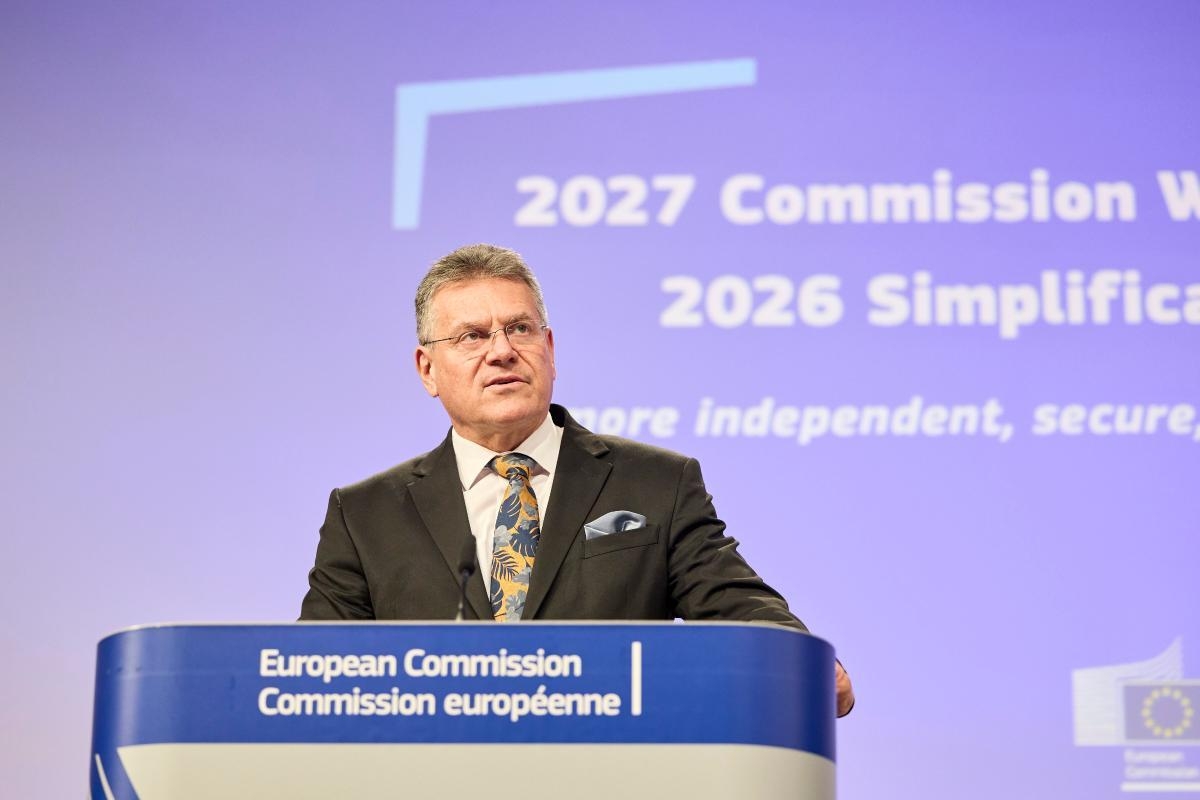
Maroš Šefčovič, European Commissioner for Trade and Economic Security, speaks at a press conference on the 2027 Commission Work Programme. © European Union, 2026. Source: European Commission - Audiovisual Service)
The European Commission published its 2027 Commission Work Programme (CWP) last Wednesday, 4 November 2026. The annual Work Programme sets out the Commission’s priorities for the year ahead, detailing both new policy initiatives and current pending proposals.
Entitled Standing up for one another, the 2027 CWP is structured around a series of broad policy priorities to strengthen the European Union's prosperity, security, resilience, democratic values and future development.
A notable feature of this year's programme is an emphasis on policy delivery rather than policy development. The Commission has indicated it intends to prioritise enforcement and simplification of existing measures and implementing current proposals such as the ‘European Product Act’ , the ‘Automotive Package’ and the ‘Industrial Accelerator Act’ (which includes the proposed ‘Made in Europe’ scheme).
The 2027 CWP lists 23 new initiatives, compared to 38 new initiatives in last year’s programme. Among the new proposals listed are: a ‘Digital Transformation, Simplification and Copyright package’ (expected Quarter 1 2027), ‘Review of the heavy-duty vehicles CO2 standards’ (expected Quarter 3 2027) and a ‘European Water Initiative’ (expected Quarter 2 2027).
The Commission is scheduled to present the 2027 Work Programme to the European Parliament on 11 November.
Assembly round-up

During Question Time on Monday, 2 November, the Economy Minister, Dr. Caoimhe Archibald MLA, was asked about differences in energy costs for businesses in Northern Ireland compared to Great Britain. The Minister referenced ongoing negotiations between the UK and EU regarding the UK’s participation in the EU’s internal electricity market: “One of the things that happened as a result of Brexit was the decoupling of the electricity market east and west. That has added costs to consumers here. Ongoing negotiations between the British Government and the EU will, hopefully, see progress on that issue. “
Dr. Steve Aiken MLA highlighted concerns regarding the EU’s Union Customs Code during Members’ Statements on Tuesday. While giving a cautious welcome to news that the UK Government and European Commission had concluded negotiations on an SPS agreement, he warned Members: “The implementation of the new Union Customs Code and the considerable divergence and disruption that it would bring, along with the resultant extra bureaucracy, mean that the cost of doing business with our largest market — our own country — will escalate.”
MLAs debated a Private Members’ Motion on Tuesday on Remote Working across the Island of Ireland.
Opening the debate, Pádraig Delargy MLA outlined the barriers to cross-border working and the negative impacts on workers: “Many of our workers living in the South and working in the North, or vice versa, face unnecessary bureaucracy because of payroll complications and the risk of double taxation.”
Mr. Delargy told Members that changes in work patterns since Covid and increased prevalence of remote working mean that frictions “now impact on more workers and businesses than ever”. He noted that Brexit had added to barriers by increasing divergence in employment legislation.
Responding to the debate, the Minister for Finance, John O’Dowd MLA, outlined representations made by Executive departments to the British and Irish Governments on actions to improve labour mobility, and welcomed commitments on tax made at the UK-Ireland Summit last March. The Minister also highlighted various projects funded through PEACE PLUS that aim to provide improved advice and support for cross-border workers and to address skills and mobility issues.
The motion was agreed without division.
Westminster brief
Negotiations with the EU also featured in debate at Westminster last week. The Chancellor of the Exchequer, John Healey MP looked ahead to the 20 November summit during Treasury Questions on Tuesday, where he said the UK is: “…faced with the chance to add billions to our economy and help with prices, with a new deal on food, drinks and farming. It is a chance to reinforce the collaboration on illegal immigration that will help to tackle the small boat smuggling gangs…”
At the Budget debate later on Tuesday afternoon, the Business Secretary, Jonathan Reynolds MP, told Members that deals on SPS products and emissions trading could add up to £9 billion a year to the UK economy. Mr. Reynolds added that the Government was also seeking to use the summit “to make progress on electric vehicle rules of origin, steel tariffs and economic security”,and described access to ‘Made in Europe’ as a “top priority … for the whole Government”.
This week in the Assembly
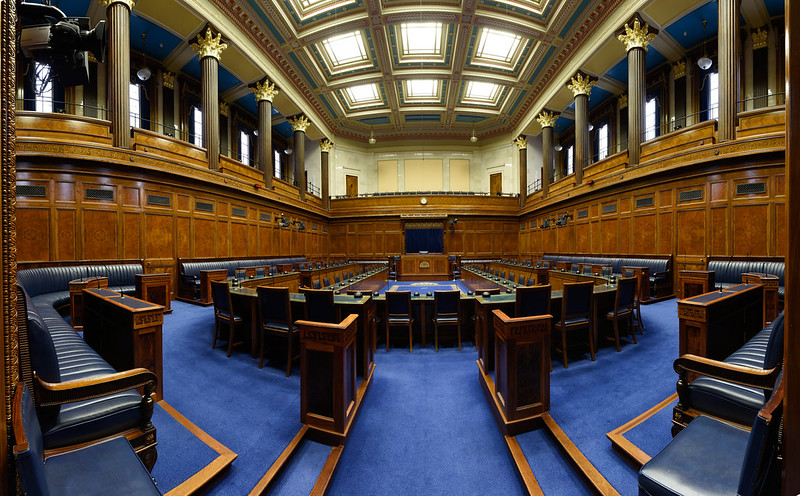
At Question Time this afternoon, the Minister for Finance, John O’Dowd MLA, provided an update on the Local Growth Fund.
The Agriculture, Environment and Rural Affairs Committee will receive an oral briefing from departmental officials on Thursday regarding a proposed statutory rule, The Hemp (Third Country Import) (Amendment) Regulations (Northern Ireland) 2026. Amendments are required to existing legislation following an update to EU rules on hemp imports which are directly applicable in Northern Ireland under Annex 2 of the Windsor Framework. The Department for Agriculture, Environment and Rural Affairs consulted on the proposed changes earlier this year.
The Windsor Framework Democratic Scrutiny Committee will also meet on Thursday to hear departmental oral evidence on two replacement EU acts:
- Regulation (EU) 2026/2382 amending Regulations (EC) No 1907/2006, (EC) No 1272/2008, (EU) No 528/2012, (EU) 2019/1021 and (EU) 2021/697 as regards defence readiness and facilitating defence investments and conditions for defence industry
- Directive (EU) 2026/2383 amending Directives 2009/43/EC and 2009/81/EC, as regards the simplification of intra-EU transfers of defence-related products and the simplification of security and defence procurement
Parliamentary planner

House of Commons
On Tuesday 10 November, the Business, Innovation, Science and Trade Committee will hear oral evidence as part of its inquiry into UK export support services.
House of Lords
The International Agreements committee will hear oral evidence on Tuesday 10 November as part of its inquiry on Trade in a turbulent world: how should the UK deploy its trade instruments?
European Parliament
On Wednesday, 11 November, the European Parliament will discuss the 2027 Commission Work Programme.
In case you missed it...

- Jim Allister MP argues that the UK Government is breaching commitments made in the Safeguarding the Union command paper, in an article for the Slugger O’Toole website: Why is the Government hiding the Irish Sea border report? Mr. Allister highlights that the Windsor Framework Independent Monitoring Panel, set up to scrutinise the operation of the ‘Internal Market Guarantee’, still has not published its report for the period July-December 2025.
- The Scottish Parliament has published an Intergovernmental activity update for July-September 2026. The update summarises inter-ministerial meetings over this period and provides information on policy and regulatory developments relating to intergovernmental relations and the UK’s internal market.
- The UK Government has also updated its Intergovernmental Relations dashboard with data on inter-ministerial meetings for the period April-June 2026. Minister Hamish Falconer MP informed the House of Commons via a written statement on 3 November.
- A briefing paper by Dr Anthony Soares, Director of the Centre for Cross Border Cooperation, looks at North-South cooperation, the Windsor Framework and the re-set of EU-UK relations. The paper argues that, “the ongoing reset of UK-EU relations needs to review how they are interpreting Article 11 of the Windsor Framework and its commitment to maintaining the necessary conditions for continued North-South cooperation.”
- The British Chambers of Commerce published a report on 2 November, The Future of UK-EU Relations: Key goals for the 2026 Leaders’ Summit.
- A Financial Times editorial (5 November) argues: The UK-EU reset is a deal worth doing - But Britain’s hard-pressed universities should not be left worse off.
- Lord David Frost writes in the Telegraph (paywall) on 3 November regarding an SPS agreement, Britain is paying an intolerable price for Labour’s Brexit reset.
- The Telegraph also reports (paywall, 7 November), British gene-edited crops subject to EU laws under Burnham deal.
- Writing in the Financial Times on 7 November (paywall), Professor Anand Menon reflects, The UK has few easy options for rejoining a ‘traumatised’ EU.
- The Times reports (paywall, 2 November): EU demands Britain scrap plans to deport more European criminals, as part of conclusions to be agreed at the 20 November summit.
- The Trade Specialised Committee on Goods, which forms part of the governance structures under the EU-UK Trade and Cooperation Agreement (TCA), will hold its sixth meeting on 11 November 2026. The agenda includes discussion on ‘Industrial policy developments’, including the EU’s proposed Industrial Accelerator Act.
- The sixth meeting of the Trade Specialised Committee on Customs Cooperation and Rules of Origin (which also forms part of TCA governance structures) will take place on 12 November 2026. The agenda includes an exchange of information on respective customs regimes, including an EU update on the Union Customs Code, and the State of play on UK legislative developments regarding customs treatment of low value imports.
- The 9th Summit of the European Political Community will take place in Dublin on 12 November, bringing together over 50 European Heads of State or Government and leaders of key European and international institutions, for informal political and strategic discussions.
- The European Council will also host an informal meeting of Heads of State or Government in Dublin on 13 November, where discussions will focus on artificial intelligence.


