Brexit and Beyond
23 October 2026

This week's bumper edition brings you up to speed with all the EU, Brexit and Windsor Framework news from Brussels to Belfast and beyond.
We take a closer look at Tuesday's key debate in the European Parliament on the upcoming EU-UK summit in November, as well as the recent summit of the European Council.
On Monday, the Assembly welcomed the Committee of the Regions - UK Contact Group to Parliament Buildings. We provide an overview of discussions from the Group's first visit to Belfast.
In our Assembly Round-up and Westminster Brief segments, we highlight some of the EU related statements, questions, and discussions that took place earlier this week.
Our regular ‘Parliamentary Planner’ highlights upcoming debates and discussion topics at Westminster next week, and as always, we link you through to the news stories and items of interest you may have missed.
As the Assembly prepares to enter recess next week, we too will be taking a short break. Thanks to all our subscribers for your continued interest in Brexit and Beyond.
- Assembly Round-up
- Windsor Framework Committee publishes report on EU Customs Code
- Economy Committee discusses student mobility
- Committee of the Regions - UK Contact Group meets in Parliament Buildings
- MEPs debate ‘EU–UK summit: renewed ambition for a closer partnership’
- European Council summit discusses energy costs and EU budget
- Congress of Local and Regional Authorities set to meet in Strasbourg
- House of Lords debates UK-EU agreement on Gibraltar
- Westminster Brief
- Parliamentary Planner
- In case you missed it…
Assembly Round-up
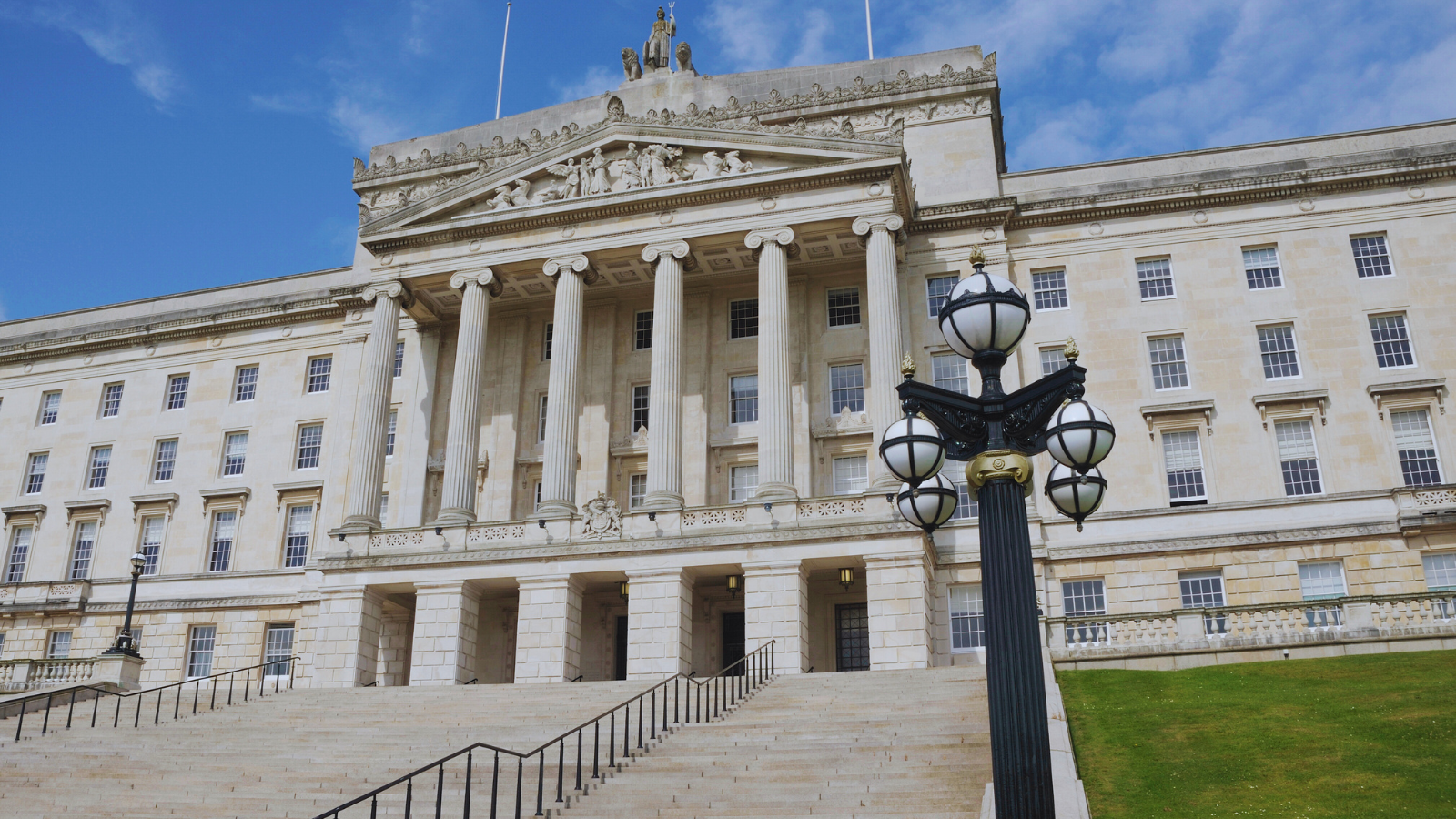
On Monday, the Minister for Finance, John O’Dowd MLA moved a Legislative Consent Motion (LCM) on the Cyber Security and Resilience (Network and Information Systems) Bill.
Opening the debate, the Minister told the Assembly that the main purpose of the LCM was to update and strengthen the existing Network and Information Systems (NIS) Regulations 2018, thereby improving cyber-resilience across critical sectors. The 2018 NIS regulations transposed relevant EU regulations, which Mr. O’Dowd noted had subsequently BEEN updated through the EU’s NIS2 directive.
Mr. O’Dowd advised Members that the Bill: “…provides an opportunity to strengthen the British Government's existing regime while minimising unnecessary regulatory divergence from the European Union.”
The Chairperson of the Committee for Finance, Matthew O’Toole MLA asked if the Minister could outline what work has been done to interrogate any particular cross-border impacts, noting that: “One of the important questions around the Brexit process was to ensure that moving data from North to South would not become an impossible burden.”
Responding, the Minister said that: “…cross-border data and the need for regulatory cooperation and coherence across the border… presents similar challenges to Governments across the globe.” He told the Assembly that there was broad alignment between the Bill and the approach that has been taken by international colleagues, including the European Union, adding that the: “The British Government continue to engage constructively on that issue with the EU through the UK-EU cyber dialogue.”
The question on the LCM was put to the Assembly and agreed to. You can read the full transcript here.
Windsor Framework Committee publishes report on EU Customs Code

Following its meeting yesterday (Thursday, 22 October 2026), the Windsor Framework (DSC) Committee published a report which sets out the conclusions of its inquiry into a published replacement EU act: Regulation (EU) 2026/2108 of the European Parliament and of the Council of 16 September 2026 establishing the Union Customs Code and the European Union Customs Authority, and repealing Regulation (EU) No 952/2013.
Brexit and Beyond covered the Committee’s recent evidence session on the published replacement act with Department for the Economy officials in our 5 October edition.
The Committee concluded in its report, that having considered the evidence received from the Department for the Economy and the UK Government as well as the responses to its public consultation, that the replacement EU act would not have a significant impact specific to everyday life of communities in Northern Ireland in a way that is liable to persist. You can read the Committee report in full here.
Economy Committee discusses student mobility
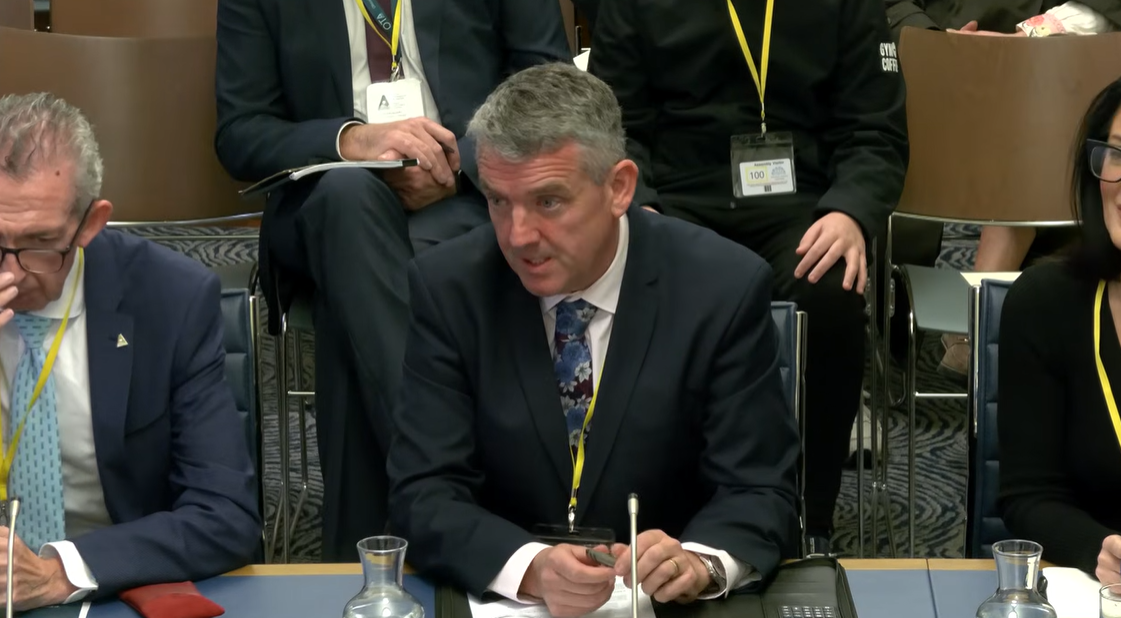
The Committee for the Economy heard evidence from Atlantic Technological University (ATU) on Wednesday, 14 October 2026 regarding a recent research project led by ATU on student mobility across the island of Ireland. The research sought to establish why so few students from Northern Ireland choose to study at higher education institutions in the Republic of Ireland (RoI), by identifying the barriers, opportunities and sustainable pathways that shape student decision-making.
ATU representatives outlined how the research had identified various factors as contributing to low student mobility, including: limited knowledge among careers advisors, students and teachers of what higher education opportunities are available in the Republic of Ireland; lack of familiarity with the Central Applications Office (CAO) process for applying to institutions in the RoI, and the perception that it is more difficult to navigate than UCAS (the UK process); and a failure of the admissions approach in the RoI to fully recognise student achievements where students have followed a mixed academic and vocational pathway.
You can watch the full meeting here.
Committee of the Regions - UK Contact Group meets in Parliament Buildings
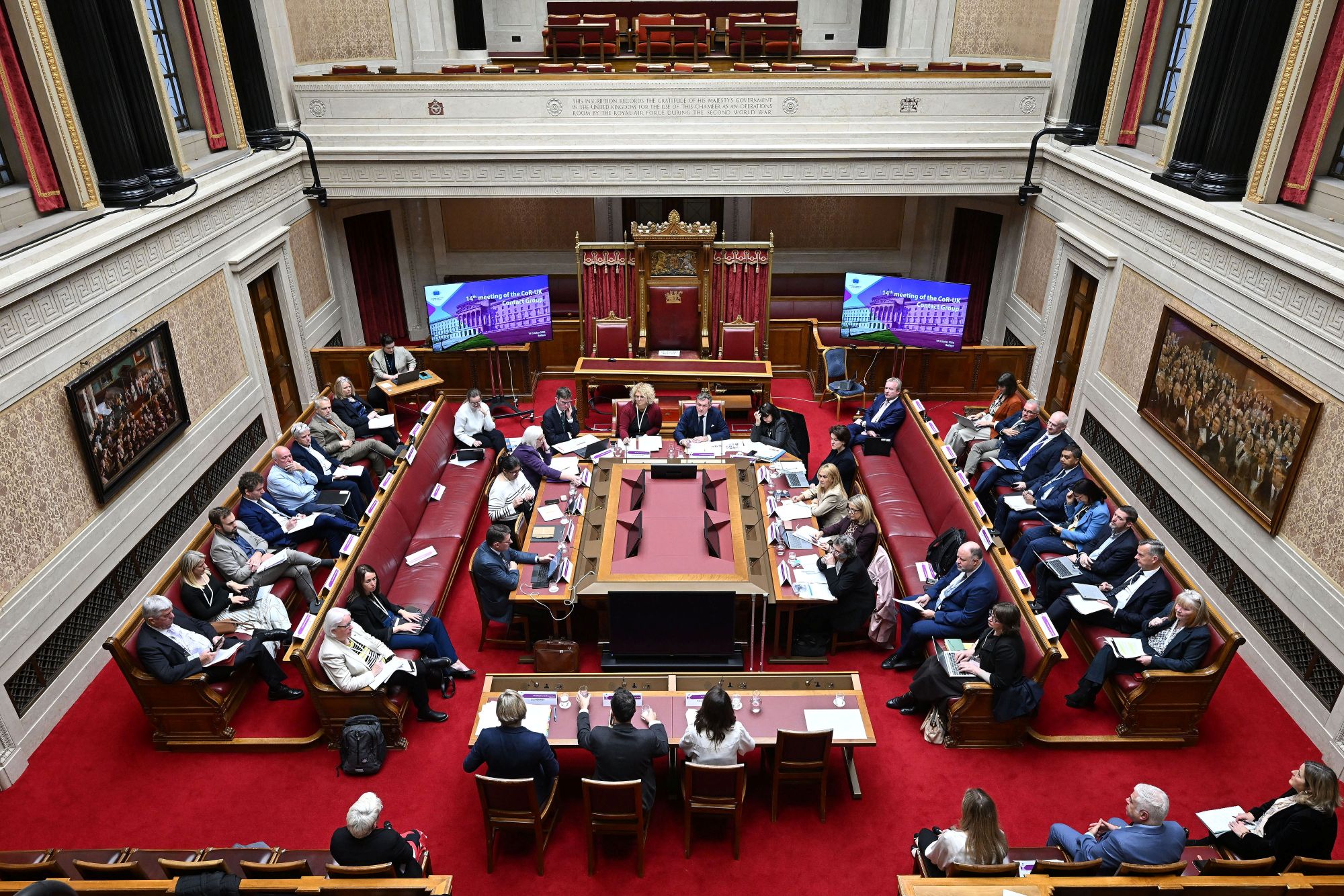
It was destination Parliament Buildings for the Committee of the Regions (CoR) – UK Contact Group this week, when it met in the Senate Chamber on Monday, 19 October.
Bringing together parliamentarians and representatives from devolved, regional, and local authorities across the UK and EU, the Contact Group provides a forum for dialogue and political partnership at the subnational level and to discuss matters arising from the UK’s withdrawal from the EU.
Delegates were welcomed by Edwin Poots MLA, Speaker of the Assembly, and Alderman Hazel Legge, President of the Northern Ireland Local Government Association (NILGA), before moving to a discussion on the State of Play in UK-EU relations. Members heard contributions from Dunstan Hadley, Deputy Director, Cabinet Office, UK Government; Lisa Hemmer, Political Counsellor, Delegation of the European Union to the United Kingdom; and Professor Katy Hayward, Queen's University Belfast.
This was followed by an Exchange of views on the Local and Regional Dimension of the EU-UK relationship, to inform a forthcoming CoR Opinion which has been requested by the Irish Presidency of the Council of the EU. The discussion was led by Gillian Coughlan, Head of the Irish delegation to the CoR and rapporteur responsible for drafting the Opinion.
Rounding off Monday’s proceedings, Dr. Anthony Soares, Director of the Centre for Cross Border Cooperation and Catriona McCarthy, Interim Director Education at the British Council, gave an overview of cross-border collaboration in higher education between UK and EU-based institutions.
While this was the Contact Group’s 14th meeting, it was the first time Members had met in Belfast, having previously met in London, Edinburgh, Cardiff and Brussels. You can watch the meeting in full here.
MEPs debate ‘EU–UK summit: renewed ambition for a closer partnership’
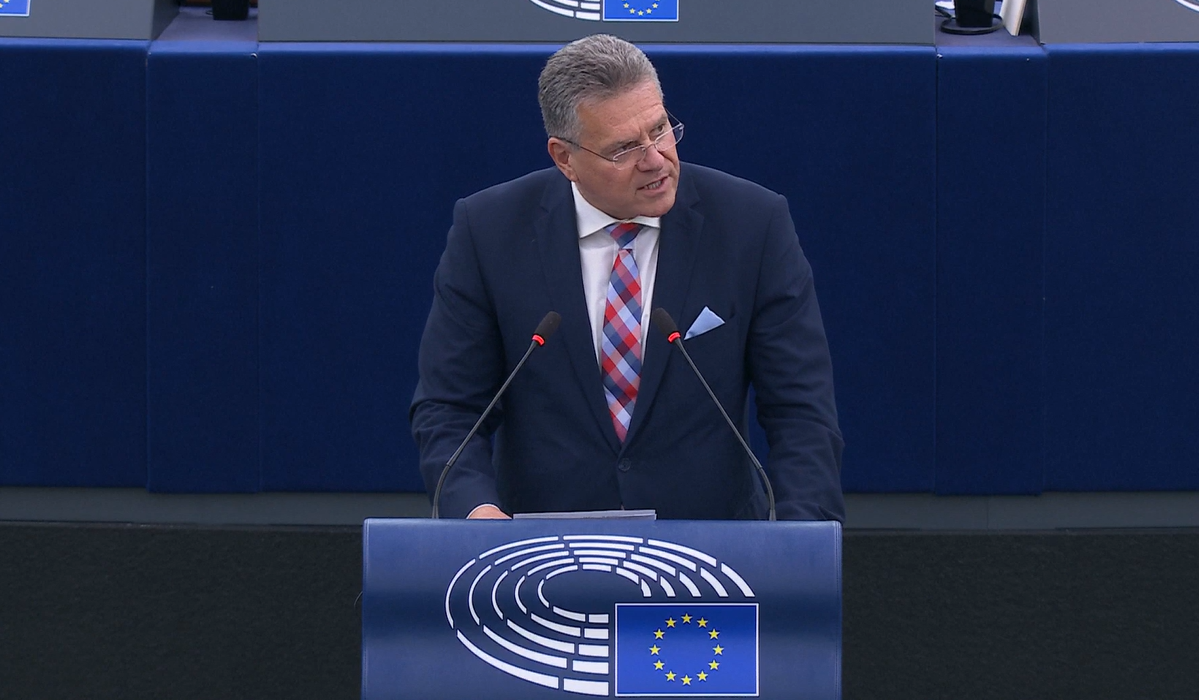
The EU Commissioner Maroš Šefčovič took centre stage in a European Parliament debate on Tuesday regarding the upcoming EU-UK summit scheduled to take place in Brussels on 20 November.
In his opening remarks Commissioner Šefčovič told MEPs: “Our partnership with the UK remains of vital importance in the current geopolitical, security and economic context.”
The Commissioner emphasised the importance of “full, timely and faithful implementation of the existing agreements”. Referencing the Windsor Framework directly, the Commissioner said that it: “…plays a vital role in avoiding a hard border on the island of Ireland, thus protecting the hard-earned gains of the peace process. Work continues towards ensuring its full delivery, as flexibilities for the benefit of people and businesses in Northern Ireland go hand in hand with the safeguards for the protection of the EU single market.”
Mr. Šefčovič reminded MEPs that by the time of the summit, the EU and UK aim to: “…complete negotiations on a common sanitary and phytosanitary area, a linkage between our emissions trading systems and the creation of a youth experience scheme.”
The Commissioner noted that negotiations had also begun on agreements regarding: “…the UK's participation in the EU's internal electricity market, and on an appropriate financial contribution from the UK towards reducing economic, social and territorial disparities between regions in the Union.” He added that these negotiations would continue beyond the summit.
Closing the debate, Ireland’s Minister of State for European Affairs and Defence, Thomas Byrne TD, speaking in his capacity as President-in-Office of the Council, said that he was very optimistic that: “…in the context of a renewed ambition for a closer partnership, the November summit can and will be a success.”
He welcomed that: “…the UK has repeated its commitment to the full, timely and faithful implementation of the Windsor Framework at the recent meeting of the Specialised Committee on the Windsor Framework…”, adding: “It is important now that we see further progress in the weeks and months ahead.”
Concluding the debate, the Minister told MEPs that he wanted to acknowledge: “…the importance of EU and UK joint engagement with stakeholders in Northern Ireland. This engagement remains crucial to understand the situation on the ground.” You can read a full transcript of Tuesday's debate here.
European Council summit discusses energy costs and EU budget
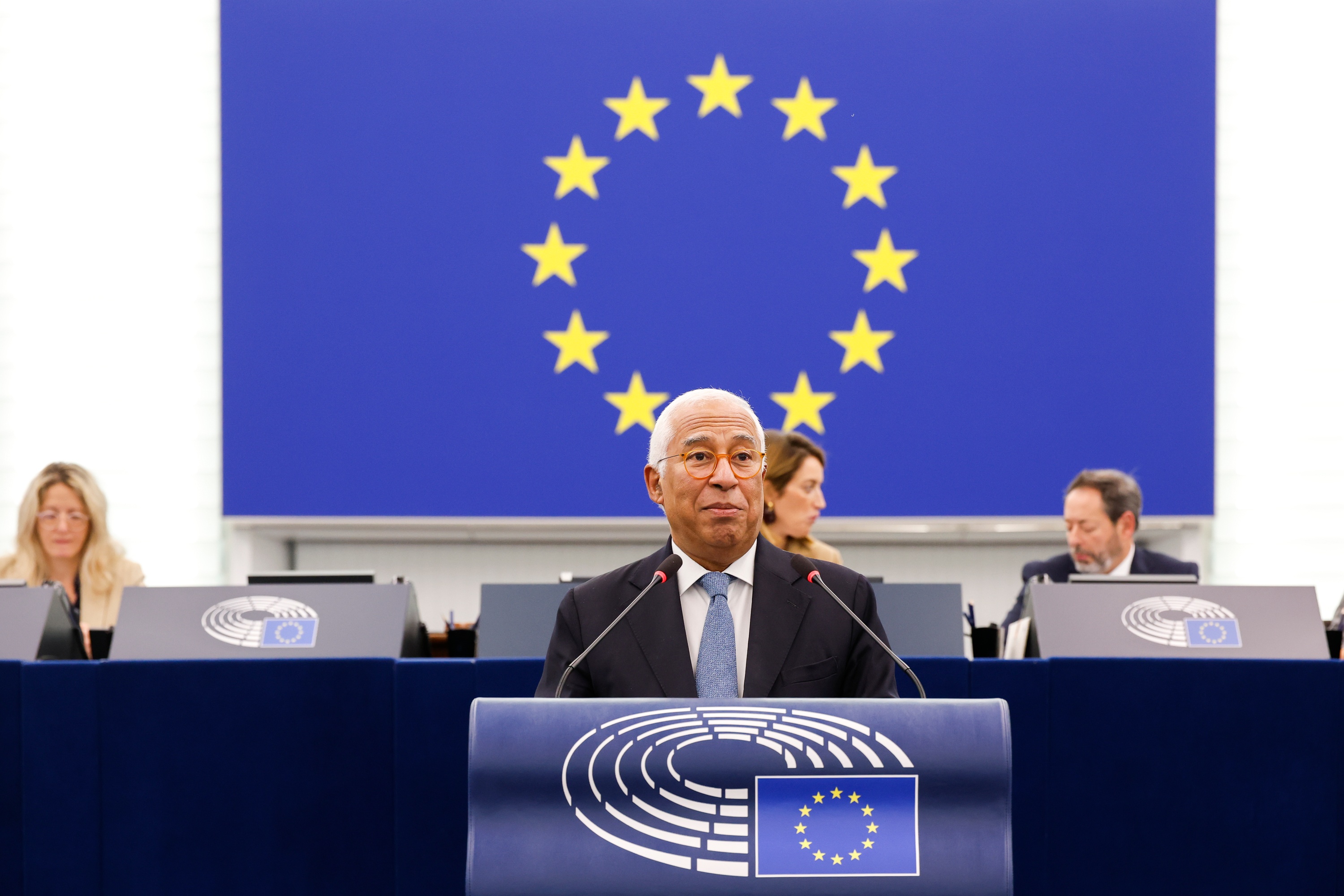
© European Union 2026 - Source : EP
Leaders of EU member states gathered in Brussels on 15-16 October 2026 for a summit of the European Council.
During the first day of the summit, Leaders debated measures to improve EU competitiveness and how to tackle high energy costs, the next multiannual financial framework (the MFF, or EU budget), enlargement and reforms. No agreement was reached on the MFF but the President of the European Council, António Costa announced an additional summit on 26 November to make further progress.
Discussions continued the next day as leaders focused on support for Ukraine, European defence and security, developments in the Middle East, and migration.
A briefing by the European Parliament Research Service summarises outcomes from the summit.
Congress of Local and Regional Authorities set to meet in Strasbourg
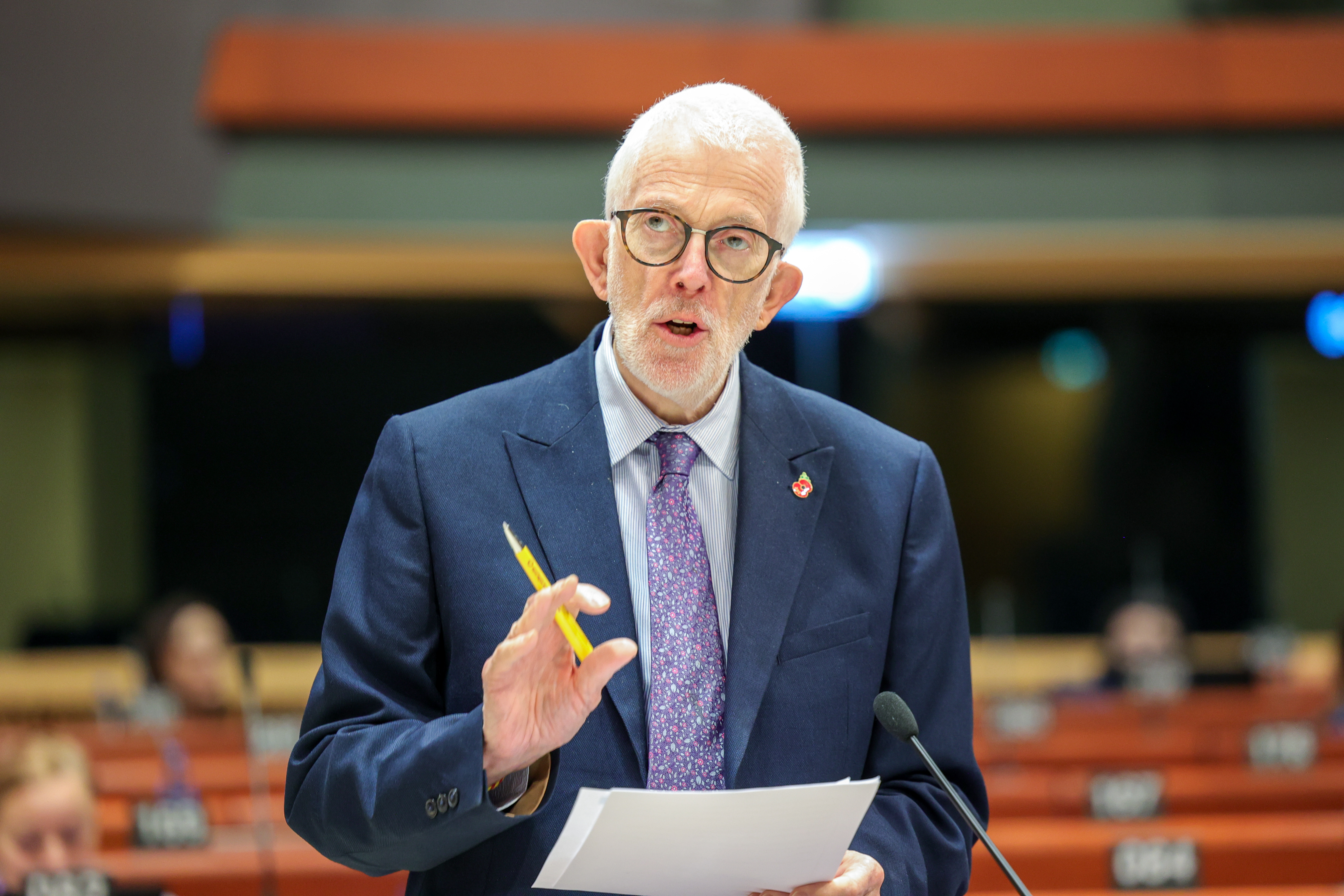
© Conseil de l'Europe, Strasbourg
Next week will see representatives of local and regional authorities from the 46 member states of the Council of Europe come together in Strasbourg, for the 51st session of the Congress of Local and Regional Authorities.
Among other agenda items, delegates are expected to adopt Congress priorities for 2026-2031 and will debate early-warning instruments against democratic backsliding at local and regional levels, as a Congress contribution to the Council of Europe’s ‘New Democratic Pact for Europe’. Further details of the meeting agenda are available on the Congress’ website.
The Congress of Local and Regional Authorities is an institution of the Council of Europe, and aims to promote human rights, democracy and the rule of law at the local and regional level across its 46 member states. The Assembly will be represented at the meeting by Stewart Dickson MLA.
House of Lords debates UK-EU agreement on Gibraltar
Peers discussed the recent UK-EU agreement on Gibraltar in the House of Lords Grand Committee last Tuesday, 20 October.
The debate followed scrutiny of the agreement by the House of Lords European Affairs Committee, which published its report on 14 October. The agreement itself was formally signed by the UK Government and European Commission on 14 July 2026. (Readers will recall we covered the Committee’s evidence sessions with the FCDO Minister, Lord Wood of Anfield, and the Chief Minister of Gibraltar, Fabian Picardo, in the 21 Septemberedition of Brexit and Beyond.)
Introducing the debate, Lord Barrow gave an overview of the European Affairs Committee’s scrutiny of the agreement. He noted that although the agreement does not require the approval of the House of Lords, the Committee had nonetheless chosen to report the agreement for special attention and debate in the House, “given the matter’s political importance in settling one of the major issues outstanding from Brexit.”
Lord Barrow reminded Members that the agreement had been operating provisionally since mid-July and pointed out that it had delivered on UK Government objectives: “There is naturally an enormous amount of detail in the agreement. But considering it in the round, noble Lords may wish to reassure themselves that the objectives set out by the Government in 2021, and reiterated by their successor Administration in 2024, have been met.”
Members emphasised the importance of respecting the wishes of the people of Gibraltar and noted that the Gibraltar Parliament had voted unanimously to accept the agreement.
However, peers raised broader concerns about the arrangements under the Constitutional Reform and Governance Act 2010 for Parliament to scrutinise international treaties. Lord Jackson of Peterborough told the House, “I believe we have a weak treaty scrutiny regime. The 21-day sitting period for ratification does not require Parliament to scrutinise, debate or even vote on treaties and is poor compared with other jurisdictions…”
Responding to the debate, the Minister, Lord Wood of Anfield, described the provisional application of the Treaty as an important milestone: “It provides a stable framework for Gibraltar’s relationship with the EU. It fully safeguards British sovereignty and the operational autonomy of British Forces Gibraltar. It is a long-term solution to one of the most significant outstanding issues arising from the United Kingdom’s departure from the EU.”
You can read the full debate here.
Westminster Brief
On Monday, during questions to the Ministry of Defence, the Minister for the Armed Forces, Louise Sandler-Jones MP told the House that: “At a time when Europe faces the most dangerous security environment since the cold war, defence co-operation is key.” The Minister said that the UK-EU security and defence partnership agreed at the summit in May 2025 was delivering on that.
In the House of Lords on Monday afternoon, Baroness Curran, the Parliamentary Under-Secretary of State in the Department for Energy Security and Net Zero, responded to a question on what assessment the UK Government has made of the United Kingdom’s ability to align with the European Union’s acquis on renewable energy.
She told peers that the: “… Government are negotiating an electricity agreement with the EU to reduce the cost of trading electricity with our European partners, strengthen the UK’s energy security, support investment in the North Sea and help deliver our clean power mission.”
Responding to points raised in relation to dynamic alignment and compliance with EU rules, Baroness Curran said: “…we will not agree to comply with any rules that we have not participated in making.” She added: “The UK-EU common understanding sets out that any agreement on state aid should provide for the UK’s dynamic alignment and that any further agreement on other dimensions requires constitutional parliamentary processes.”
During Question Time on Wednesday, the Parliamentary Under-Secretary of State for Northern Ireland, Sarah Owen MP updated the house on dual ‘type approvals’ for passenger vehicles and Northern Ireland’s automotive sector. Regular readers will recall that we have covered this issue on a number of occasions in Brexit and Beyond; including in articles published on: 24 November 2025; 1 December 2025 and 12 January 2026.
Ms. Owen said that Ministers and officials in the Northern Ireland Office were in regular contact with the Department of Transport on this issue and that the: “…Government remain committed to ensuring that vehicle supply remains as seamless as possible across the whole of the UK.” She added that this commitment was shown: “…when the Government secured fairness on the tax treatment of plug-in hybrid electric vehicles, supporting dealerships and car buyers.”
The Prime Minister, Andy Burnham MP was also in the Commons Chamber on Wednesday for PMQs. Looking ahead to the UK-EU Summit on 20 November, Mr. Burnham said it was an: “…opportunity for the House to come together and get a good deal for food producers, for farmers in this country and for Northern Ireland in relation to energy costs there…” Mr. Burnham also told MPs that the Government was “working to reduce the risks from the Made in Europe initiative, and we are making good progress there.”
During questions to the Department for Environment, Food and Rural Affairs (DEFRA) on Thursday, the Parliamentary Under-Secretary of State for DEFRA, Stephen Morgan MP told Members that the government was in the final stages of negotiating the sanitary and phytosanitary agreement with the EU. Mr. Morgan said that: “An SPS agreement could increase the volume of UK exports of major primary agricultural commodities to the EU by around 16%.”
A number of MPs raised concerns that dynamic alignment with EU regulations would restrict use of gene editing and precision breeding technology in the UK. Mr. Morgan told MPs, “I am committed to the Genetic Technology (Precision Breeding) Act 2023,” and noted that the SPS agreement would include a short list of exemptions. He added, “…the UK has been clear about the importance of being able to support the use of new and innovative technologies.”
Also on Thursday, during oral questions in the House of Lords, Lord Spellar asked the UK Government: “…what assessment they have made of the impact of WTO rules and EU regulations on their ability to prioritise British suppliers for public procurement.”
Responding, the Parliamentary Secretary, Cabinet Office, and Parliamentary Under-Secretary of State, Department for Digital, Culture, Media and Sport, Baroness Twycross told peers that in the last six months, the government had issued new guidance on steel transparency requirements and the use of the national security exemption, as well as revising their social value model to support local communities. She said: “These reforms will support growth, create more jobs and strengthen skills while complying with our international agreements, and we will continue to do more.”
In a follow-up question, Lord Browne of Belmont asked what the UK Government was doing to ensure that investment in zero-emission buses supports jobs in Great Britain and Northern Ireland, as well as greener transport. Baroness Twycross noted that the Department of Transport had recently published a 10-year pipeline for zero-emission buses, covering procurement through to 2035. She told peers that this would help: “…give British manufacturers the long-term capacity they need to plan ahead and invest in their workforce. It will benefit producers and manufacturers from across the UK.”
Parliamentary Planner

House of Commons
Questions to the Foreign, Commonwealth and Development Office next Monday include: What discussions he has had with European partners on defence and security; what steps the Minister is taking to strengthen the UK's relationship with European partners; and what assessment the Minister has made with Cabinet colleagues of the potential merits of negotiating a growth and defence partnership with the EU.
On Wednesday, Carla Lockhart MP will introduce a Westminster Hall debate on ‘Domestic Farming and Food Supply’.
House of Lords
During oral questions on Monday, Lord Redwood will ask the UK Government when they will publish a business plan for British Steel.
Also on Monday, Baroness Lloyd of Effra will introduce the Report Stage of the Cyber Security and Resilience (Network and Information Systems) Bill.
On Tuesday, during oral questions, Lord Macintosh of Eastwood will ask the government what steps it is taking to improve joint working between the UK Government and the devolved governments in the delivery of public services.
On Wednesday, Lord Hendy of Richmond Hill will move that the Railways (Interoperability in Northern Ireland) (Convention on International Carriage by Rail) (Amendment) Regulations 2026 are approved. These Regulations establish the conditions and technical specifications that railway equipment must satisfy before they can be placed on the market in Northern Ireland or put into service in a manner consistent with the Interoperability Directive (EU) 2016/797.
Baroness Hoey will move, as an amendment to the motion: “…but that this House regrets that the draft Regulations were not subject to a public consultation on the proposed divergence in rail regulations between Great Britain and Northern Ireland.”
In case you missed it…

-
The Youth Experience Scheme was back in the news this week, with both the Financial Times (may be behind a paywall) and Politico reporting that the EU will delay its demands on tuition fees until after the UK-EU summit in November.
-
An article published by Politico on 16 October, France, Germany strike bargain on Made in Europe, car emissions, explains: “Germany would accept stricter “Made in Europe” — or local content — requirements for the automotive industry in the proposed Industrial Accelerator Act… while France would back Berlin’s push to relax the EU’s plan to phase out new combustion-engine cars.”
-
Meanwhile, an article published in the Guardian on 14 October states: UK resists EU pressure to hit China with tariffs
-
The seventh meeting of the Separation Agreement Joint Committee between the UK and EEA EFTA states was held online on 20 October 2026. The meeting was attended by representatives from Liechtenstein, Iceland, Norway and the UK. The UK Cabinet Office published the joint statement from the seventh meeting.
-
The European Council published a press release on 21 October re: Simplification: Council agrees negotiating stance to cut red tape for small packaging producers. We covered this issue in the 01 September edition of Brexit and Beyond.
-
An article published by Politico on 20 October: Burnham needs public consent for his EU reset, says Brexit negotiator Barnier, reports: The former European Commissioner and French prime minister said the U.K. would be “welcome back, but there are conditions attached” if the British PM pushes to rejoin the EU.
-
A news article published in EUobserver on 20 October reports: MEPs open arms to UK rejoining EU to ‘correct’ Brexit mistake.
-
An article published by Prospect Magazine on 23 October: We’re all Eurorealists now argues that: Ten years after Brexit, even Eurosceptics have discovered Brussels’ value.
-
In a blog post for UK in a Changing Europe, How long does it take to join the EU? Why the UK in 2026 isn’t Finland in 1992(19 October), Simon Usherwood argues that should the UK seek to rejoin the European Union, the ‘accession’ process from application to membership is likely to take a long time.
-
In a further UK in a Changing Europe blog post published on 22 October: The future EU budget: reconciling immovable objects and unstoppable forces…or not, Iain Begg explains why negotiations over the next EU budget are proving so difficult.
-
In a news item published this week, the Belfast Chamber announced: Sue Gray among speakers at Belfast Chamber Forum exploring devolution, Windsor Framework and how NI can deliver “Good Growth”. The event will be held at the O2 Belfast on 4 November, further information including how to register can be accessed here.


