Brexit and Beyond
21 September 2026

Welcome to a packed edition of Brexit and Beyond. This week promises an electrifying read: in the House of Lords, peers debated regulations regarding batteries, while MLAs discussed discounts on household electricity bills.
Meanwhile in Strasbourg, the President of the European Commission delivered her 2026 State of the Union address with a call to make Europe’s future electric. Current affairs, in more ways than one.
- Assembly Round-up
- Trading Places at Westminster Hall
- Lords approve regulations relating to inquiry timelines for Windsor Framework DSC
- Battery regulations spark Lords debate
- Rock Solid? Lords Committee takes evidence on Gibraltar agreement
- Destination Parliament Buildings for Northern Ireland Scrutiny Committee
- Westminster Brief
- "It was the best of times, it was the worst of times…"
- Yes We Can(ada)?
- Was it summit I said?
- This week in the Assembly
- In case you missed it…
Assembly Round-up
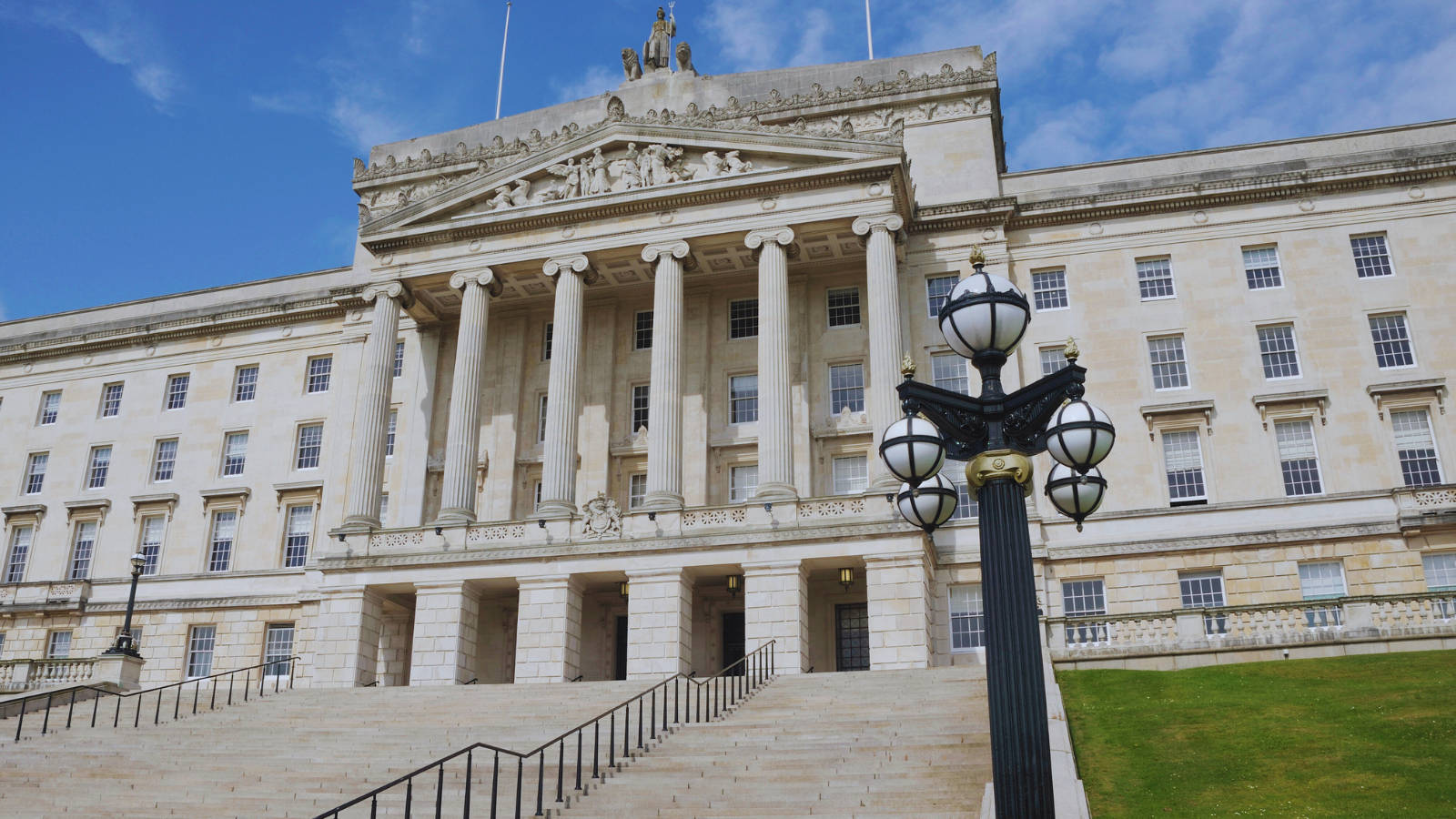
At Question time on Tuesday, 15 September, the Minister for Finance, John O’Dowd MLA explained how this department is engaging with the UK Government regarding the removal of VAT on household electricity bills. Mr. O’Dowd told Members that he had written to the Chief Secretary to the Treasury on 24 July urging her to progress the necessary steps to secure European Commission agreement to extend the VAT reduction to Northern Ireland from 1 October.
He added that the UK Government had advised it was unlikely that approval from the European Commission to apply the 0% VAT rate would be secured in time, and thus the Department for the Economy had developed and submitted alternative scheme proposals to Treasury.
In a press release issued by the Department for the Economy on Thursday, 17 September, the Minister, Dr. Caoimhe Archibald confirmed that around 860,000 households in Northern Ireland will receive a £63 discount off electricity bills, from 6 October. The Department advised that: “The Household Electricity Discount Scheme will continue in 2027 and 2028, with the value of future discounts confirmed ahead of payment.”
On Thursday morning, the Committee for Communities heard evidence from the Northern Ireland Community and Voluntary Association (NICVA) on the impact of Local Growth Fund Cuts on the voluntary and community sector. NICVA opened the evidence session by presenting the findings of its report, Capturing the impact of Local Growth Fund Cuts.
Jenny Potter, Director of Policy & Insight at NICVA told Members that the report set out the findings of a scoping exercise conducted by NICVA across members of the Economic Activity Coalition to capture the emerging impacts of the transition from the UK Shared Prosperity Fund to the Local Growth Fund.
Ms. Potter told Members that: “Despite Northern Ireland’s persistent issues of high levels of economic activity, widening disability employment gap and concerns regarding youth unemployment, investment in voluntary and community sector led employability and economic inactivity provision has seen a sustained decline.” She stated that this had fallen from: “…more that £40 million under the ESF [European Social Fund] to £25 million under the UK SPF [Shared Prosperity Fund] to now only £9.2 million under the Local Growth Fund.”
She told Members that this was not just about a loss of funding for voluntary and community organisations, but “…it was also a story about the loss of capacity to support people who face the greatest barrier to employment, participation and opportunity across Northern Ireland.” You can watch the meeting in full here.
Trading Places at Westminster Hall
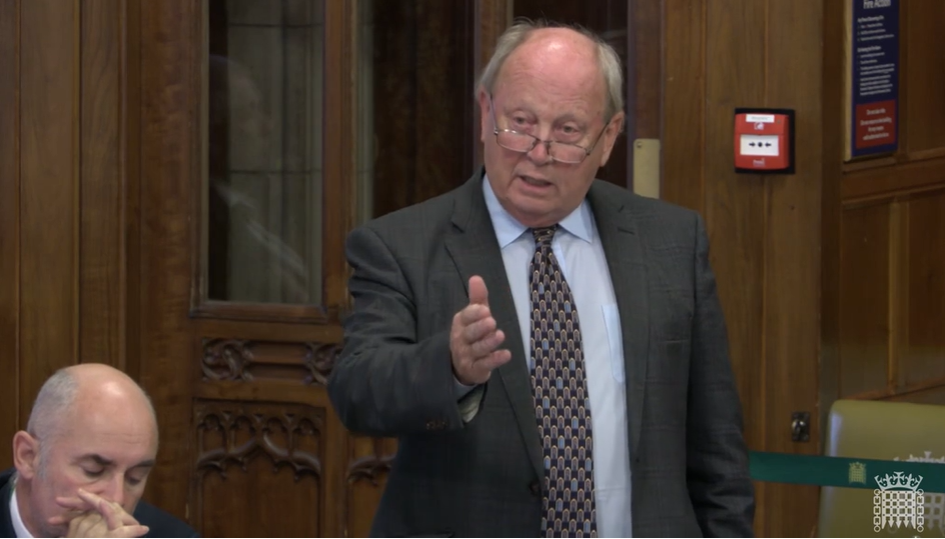
The Windsor Framework was back on the agenda last Tuesday, when Jim Allister MP introduced a Westminster Hall debate on Goods Trading: Great Britain and Northern Ireland.
Opening the debate, Mr. Allister told MPs that as a consequence of the Windsor Framework: “…the EU’s customs union requires Great Britain, the other part of this United Kingdom, to be treated and regarded in trade terms as a third or foreign country, and from that flows the iniquitous Irish sea border—a full international customs, sanitary and phytosanitary and trade border—which is truncating and partitioning this United Kingdom.”
On the issue of trade, Mr. Allister cited statistics from a 2025 Federation of Small Businesses survey, which he said noted that: “…34% of GB companies that used to trade with Northern Ireland have ceased trading [with NI]. Why? Because this paperwork and this checking is such a disincentive that it is not worth the bother.”
He further stated that when the Windsor framework was introduced, Article 16: “…promised that if there were any trade diversion, the Government would step in and sort it out with the EU. There is lamentable and demonstrable trade diversion, but the Government are blind and deaf to the issue, refusing to act.”
Responding to the debate, The Minister for Science, Innovation and Investment, Chris McDonald MP told MPs: “Northern Ireland’s goods exports within the UK and with the European Union have been strong. In fact, Northern Ireland’s exports to the European Union have outperformed the rest of the United Kingdom, increasing since 2019, whereas in the rest of the United Kingdom, exports have decreased in that period.”
He outlined steps that the UK Government has committed to taking in response to Lord Murphy’s Independent Review of the Windsor Framework: “We are building on the comprehensive support available through the free Trader Support Service beyond 2026, and work is under way to progress the £16.6 million regulatory support service, which will provide clear and targeted support to help businesses to trade across the UK and EU markets and to benefit from Northern Ireland’s unique dual market access.”
Concluding the debate, Mr. McDonald said: “Sales from Northern Ireland to the rest of the UK reached £10.9 billion in 2024, and that figure was up by 0.8% on 2023. The UK internal market is expanding, not shrinking.” He added that the UK Government is: “…committed to maintaining and smoothing the flow of goods between Great Britain and Northern Ireland run through all the points that we are making about how we interact with the Windsor framework.” You can read the full transcript of the debate here.
Lords approve regulations relating to inquiry timelines for Windsor Framework DSC
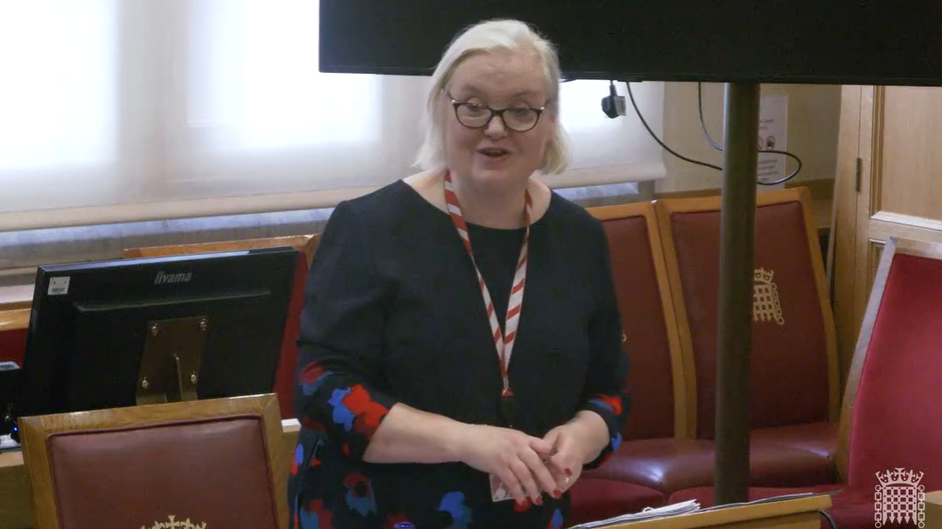
Last week the House of Lords approved regulations which would provide more flexibility over timelines for the Assembly’s Windsor Framework Democratic Scrutiny Committee (DSC) to scrutinise ‘replacement’ EU acts.
Baroness Twycross, Parliamentary Secretary at the Cabinet Office, opened the debate on the Withdrawal Agreement (Windsor Framework and Governance) (Amendment) Regulations 2026 in House of Lords Grand Committee on Monday 14 September. She told peers that the SI takes forward commitments made in response to Lord Murphy’s Independent Review of the Windsor Framework, as explained in last week’s Brexit and Beyond.
The Minister added that the regulations will also “allow the UK to agree to decisions and recommendations at the [Withdrawal Agreement] Joint Committee between meetings in a process known as written procedure”. She noted this would align governance procedures under the EU-UK Withdrawal Agreement with those under the Trade and Cooperation Agreement. Finally, she stated that the regulations seek to support the DSC by clarifying the duty on Northern Ireland departments and Ministers to comply with reasonable requests for information from the DSC.
Lord Bew welcomed the regulations, noting the SI is part of a process by which the Windsor Framework can “introduce more suppleness in facing up to the difficult question of Brexit.” He cautioned that despite the Windsor Framework’s “many, many imperfections … there is a danger, within Northern Ireland, of not coming to terms with the fact that the Windsor Framework has actually effected positive changes.”
Baroness Ritchie told Members that she supported the changes introduced by the regulations, “as they will bring greater accountability from the work carried out by the Democratic Scrutiny Committee.”
However, Lord McCrea raise concerns that the adoption of written procedure weakens Ministers’ democratic accountability for decisions made in the Joint Committee. He told peers that the original provision precluding use of written procedure in the Joint Committee was “to ensure that there is full ministerial accountability … then for confidence that there is full accountability it should have remained.”
You can read the debate in full here.
Battery regulations spark Lords debate
© Copyright European Union , 2023
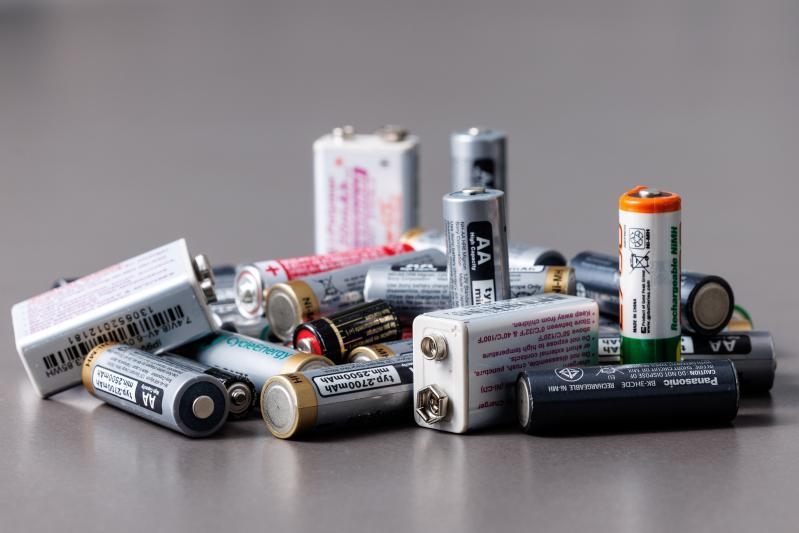
The House of Lords approved the Batteries (Placing on the Market) (Northern Ireland) Regulations on Tuesday 15 September, following a debate where several Lords raised concerns over the operation of the Windsor Framework.
Baroness Hayman of Ullock, the Parliamentary Under-Secretary of State at the Department for Environment, Food and Rural Affairs, explained to peers that the EU Batteries Regulation already applies in Northern Ireland under the Windsor Framework, and that the statutory instrument does not introduce new policy or significant new regulatory burdens: “It ensures the obligations that are already in force in Northern Ireland can be properly enforced. Without these regulations, we would have rules on the statute book but no effective means to uphold them…”
Lord McCrea of Magherafelt and Cookstown moved a motion to regret: “that the draft Regulations impose a different legal requirement for the placing on the market of batteries in Northern Ireland in order to comply with the Windsor Framework; further undermine the integrity of the UK internal market; and could lead to higher costs for companies based in Northern Ireland.” He expressed concerns over the enforcement provisions in the regulations and divergence between regulatory regimes in GB and NI.
Lord Browne of Belmont warned of the impact of regulations on small businesses, telling peers: “A family-run wholesaler or retailer in Northern Ireland does not have a dedicated compliance department or a team of lawyers on hand to interpret evolving rules. Every new requirement means additional paper, additional administrative time, additional record keeping and, of course, additional cost.”
Lord Elliott of Ballinamallard also queried the costs for businesses and requested an update on progress towards the ‘one-stop shop’ service for businesses, as recommended in Lord Murphy’s Independent Review of the Windsor Framework. He noted that the one-stop shop service “…will not resolve the issue of divergence between the UK and Northern Ireland, but it would, at least in the meantime, help small and medium-sized businesses in Northern Ireland by signposting to them so that they get the proper help and security they may need.”
The Minister addressed concerns regarding the impact on the UK internal market, telling peers, “On divergence, I reassure the House that, in practice, the impact will be minimal because the reality is that most manufacturers already design their products to meet EU standards wherever they are sold.” She emphasised that costs to businesses associated with the SI are “extremely low”. The Minister also confirmed that the UK Government intends to consult this year on introducing an aligned regime across the whole of the UK that would be consistent with the EU Batteries Regulation.
You can read the debate in full here.
Rock Solid? Lords Committee takes evidence on Gibraltar agreement
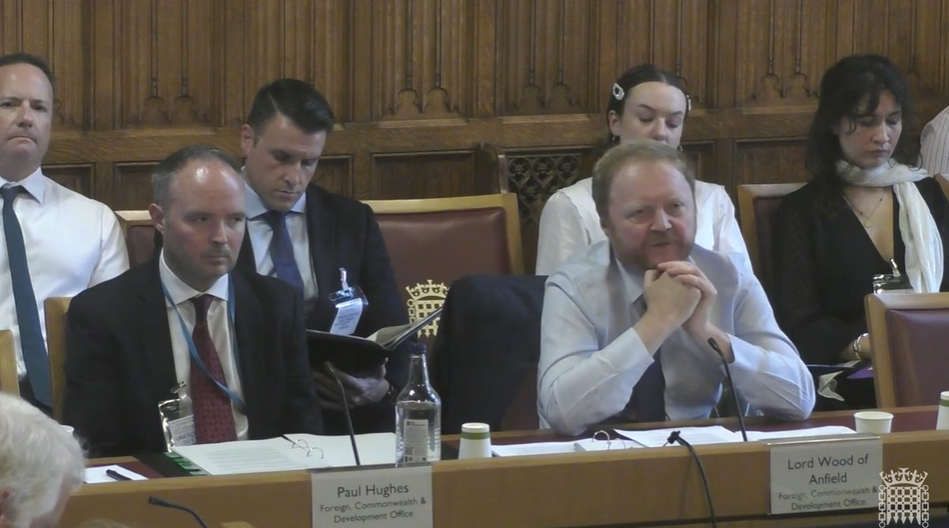
The House of Lords European Affairs Committee met on Tuesday, 15 September to discuss the UK-EU Agreement on Gibraltar, which was formally signed by the European Commission and UK Government on 14 July 2026. Members took evidence from Lord Wood of Anfield, Parliamentary Under-Secretary of State at Foreign, Commonwealth & Development Office (FCDO), Paul Hughes, Deputy Head, Southern Europe Department at the FCDO and the Hon Fabian Picardo KC MP, Chief Minister at Government of Gibraltar.
Opening the evidence session, Lord Wood told peers that the treaty provided: “… a fluid border between Gibraltar and Spain.” He added that the solution cemented: “Gibraltar’s economy and way of life and the principle of sovereignty.” He noted that while previous ‘bridging measures’ (informal agreements between the UK, Gibraltar and Spain, in place prior to the treaty) had been successful, they were not sustainable in the long term.
Lord Wood outlined the joint governance bodies established by the treaty, including a ministerial-led co-operation council and three specialised committees with the EU similar to structures under the Withdrawal Agreement.
Responding to questions on whether the agreement would affect sovereignty, Lord Wood said that: “Article 2 of the treaty has a specific clause that explicitly makes clear that its contents do not impact the sovereignty position and cannot be used to challenge it.” He added that the agreement was about the technical arrangements that apply and which govern Gibraltar’s relationship with the EU.
A further discussion centred upon Gibraltar’s decision to establish a customs union with the EU in regard to trade in goods, with the issue of sovereignty being raised again by Lord Moynihan who questioned whether this would “remove the territory permanently from British trade policy.” Responding, Lord Wood said that: “…the customs arrangements, as with the border arrangements, were chosen by the Government of Gibraltar.” He added: “These are choices that were made in pursuit of the goal to have a land border that was open in a way that would support the Gibraltar economy.”
Speaking on the customs arrangements with the EU, the Chief Minister at Government of Gibraltar the Hon Fabian Picardo told peers: “Gibraltar is geographically, and therefore physically, attached to Europe, so the things that move physically, such as people and goods, need to be able to flow with Europe in a very fluid fashion.”
He highlighted that since 2016; Gibraltar could not import any fresh produce that is not able to enter the EU under the current arrangements for the UK. Mr. Picardo said that he hoped that the UK Government’s reset with the European Union would: “…include an SPS agreement so that anything produced in the UK will be able to come into Gibraltar.”
You can read both evidence transcripts in full here and here.
Destination Parliament Buildings for Northern Ireland Scrutiny Committee
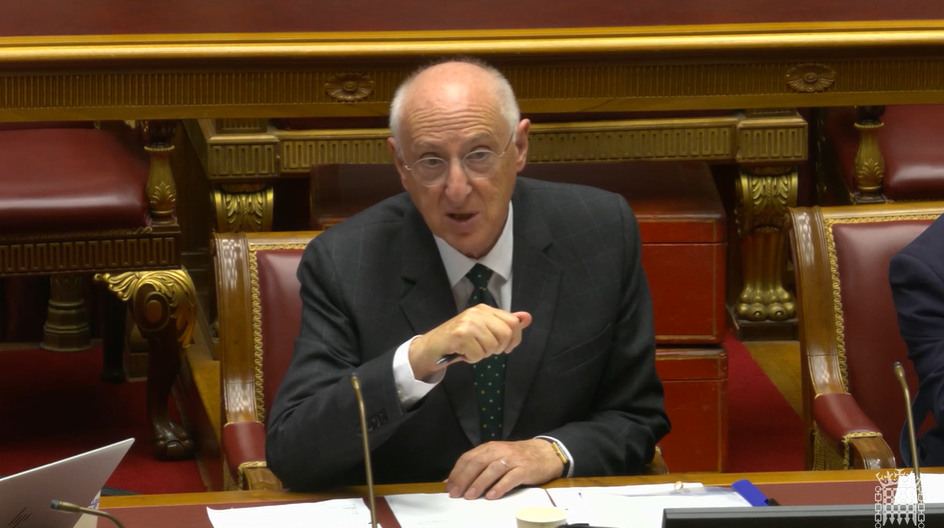
Last Thursday, the House of Lords Northern Ireland Scrutiny Committee continued its inquiry on Article 2 of the Protocol/Windsor Framework, taking evidence from political parties at Parliament Buildings, Stormont. Providing evidence to peers were: Jon Burrows MLA, Matthew O'Toole MLA, Jim Allister MP and Gavin Robinson MP.
The meeting was covered by Press Association with articles published in the Belfast Telegraph, the Newsletter and on Belfast Live.
A transcript of the meeting will be published on the Committee’s webpage in due course.
Westminster Brief
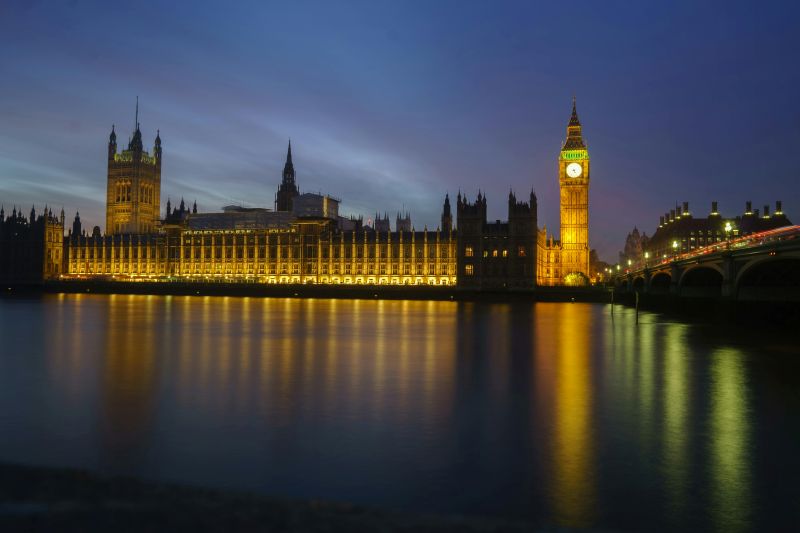
On Monday, in the House of Commons, the Secretary of State for Business, Innovation, Science and Trade, Jonathan Reynolds MP delivered a statement on Speciality Steel UK, during which he outlined the Government’s planned proposal for the public acquisition of the company. Mr. Reynolds told MPs that the European Union’s change to its own trade defence measures on steel had resulted in some adverse consequences for the UK. He added that he had spoken directly to the EU Commissioner Maros Šefčovič about the issue, noting that they were: “… seeking a resolution specifically on steel, which I believe would be in our interests and those of the European Union.”
Jim Shannon MP raised the importance of imported steel to manufacturing, construction and engineering industries in Northern Ireland. He underlined that: “…every effort must be made to ensure that Northern Ireland is not economically cut off by steel import arrangements protection for GB, and that this must not be at a cost to businesses in Northern Ireland.”
Responding, the Secretary of State accepted that the movement of steel between Northern Ireland and Great Britain was a: “…complex situation that reflects the Windsor [Framework].” However, he added that: “There are things, particularly in the reset of the Government’s relationship with the EU, that Northern Ireland stands to gain from, and this is one of those areas…” You can read the full statement and MPs’ questionshere.
"It was the best of times, it was the worst of times…"
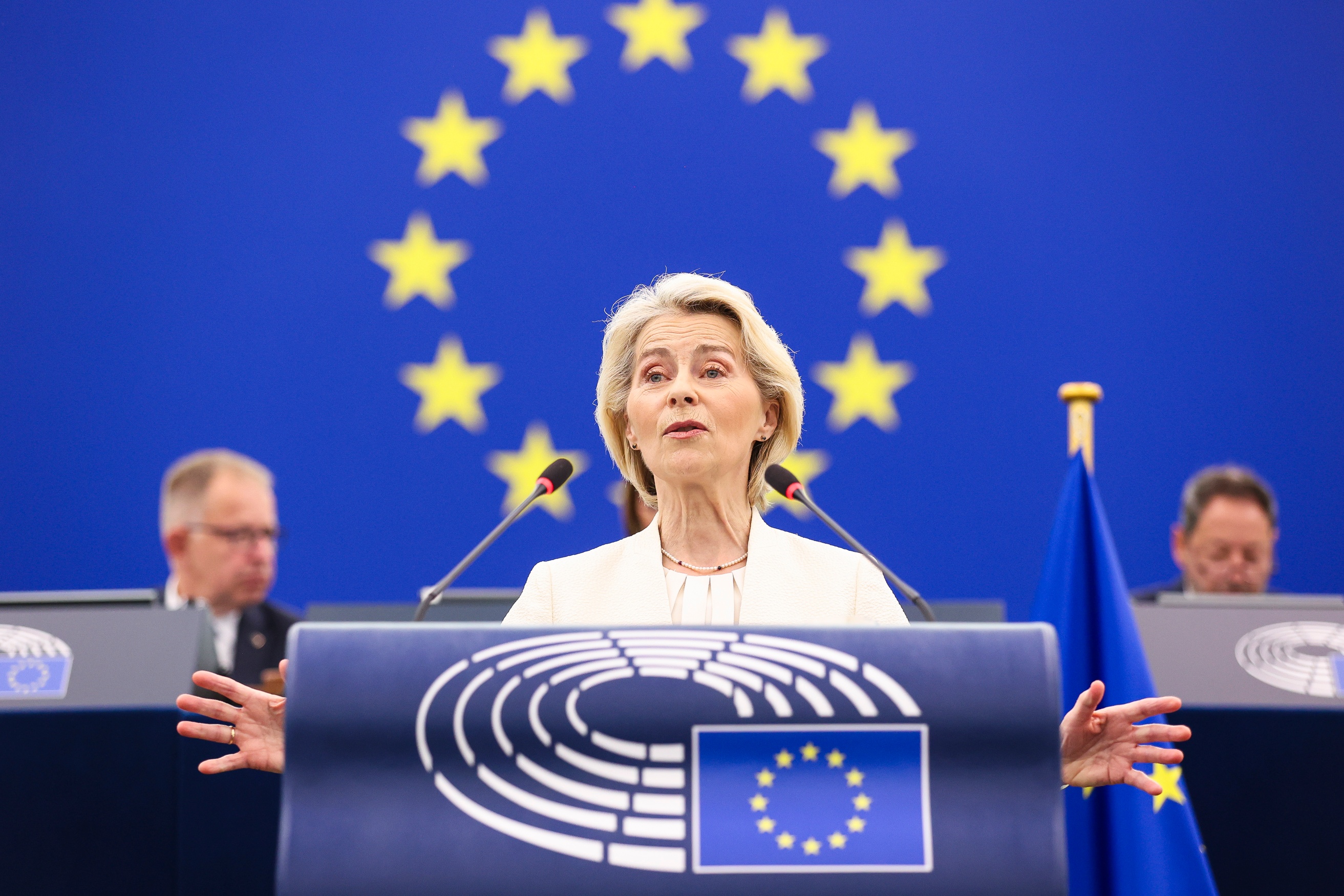
© Ursula von der Leyen gives her State of the Union address in Strasbourg, France on Sept. 16, 2026. | Fred Marvaux/EP
Opening her 2026 State of the Union Address with a quote from Dickens, the President of the European Commission, Ursula von der Leyen told MEPs: “…it is also a fair description of the world we live in. The speed of change is incredible. The challenges exceptional.”
The President’s speech outlined her main priorities and flagship initiatives for the year to come across a wide range of areas including competitiveness, defence, adapting to climate change, and protecting children from social media. The President told MEPs that “…kickstarting Europe's economy is our number one priority…”.
She referenced cooperation with the UK in the context of Artificial Intelligence, stating that the EU will: “…step up together with our like-minded partners like Canada, the United Kingdom and others. We want to team up on model evaluation, verification, early warning, AI security and much more.”
In what became the leading news story across global news platforms, the President, directing her remarks to the Canadian Prime Minister, Mark Carney who was present at the address, said: “I would like to work with you on opening the door for Canada to be the first associate member of the EU.” She added: “We share one ocean, one set of values, one way of seeing the world. And we will now build our shared future as well…”
You can read a transcript of the President’s address in full here. The Commission has published a range of supporting documents setting out its plans in more detail.
The Prime Minister of Canada, Mark Carney, addressed the European Parliament the following day and his speech can be viewed here.
Yes We Can(ada)?
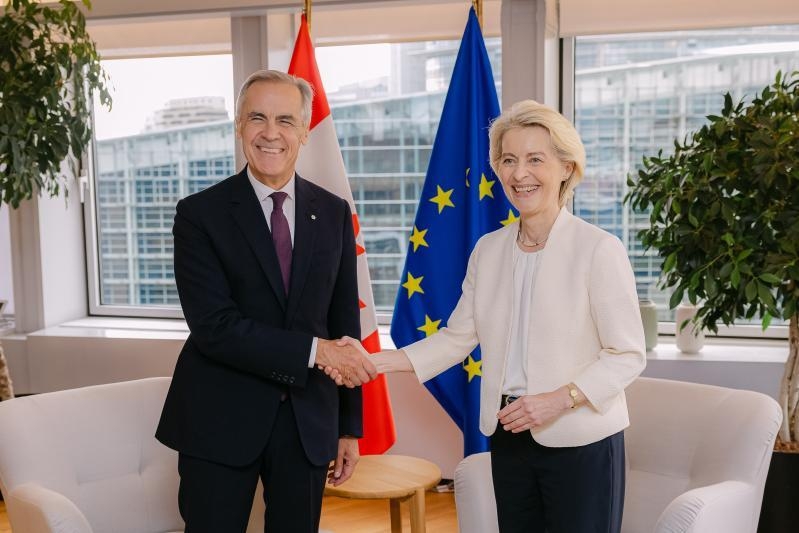
© Copyright European Union , 2026 Mark Carney
President Ursula von der Leyen’s offer of associate EU membership to Canada was covered by a number of media outlets including Politico, The Financial Times (behind a paywall), Euronews, theBBC,The Guardianand The Spectator (behind a paywall).
A number of commentators discussed potential implications for the UK. In a blog post published by UK in a Changing Europe on 18 September, Fabian Zuleeg argues that even if Canada does become an ‘Associate Member’ of the EU, this is not a future model for the UK-EU relationship as the starting points for the UK and Canada are very different.
Joel Reland, Senior Researcher at the UK in a Changing Europe, points out, “We simply do not know what associate membership means”. He notes that while it could set some important precedents for the UK, it is not likely to create a shortcut back into the single market.
Jill Rutter, Senior Fellow at the Institute for Government, suggests, “Even if it does not yield instant benefits for the UK, it is good news that one part of the EU at least is showing that it can think more widely about options for new configurations”. However, she warns that this also comes with a risk that the EU spends more time and effort on relations with Canada than with the UK.
Was it summit I said?
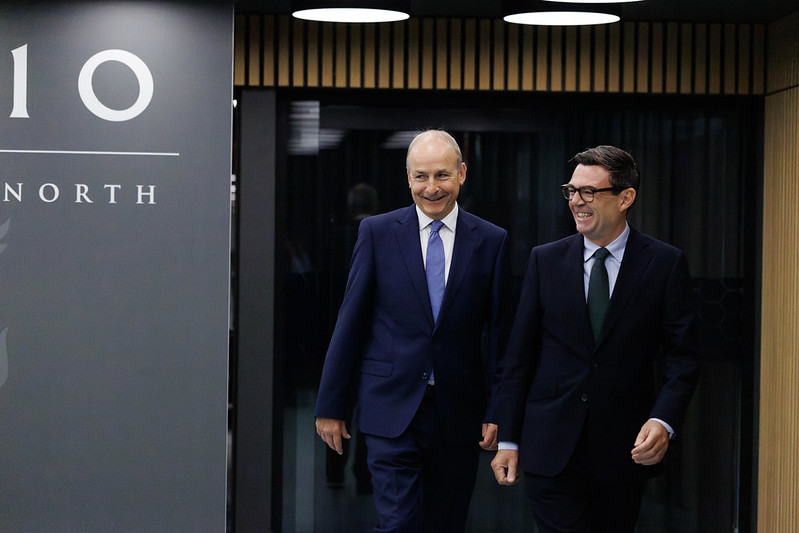
© Prime Minister Andy Burnham hosts Taoiseach Micheál Martin at Number 10 North. Picture by Lauren Hurley / No 10 Downing Street
The Guardian and Financial Times(paywall) reported last week that the UK-EU summit will not take place until late November at the earliest, as the UK Government seeks to put Made in Europe on the summit agenda.
The UK Chancellor of the Exchequer, John Healey MP, attended the ECOFIN meeting of EU finance ministers in Dublin on Friday 18 September. Politico reported that Mr Healey would urge fellow ministers to include the UK in the EU’s proposed ‘Made in Europe’ scheme.
Meanwhile, Prime Minister Andy Burnham hosted Taoiseach Micheál Martin at No.10 North in Manchester on Friday. Mr Burnham told reporters, “…We are looking forward to UK-EU summit later this year and, with Ireland in the presidency, wanting to take further steps to deepen the relationship with Europe.”
This week in the Assembly
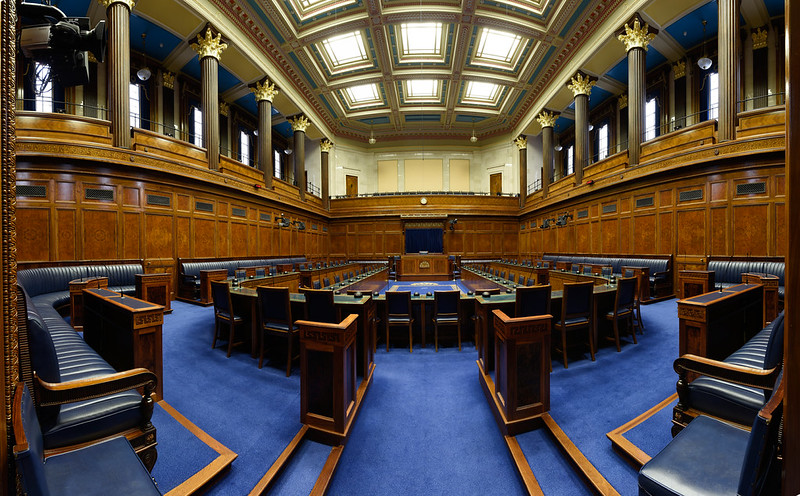
Earlier today, the Minister for Communities, Gordon Lyons MLAmade a Statement to the Assembly on the 45th Summit of the British-Irish Council.
On Thursday, the Committee for Agriculture, Environment and Rural Affairs will hear from the Nature Friendly Farming Network as it continues its evidence sessions on the Areas with Natural Constraints (Payments) Bill.
Also on Thursday, the Windsor Framework Democratic Scrutiny (DSC) Committee will take evidence from Department for Economy and Department of Infrastructure officials on a proposal for a Regulation amending Regulation (EU) 2017/1369 and Regulation (EU) 2020/740 as regards simplification and better use of digital options for energy and tyre labelling. You can view the full agenda here and watch the meeting live via https://niassembly.tv/calendar/
In case you missed it…

- The Specialised Committee on the Implementation of the Windsor Framework met on 15 September.The Joint Statement published following the meeting, provides an overview of what was discussed. The Specialised Committee is part of the governance structure under the UK-EU Withdrawal Agreement and is co-chaired by officials from the UK Government and European Commission.
- The FT reported (paywall) on 16 September that “EU bans on imports linked to deforestation are finally set to bite following a two-year delay”. The Delegated Act on products in scope of the EU’s Deforestation Regulation was published in the Official Journal of the European Union on 17 September, entering into force the following day. The EU Deforestation Regulation applies in Northern Ireland under the Windsor Framework.
- A BBC article published on 17 September reports: Mixed feelings from consumers as electricity discount to be given to NI households.
- An article in the September edition of Agenda NI: Northern Ireland outperforming Britain but lags behind Republic of Ireland, compares the economic performance of Northern Ireland against the UK as a whole and the Republic of Ireland.
- An article published in the Financial Times (behind a paywall) states: UK and Japan seek to fully benefit from ‘Made in Europe’ car sector rules.
- An article published in The Independent on 18 September states:Burnham pushes for ‘deeper relationship’ with EU in No 10 North talks with Ireland’s Martin.


