Brexit and Beyond
14 September 2026

In last week’s edition we were talking about tomatoes, peppers and ginger; today we’re talking potatoes: we report back on last Tuesday’s House of Lords debate on the Plant Health, Seeds, Seed Potatoes and Plant Propagating Material (Amendment) (Northern Ireland) Regulations 2026.
But just in case you feel that your weekly Brexit and Beyond is starting to feel too much like a trip down the fruit and veg aisle, there was plenty of other EU-related business in the Assembly and Westminster – we catch you up on the highlights and look ahead to a packed agenda for this week.
- Assembly Round-up
- Westminster Brief
- Seeds and spuds: Lords dig into Plant Health Regulations
- New chemicals rules get on top of the POPs?
- Parliamentary Planner
- This week in the Assembly
- In case you missed it…
Assembly Round-up

During Members’ Statements on Tuesday, David Brooks MP discussed Royal Navy Vessels in Belfast. He noted that a Royal Navy frigate was recently deployed to help to provide security for a summit in the Republic of Ireland as part of its presidency of the Council of the European Union. You can read the full statement here:
During a debate on the Second Stage of the Renewable Electricity Generation Bill on Tuesday afternoon, Phillip Brett MLA discussed the renewable electricity price guarantee (REPG) scheme, for which the Bill will provide a legal framework.
Mr. Brett told MLAs that he had concerns that some of the process will be delayed as a result of the Windsor framework. He added that he believed that permission for the scheme will be required by the European Union and welcomed: “…the fact that officials have given an undertaking that they will engage with the European Union at this stage.”
Responding to a question from Mr. Brett on possible delays in relation to state aid rules and approval by the European Union, the Minister for the Economy Dr. Caoimhe Archibald confirmed that she would encourage officials to engage with the EU to avoid any unnecessary delays to implementation. The Minister also noted that other EU states have similar schemes in place.
The Second Stage of the Renewable Electricity Generation Bill was agreed. You can read the debate in full here.
Westminster Brief
During a question on theUK Automotive and Components Sectorin the House of Lords last Wednesday, Lord Leung told peers that: “The Government will defend the interests of British manufacturers and our deeply integrated UK-EU automotive supply chains.” With regard to the EU’s proposed Industrial Accelerator Act and ‘Made in Europe’ initiative, Lord Leung added that the Secretary of State and Trade Minister had raised concerns directly with EU member states, their commissioners and MEPs. He added: “The proposal is not final, and we continue to work with the industry to assess its impact.”
The Chief Secretary to the Treasury, Emma Reynolds MP, made a statement to the House of Commons on Monday (7 September), on “the Government’s plan to deliver good growth in every postcode”. In response to questions from MPs, the Chief Secretary underlined that the UK would not rejoin the Single Market, but that: “…we will bring down those barriers at the border, particularly with the sanitary and phytosanitary agreement that we are currently negotiating with the EU—there will be further announcements on that in due course—which will benefit our agrifood industry by making it easier to export to the European Union.”
Sammy Wilson MP told MPs that: “…as a result of the Windsor framework, the internal market in the UK has been severely disrupted by EU-imposed restrictions on trade, which mean customs unions, mountains of paperwork and physical barriers.” Responding, Ms. Reynolds said that she had seen the checks at the port of Belfast when she was Environment Secretary, adding that: “The sanitary and phytosanitary agreement that we are negotiating with the EU will help to reduce that friction.”
During questions to the Cabinet Office on Thursday, the Minister for Intergovernmental Relations and European Relations, Hamish Falconer MP told the House: “This Government [is] committed to deepening our ties with the European Union. It is right at the centre of everything that we are trying to do on the cost of living and energy, as well as the security of our continent.” He added that he would continue to lead discussions with his counterpart, Commissioner Šefčovič, whom he met with on Monday, 7 September, on how to continue to strengthen the UK-EU partnership.
Seeds and spuds: Lords dig into Plant Health Regulations
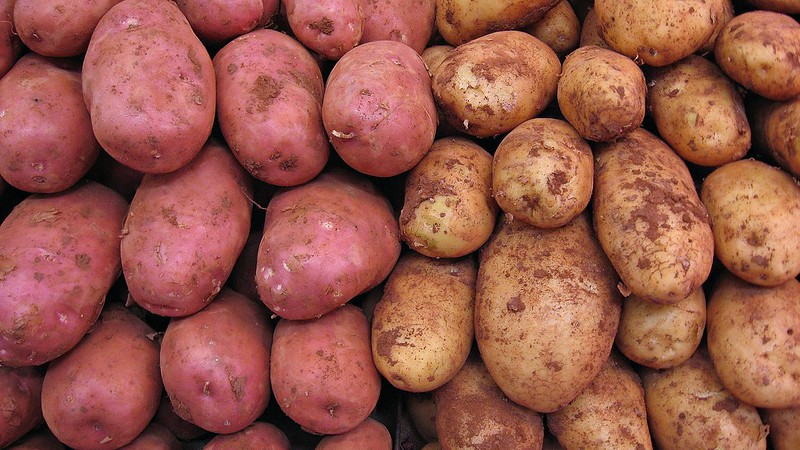
"Potatoes" by 16:9clue is licensed under CC BY 2.0.
On Tuesday 11 September, the House of Lords debated a motion to approve the Plant Health, Seeds, Seed Potatoes and Plant Propagating Material (Amendment) (Northern Ireland) Regulations 2026.
As with last week’s Lords debate on a separate set of plant health regulations, much of the debate covered wider constitutional issues relating to the Windsor Framework.
Opening the debate, the Parliamentary Under-Secretary of State for the Department for Environment, Food and Rural Affairs, Baroness Hayman of Ullock, explained to peers that the statutory instrument: “…is a necessary measure to update Northern Ireland’s domestic legislation and plant health enforcement provisions, ensuring the continued protection of Northern Ireland’s biosecurity and fulfilment of our Windsor Framework obligations.”
The Minister outlined that the SI amends six existing statutory rules, updating obsolete definitions and references in the legislation which are no longer applicable under the Windsor Framework. She explained that the SI also ensures that DAERA is able to take enforcement action in relation to EU biosecurity rules that are already applicable and implemented in Northern Ireland.
An amendment to the motion was moved by Lord Dodds of Duncairn, “that this House regrets that [the Regulations] implement provisions of EU law on part of the United Kingdom without public consultation; and do not help resolve the fundamental problems created by the Northern Ireland Protocol and Windsor Framework”. Lord Dodds warned that the regulations raise important constitutional issues, telling peers: “Parliament is being asked to amend domestic law as a consequence of a regulatory regime imposed on part of the United Kingdom by the European Union.”
A number of peers, including Lord Dodds, raised concerns regarding the absence of a public consultation on the SI. Responding to the debate, Baroness Hayman advised Members. “…there is no statutory duty to consult, because this makes consequential changes relating to plant health legislation that already applies in Northern Ireland under the Windsor Framework.”
Lord Dodds’s amendment was rejected upon a division, and the motion to approve the Regulations was subsequently agreed. You can read the debate in full here.
New chemicals rules get on top of the POPs?

On 10 September, the UK Government’s Department for Environment, Food & Rural Affairs published its response to the recent Consultation on potential amendments to the assimilated Persistent Organic Pollutants (POPs) Regulation.
The consultation sought views on government proposals to amend relevant UK legislation following recent additions of new POPs to the list of prohibited substances under the Stockholm Convention, which the UK, as Party to the Convention, must implement at a national level.
However, the consultation also invited respondents to share evidence regarding related amendments adopted or proposed by the EU, including their potential suitability for GB and any implications for the functioning of the UK internal markets, particularly where different requirements may apply in Northern Ireland under the Windsor Framework.
Parliamentary Planner

House of Commons
Jim Allister MP has secured a Westminster Hall debate on Tuesday on: ‘Goods trading between Great Britain and Northern Ireland’.
House of Lords
This afternoon, peers will consider the Withdrawal Agreement (Windsor Framework and Governance) (Amendment) Regulations 2026. This statutory instrument aims to provide the Windsor Framework Democratic Scrutiny Committee (DSC) with greater flexibility over timelines for scrutinising ‘replacement’ EU acts within the fixed two-month window following the publication of a relevant EU act.
The regulations were brought forward in response to recommendations made by Lord Murphy in his Independent Review of the Windsor Framework. They would extend the deadline for the DSC to decide whether to hold an inquiry on a replacement act from 5 to 10 working days and extend the deadline for publishing an inquiry report to no later than 12 working days before the end of the scrutiny period (rather than 15 working days before).
On Tuesday, Baroness Hayman of Ullock will move that the Batteries (Placing on the Market) (Northern Ireland) Regulations 2026 are approved. You can find the Regulations and accompanying Explanatory Memorandum here. Lord McCrea will move as an amendment: “… but that this that this House regrets that the draft Regulations impose a different legal requirement for the placing on the market of batteries in Northern Ireland in order to comply with the Windsor Framework; further undermine the integrity of the UK internal market; and could lead to higher costs for companies based in Northern Ireland."
Also on Tuesday, the European Affairs Committee will hold an oral evidence session on the UK-EU Agreement on Gibraltar. Peers will take evidence from: The Lord Wood of Anfield, Parliamentary Under-Secretary of State at Foreign, Commonwealth & Development Office (FCDO); Paul Hughes, Deputy Head of the Southern Europe Department at Foreign, Commonwealth & Development Office; and the Hon Fabian Picardo KC MP, Chief Minister at Government of Gibraltar. You can watch Tuesday’s meeting here.
It’s destination Parliament Buildings for the Northern Ireland Scrutiny Committee on Thursday, where it will continue evidence sessions on the Committee’s ongoing inquiry on Article 2 of the Protocol/Windsor Framework. Evidence will be provided by Jon Burrows MLA, Matthew O'Toole MLA, Jim Allister MP and Gavin Robinson MP. Thursday’s meeting will begin at 9:15am and will be available to watch on the Assembly’s live stream 4.
The Scottish Parliament
At its meeting on Tuesday, the Europe, External Affairs and Culture Committee will consider MSP representation on a number of external bodies, including: the UK/EU Parliamentary Partnership Assembly (PPA); Congress of Local and Regional Authorities (CLRAE) of the Council of Europe; Committee of the Regions (CoR)-UK Contact Group; and the Interparliamentary Forum.
The European Parliament
On Monday, MEPs will debate: Establishing the Union Customs Code and the European Union Customs Authority, an element of which will deal with e-commerce growth (i.e. small parcels customs charges and handling fees). A vote to approve the new Customs Code will take place on Wednesday, 16 September.
On Wednesday, 16 September, MEPs will also vote on theEU-UK Agreement regarding cooperation on the application of their respective competition lawswhich was signed by the EU and the UK on 25 February 2026. The Agreement establishes a formal framework for competition enforcement cooperation.
The European Commission President Ursula von der Leyen and MEPs will debate the State of the European Union in 2026 on Wednesday morning.
According to a pre-brief published by the European Parliament, the President is set to focus on: “European defence and security, the EU’s continued support for Ukraine in the face of Russia’s war of aggression and the situation in the Middle East.” She is also expected to discuss: “…the EU’s strategy to adapt to a shifting global order, competitiveness, jobs and sustainable prosperity, the fight against climate change” as well as: “…the EU’s next long-term budget post 2027, democratic resilience, migration management and how to protect core EU values.”
The Canadian Prime Minister, Mark Carney, will attend the debate as a guest of honour and will also address the European Parliament in a Formal Sitting on Thursday morning.
Also on Wednesday, the European Parliament will debate the impact of the implementation of the Packaging and Packaging Waste Regulation (PPWR) on SMEs, its administrative burden and challenges for the European Single Market. Much of the PPWR, namely the recyclability of packaging, labelling and restrictions on single-use packaging, apply in Northern Ireland under the Windsor Framework. We previously covered the PPWR in the 1 September edition of Brexit and Beyond.
At its meeting in Strasbourg on Thursday, the Delegation to the EU-UK Parliamentary Partnership Assembly (D-UK) will hold an Exchange of views on the EU-UK relationship in financial services with Kerstin Mathias, Director of International Affairs, UK Finance and Scott Devine, Associate Director, Europe, TheCityUK. The meeting will be livestreamed here.
This week in the Assembly
On Thursday, the Committee for Agriculture, Environment and Rural Affairs will continue its evidence sessions on the Areas with Natural Constraints (Payments) Bill, with the Northern Ireland Environment Agency.
The Private Members’ Bill which is sponsored by Declan McAleer, MLA, aims to reintroduce targeted support for farmers operating in Northern Ireland’s most disadvantaged areas. Historically, the Areas of Natural Constraint (ANC) scheme and its predecessor schemes under the EU Common Agricultural Policy provided essential payments to offset higher costs and income foregone in upland farming. These schemes ended in 2018.
Also on Thursday, the Committee for Communities will take evidence from the Northern Ireland Community and Voluntary Association (NICVA) on the impact of Local Growth Fund Cuts on the Voluntary and Community Sector.
In case you missed it…

-
An article in Sunday’s Financial Times:EU-UK reset talks delayed again amid tension over ‘Made in Europe’ rules(behind a paywall) reports that the UK-EU Summit has been pushed back until late November against backdrop of challenges facing UK industry.
-
An article published by the BBC on 7 September reports: UK begins talks to rejoin EU security missions
-
An article published by Politico on 7 September reports:Andy Burnham’s big new Brexit deal isn’t coming anytime soon.The outlet states that: “The new prime minister’s red lines are making a more radical reimagining of the U.K.-EU relationship implausible, EU officials say.”
-
In an article published on 10 September, FactCheckNI examines: Trade between NI, RoI and GB: Have Irish goods exports to the UK more than doubled since Brexit?
-
The Independent on 12 September, the former Chancellor George Osborne says: ‘Brexit was like Battle of Hastings defeat – rejoining EU body will fix it’.
-
An article published by the I Paper on 13 September reports: Reverse Brexit in Labour’s next manifesto, Kinnock tells Burnham.
-
An article published by The Economist on 10 September: Brexit has disappointed British fishermen.
-
In a new blog by UK in a Changing Europe, published on 9 September: How do young people in the UK feel about its relationship with the EU?Dr. Heather Rolfe argues that campaigners for a closer relationship with the EU will find it challenging to engage young people in a debate that has passed them by.
-
An article in the Newsletter reported on 9 September: DUP promise of 'unfettered access' to Great Britain meaningless as NI medical devices branded imports by government - Allister’.


