Twelfth Plenary of the North/South Inter-Parliamentary Association
Joint Communiqué
Session: Session currently unavailable
Date: 25 November 2026
Reference: Joint Communiqué
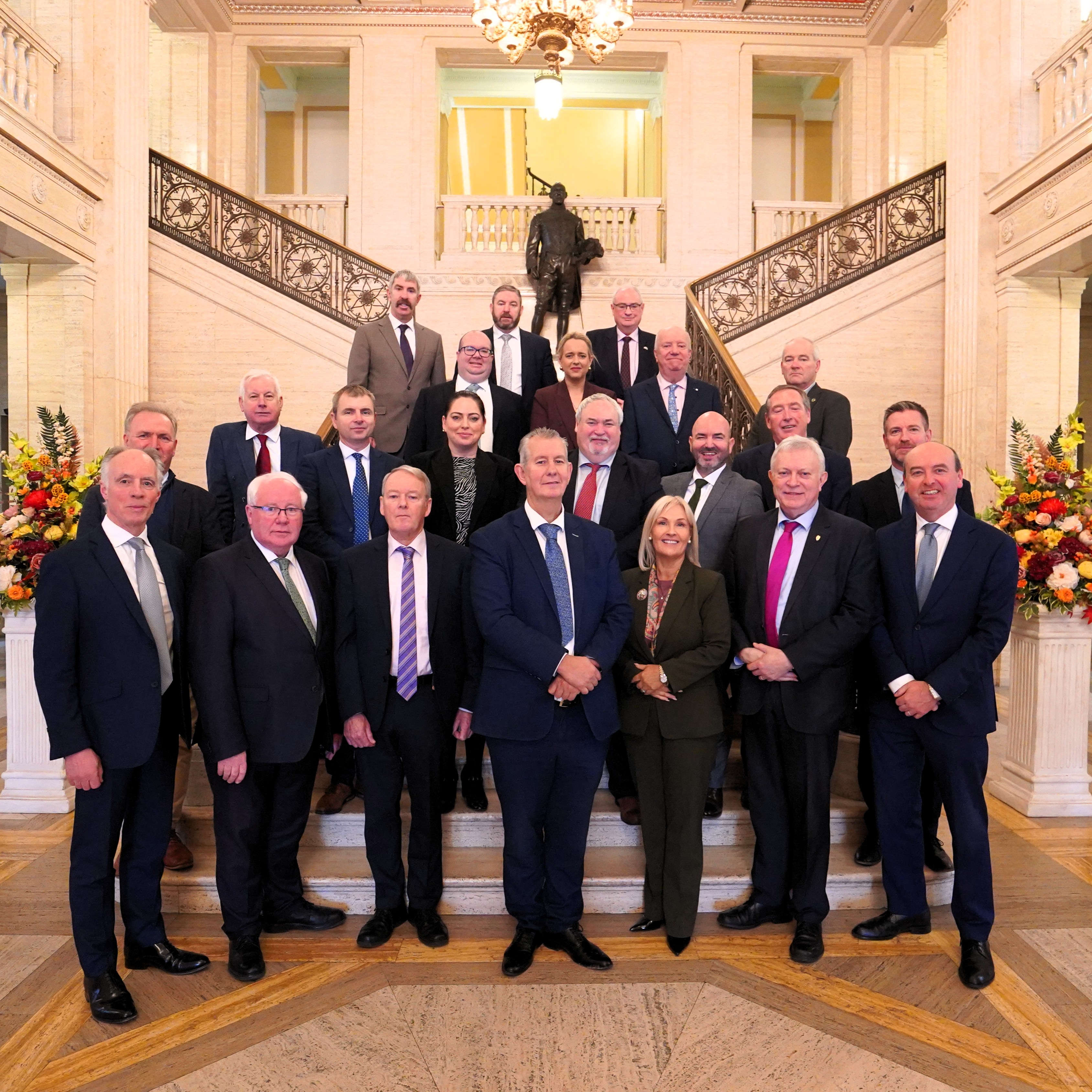
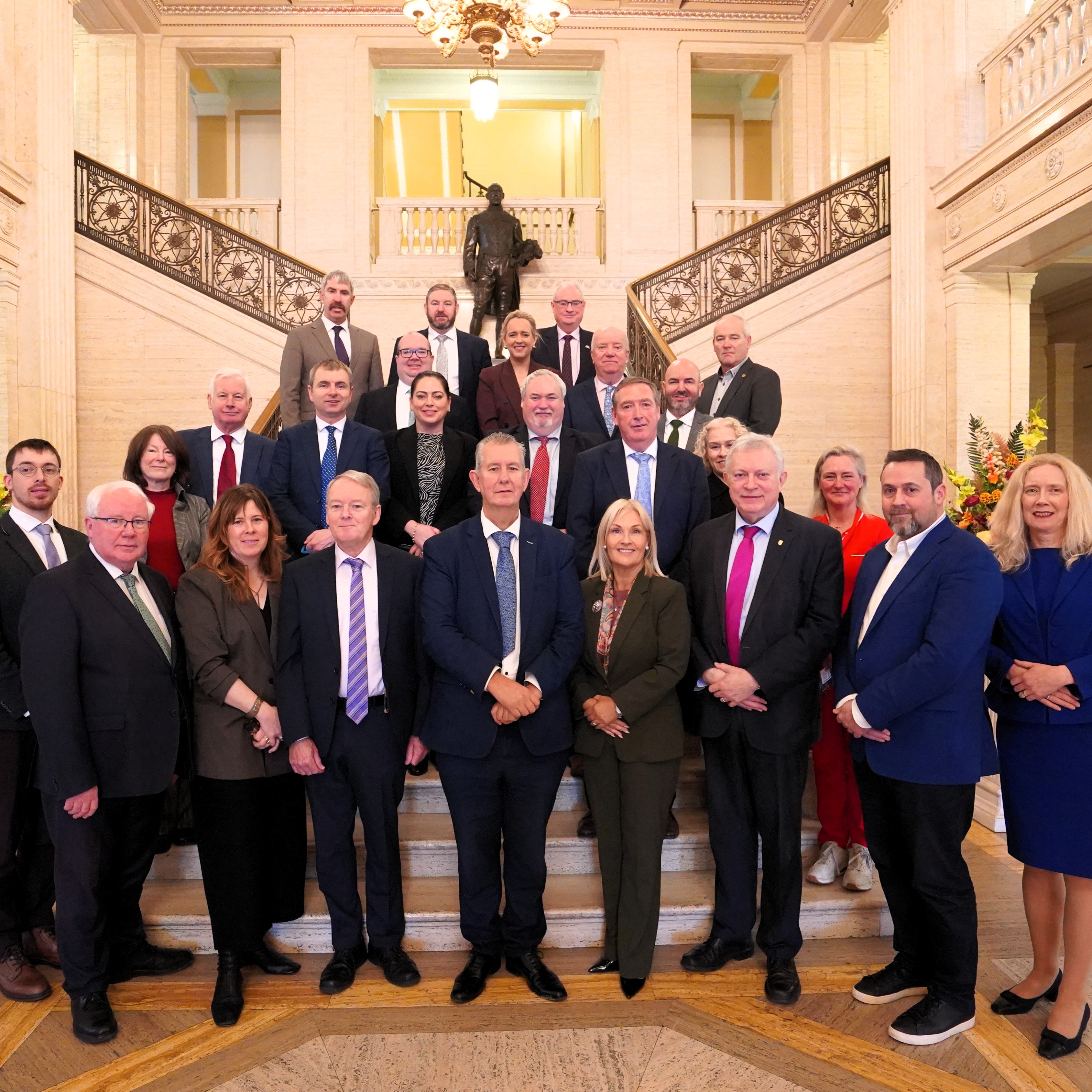
Representatives from all the main political parties and independents of the Northern Ireland Assembly and the Houses of the Oireachtas gathered today in the Senate Chamber of Parliament Buildings in Belfast for the twelfth plenary session of the North/South Inter-Parliamentary Association (NSIPA).
The Speaker Edwin Poots MLA chaired the plenary session with his Co-Chair the Ceann Comhairle, Verona Murphy TD. Both welcomed the opportunity for members to come together to engage on two important areas of common interest. The topics for discussion at the plenary session were Artificial Intelligence (AI), and Trade and the Windsor Framework. The meeting allowed Members to assess the current situation and to consider areas where further progress could be made.
Artificial Intelligence
The Association heard from Patricia O'Hagan of MATRIX and Tadgh Hickey and Professor Michaela Black of the Artificial Intelligence Collaboration Centre (AICC), from Erik O'Donovan of Ibec, and from former AI Ambassador and former Chair of Ireland's AI Advisory Council, Dr Patricia Scanlon. Members heard evidence on the opportunities and challenges presented by AI and the implications for policymakers, businesses, workers and public services.
The Association heard that AI has the potential to deliver significant economic, societal and public service benefits, including increased productivity, innovation, improved healthcare outcomes and enhanced public service delivery. Members heard that Northern Ireland has developed a growing AI ecosystem supported by the work of MATRIX, the AICC and the Department for the Economy AI Advisory Panel, while Ireland has developed its own structures and policy approaches within the wider European framework. Contributors highlighted the importance of skills development, business support and research collaboration to realise the economic benefits of AI.
The Association heard that alongside the opportunities of AI, there were significant challenges and uncertainties. These included the impact of AI on employment, the need for workforce reskilling and upskilling, the risks posed by AI-enabled cybercrime and misinformation, and the increasing demands that AI infrastructure may place on energy systems and digital networks. Members heard the uncertainty around the pace of technological change and the extent to which existing roles may be adapted had to be balanced against the potential new jobs and innovations which could be created. It was therefore vital for businesses and wider society to prepare for change and protect against risks to benefit from the opportunity for growth.
In a wide ranging discussion, Members recognised that other parts of the world are embracing AI to enhance their economic growth and this underlined the importance of keeping pace with these developments. It was recognised that both jurisdictions already possess strong expertise in this field.
There was considerable debate on how government can help create the conditions for innovation while ensuring appropriate guardrails exist to maintain public confidence. Members discussed the opportunities for enhanced North-South collaboration in areas such as skills development, research and innovation, business support, cybersecurity and the monitoring of AI's economic and societal impacts. It was noted that cooperation already exists, but contributors suggested there was scope for more structured cross-border engagement and information sharing. Some Members suggested that this was a potential area for the Irish government’s Shared Island Unit.
There was acknowledgment of the gap in the use, awareness and understanding of AI between younger and older generations. The impact of AI on current and future employment and skills needed to be managed in a way that would ensure that no region, and no part of society, is left behind. The importance of both human supervision of AI and the continued value of human interaction, particularly in customer service, was raised by many Members. There was an opportunity for companies to retrain employees to focus on new activities.
Some Members noted that the growth of AI, and more particularly social media, depended on an increase in data centres which brought their own demands and environmental concerns. There was a need to seek to facilitate such infrastructure while understanding local concerns. It was also acknowledged that AI could be abused and created a further risk of misinformation. This posed potential issues for democracy and democratic institutions. Members noted the importance of informed citizen engagement and that AI needed to be incorporated in the education system at an early stage.
There was broad agreement that policymakers must balance support for innovation and economic growth with measures to address workforce impact, cybersecurity threats and public confidence. This included serious consideration of whether the current legislative framework is sufficient and whether it can keep pace with the rapid development of AI. Members recognised the value of continued dialogue and cooperation between organisations on a North-South and East-West basis to ensure that the undoubted benefits of AI can be realised while managing the challenges which arise from technological change.
Trade and the Windsor Framework
The Association benefitted from presentations by Roger Pollen of the Federation of Small Businesses Northern Ireland (FSB NI), David Phinnemore of Queen's University Belfast, Colin McCabrey of Inter Trade Ireland, and Fergal O'Brien of Ibec on the operation of the Windsor Framework and its impact on trade and business.
The Association heard that cross-border trade is now worth approximately £14.6 billion (€17.2 billion), having grown significantly since 1998, with SMEs accounting for over 80% of that trade. Members heard that services now account for around one-quarter of cross-border trade and that all-island supply chains, and a cross-border workforce, have become increasingly important across a range of sectors.
Contributors highlighted the role of the Windsor Framework in maintaining trade across the border while acknowledging its importance to maintaining the economic and political stability provided by the Good Friday Agreement. While opportunities arising from Northern Ireland's access to both UK and EU markets were noted, it was recognised that the Windsor Framework was dealing with complex issues. Therefore, it was inevitable that it would have ongoing challenges. The Association heard that businesses continue to face a range of administrative and cost burdens when trading across, and beyond, the island of Ireland. Therefore, there was a need for the practical outworkings of the relationship between the UK and EU to continue to evolve, including the Windsor Framework arrangements.
The discussion reflected differing views amongst Members about the origins and shape of the Windsor Framework, noting the importance of reducing friction while maintaining economic stability. Some Members noted that addressing the impact of the Windsor Framework upon trade and businesses should also take account of the requirement for these arrangements because of the wider outworkings of Brexit on people and cross-border communities. The practical difficulties were particularly noted in relation to cross-border workers and the bodies employing them given the significant proportion of people working for companies across the Common Travel Area. Solutions were needed to these issues to ensure businesses continue to employ those working across the border.
There was agreement on the requirement for continued engagement between governments, businesses and relevant institutions to ensure that potential benefits of the Windsor Framework are fully realised. It was recognised that the trading relationship between the UK and EU continued to change, including recent developments on EU custom codes. Therefore, there was a need to consider what more could be done to give businesses and others advance warning of forthcoming changes to enable early preparation. Members accepted that practical assistance, and coordination between those offering it, was vital to provide support for businesses as they seek to navigate trading requirements.
Members highlighted a number of ongoing cross-border barriers and challenges which they felt needed to be considered alongside the challenges of the Windsor Framework including pressures on the agri-food sector, the North-South inter-connector and the mobility of labour, students and qualifications across the border. Addressing these issues would help increase economic integration and competitiveness. Members discussed the importance of ensuring that future regulatory developments take account of their potential impact on businesses trading across the UK and Ireland, including those which operate on a cross-border basis. There was also an important case for maintaining a presence in Brussels so that forthcoming developments at the EU level were highlighted, and engaged with, at the earliest opportunity.
It was highlighted that the UK’s relationship with the EU existed within the wider international defence and security situation. Cooperation was required to maintain the resilience of the economy, trade and energy in the face of these significant threats.
Members noted that the summit on the future relationship between the EU and UK could significantly change the context of the Windsor Framework. This emphasised the need for constant and continuing engagement between the EU and the UK on trade issues, including the impact upon Northern Ireland, and for both to take account of each other’s perspective.
Members therefore agreed that it was important for political institutions to continue to follow developments and use their influence to engage on issues to deliver practical improvements in trading arrangements.
Conclusion
The Co-Chairs praised the contributions made by the guest speakers. It was noted that the topics for the two debate sessions were good examples of constructive issues the Association could discuss in a meaningful way to increase understanding of current challenges and future opportunities. The next meeting of the Association will take place in the Houses of the Oireachtas, following elections to the Northern Ireland Assembly in May 2027.