Committee for the Economy
End of Session Report: February 2024- August 2025
Committee for the Economy - February 2024-August 2025.pdf (2 mb)
Ordered by the Committee for the Economy to be published on 8 October 2025
Report: NIA XX/22-27 - Committee for the Economy
Table of Contents
Summary: February 2024 - August 2025 Session
Scrutiny Areas: February 2024 - August 2025 Session
Powers and Membership
Powers
- The Committee for the Economy is a Statutory Departmental Committee established in accordance with paragraphs 8 and 9 of Strand One of the Belfast Agreement and under Assembly Standing Order No 48. The Committee has a scrutiny, policy development and consultation role with respect to the Department for Communities and has a role in the initiation of legislation.
- The Committee has power to:
- consider and advise on Departmental budgets and Annual Plans in the context of the overall budget allocation;
- approve relevant secondary legislation and take the Committee Stage of relevant primary legislation;
- call for persons and papers;
- initiate enquiries and make reports; and
- consider and advise on matters brought to the Committee by the Minister of Communities.
Membership
- The Committee has nine Members, including a Chairperson and Deputy Chairperson, and a quorum of five Members. The membership of the Committee is as follows:
Mr Phillip Brett MLA (Chairperson)
Mr Gary Middleton MLA (Deputy Chairperson)
Ms Diana Armstrong MLA[1][2][3]
Mr Jonathan Buckley MLA
Mr Pádraig Delargy MLA
Mr David Honeyford MLA
Ms Sinéad McLaughlin MLA
Ms Kate Nicholl MLA[4]
Ms Emma Sheerin MLA[5]
Summary: February 2024 - August 2025 Session
- The Assembly resumed usual proceedings in February 2024. In the period until August 2025, the Economy Committee met 56 times (plus a further 3 meetings in joint concurrent session with other statutory committees) - 95% of proceedings were in public session. The Committee heard from 320 witnesses and met outside of Parliament Buildings on 9 occasions.
- The Committee recognised that as the mandate had been foreshortened to around 3 years and the Department was expected to undertake a full programme of primary legislation (which would require the completion of a fairly large number of carefully considered Committee Stages), there would not be time for a full-blown Committee inquiry which might take over a year to gather evidence and report.
- The Committee also found that the Department was not immediately forthcoming on its revised policy positions in respect of a number of areas including: renewable energy; energy security and grid connectivity; the funding of Higher Education; the new model for the delivery of Further Education; changes to employment legislation; local economic development; and tourism.
- At a number of strategic planning sessions, the Committee consequently elected to undertake focused scrutiny in different formats in order to inform its understanding of the wide-ranging policy remit of the Department for the Economy, so as to prepare for an expected fulsome Departmental primary legislative programme.
- As the Committee's extensive remit includes cross-cutting matters, the Committee undertook: a joint informal session (leading to a joint Committee motion, the record of which can be found here: Joint Committee Motion) with the Committee for Finance on the impact of the Chancellor's Autumn Statement; a joint concurrent session with the Committee for Agriculture, Environment and Rural Affairs on the impact on rural telecommunications of Storm Éowyn; and 2 joint concurrent meetings with the Committee for Education on careers education, advice, information and guidance and related matters.
- Furthermore in this period, the Committee undertook 14 external visits (including to: UU Magee Campus, City of Derry Airport, Maze Long Kesh, the Deluxe Group in Lurgan, GoT Studio Tour near Banbridge, Royal Portrush Golf Club, Northern Regional College in Coleraine, Studio Ulster, Spirit Aerosystems, South West Regional College in Enniskillen, Balcas Ltd in Derrylin, QUB, the Centre for Secure Information Technology and Foyle Port) and 23 informal meetings with stakeholders in: industry; Further and Higher Education; and tourism etc.. The Committee met informally with the US Special Economic Envoy in April 2024. The Committee also met with the Oireachtas Committee on Social Protection in October 2024 to discuss labour mobility issues. The Committee will meet informally with the House of Lords Committee on International Agreements in September 2025.
- The Committee: considered 51 statutory rules (21 of these were considered at the Committee's first meeting); reported on 2 Legislative Consent Motions relating to Westminster legislation - the reports can be found here: LCM Reports; and recently commenced the Committee Stage of the Insolvency (Amendment) Bill - the call for evidence information can be found here: The Insolvency (Amendment) Bill Call for Evidence.
- The Committee undertook scrutiny of the Department's budget noting the very useful Estimates Memoranda which officials helpfully provided. The Committee also considered relevant European Union matters including the impact of the loss of European Social Funding and key regulatory changes associated with the Windsor Framework (included those relating to e.g. new car registrations) where these lay outwith the remit of the Windsor Framework Democratic Scrutiny Committee.
- The Committee anticipates that it will report later in this mandate on a number of policy issues, as the way forward is clarified by the Department. Committee Stages for a further 7 Executive Bills and 1 Private Members Bill are also expected to be undertaken in the remaining 18 months of the 2022-27 mandate.
- Please see the following short films that the Committee commissioned in order to inform stakeholders of some of its engagement activities:
- The Committee ordered this report to be published on 8 October 2025.
Scrutiny Areas: February 2024 - August 2025 Session
Energy
- The Committee elected to focus its consideration on energy issues relating to: interconnection and security of supply; network grid connections; smart metering; on-shore renewable electricity generation incentivisation; and off-shore renewable development. The Committee noted with some frustration that limited policy clarity (or timelines) was provided by the Department on any of these important and potentially expensive matters and particularly in respect of the impact of related changes on rural communities.
- The Committee considered the impact of Storm Éowyn on electricity (and telecommunications) infrastructure and was concerned by what might be interpreted as an absence of co-ordination between the Utility Regulator and the Department in respect of Guaranteed Service Standards for the provision of electricity supplies.
- The Committee also noted that numerous stakeholders referred to economic development opportunities which may flow to other jurisdictions owing to the failure to ensure that adequate electricity grid connections were provided and appropriate exploitation of renewable energy potential was planned.
- The Committee noted with interest the subordinate legislation which was rejected by the Assembly relating to revised Renewable Heat Incentive (RHI) tariffs and the absence of clarity on the timing and nature of the legislation in respect of the closure of the RHI Scheme.
- The Committee noted that policy clarity is expected to follow soon in respect of some of the above and that Department is to bring forward primary legislation in the next 18 months on:
- onshore renewable incentivisation;
- the role of the Utility Regulator in respect of renewables;
- offshore renewables decommissioning; and
- petroleum licensing i.e. fracking.
Economic Policy / Regional Balance
- The Committee considered the Sub-Regional Economic Plan and the development of the Local Economic Partnerships and the progress of the City & Growth Deals in particular Ulster University Magee expansion. These policy interventions are designed, among other things, to address regional economic imbalance.
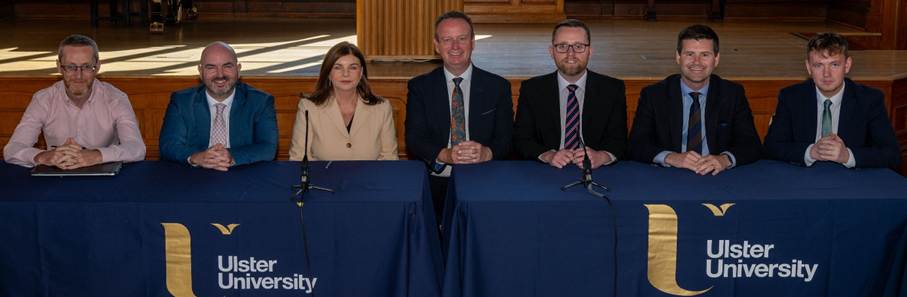
Members meeting with the chairperson of the UU Magee Expansion Taskforce. - The Committee gathered evidence on: the effectiveness of Departmental economic policy; sectoral action plans and clustering policy; the needs of Northern Ireland businesses; the outworking of the Lyons review of Invest NI; the role of social enterprises; and new challenges to employers including Artificial Intelligence. The Committee also gave particular consideration to the economic impact of the creative industries including the development of Studio Ulster and the need to support the creative supply chain.
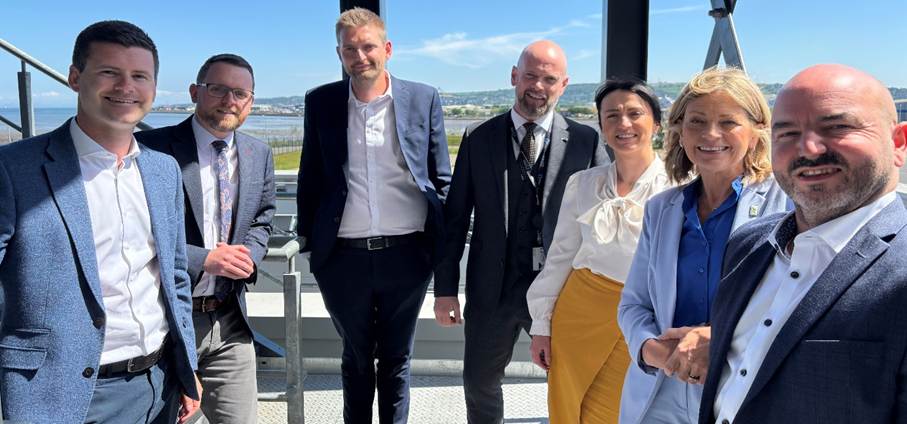
Members at Studio Ulster with its Chief Executive.
The Committee noted that, as above, numerous stakeholders referred to economic development opportunities which may flow to other jurisdictions owing to, in this case, the failure to ensure that developable land is available in order to support business expansion. Members were concerned that Departmental policy or Invest NI interventions did not clearly address this concern. Some Members noted particularly the failure to bring on-stream development opportunities at the Maze Long Kesh (MLK) site. - Working with the Committee for Finance, the Economy Committee considered the implications for businesses of changes to minimum wage and Employers National Insurance contributions, undertaking an informal evidence session hosted by NICVA and subsequently bringing a joint motion to the Assembly.
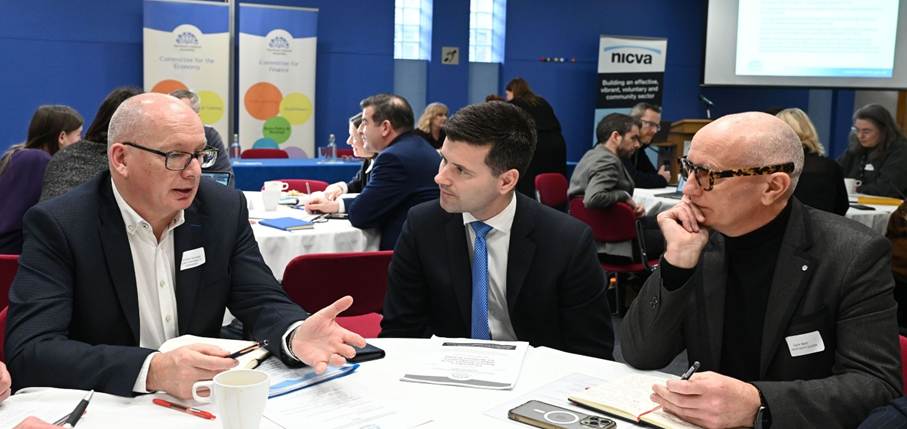
Members hearing evidence on the cost of doing business at the joint Committee event at NICVA. - The Economy Committee also considered the implications for businesses of the impact of other matters beyond the control of the Executive including regulatory divergence in the UK internal market and the application of US tariffs.
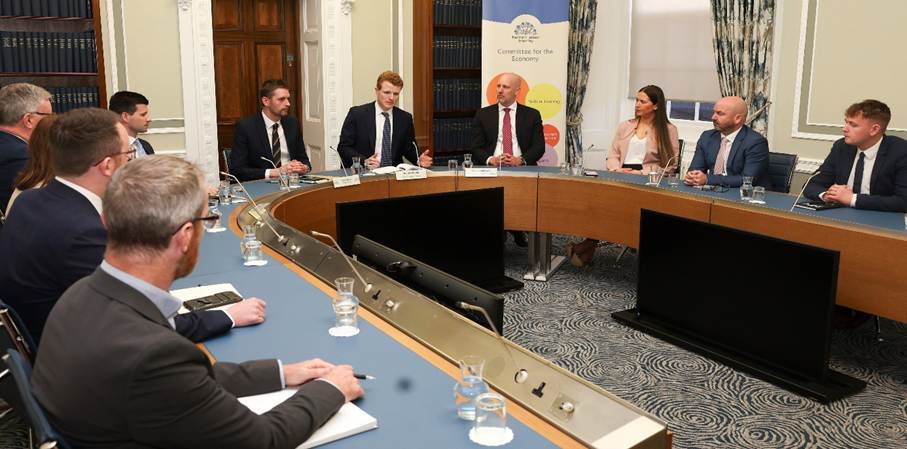
Members meeting with the US Special Economic Envoy. - The Committee also noted that the Department is to bring forward primary legislation in respect of the Employment Rights Bill which is expected to include a wide range of far-reaching changes which may well evolve following the passage of related legislation at Westminster.
Skills
- Members welcomed the work of the Northern Ireland Skills Council and strongly felt that its monitoring reports, which appeared to have not been published for 2 years, were crucial to understanding the changing skills needs of Northern Ireland businesses. Members felt that industry specific skills action plans were essential in matching business needs with the aspirations of its working (and its disproportionately large) economically inactive populations.
- Working with the Committee for Education, the Economy Committee met in joint concurrent session and considered cross-cutting issues including the need for a revised careers action plan. Members again expressed frustration at the delay in the publication of the action plan - which was finally produced just before summer recess along with the apprenticeship action plan.
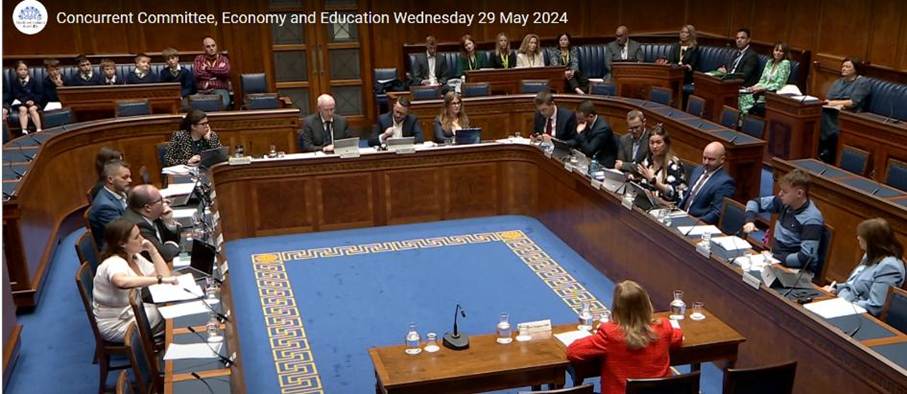
Joint concurrent meeting on careers issues - The Committee agreed to pursue its scrutiny of other cross-cutting issues including the 14-19 strategy; measures to address the skills gap; support for apprenticeships; support for lifelong learning; economic inactivity; childcare and post-school SEN. Members recognised that substantial progress in respect of the latter was unlikely to be fully realised in this mandate.
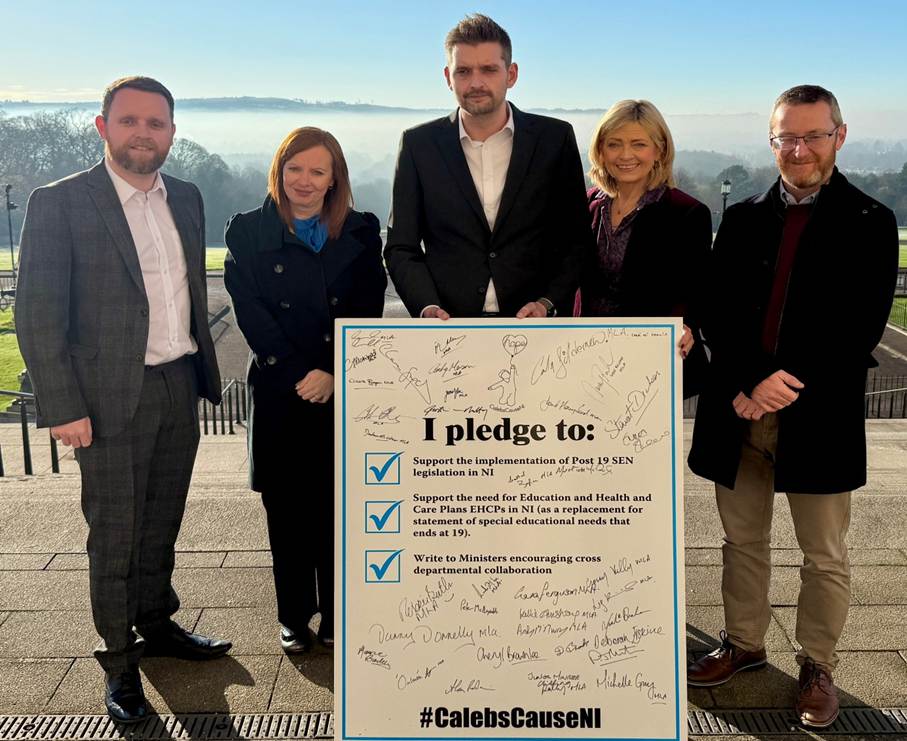
Members meeting with the Caleb's Cause campaign. - The Committee noted that although a new model for the delivery of Further Education had been trailed by the Department and was expected to provide clarity on the delivery of traineeships, apprenticeships and SEN support, the likely timeline for reporting on the new model was in the next mandate.
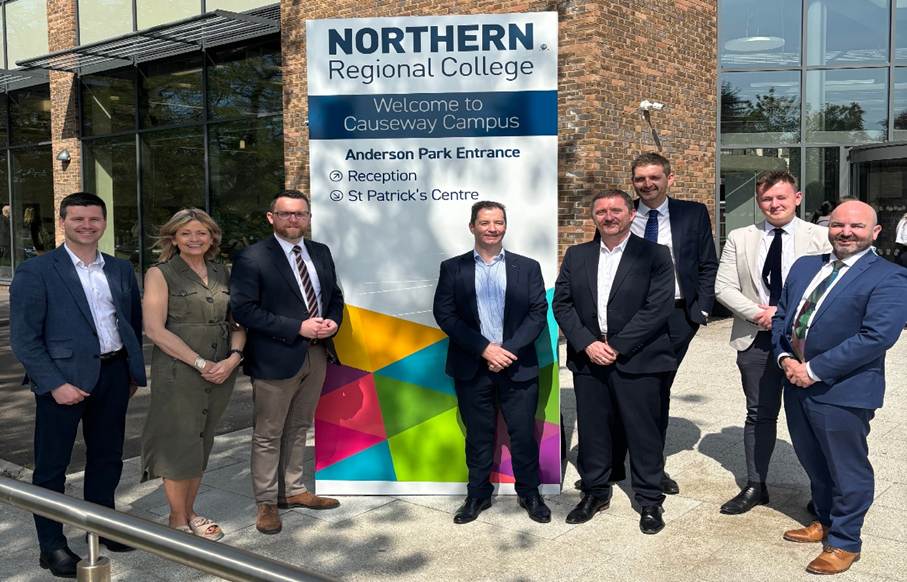
Members meeting with the principals of Further Education colleges.
Higher Education
- The Committee spent some time considering persistent funding issues in the Higher Education (HE) sector including options for changes to the treatment of the Maximum Student Number (MaSN) cap for HE and the impact of changes to immigration rules on the viability of post-graduate provision in Northern Ireland. The Committee noted with concern that these changes by the UK Government may have implications for undergraduate and post-graduate tuition fees and the quantum of student loans.
- The Committee noted with some frustration that although a review of the HE funding model had been trailed by the Department and previously considered by the Secretary of State NI, the terms of reference, the nature and independence of the review panel and the timeline for reporting had not been disclosed. The Committee noted that the probable reporting end-date for this key important review was now likely to be in the next mandate.
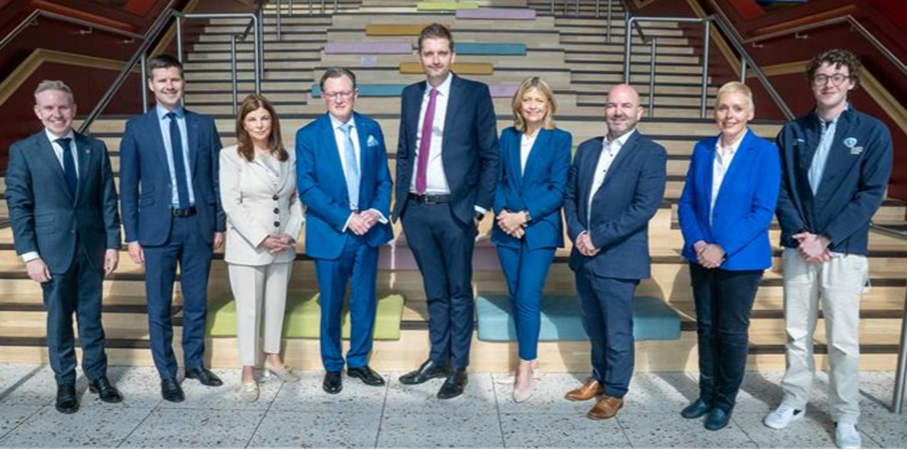
Members meeting with the QUB Vice Chancellor, QUB staff and the QUB Student Union President
Tourism
- The Committee considered the views of the sector in respect of the 10 year Tourism Strategy and Vision and the needs of sub-regions of Northern Ireland in order to develop their tourism offer.
- The Committee also reviewed the Department's revised approach to aviation policy including its support for City of Derry Airport as part of the consideration of an anticipated new air route development strategy. Members also considered matters relating to the promotion of adequate public transport to support the night-time economy in urban centres.
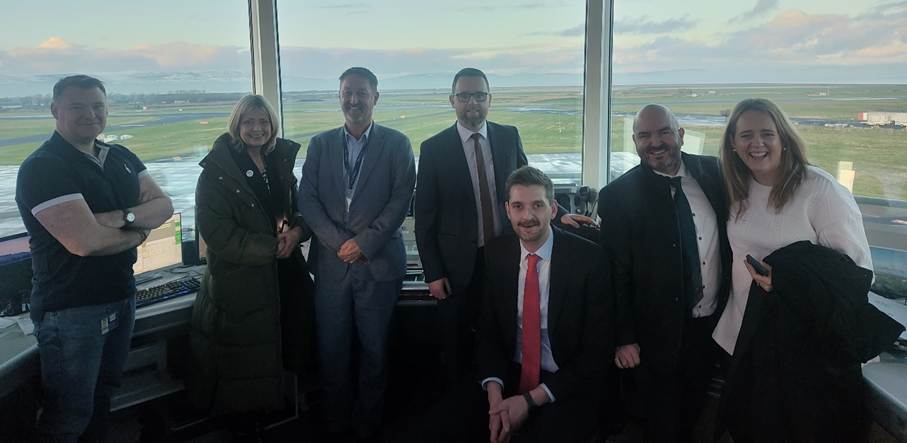
Members meeting with City of Derry Airport Chief Executive and staff in the control tower
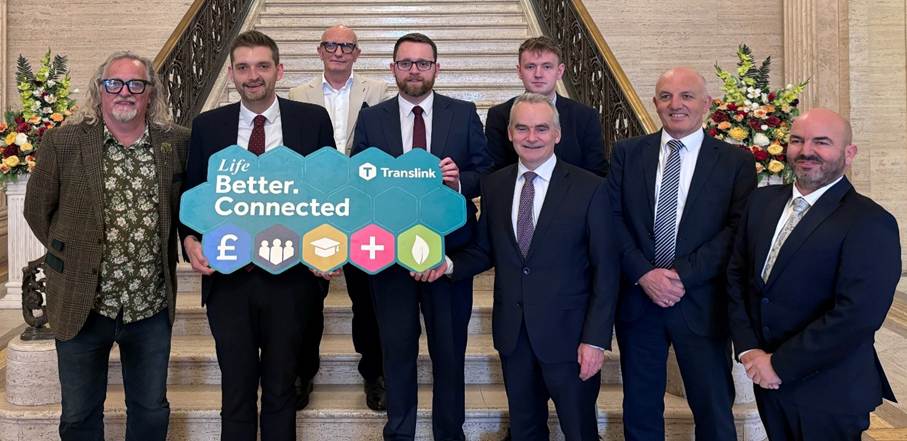
Members meeting with the Belfast Night Czar, Hospitality Ulster and Translink in support of the night mover service
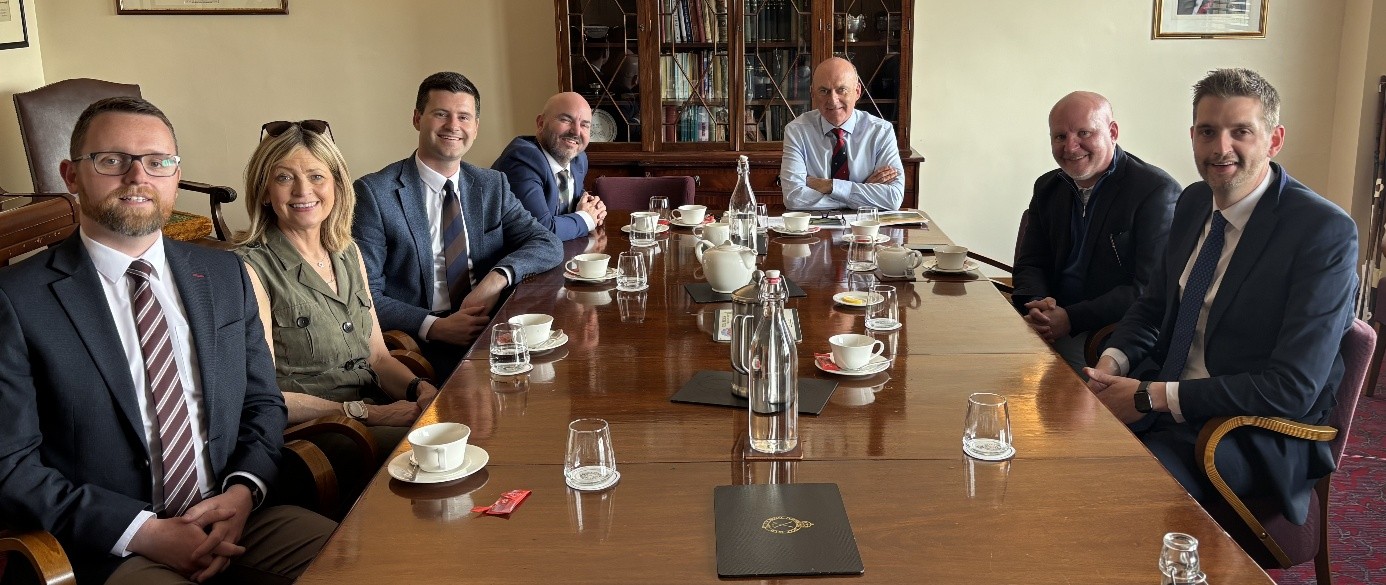
Members meeting with Royal Portrush Golf Club to discuss the economic benefit of the Open
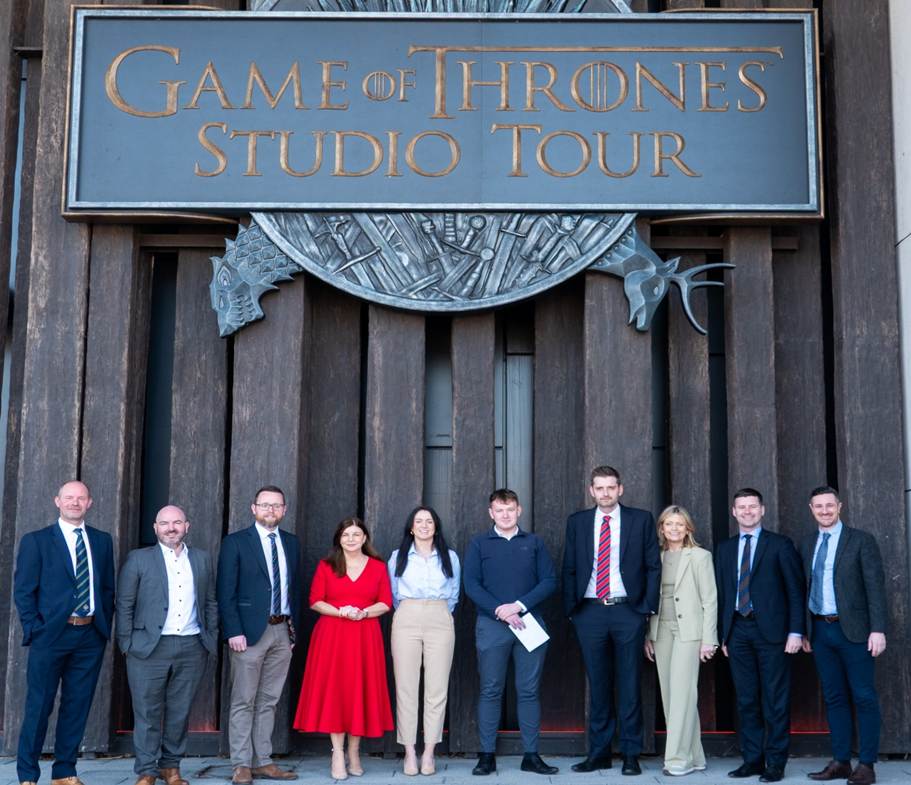
Members meeting with staff at the Game of Thrones Studio Tour.
Annex A
Committee for the Economy
Expenditure for the period 3 February 2024 - 31 August 2025
|
Budget area |
Details |
Expenditure |
|
Committee Travel - committee members and staff travel and subsistence in relation to visits and meetings outside Parliament Buildings |
Includes the cost for 9 meetings held outside Parliament Buildings |
£206.45 |
|
Advertising - the cost of public notices relating to committee inquiries, the committee stage of Bills and meetings held outside Parliament Buildings |
Includes the cost of public notices in relation to:
|
£934.04 |
|
Specialist Advice - the cost of specialist advisers appointed by the committee and commissioned research, also the cost of drafting Standing Orders |
Specialist adviser to the Committee on [issue/inquiry to which the advice related] |
N/A |
|
Refreshments & Hospitality |
Includes the cost of all refreshments and hospitality provided by the committee; to include meetings, working lunches, seminars and any other such expenditure. |
£3834.28 |
|
General expenses |
Includes the cost of seminars (excluding refreshments and hospitality); room hire; witness expenses; gifts provided by the committee during visits; and conference fees for members. |
£341.95 |
|
Total Expenditure |
£5316.37 |
|
[1]On 17 June 2024 Mr Doug Beattie MC replaced Mr Mike Nesbitt
[2] On 9 September 2024 Mr Colin Crawford replaced Mr Doug Beattie MC
[3] On 7 October 2024 Ms Diana Armstrong replaced Mr Colin Crawford
[4] On 9 September 2024 Ms Kate Nicholl replaced Ms Sorcha Eastwood MP
[5] On 10 February 2025 Ms Emma Sheerin replaced Mr Philip McGuigan


