Brexit and Beyond
18 November 2026

We have another bumper edition of Brexit and Beyond for you this week!
As arrangements for the UK-EU summit ramp up – we take a closer look at the Prime Minister's speech at the Lord Mayor's Banquet and on related media reporting in 'Summit Stories'.
Yesterday, the Secretary of State informed the Assembly Speaker that he would not pull the 'Stormont Brake' on an EU regulation establishing the Union Customs Code which is to be applied under the Windsor Framework.
In what has been a busy few days for EU and Brexit related affairs, we bring you up to speed on the recent meetings of the European Political Community in Dublin and the Parliamentary Partnership Assembly in London.
Other key developments this week include the publication of the European Affairs Committee Report on Dynamic Alignment, and discussions at the UK-EU Withdrawal Agreement Joint Committee.
As always, we update on all the relevant discussions, debates and questions in the Assembly and Westminster this week and look ahead to what's coming up.
- Assembly Round-up
- UK Government declines to pull Stormont Brake
- UK-EU Parliamentary Partnership Assembly meets in London
- Committee takes evidence on new hemp import regulations
- Windsor Framework Committee initiates inquiries on two EU regulations
- Leaders gather in Dublin for Meeting of the European Political Community
- Lords Committee publishes report on Dynamic Alignment
- Windsor Framework centre of discussions at UK-EU Joint Committee meeting
- Westminster brief
- Hook, Line and Sinker? MPs discuss merits of a fishing and seafood strategy
- Parliamentary Planner
- This Week in the Assembly
- PM looks beyond the summit at Lord Mayor’s Banquet
- Summit Stories: what the papers are saying
- New research looks at potential impact of SPS agreement on GB firms
- Seeing the wood for the trees: Defra launches consultation on deforestation approach
- In case you missed it…
Assembly Round-up

On Monday afternoon, as part of Opposition Business, Sinéad McLaughlin MLA moved a motion on: Unlocking the Potential of All-Island Tourism. Outlining what she described as a: “… major obstacle to unlocking tourism's potential...”, Ms. McLaughlin told Members that the electronic travel authorisation (ETA): “… creates additional administrative requirements for many who are travelling north.” She added: “We promote Ireland internationally as a single destination, yet the British Government impose barriers that undermine that very proposition.”
Moving an amendment to the motion, Mike Nesbitt MLA discussed the differential between VAT rates in Northern Ireland and the Republic of Ireland, which he said gave: “...the Republic a very solid and demonstrable advantage when it comes to attracting tourism.” Turning to the ETA, Mr. Nesbitt told the Assembly that he had been briefed by representatives of the hospitality and tourism sector: “…who are deeply concerned about the negative impact that that will have on tourism.”
The Assembly voted to agree the amendment, and you can read the debate in full here.
Earlier on Monday during Members’ Statements, Declan Kearney MLA referenced a new report: The EU and Irish unity: the consequences of constitutional change published by Mark Bassett and Colin Harvey. The report was presented by the authors to a group of MEPs at the European Parliament on 12 November. Mr. Kearney told Members that the report detailed: “…how the European Union institutions can and should prepare for Irish reunification.” You can read Mr. Kearney’s Statement in full here.
UK Government declines to pull Stormont Brake
The UK Government has responded to a notification from 34 MLAs seeking to prevent the application of an EU regulation in Northern Ireland under the ‘Stormont Brake’.
As covered in last week’s Brexit and Beyond, the Speaker of the Assembly had submitted a written notification signed by the MLAs to the Secretary of State regarding EU Regulation 2026/2108 establishing the Union Customs Code and EU Customs Authority.
In a letter to the Assembly Speaker, the Secretary of State for Northern Ireland stated that he was unable to accept the notification, as he concluded that “the criteria to notify the EU that the replacing regulation will be disapplied have not been met in full.”
The Secretary of State’s letter sets out the reasons why he does not consider that the substantive conditions required for use of the Brake as set out in Article 13(3a) of the Windsor Framework have been met, in particular that “the regulation, or relevant part, would have a significant impact specific to everyday life of communities in Northern Ireland in a way that is liable to persist.”
The Secretary of State also outlined his decision in a Written Statement to the House of Commons.
UK-EU Parliamentary Partnership Assembly meets in London
©House of Commons
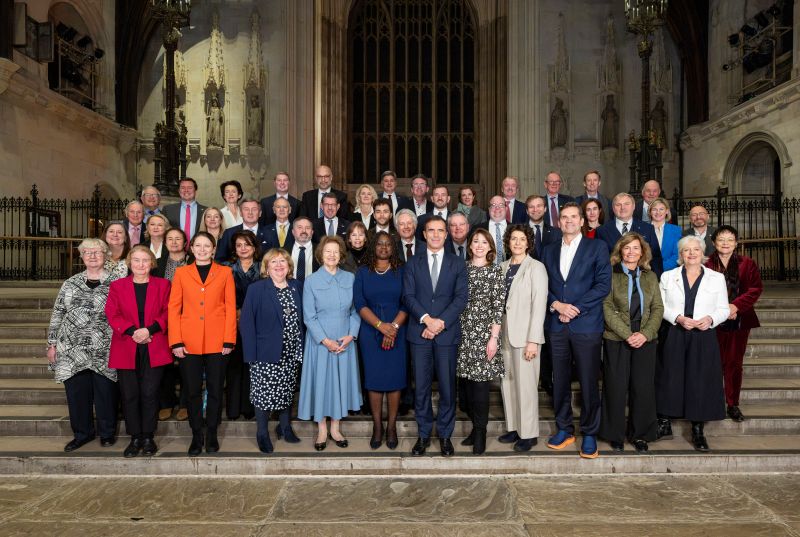
Members of the UK Parliament and European Parliament gathered in London on 16-17 November for the eighth meeting of the UK-EU Parliamentary Partnership Assembly (PPA).
Items under discussion included the state of play in EU-UK relations, looking towards Friday’s summit; the UK-EU Security and Defence Partnership; Capability in AI, Data and Digital Infrastructure; and Energy Security and Climate Change. The full meeting agenda is available here.
Members adopted a Recommendation, ‘The UK-EU Strategic Partnership: A Renewed Ambition’, to be issued to the co-chairs of the Trade and Cooperation Agreement Partnership Council (UK Minister Hamish Falconer and European Commissioner Maroš Šefčovič).
Cathal Boylan MLA and David Brooks MLA represented the Assembly at the meeting. The Assembly, along with other devolved legislatures, has observer status at the PPA.
Committee takes evidence on new hemp import regulations
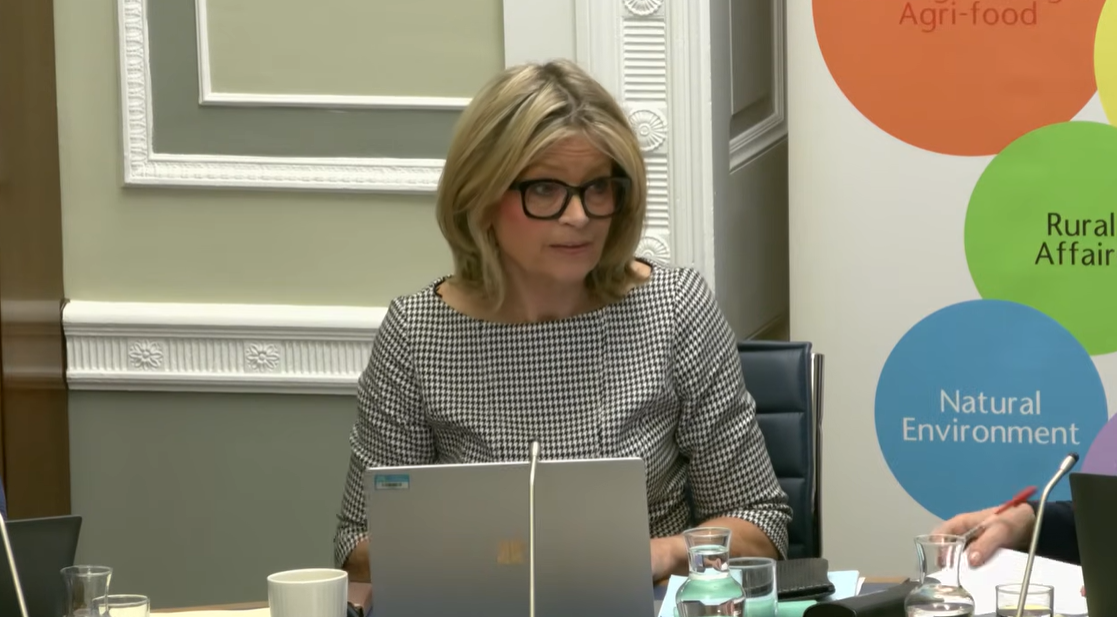
At its meeting on Thursday, 12 November, the Committee for Agriculture, Environment and Rural Affairs took evidence from departmental officials on The Hemp (Third Country Import) (Amendment) Regulations (Northern Ireland) 2026.
The proposed Statutory Rule will amend the Hemp (Third Country Imports) Regulations 2002, as they apply in Northern Ireland, primarily to raise the maximum acceptable Tetrahydrocannabinol (THC) level of hemp and hemp seeds from third countries from 0.2% to 0.3% in line with updated EU rules which are directly applicable in Northern Ireland under the Windsor Framework.
The THC threshold was increased to provide greater flexibility for hemp producers by allowing a wider range of approved varieties to be cultivated and marketed within the EU.
Although the maximum THC level currently remains at 0.2% in GB, officials advised the Committee that the UK Government has publicly committed to increase the maximum permitted level of THC in industrial hemp to 0.3%, which would remove potential divergence with Northern Ireland.
The Committee agreed that it had no objection to the proposed Statutory Rule, subject to the report by the Examiner of Statutory Rules. You can watch Thursday’s meeting here.
Windsor Framework Committee initiates inquiries on two EU regulations
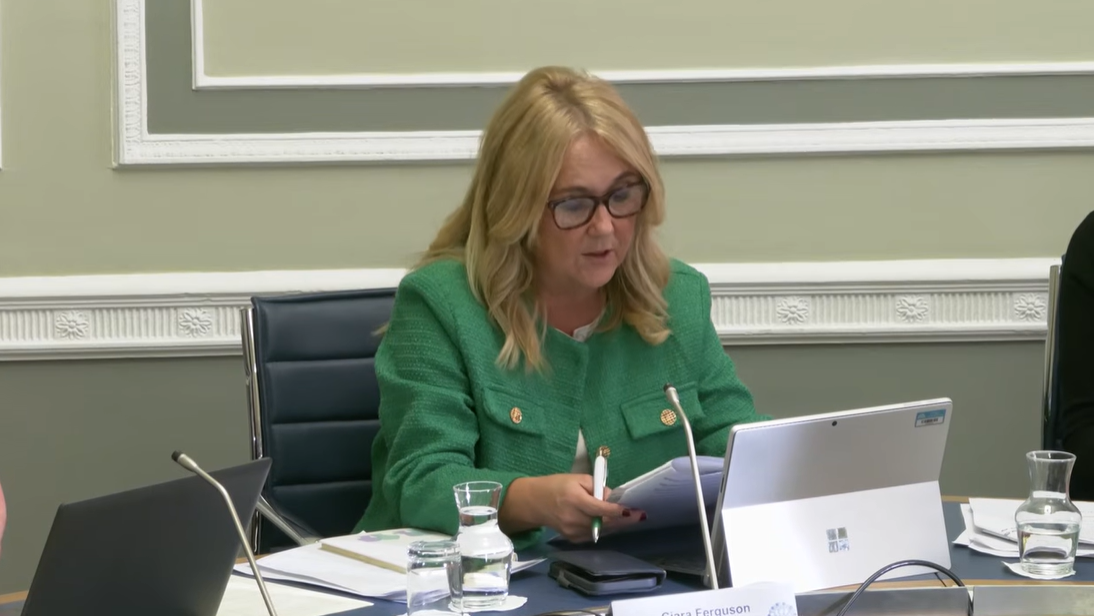
At its meeting on Thursday, 12 November, the Windsor Framework Democratic Scrutiny Committee (DSC) agreed to hold inquiries on two published EU regulations, the first regarding defence readiness and facilitating defence investments and conditions for defence industry, and the second regarding the simplification of intra-EU transfers of defence-related products and the simplification of security and defence procurement.
As the first regulation involves cross-departmental responsibilities, the Committee heard evidence from officials from the Department for the Economy, the Department of Agriculture, Environment and Rural Affairs and the Department of Justice.
Opening the evidence session, Mark McGregor, Head of Trade: Windsor Framework at the Department for the Economy, told the Committee that while defence is an excepted matter, the departmental interest is that the act amends four chemicals and environmental regulations which apply in Northern Ireland under Annex 2 of the Windsor Framework.
Following a discussion, the Committee agreed to carry out an inquiry into the proposed EU act. The Committee has issued a public ‘Call for Views’ which will remain open until 29 November 2026.
In relation to the regulation regarding the simplification of intra-EU transfers of defence-related products and the simplification of security and defence procurement, the Committee did not receive any evidence on the act from Northern Ireland Executive departments, although the UK Government had previously prepared an Explanatory Memorandum on the act when it was at proposal stage. In the absence of information from Executive departments, the Committee agreed that it would hold an inquiry. The ‘Call for Views’ will remain open until 29 November.
The Committee will take further evidence on the published acts from the Department for the Economy and The Executive Office at its next meeting on Thursday, 19 November. You can watch last Thursday’s meeting in full here.
Leaders gather in Dublin for Meeting of the European Political Community
© Government of Ireland
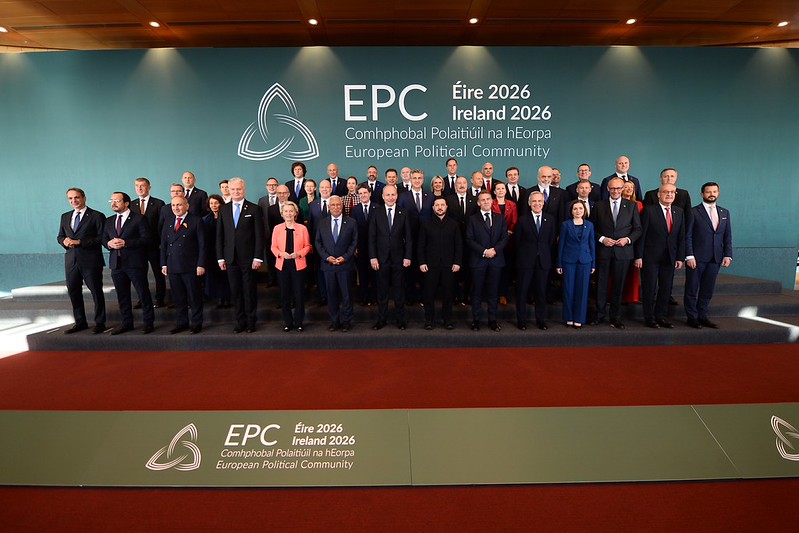
Dublin was very much at the centre of European politics on Thursday, 12 November when the city hosted the ninth meeting of the European Political Community (EPC). Bringing together more than 50 European leaders as well as other international figures including the Ukrainian President Volodymyr Zelenskyy and the Canadian Prime Minister Mark Carney, the summit was an opportunity for participants to discuss shared economic, political and security concerns.
Under the theme ‘Europe – Strong, Secure and Connected’, the Irish Taoiseach Micheál Martin and the President of the European Council, António Costa led dialogue on the ongoing war in Ukraine. Further issues discussed included defence cooperation, energy security, and the rise in cyber and hybrid threats.
Tackling illegal migration was also a key agenda item and a joint statement issued by the UK, Italy and Denmark and endorsed by 41 leaders set out opportunities for enhanced cooperation and continuing focus in this area.
Discussions continued in Dublin on Friday at an informal European Council meeting when participants turned their attention to AI. During remarks made at a press conference following the meeting, the President of the European Council, António Costa said: “AI is the most important technology of our time. Europe must make the most of its benefits, from higher productivity to better public services. We must also manage the risks effectively.”
Lords Committee publishes report on Dynamic Alignment
The House of Lords European Affairs Committee published its report, ‘Dynamic alignment: a fundamental change’, on Friday 13 November.
Focusing on the implications of proposed UK-EU agreements on sanitary and phytosanitary (SPS) measures, emissions trading and electricity, the report underlines that dynamic alignment: “… will make for a fundamental change in the UK-EU relationship which will increase the demands on Parliament for scrutiny and on the Government for engagement with the EU institutions in Brussels.”
Central to the Committee’s findings is the need for a review of the current arrangements in Parliament to ensure that it has the: “procedures, institutional arrangements and resources that it needs in order to carry out the appropriate scrutiny.” The report also emphasises that the UK Parliament must establish a “…robust, consistent and adequately resourced cross-departmental system…” in order to identify, assess and engage on planned EU law that falls within the scope of the UK’s dynamic alignment commitments. The Committee adds that this system will need to: “…encompass the UK Mission to the EU in Brussels and timely engagement with the devolved governments.”
Speaking after the publication of the report, the Committee Chair, Lord Stirrup said that the Committee had heard during its evidence sessions that: “…the SPS Agreement alone might generate at least 780 pieces of in-scope EU law a year.” He observed that while this might sound like a technical issue, “…the rules in question can affect everyday matters, from food standards and consumer prices to business costs and household budgets. That is why effective parliamentary scrutiny is essential to ensure such changes do not pass without proper oversight.”
The UK Government’s response to the Committee report is expected in January 2027.
Windsor Framework centre of discussions at UK-EU Joint Committee meeting
© Image posted by the UK Minister for Intergovernmental Relations and European Relations, Hamish Falconer MP on X
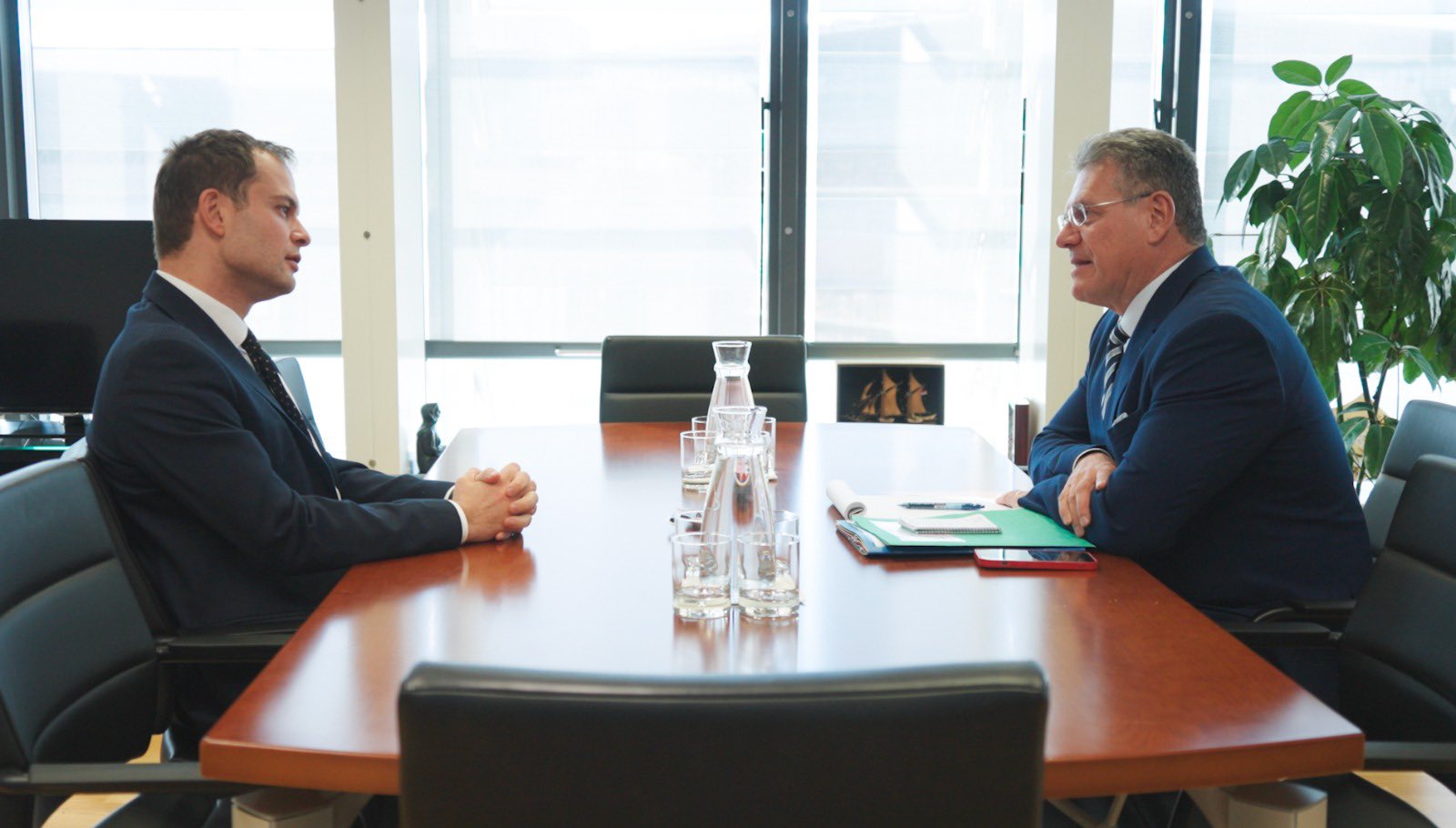
The sixteenth meeting of the UK-EU Withdrawal Agreement Joint Committee took place in Brussels on the 10 November.
Co-chaired by the UK Minister for Intergovernmental Relations and European Relations, Hamish Falconer MP, and European Commissioner, Maroš Šefčovič, much of Tuesday’s meeting focused on the ongoing implementation of the Windsor Framework.
The Minister and the Commissioner welcomed an EU-UK declaration on the application of Article 5 of the Windsor Framework, which clarified that: “… handling fees for consumer parcels would be treated like customs duties… ensuring that they would not be paid on goods staying in the UK and any fees would be collected and kept by UK authorities for goods at risk of entering the EU.”
With regards the implementation of sanitary and phytosanitary (SPS) measures, they agreed to strengthen efforts to: “…ensure that all agri-foods are moved to Northern Ireland in accordance with the Windsor Framework rules.” They further acknowledged the work by the UK and the EU, including in the area of SPS, to strengthen: “…their bilateral partnership...” which they said would: “…also bring additional benefits to Northern Ireland.”
As covered in last week’s Brexit and Beyond, the co-chairs also agreed to add two acts to Annex 2 of the Windsor Framework: the EU Forced Labour Regulation and limited provisions of the EU Artificial Intelligence Act. The co-chairs adopted a further Joint Committee decision in relation to Social Security Coordination.
At Tuesday’s meeting the co-chairs also discussed the addition of the Cyber Resilience Act to the Windsor Framework, with both agreeing to: “… examine all possibilities to maintain the good functioning of the Framework and take the needed decisions in the future to this effect.” You can read the Joint Statement in full here.
Westminster brief
In a Westminster Hall debate on Thursday, 12 November, MPs discussed China and the UK Economy. The motion was introduced by the Chair of the Business, Innovation, Science and Trade Committee, Liam Byrne MP, and centred upon the Committee’s report which was published on 2 November.
Mr. Byrne noted that there was currently, “a debate with our European partners about whether we should align on anti-competitive practices by China and introduce tariffs on electric vehicles.”
Referencing work carried out by the Organisation for Economic Co-operation and Development (OECD), Mr. Byrne said that it had made clear that: “…in some sectors of the economy China is over-subsidising its industry by six times more than we are in Europe.” Noting that this was costing tens of thousands of jobs across Europe, he told MPs that the Committee had concluded: “… that we should work much harder with our partners in the European Union to develop pro-competition, pro-fairness measures for levelling the playing field with China.” You can read the debate in full here.
The Minister of State for Trade, Lord Sarwar, issued a written statement on the introduction of a new melt and pour reporting requirement for steel products within the scope of the UK’s steel trade measure on Monday, 16 November. The requirement is intended to “improve transparency in steel supply chains by identifying where steel was originally melted and poured”, while also providing evidence to inform future policy decisions aimed at addressing global steel overcapacity and supporting UK steelmaking.
The statement further emphasised that the design of the UK requirement closely matched the European Union’s approach: “…in order to simplify arrangements for businesses trading across both markets and reduce complexity for traders in Northern Ireland.” Mandatory reporting will begin on 1 July 2027. You can read the statement in full here.
On Monday evening, the Delegated Legislation Committee debated a motion on the draft Persistent Organic Pollutants (Amendment) Regulations 2026. Moving the motion, the Parliamentary Under-Secretary for the Department for Environment, Food and Rural Affairs (Defra), Jenny Riddell-Carpenter MP told the Committee that the instrument will prohibit the manufacturing, placing on the market and use of five recently adopted POPs substances. Ms. Carpenter explained that POPs are substances that have been agreed internationally under the UN Stockholm convention to be extremely dangerous to the health of humans, wildlife, and the environment. She advised that: “Under the Windsor framework, equivalent amendments to the EU POPs regulation will apply directly in Northern Ireland…” She added that Defra anticipates that: “…the EU will make similar amendments to the EU POPs regulation where equivalent amendments are not already in force in the EU and Northern Ireland.”
Concluding the debate, the Minister said that it was worth stating that: “…both the UK and the EU are parties to the Stockholm convention and subject to the same obligations regarding the prohibition of harmful POPs adopted under the convention.” She added that Defra did not: “…anticipate any significant divergence from issues between this instrument applying to Great Britain and the equivalent regulation applying in the EU and Northern Ireland.” The question was put to the Committee and agreed to; you can read the debate in full here.
The draft Persistent Organic Pollutants (Amendment) Regulations 2026 were also discussed in the House of Lords Grand Committee on Tuesday afternoon. The motion was agreed and you can read the full House of Lords debate here.
Hook, Line and Sinker? MPs discuss merits of a fishing and seafood strategy
© Copyright: European Union , 2018
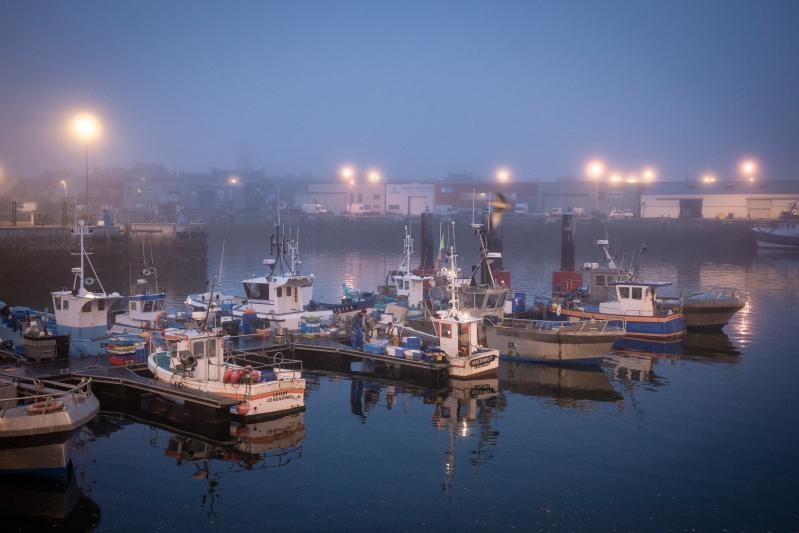
On Tuesday, 10 November Daniel Zeichner MP moved a motion in a Westminster Hall debate on the potential merits of a fishing and seafood sector strategy. During the debate, MPs discussed a number of issues facing the sector, including rising fuel costs, as well as ongoing environmental and regulatory challenges.
Jim Shannon MP raised concerns regarding the ongoing high costs of fuel resulting in: “Northern Ireland fishing boats are being forced to tie up…” Mr. Shannon told MPs that the: “Republic of Ireland and EU companies are already getting fuel support from their countries, creating an unfair competitive advantage over those in other jurisdictions.”
Responding to the issues raised by Jim Shannon, the Parliamentary Under-Secretary of State for Environment, Food and Rural Affairs, Stephen Morgan MP said that he recognised: “…the genuine hardship that high, volatile fuel prices are causing, as well as the concerns about competition from EU vessels that may have benefited from temporary fuel-related support.”He told MPs that there was support available via the existing tax system and that the government had announced funding for engines and gearboxes to improve fuel efficiency.
Concluding his remarks, Mr. Morgan said that the government was: “…working at pace to finalise arrangements for a new SPS deal, which will make it easier and cheaper to export seafood to the EU.” You can read Tuesday’s debate in full here.
Parliamentary Planner

House of Commons
Earlier today, the Northern Ireland Affairs Committee took evidence from the Secretary of State for Northern Ireland, the Rt Hon Chris Bryant MP. You can watch the meeting here.
Questions to the Cabinet Office tomorrow include: what progress it has made on implementing UK-EU summit agreements and what recent discussions the Minister has had with her EU counterparts on the future EU-UK relationship.
House of Lords
On Thursday, Lord Lilley will move a motion to take note of international approaches to removing sanitary and phytosanitary checks at EU borders.
The European Union (Withdrawal Arrangements) Bill will have its second reading on Friday. The Bill, brought forward by Lord Dodds of Duncairn, aims to: “make provision to modify the effect on domestic law of arrangements relating to the withdrawal of the United Kingdom from the European Union.”
Scottish Parliament
During portfolio questions this afternoon, the Minister for Public Service Reform, Europe, External Affairs and Energy, Stephen Gethins MSP was expected to respond to a question on what analysis the Scottish Government has carried out or plans to carry out of the potential benefits to Scotland of the UK rejoining the EU.
This Week in the Assembly
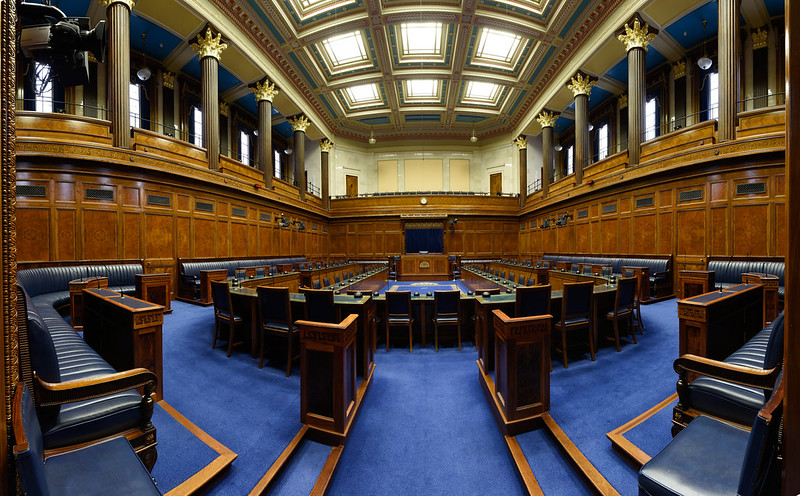
At its meeting on Thursday, the Committee will continue its deliberations on the Areas with Natural Constraints (Payments) Bill with the Bill sponsor, Declan McAleer MLA.
The Windsor Framework Democratic Scrutiny Committee will also meet on Thursday morning. You can watch both meetings live or via catch-up here.
PM looks beyond the summit at Lord Mayor’s Banquet
© Picture by Simon Dawson / No 10 Downing Street
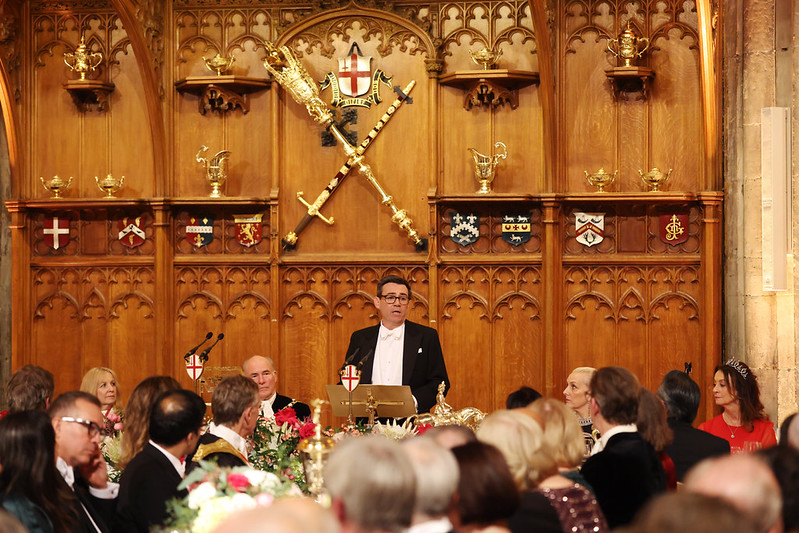
Delivering his speech at the Lord Mayor's Banquet on 16 November, the Prime Minister Andy Burnham MP told attendees that his mission in relation to UK-EU relations and the upcoming summit was to: “…draw a line under a decade of drift and division and to set Britain on a more hopeful, unifying path.”
Mr. Burnham said that since the 2016 referendum, the UK had lost more than it had gained, adding that: “The hard Brexit we were given is not good enough for Britain.” While noting that some sectors of the economy such as financial services and tech had adapted well, the Prime Minister referenced the findings of the Office for Budget Responsibility (OBR), that, “Taken as a whole… Brexit has meant a 4% hit to the British economy.”
Noting that: “This is not about re-running the arguments of 2016…”, Mr. Burnham said a deal between the UK and the EU was about: “…making practical changes to the Brexit arrangements…” He emphasised that: “Britain is not in a position to turn its back on a potential deal that could add up to 0.4% to GDP.”
The Prime Minister reiterated the government’s position that it would: “…do nothing that crosses our red lines this side of a General Election…” However, he added that following the summit, the government would: “…initiate a discussion with our EU partners about options for our long-term relationship…”
The Prime Minister’s speech garnered significant traction across a number of media outlets including: The Financial Times (may be behind a paywall), The Independent, The Guardian, the BBC and Politico. You can read the speech in full here.
The government’s European Partnership Bill, announced in the King’s Speech back in May, is expected to be introduced at Westminster next week.
Summit Stories: what the papers are saying

As Friday’s UK-EU summit approaches, media focus has turned to the potential outcomes and issues surrounding continuing sticking points in the negotiations.
In an article published by Reuters on 16 November, Kate Holton and Philip Blenkinsop highlight that while the UK and the EU are expected to agree deals on food and carbon markets: “…disagreements over the size of a youth mobility scheme and university tuition fees mean any package will take another six months to be signed off.”
The Youth Experience Scheme was further explored in an article in the Guardian on Tuesday, with the media outlet reporting that EU and UK leaders are expected to: “…settle on a quota of about 100,000 a year being allowed to work, travel or study in each others’ territories from 2028.”
The Times (behind a pay wall) and the Daily Express reported Tuesday on what both publications described as a "Farage penalty": “UK and EU negotiators have agreed a clause in the food and agriculture pact that would require either side to pay compensation if they withdraw.”
Meanwhile, from citrus marmalade to smoky flavoured crisps – the UK Cabinet Office published a UK-EU Summit package - factsheet and mythbuster yesterday.
New research looks at potential impact of SPS agreement on GB firms

Ahead of this week’s UK-EU Summit, the UK Department for Environment, Food and Rural Affairs (Defra) published new research, EU Trade Opportunities for Food and Drink SMEs under a UK-EU SPS Agreement. The research involved a survey of 600 small and medium-sized enterprises (SMEs) in the GB food and drink manufacturing sector.
A press release published by the Department on 13 November states that: “55% of SME exporters to the EU and 47% of importers reported lower profitability following the introduction of new trading requirements in January 2021.” However, it also highlights that 58% of food and drink manufacturing SMEs said that: “…a new UK-EU food and drink agreement could help them increase, resume or begin exporting within a year, with half saying the same for imports.”
You can read the press release in full here and the full report here.
Seeing the wood for the trees: Defra launches consultation on deforestation approach

On 11 November, Defra launched a public consultation on its proposed approach towards tackling deforestation across the UK.
This follows on from the publication of a policy paper in June 2026, in which the department set out that it intended to introduce measures in new UK regulations that would operate consistently alongside the EU Regulation on Deforestation-free Products (EUDR), which applies in Northern Ireland Under the Windsor Framework. We covered the background to this in greater depth in the 29 June edition of Brexit and Beyond.
You can find out more about the proposed regulations here and access the consultation document here. The consultation will remain open until 17 January 2027.
In case you missed it…

-
The Assembly Research and Information Service (RaISe) has issued new topical publications in advance of the UK-EU Summit, including: The UK-EU Reset: Reflections ahead of the second UK-EU Summit, Mapping the Windsor Framework and UK-EU Reset: SPS and The UK-EU reset and the role of devolution.
-
In an article published by ‘The House Magazine’ on Wednesday, 18 November, the co-chairs of the Parliamentary Partnership Assembly, Marsha de Cordova MP and Sandro Gozi MEP, say: Now more than ever, this is a pivotal moment to strengthen the UK-EU partnership.
-
Chatham House published an article on 16 November: The UK and the EU need an economic security partnership, in which Jerome Puri, Research Fellow with the UK in the World Programme states that: “The UK–EU Summit is an opportunity to secure a new partnership suitable for an increasingly hostile global economy.”
-
UK in a Changing Europe published a new report on 17 November re: The UK-EU summit: what to expect and what comes next?
-
A Joint Statement of the EU and UK Domestic Advisory Groups under the UK-EU Trade and Cooperation Agreement (TCA) was published on 12 November. The statement emphasises that the DAGs should be “meaningfully involved in the 2nd EU-UK summit and its follow-up.” Under the TCA, the EU and UK established Domestic Advisory Groups (DAGs), made up of civil society organisations, such as NGOs, business organisations, and trade unions, which advise the respective parties on the implementation of the agreement.


