Brexit and Beyond
29 June 2026

In this edition of Brexit and Beyond, we take a look at some of the debates and meetings in the Assembly last week, including The Executive Office Committee's evidence session with the Equality Commission for Northern Ireland.
Last week, Defra published a new policy paper setting out its approach to deforestation regulations, we explore the relevance for Northern Ireland.
In Westminster Brief, we highlight some of the EU related statements, questions, and discussions that took place last week.
Our regular ‘Parliamentary Planner’ section highlights upcoming debates and discussion topics at Westminster this week, and as always, we link you through to the news stories and items of interest you may have missed.
As the Assembly prepares to enter summer recess next week, we too will be taking a short break. Thanks to all of our subscribers for your continued support and interest in Brexit and Beyond.
- Assembly Round-up
- Marking the Ten-year Anniversary of the Brexit Referendum
- Committee hears evidence from Equality Commission on the ‘For Women Scotland’ Supreme Court Judgment
- Westminster Brief
- Lords Committee publishes correspondence from the Secretary of State and the Paymaster General
- UK Government sets out its approach to tackling deforestation
- This week in the Assembly
- Parliamentary Planner
- Ireland takes on Presidency of Council on 1 July
- In case you missed it…
Assembly Round-up

Our regular weekly round-up of Brexit, EU and international focused debates and Committee evidence sessions at the Assembly.
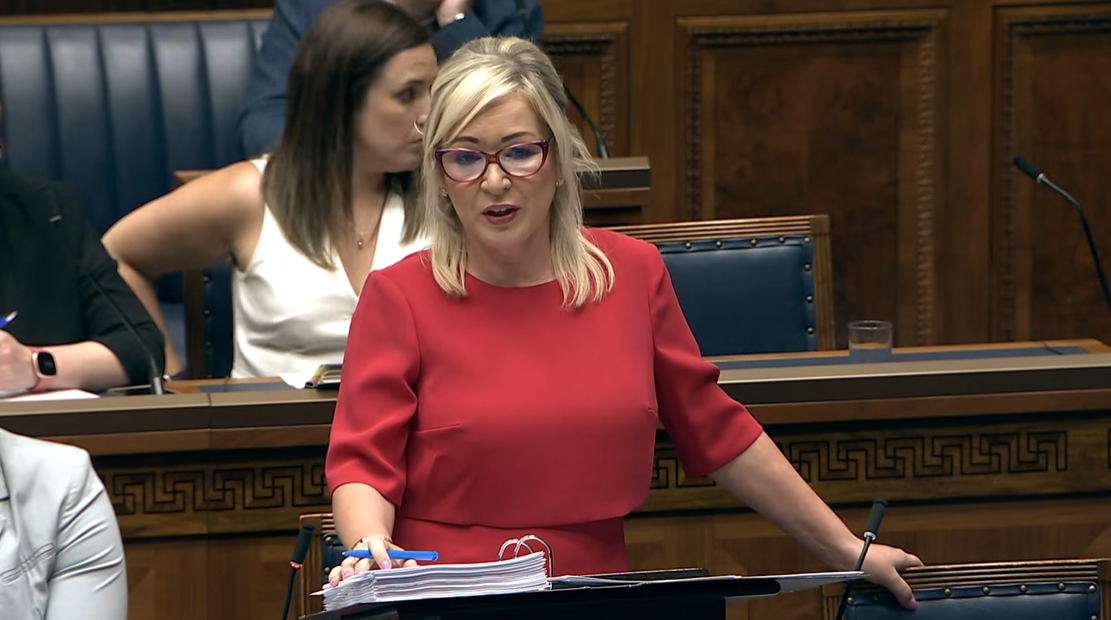
The First Minister, Michelle O'Neill MLA was in the chamber on Monday for Questions to The Executive Office. Responding to questions regarding the resignation of the Prime Minister, Sir Keir Starmer, the First Minister said: “Tomorrow is the 10th anniversary of Brexit, which inflicted so much damage to the wider economy. We are now on the verge of having a seventh British Prime Minister in 10 years.”
Ms. O’Neill also described Brexit as: “…an unmitigated disaster for jobs, businesses and our economy, and has led to a very toxic atmosphere out there in society.”
You can read the First Minister’s answers in full here.
Marking the Ten-year Anniversary of the Brexit Referendum
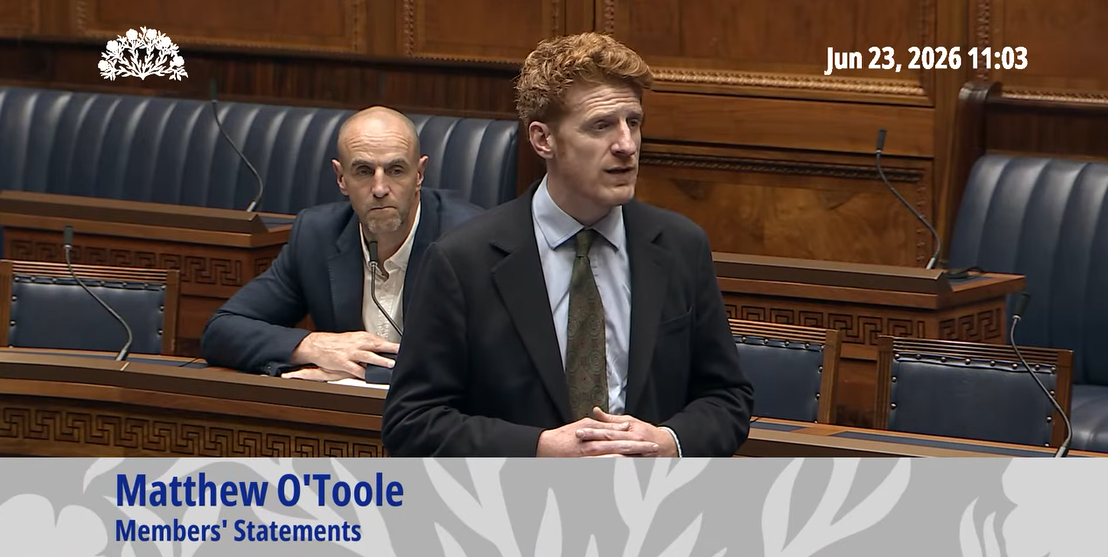
During Members Statements on Tuesday, MLAs took the opportunity to speak on the ten-year anniversary of the Brexit Referendum.
The Leader of the Opposition, Matthew O’Toole MLA told Members: “…it bears repeating that Northern Ireland did not vote to leave the European Union; it voted to remain in the European Union but was removed against our will.” He added: “At that time, the warnings were clear that Northern Ireland would be a victim of Brexit and the complex relations on the island of Ireland and between the islands of Britain and Ireland would be jeopardised.”
Concluding his remarks, Mr. O’Toole said that his party believed that: “…the best future for the UK would be to rejoin the European Union. That is not likely, but the best choice for Northern Ireland is to rebuild that common purpose and build a new Ireland back inside the European Union.”
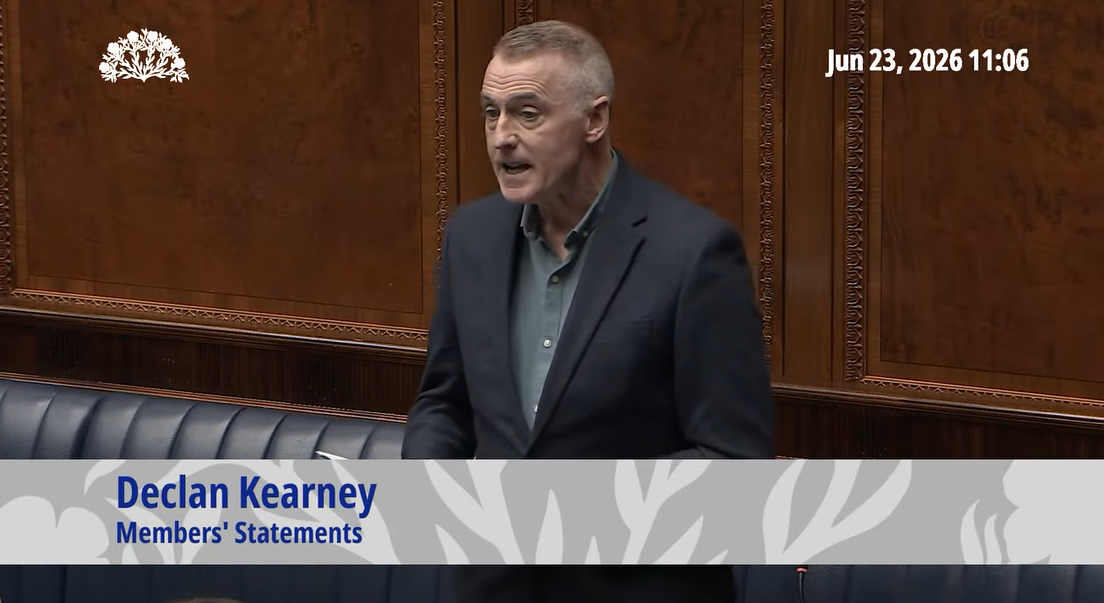
In his statement, Declan Kearney MLA said: “…the fallout from Brexit is a reality that is being felt hard by workers and families across the North daily…”
He told Members that: “There is a way to remove the negative and enduring legacy of Brexit. Irish unity provides that option. Therefore, it is time to widen participation in the debate.” Mr. Kearney added: “… the term of Ireland's presidency of the European Council provides an important opportunity to do so.”
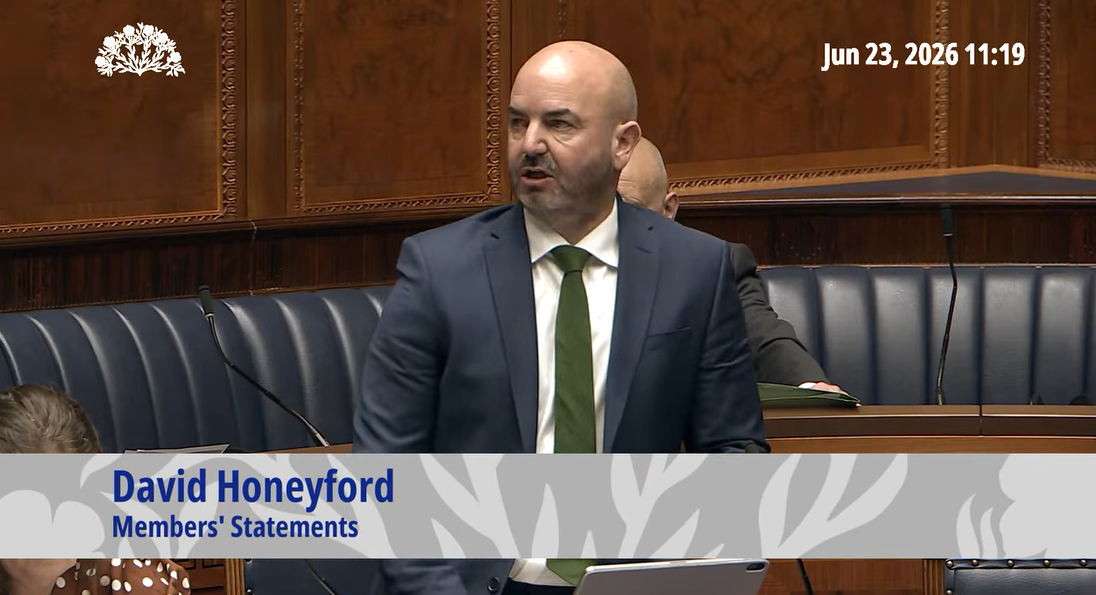
David Honeyford MLA told the Assembly that: “The biggest cost of Brexit has been instability, which scares off investment. Since the Brexit referendum, the UK has had seven Prime Ministers, and we have had the Assembly collapse twice. Political uncertainty has become normal.”
Mr. Honeyford said that the question now: “…is how we move forward, because we find ourselves in a unique position, with dual market access, to both the UK and EU markets, and the opportunity to sell the region that we all enjoy. We need to maximise that opportunity as best we can for our people.” You can read the Members Statements in full here:
Committee hears evidence from Equality Commission on the ‘For Women Scotland’ Supreme Court Judgment
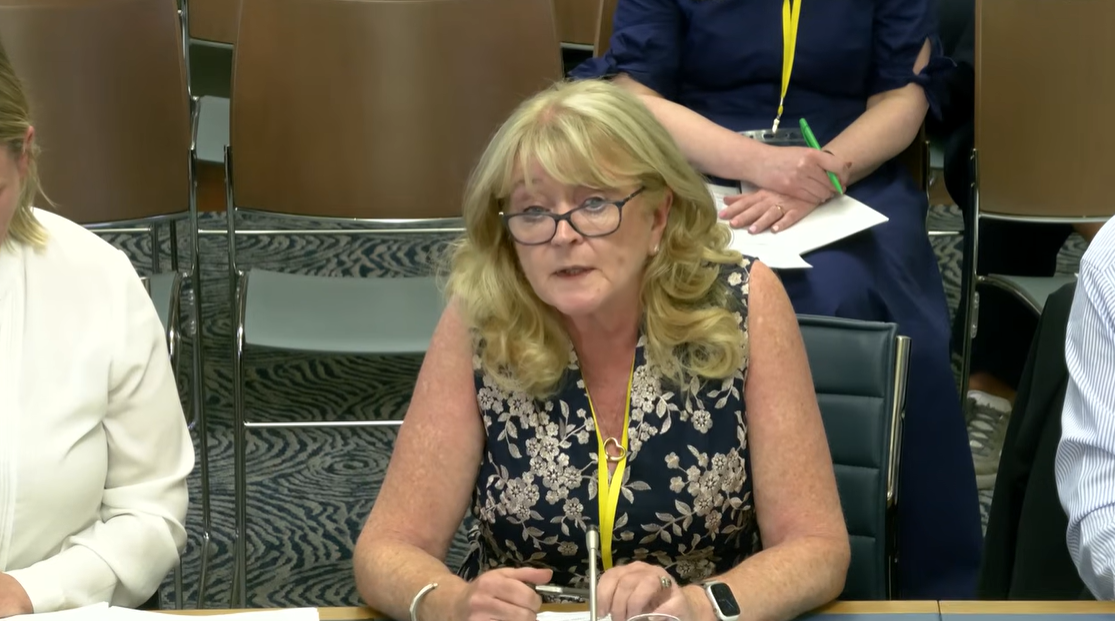
At its meeting on Wednesday, 24 June, the Committee for The Executive Office took evidence from representatives from the Equality Commission for Northern Ireland on the April 2025 Supreme Court judgment in the “For Women Scotland” case.
The Equality Commission has applied to the High Court for leave to apply for a judicial review to clarify how the Supreme Court judgment should be applied in the different legal context of Northern Ireland, citing that the judgment did not consider the particular context of the different legal obligations in Northern Ireland, including Article 2 of the Windsor Framework.
Opening Wednesday’s evidence session, the Chief Commissioner of the Equality Commission, Geraldine McGahey OBE told the Committee that the Commission was not challenging the judgment of the Supreme Court in this particular case, which she said: “…was an important judgment.” She added: “…were it not for the government’s commitment under Article 2 of the Windsor Framework, courts and tribunals in Northern Ireland would and should deem the judgment in ‘For Women Scotland’ as highly persuasive in respect of interpreting terms such as sex, men and women in Northern Ireland Equality Law.”
The Chief Commissioner told Members that following the judgment the Equality Commission had received a number of queries regarding a potential breach of Article 2 of the Windsor Framework. She noted that the Equality Commission has “…a statutory responsibility to consider all relevant issues and seek clarity so that any guidance we issue is workable, accurate and robust.”
Referencing the Supreme Court’s recent judgment on Dillon, Ms. McGahey said that: “…it provided important clarification concerning civil rights. It also confirmed that Article 2 is capable of having enforceable legal effects in Northern Ireland, in certain circumstances…”
The Chief Commissioner told the Committee that the Equality Commission is already facing two related judicial review applications from the Good Law Project and The Women’s Rights Network. She said that: “…without legal clarity there is a significant risk of continued uncertainty, further litigation and employers, service providers and public authorities being left to navigate these complex issues and questions for themselves.”
Setting out the judicial timescale, the Chief Commissioner advised Members that there would be a further review hearing in the courts on 7 September and that two weeks commencing on 30 November had been set aside for the leave hearing. She added that if leave was granted, the Equality Commission anticipated that the hearing would take place in the spring of 2027. You can watch Wednesday’s meeting in full here.
Westminster Brief
On Monday during a statement on the G7 summit, the Deputy Prime Minister, David Lammy MP told Members that the EU Commission President Ursula von der Leyen and the Prime Minister had: “…agreed to intensify work to deepen our economic ties.”
Responding to concerns regarding the postponement of the UK-EU Summit, the Deputy Prime Minister assured MPs that the summit would take place as soon as possible. He added: “We are having ongoing discussions with the European Union on SPS, youth mobility, steel and a range of issues on a day-to-day basis.” You can read the full statement and questions from Members here.
On Tuesday during questions to The Treasury, The Chancellor of the Exchequer, Rachel Reeves MP told MPs that she had: “…worked closely with my counterparts across the EU as part of this Government’s commitment to resetting the UK-EU relationship, most recently at meetings of the G7 in Paris, and meetings with the European Bank for Reconstruction and Development in Riga.” The Chancellor added that at the upcoming UK-EU summit: “…we hope to be able to conclude deals on food and agrifood, on linking to the EU emissions trading schemes, and on an ambitious youth mobility scheme.”
Responding to a question on whether it was now time to discuss the opportunity, costs and benefits for more key parts of our economy of rejoining the single market, the Chancellor said: “We made a manifesto commitment that we would not rejoin the single market or customs union, or return to the free movement of labour. Those red lines stand, but within them there is an awful lot that we can do to improve relations.” You can read the Chancellor’s responses in full here.
On Wednesday afternoon, the Secretary of State for Environment, Food and Rural Affairs, Emma Reynolds MP, delivered a statement on the publication of the (25 year) Farming Road Map and Profitability Review. The Minister described the Road Map, which applies to England, as: “…the first ever long-term plan for farming in this country, giving farmers the clarity and confidence that they need to make investment decisions.”
Responding to a question asking for further detail on the UK-EU SPS agreement in relation to its terms, implementation and the impact on trading deals with other nations, Ms. Reynolds said: “…we are working closely with the National Farmers’ Union about the implementation timelines. We want a smooth transition to what comes next.”
You can read the full statement and questions from Members here. A press release, providing further detail on the 25-year Farming Road Map, including information on establishing a new UK-EU Sanitary and Phytosanitary area to cut export friction, was published on 24 June.
During questions to the Cabinet Office on Thursday, the Paymaster General and Minister for the Cabinet Office, Nick Thomas-Symonds MP, responded to a series of questions on UK-EU relations.
On the establishment of a UK-EU youth experience scheme, the Minister told Members that: “Negotiations have been proceeding very well. I look forward to making the case for those opportunities to work, travel and study for young people…”
Regarding Erasmus+ Mr. Thomas-Symonds said: “We have re-accession to Erasmus+ from next year at a cost of £570 million, after I negotiated a 30% discount.” He added that after 10 months, there is a review clause in the agreement which will provide the government with an opportunity to: “…balance participation versus cost.” You can read the full debate and questionshere.
Meanwhile the House of Lords Northern Ireland Scrutiny Committee continued hearing oral evidence as part of its inquiry into Article 2 of the Protocol/Windsor Framework.
Last Wednesday, the Committee heard evidence from Professor Christopher McCrudden CB, Barrister at Blackstone Chambers and Emeritus Professor of Human Rights and Equality Law at Queen's University Belfast, and from Samuel Willis, Barrister at 11KBW. You can read a transcript of the meeting here.
Lords Committee publishes correspondence from the Secretary of State and the Paymaster General
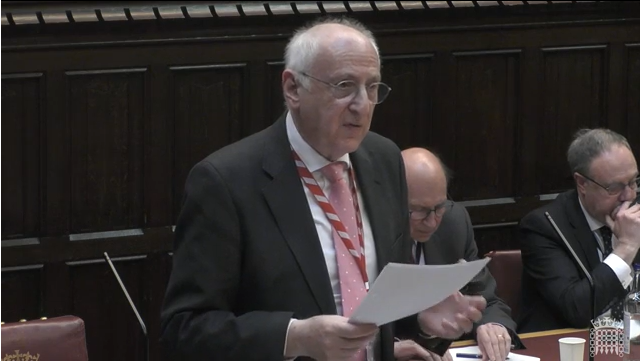
On Thursday, 25 June, the Northern Ireland Scrutiny Committee published a letter from the Secretary of State, Hilary Benn MP and the Paymaster General and Minister for the Cabinet Office, Nick Thomas-Symonds MP, which provided updates relating to the Committee’s follow-up inquiry on Strengthening Northern Ireland’s voice in the context of the Windsor Framework.
Regarding the Trader Support Service (TSS), the Ministers write that their goal is “…to ensure that the service remains a high-quality, free-to-use resource.” The letter notes specific suggestions made by Committee witnesses for the service, “to improve user-friendliness, compliance management, and the reintroduction of human triage for bespoke queries,” and states that these views will be shared with HMRC.
The Secretary of State and the Minister outline that the Northern Ireland Business Support Service will act as a centralised ‘Enhanced One Stop Shop’ source for regulatory advice, tailored to SMEs. The Government is considering “…how AI can help facilitate providing timely and tailored information to businesses, supported also by the casework resolution function”, and which elements of the service will be delivered by contractors or from within government. The objective remains “…to have core functionality operational within the 2026-27 financial year.”
The letter provides additional updates on stakeholder engagement, including through the Northern Ireland Business Stakeholders Group (NIBSG) and on Customs issues with particular reference to Lord Murphy’s recommendation: “…to look at all possibilities to reduce frictions for logistics and haulage businesses.” You can read the letter in full here.
In further correspondence, the Secretary of State provided an update to the Committee on the implementation of mandatory dual vehicle type approvals. Regarding the Department of Transport’s, recent consultation, the Secretary of State said that he expects a full response to the call for evidence to be published shortly. He added that in the interim, the Department of Transport is: “…already taking action to streamline manufacturers’ ability to sell the same vehicles across the whole UK internal market, by consulting on Euro 7 and general safety regulations.”
UK Government sets out its approach to tackling deforestation

On 23 June, the UK Government’s Department for Environment, Food and Rural Affairs (Defra) published a new policy paper: The UK’s approach to deforestation regulations.
In the paper, Defra states that its aim is: “...to require businesses in GB with an annual turnover of over £1 million, that use forest risk commodities and wood products, to carry out due diligence to ensure these are produced in compliance with relevant local laws.” Measures would operate consistently alongside the EU Regulation on Deforestation-free Products (EUDR), so that the information that GB businesses must hold would be “broadly the same as what is needed for a due diligence statement when exporting to the EU or moving goods to Northern Ireland under the EUDR”.
The paper notes that the EU Regulation on Deforestation-free Products (EUDR): “…will apply in Northern Ireland as part of arrangements which ensure Northern Ireland’s unique access to the EU single market is maintained.” Defra will support the UK Government’s commitment to protect the UK internal market by delivering an approach in Great Britain that operates consistently alongside the EUDR, which will also ensure: “…the dual market access upon which Northern Ireland businesses depend is maintained.” Defra underlines that its approach will support trade with the EU as well as reducing regulatory divergence between Great Britain and Northern Ireland.
As outlined in the policy paper, from 30 December 2026 large and medium UK businesses operating within the EU or placing relevant products on the EU or Northern Ireland markets will have to comply with the EUDR. The Department further states that it will provide further specific guidance on movements from Great Britain to Northern Ireland as soon as possible.
This week in the Assembly
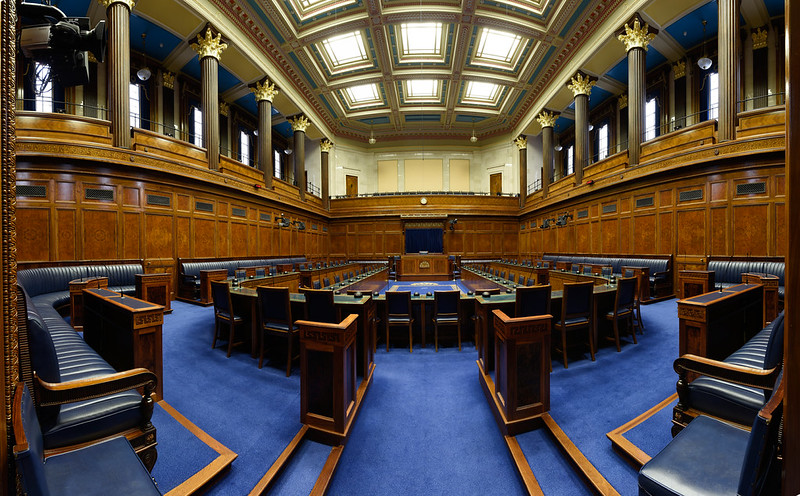
Earlier today, the Minister for Finance, John O’Dowd MLA delivered a statement to the Assembly on the North South Ministerial Council in Special EU Programmes Sectoral Format. A further statement on the North South Ministerial Council Inland Waterways Sectoral Format Meeting was provided by the Minister for Infrastructure, Liz Kimmins MLA.
On Thursday, the Committee for Agriculture, Environment and Rural Affairs will hear from the Minister, Andrew Muir, MLA, on current departmental issues and programmes. You can watch Thursday's meeting here.
Parliamentary Planner

It’s another busy week ahead for Brexit and EU related Affairs at Westminster.
House of Commons
This afternoon, the Northern Ireland Affairs Committee took evidence on its inquiry into: Economic growth in Northern Ireland: new and emerging sectors. Evidence was provided by: Blair McDougall MP, Minister for Small Business and Economic Transformation at the Department for Business and Trade; Matthew Patrick MP, Parliamentary Under-Secretary of State at the Northern Ireland Office; and Paul Flynn, Deputy Director for Windsor Framework Taskforce at the Northern Ireland Office. You can watch the meeting here.
On Tuesday, the Third Delegated Legislation Committee will debate ‘The draft Supply of Machinery (Safety) (Amendment etc.) and the EU Machinery Regulation (Enforcement etc. in Northern Ireland) Regulations 2026’. This Statutory Instrument (SI) provides for the application of theEU Machinery Regulation which will apply in Northern Ireland under the Windsor Framework from 20 January 2027.
The SI applies to both workplace machinery and consumer products, including excavators, cranes, and leaf blowers. The Health and Safety Executive Northern Ireland (HSENI) and local government district councils will be responsible for enforcement of workplace and consumer products, respectively.
GB will continue with its own machinery safety regulations, but the UK draft legislation creates a route for machinery compliant with the new EU Machinery Regulation to be placed on the GB market.
Also on Tuesday, the Environment, Food and Rural Affairs Committee will hold an evidence session as part of its inquiry on Biosecurity and animal welfare. Topics for scrutiny within the inquiry include the potential SPS agreement with the EU.
Providing evidence this week are: Abigail Seager, CEO at Veterinary Medicines Directorate; Dr Suzanne Eckford, Head of International Office at Veterinary Medicines Directorate and Lea Reynolds, Head of Policy Development and Delivery at Veterinary Medicines Directorate. The meeting will be streamed live here.
On Thursday, 2 July questions to the Department for Business and Trade include: ‘What recent assessment he has made of the potential impact of free trade agreements on family businesses’; ‘What steps his Department is taking to increase trade with Europe’ and ‘What steps he is taking through international trade policies to help increase the financial sustainability of the farming sector’.
House of Lords
On Wednesday, the Northern Ireland Scrutiny Committee will continue its inquiry into Article 2 of the Protocol/Windsor Framework. This week, Members will hear from representatives from the Northern Ireland Human Rights Commission: Alyson Kilpatrick, Chief Commissioner; Dr Claire McCann, Senior Policy and Research Officer and Éilis Haughey, Director (Human Rights after EU Withdrawal).
Ireland takes on Presidency of Council on 1 July
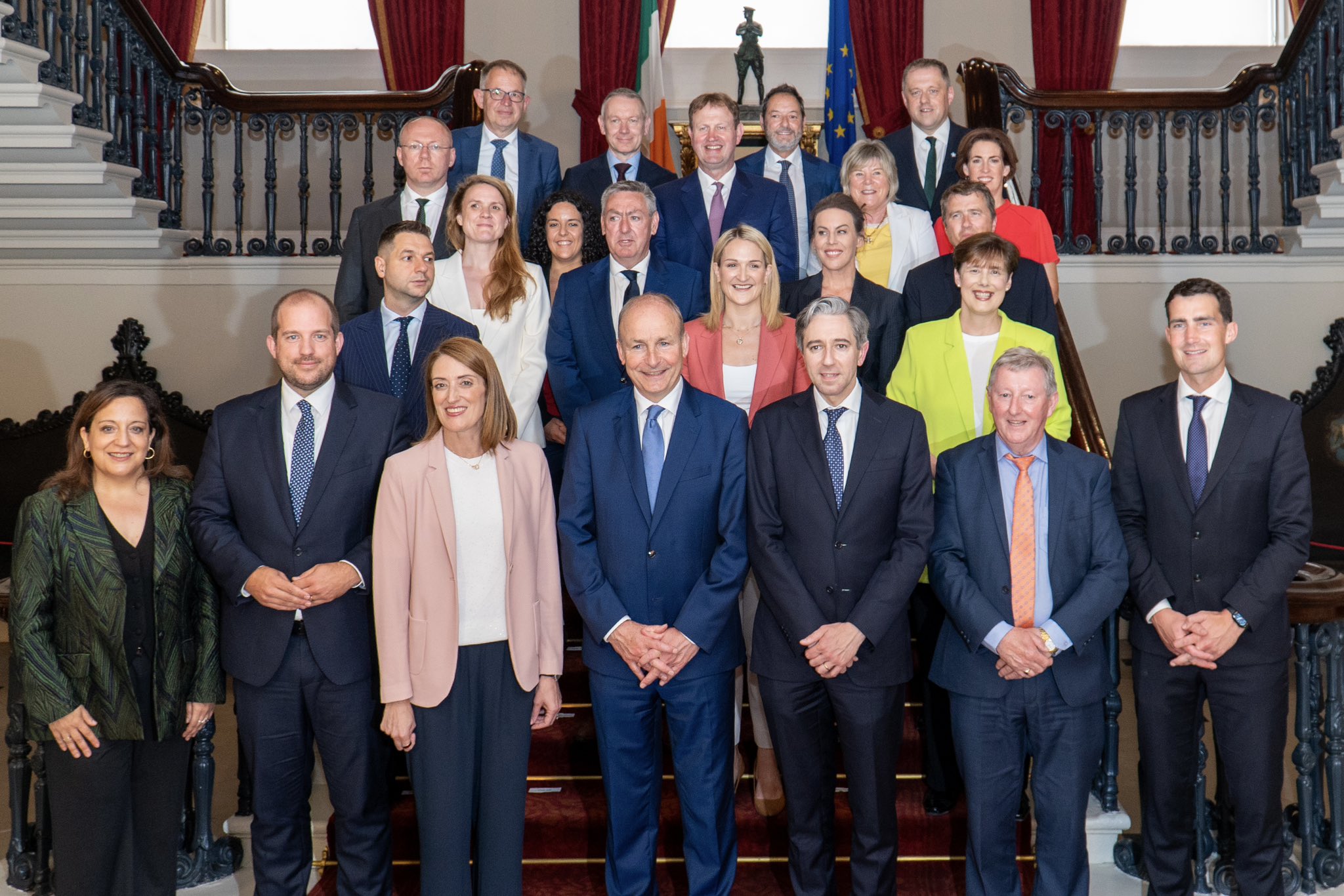
Ireland is set to commence its Presidency of the Council of the European Union on Wednesday 1 July. Last week, the President of the European Parliament, Roberta Metsola, and the Conference of Presidents in the European Parliament visited Dublin to prepare for the presidency, this week it's the turn of the College of Commissioners, the political leadership of the European Parliament who will meet with members of the Irish Government on a visit to Cork on 2-3 July. The discussion is expected to focus on key EU policy areas linked to the priorities of the Presidency.
Readers may also be interested in an article by Tony Connelly, RTE’s Europe Editor, published on 27 June which looks at Ireland’s EU Presidency: What it is and why it matters.
In case you missed it...

- On 24 June, the Cabinet Office published a speech by the Minister for the Constitution and European Union Relations, Nick Thomas-Symonds, marking the 10th anniversary of the Brexit Referendum.
- On Wednesday, 1 July, the Centre for European Reform will hold a: Hybrid discussion on 'Brexit ten years on: Northern Ireland and its future' with Matthew O'Toole MLA and Adam Payne Editor of PoliticsHome, chaired by Anton Spisak, Senior Research Fellow, Centre for European Reform.
- On 22 June, Chatham House held an event: Brexit 10 years on: Michel Barnier and the future of UK-EU relations. You can watch the recording here.
- On 26 June, the Centre for Inclusive Trade Policy published a briefing paper: Devolution and Post-Brexit UK FTAs: The Story So Far.
- HM Revenue and Customs and The Treasury published an open call for evidence: Modernising the UK Customs Regime on 23 June, which is seeking views on the future of international trade and the impacts of digitalised and modernised trading practices on the UK customs regime.
- Invest NI has published an online tutorial re: United Kingdom & European Union Steel Measures | What you need to know. The tutorial explains the new steel import controls being introduced by the United Kingdom (UK) and European Union (EU) from 1 July 2026, and what they mean for business.
- On 22 June, the Department of Transport published a Communiqué from the Interministerial Group for Transport Matters which was held on 16 March 2026.
- An article published by the BBC on 23 June states: Stop pretending EU's new border system is working, says airports chief.
- A further article published by the BBC on 23 June: Irish government to contribute £197m to cross-border rail services. The article states that the money will come from the last allocation from the Irish government's Shared Island Fund.
- Marking 10 years since the Brexit Referendum, the Political Quarterly brings together a collection of articles analysing the origins, impact and enduring legacy ofBrexit in Brexit at Ten: A Retrospective.
- Continuing with its series of blogs to mark the 10th Anniversary of the Brexit Referendum, the London School of Economics published an article on 23 June: Brexit – a bad idea then, a bad idea now, by Professor of Public Economics, Nicholas Barr.
- In a BBC NI article published on 24 June, Economics and business editor, John Campbell asks: How has Northern Ireland's economy fared since Brexit?
- On 24 June, Goldman Sachs Research published analysis on: UK—The Economic Cost of Brexit, Ten Years On.
- An article in The Telegraph published earlier today says: Brexit has made inflation worse, claims Bank of England chief economist. (Behind a pay wall)
- A new report: Ten years on from the vote: Brexit has turned the UK grey not green by the Wildlife Trusts published on 23 June states: ‘The Wildlife Trusts has uncovered the decade-long decline of the UK’s environment since the EU Referendum’.
- An article published in The Guardian on 28 June: ‘British food will disappear’: trade deal after Brexit is hitting UK farmers hard, states that home-grown food may become a niche product for wealthy in our supermarkets as British farmers’ incomes plummet.
- A BBC article published on 26 June asks: Would farmers and fishermen back Brexit today?
- An article published by the European Policy Centre on 24 June asks: Brexit 10 years on: Why would the EU want the UK back?
- In a new blog published by UK in a Changing Europe on 23 June: No EEA-sy options, Joël Reland argues that calls for the UK to join the EU single market may not survive contact with political reality.


