Brexit and Beyond
08 June 2026

In this week’s edition of Brexit and Beyond, we look at the Northern Ireland Scrutiny Committee’s new inquiry on Article 2 of the Protocol/Windsor Framework, and report back on last week’s meeting of the Assembly’s Windsor Framework Democratic Scrutiny Committee (DSC).
In Assembly Round-up and Westminster Brief, we highlight some of the EU related statements, questions and discussions that took place last week.
Our regular ‘Parliamentary Planner’ section highlights upcoming debates and discussion topics at Westminster and the Scottish Parliament this week, and as always, we link you through to the news stories and items of interest you may have missed.
- Article 2 of the Windsor Framework in focus as Committee launches new inquiry
- Assembly Round-up
- North/South Ministerial Council Meeting on Transport
- North/South Ministerial Council Meetings on the Aquaculture & Marine and Agriculture sectors
- Windsor Framework Committee meeting update
- European Affairs Committee hears evidence on ETS linkage agreement
- Westminster Brief
- This week in the Assembly
- Parliamentary Planner
- In case you missed it…
Article 2 of the Windsor Framework in focus as Committee launches new inquiry
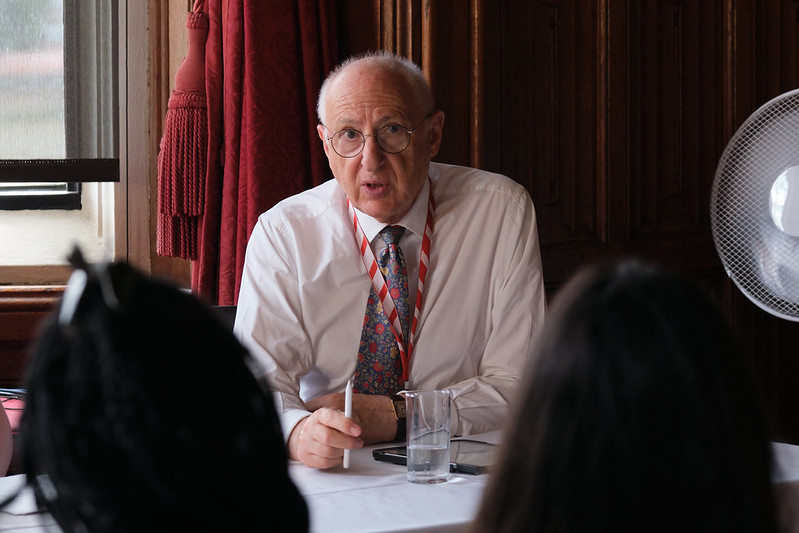
On Tuesday, 2 June, the House of Lords Northern Ireland Scrutiny Committee launched its new inquiry on Article 2 of the Protocol/Windsor Framework. Article 2 seeks to ensure that there is no diminution of rights, safeguards or equality of opportunity in Northern Ireland as a result of Brexit.
During its inquiry, the Committee has said that it will examine how this provision operates in practice, its impact on Northern Ireland and the wider UK, and its legal enforceability following the recent UK Supreme Court judgment in the Dillon case.
Speaking on the inquiry, the Committee Chairperson Lord Berriew said: “The rights and equality protections covered by Article 2 are of fundamental importance to people in Northern Ireland.”
Referencing the recent Supreme Court’s judgment in the Dillon case, the Chairperson said: “… it is especially important that we consider how enforceable these protections are, and whether there is clarity and confidence among those affected.” He added that the Committee was: “…keen to hear from a wide range of voices, including experts and those directly impacted by the issues raised…”
Oral evidence sessions, as detailed in this week’s Parliamentary Planner, will begin on Wednesday, 10 June and are expected to continue until Autumn 2026.
You can read the Committee’s press release here and find out how to submit evidence here. The deadline for submissions is 5pm on Thursday 9 July 2026.
Assembly Round-up

Our regular weekly round-up of Brexit, EU and international focused debates and Committee evidence sessions at the Assembly.
North/South Ministerial Council Meeting on Transport
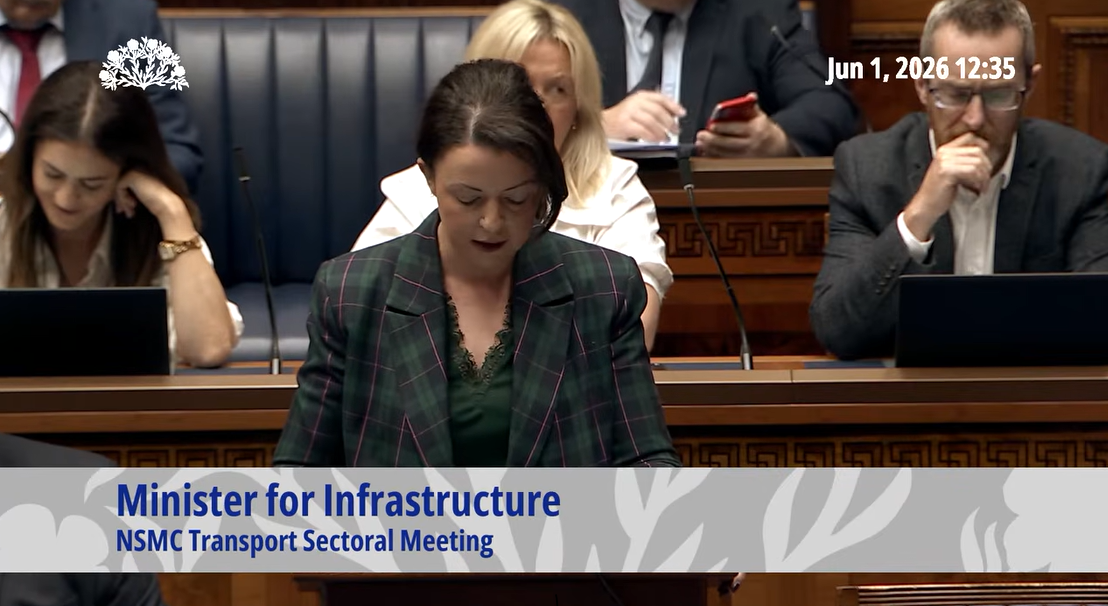
On Monday, the Minister for Infrastructure, Liz Kimmins MLA delivered a statement on the North/South Ministerial Council (NSMC) transport meeting which was held in Dublin on 7 May. The Minister for Health, Mike Nesbitt MLA was also in attendance.
The Minister updated Members on various issues discussed at the sectoral meeting. These included the all-island strategic rail review and the subsequent rail project prioritisation strategy. In response to questions from Members, Ms. Kimmins explained that officials are: “...engaging extensively with their counterparts in the South and the Special EU Programmes Body (SEUPB) on the progress of the Enterprise fleet replacement project”.
You can read the Minister’s full statement, including questions from Members here.
North/South Ministerial Council Meetings on the Aquaculture & Marine and Agriculture sectors
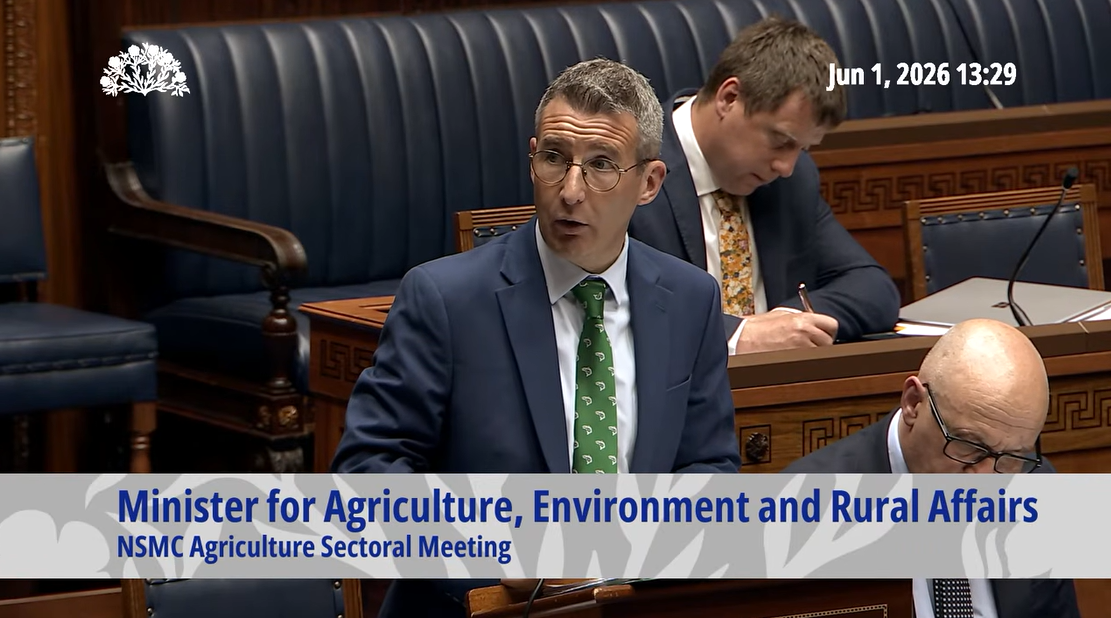
The Minister of Agriculture, Environment and Rural Affairs, Andrew Muir MLA was also in the chamber on Monday, where he delivered statements on recent meetings of the North/South Ministerial Council (NSMC) in the aquaculture and marine sector and the NSMC agriculture meeting, both of which took place in Armagh on 15 May. Junior Ministers, Aisling Reilly MLA and Joanne Bunting MLA were also in attendance.
The Minister updated Members on a wide range of issues discussed at the aquaculture and marine sector meeting. The Minister told the Assembly that the Council had welcomed the report on the activities of the Loughs Agency, particularly its ongoing conservation and protection efforts, as well as its environmental education and outreach programmes. He noted the Agency’s recent success on securing PEACE PLUS funding, particularly for the MOSAIC project, which he said: “…will deliver an innovative cross-border marine observation network with support from 11 international partners.”
Mr. Muir said that the Council was taking forward five EU-funded projects, outlining that in addition to the MOSAIC Project, these were: STRAITS, to coordinate aquatic animal tracking and environmental observation efforts, enabling progress on marine management and planning; NorTrack, which will monitor the movements of aquatic species that are critical to the north-east Atlantic; DTOTrack, which enables the Loughs Agency to develop digital twin prototypes of the Foyle and Carlingford lough catchments to improve management and spatial planning capabilities and Catchment Action for Local Management (CALM), to address critical environmental challenges in cross-border river catchments across the region. You can read the statement in full here:
The Minister proceeded to make a statement on the agriculture sector meeting, outlining issues discussed at the meeting. The Council acknowledged the continued collaboration between DAERA and DAFMon research, innovation and bioeconomy. The Council: “… recognised the successful applications from Ireland and Northern Ireland on nine projects funded under Horizon Europe cluster 6 in the food, bioeconomy, natural resources, agriculture and environment sectors.”
Responding to a Member’s question on the UK-EU sanitary and phytosanitary (SPS) agri-food negotiations, the Minister said: “The island of Ireland is a single epidemiological area. It has a very close relationship with the European Union, and the issues associated with Brexit have caused challenges.”
He added that while he welcomed the finalising of negotiations between the UK and the EU on a future SPS agri-food agreement, there remained two issues of concern regarding the movement of fish and wine and seafood marketing standards, which he said will remain outside the scope of any agreement. He told Members: “The detail in the SPS agri-food agreement on those issues is important, and I will continue to engage with the UK Government to make sure that any agreement works for Northern Ireland.” You can read the Minister’s Statement here.
Windsor Framework Committee meeting update
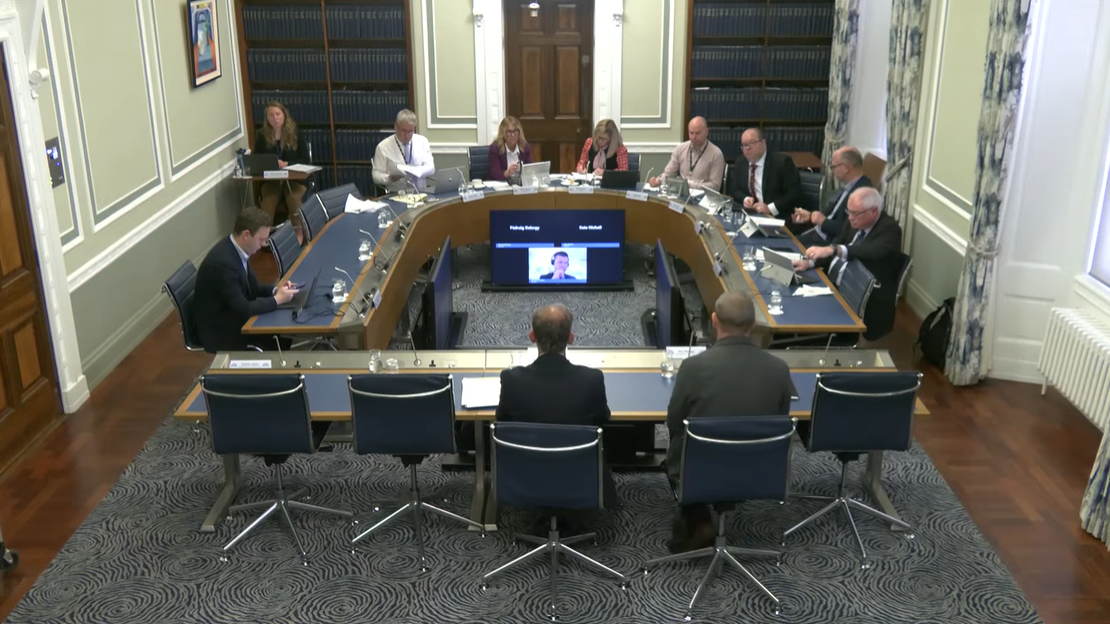
At its meeting on Thursday, 4 June, the Windsor Framework Democratic Scrutiny Committee (DSC) took evidence from Department for Economy officials on an amending EU regulation regarding the extension of certain data protection periods in relation to biocidal products.
The proposal amends the EU Biocidal Products Regulation (EU BPR) which regulates the placing on the market and use of biocidal products (including products such as insecticides, rodenticides and disinfectants). The proposed amendments would maintain the data protection provisions in Article 95(5) of EU BPR that were in force up to 31 December 2025, for a further five years.
The Committee had previously taken evidence from departmental officials on this proposal in February 2026 when it was told that that since 1 January 2026, certain regulatory datasets under the biocidal products regulation are no longer protected in the EU and Northern Ireland. Members were also informed that: “Divergence considerations for Northern Ireland are particularly relevant because Great Britain has already amended its domestic regime to extend the article 95 protection to 31 December 2030.”
During Thursday’s evidence session, Alan Ramsey, the Director of Trade, Innovation and Priority Sectors at the Department of the Economy told the Committee that while the Northern Ireland Biocides market was small: “…the Health and Safety Executive (HSE) recognises that individual businesses in Northern Ireland may nevertheless have experienced impacts during the interim period, including a possible loss of protection on data they had generated and paid to generate.”
He noted that the regulation is intended to mitigate these effects by: “…enabling data owners, including any based in Northern Ireland to seek compensation, where others have benefitted from the temporary absence of protection.” The HSE will continue to keep this under review and engage with stakeholders as appropriate.
The Committee agreed that it would not hold an inquiry into this EU Replacement Act.
The Committee also heard evidence from departmental officials on the European Commission’s proposed ‘Industrial Accelerator Act’, which would provide a framework of measures for the acceleration of industrial capacity and decarbonisation in strategic sectors. Regular readers will recall that we covered the UK Government’s Explanatory Memorandum on the Industrial Accelerator Act in our 18 May edition of Brexit and Beyond.
Mr. Ramsey outlined ‘Made in Europe’ provisions in the Act, which would apply to particular sectors and require that, in order for goods to be eligible for public procurement or subsidies, a minimum share of products or components must originate within the EU or “trusted partners” and meet low-carbon requirements. He told Members that the UK already has two legal routes to qualify as a “trusted partner” but cautioned that it was his understanding that the European Commission was yet to: “…make an active decision on the UK’s procurement market, in terms of whether it is sufficiently open on reciprocal terms.” He emphasised that many important details are still to be agreed and that the Act’s scope would be refined through subsequent delegated acts and technical regulations.
Members heard that the Act has direct relevance to Northern Ireland under the Windsor Framework in relation to placing construction products on the market, where certain products would need to comply with requirements that may be brought forward via future EU delegated acts. Mr. Ramsey noted that the UK Government had in its EM, confirmed: “…its intention to retain consistency UK wide with the EU Construction products regime and that it will engage with industry to assess marketing and labelling requirements as they come forward through those delegated acts.”
Following discussion, the Committee agreed that it would monitor the progress of the proposed regulation through the EU legislative system. You can watch Thursday’s meeting in full here.
European Affairs Committee hears evidence on ETS linkage agreement
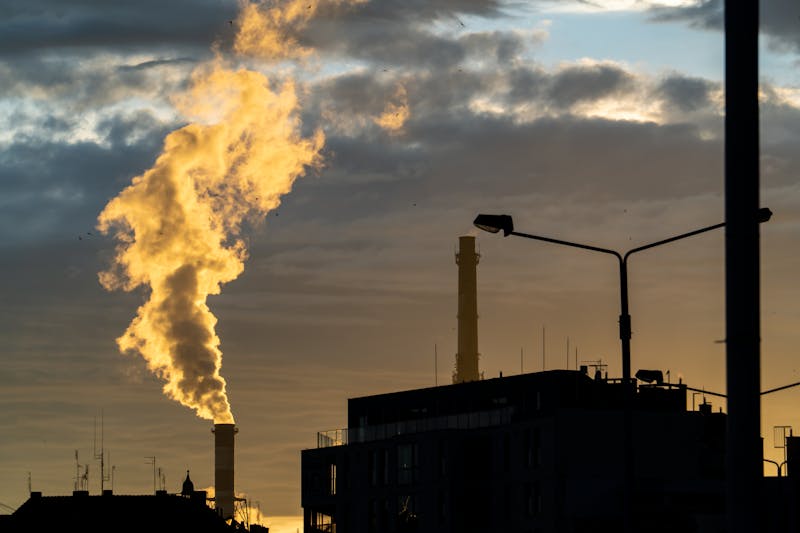
On Tuesday, 2 June, the House of Lords European Affairs Committee discussed the potential impact of linking the UK and EU's Emissions Trading Systems (ETS), as part of its inquiry into Dynamic Alignment.
The Committee heard from Frank Aaskov, Director, Energy and Climate Change Policy at UK Steel, Max Green, Senior Trade and Regulation Policy Manager at Make UK, and Will Webster, Head of Regulatory Economics at Centrica.
In a second session the Committee took evidence from James Low, Associate Director, Energy and Climate at Flint Global, and Josh Burke, Distinguished Policy Fellow at the Grantham Research Institute (LSE) on Climate Change and the Environment.
You can watch the evidence sessions here.
Westminster Brief
During questions to the Department for Energy Security and Net Zero last Tuesday, the Minister for Energy, Michael Shanks MP told Members that with regard to discussions with the EU on the internal electricity market: “We want to see much more efficient energy trading, and that is why we are working on those formal negotiations about the EU internal electricity market…”
Meanwhile, during Northern Ireland questions on Wednesday, the Secretary of State for Northern Ireland, Hilary Benn MP told the house that he welcomed: “… the clarity provided by the Supreme Court in the Dillon case, which has confirmed that the Independent Commission for Reconciliation and Information Recovery is capable of delivering human rights-compliant investigations and reaffirms the Government’s position on the interpretation and application of article 2 of the Windsor framework.”
You can read the Secretary of State’s comments and Members questions in full here:
The Minister for Food Security and Rural Affairs, Dame Angela Eagle MP responded to a question in the House of Commons on Thursday regarding what discussions she has had with Scottish fisheries on the UK-EU sanitary and phytosanitary agreement.
She told MPs that she had engaged directly with Salmon Scotland, while colleagues had discussed the UK-EU SPS agreement with the Scottish Fishermen’s Federation. The Minister said: “We will continue that close engagement as negotiations progress, and we are committed to supporting businesses and providing clear guidance, so that they are ready to benefit from the agreement from day one.”
Cultural exchange arrangements between the creative sectors in the EU and the UK were discussed in the House of Lords on Thursday. The Parliamentary Under-Secretary of State, Department for Culture, Media and Sport, Baroness Twycross told peers that in March 2026, the Minister for Creative Industries co-led the first UK-European Commission high-level meeting on culture, with European Commissioner Glenn Micallef: “...building on commitments made at the inaugural UK-EU summit in May 2025 to deepen cultural exchange.”
Responding to a question on complexities and costs faced by touring artists, Baroness Twycross said that government continued to: “…work with our European partners to make progress on practical, mutually beneficial solutions.” She added that she welcomed: “… the constructive tone of recent UK-EU engagement on cultural mobility, including references in the EU visa strategy to practical flexibilities for touring professionals.”
This week in the Assembly
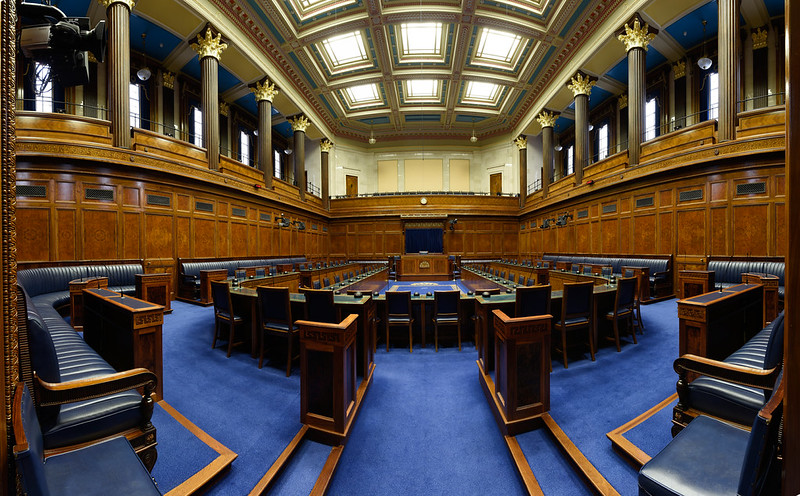
At its meeting on Thursday, the Committee for Agriculture, Environment and Rural Affairs will hear a pre-introduction briefing from departmental officials on the Fisheries, Aquaculture and Water Environment Bill.
Parliamentary Planner

House of Lords:
On Tuesday, Baroness Hoey will move that: ‘this House regrets the process that led to the Ecodesign for Energy-Related Products and Energy Information (Household Tumble Dryers) Regulations 2026, because (1) the alignment with Northern Ireland the regulations seek to achieve requires the UK to follow EU law, and (2) they will lead to increased costs and lower efficacy associated with heat pump tumble dryers’.
Also on Tuesday, the European Affairs Committee will continue its inquiry on Dynamic Alignment. This week, evidence will be provided by representatives from the Hansard Society; Professor Holger Hestermeyer, Professor of International and EU law at Diplomatic Academy; The Earl of Kinnoull, Former Chair at Lords European Affairs Committee and Sir Bill Cash, Former Chair at House of Commons European Scrutiny Committee. You can watch the meeting here.
Meanwhile on Wednesday, 10 June, the Northern Ireland Scrutiny Committee will hold the first evidence session of its new inquiry: Article 2 of the Protocol/Windsor Framework. Peers will take evidence from: Dr Eleni Frantziou, Associate Professor in Public Law and Human Rights at Durham Law School, Durham University; Professor Brice Dickson, Emeritus Professor in the School of Law at Queen's University Belfast and; Professor Colin Murray, Professor of Law and Democracy at Newcastle University. You can watch the meeting here.
Scottish Parliament
During general questions on Tuesday, the Scottish government is expected to respond to a question on what assessment it has made of any implications of the EU’s Carbon Border Adjustment Mechanism for Scotland's economy, including what representations it has made to the UK Government regarding the mitigation of any potential threats for Scotland's exports.
On Wednesday, a question has been tabled to ask the Scottish Government what assessment it has made of whether farmers and producers in Scotland are better served and protected within the single market of the UK rather than when operating in the EU market.
In case you missed it…

- In the House of Lords on Wednesday 3 June, Lord Dodds of Duncairn introduced the European Union (Withdrawal Arrangements) Bill, “to make provision to modify the effect on domestic law of arrangements relating to the withdrawal of the United Kingdom from the European Union; and for connected purposes”. Lord Dodds discussed the Bill in an article, A Tale of Two Bills, for ‘The Parliament Politics’ magazine.
- An article in today’s Times reports:Labour to rethink Brexit ‘red lines’ ahead of next election (paywall). The article reports comments from Nick Thomas-Symonds MP, Minister for the Cabinet Office that the party would reassess its position in the run-up to the next general election and that this “would be dependent on how successful we are with the current reset”. The Minister’s remarks to the Times are also covered in an article in the IndependentLabour may reconsider Brexit red lines, Britain’s top EU negotiator suggests.
- The Guardian states in an article issued on 5 June: UK-EU ‘reset’ summit may still happen next month despite delay speculation.The report references the EU trade commissioner, Maroš Šefčovič as saying: “I believe that still the expectation is that we would have the summit, most probably in July.”
- An article published in the Guardian on Sunday 7 June states: Car industry pressing EU for further delay to Brexit EV tariffs.
- UK in a Changing Europe published two blogs last week on Brexit ten years on: In the first published on 2 June, Professor Jonathan Portes looks at the economic impact of Brexit. Meanwhile, in her blog published on 3 June, Jill Rutter considers how Brexit has impacted the civil service.
- A Politico article published on 5 June, takes a look at: The Brexit referendum: 10 years on.
- In a 6 June article in the Telegraph: A decade after Brexit, Britain has more red tape than ever, Assistant Editor, Jeremy Warner argues: “The fault lies not in Brexit itself, but in the reluctance of policymakers to seize the economic opportunities it presents…” (paywall).
- In an article published on 4 June by Inside Housing, Caroline Thorpe asks: Ten years after the UK voted to leave the EU, what did Brexit do to housing?
- Farmers Guide, in its 6 June article looks at: Brexit 10 years on: How the farming subsidy landscape has changed.
- On 5 June, DEFRA updated its Fisheries: consultations between the UK and the EU for 2026.
- Following its meeting on 4 June, the Specialised Committee on Financial Provisions (SCFP), established under the UK-EU Withdrawal Agreement, released a Joint Statement providing an update on its work.
- Meanwhile, on 3 June, the Specialised Committee on Law Enforcement and Judicial Cooperation, established under the UK-EU Trade and Cooperation Agreement, published the minutes of its last meeting which took place in December 2025.
- On Tuesday 2 June, Dublin City University published a blog by Nicolas Mikolaj Kurek, PhD Candidate at the University of Zurich titled: Look at Northern Ireland! What Switzerland Can Learn from Post-Brexit UK-EU Relations.


