Brexit and Beyond
18 May 2026

In this week’s edition of Brexit and Beyond, we look at the UK Government’s announcement that it will bring forward a European Partnership Bill, and report back on the King’s Speech debates in the House of Commons and House of Lords.
In Assembly Round-up we cover EU and Windsor Framework-related discussions that took place in the Assembly last week and look forward to what’s on the agenda for this week.
Our regular ‘Parliamentary Planner’ section highlights upcoming debates and discussion topics at Westminster and the European Parliament, and as always, we link you through to the news stories and items of interest you may have missed.
- Assembly Round-up
- This week in the Assembly…
- Parliamentary Planner
- UK Government to introduce European Partnership Bill
- Lords debate Economic growth, trade and EU partnership
- UK Government issues Explanatory Memorandum on the EU Commission’s Industrial Accelerator Act
- UK–EU food and drink deal discussed as Environment Secretary visits Balmoral Show
- In case you missed it…
Assembly Round-up

Our regular weekly round-up of Brexit, EU and international focused debates and Committee evidence sessions at the Assembly.
On Monday, 11 May during Matters of the Day, Timothy Gaston MLA made a statement on the judgement in the Dillon judicial review by the Supreme Court. Mr. Gaston told the Assembly: “It was a case of real constitutional significance that puts the brakes on those who seek to expand the remit of article 2 [of the Windsor Framework].” You can read the debate in full here:
On Monday afternoon, during a debate on the Committee for Finance and Northern Ireland Fiscal Council reports on the 2026-29/2030 draft Budget, Jemma Dolan MLA raised what she described as: “…the inflexibility shown by the Treasury on the structure of the local growth fund.” She told Members that the fund was: “…supposed to be the replacement for what was lost by the community and voluntary sector from the EU following Brexit, and it already falls short of what the sector received then.” You can read the full debate via the Official Report.
Also, on Monday afternoon during a debate on a Private Members’ Motion regarding the Belfast City Airport master plan 2040, Sinéad McLaughlin MLA addressed what she termed as the wider challenges faced by the aviation and tourism sectors. She told the Assembly, “The introduction of the electronic travel authorisation scheme following Brexit has created significant concerns for tourism across the island.” Ms. McLaughlin warned that additional bureaucracy and added costs risk discouraging international visitors.
During its meeting on Wednesday, 13 May, the Assembly’s Committee for the Executive Office heard evidence from the Commissioner for Victims and Survivors and the Victims and Survivors Service on the Victims’ Payment Scheme and Victims’ Support Programme.
The witnesses gave an overview of services for victims and survivors currently funded through the PEACEPLUS Programme, and the risk of a funding gap between the end of the current programme in late 2028 and the commencement of any successor programme. You can watch the session here.
This week in the Assembly…
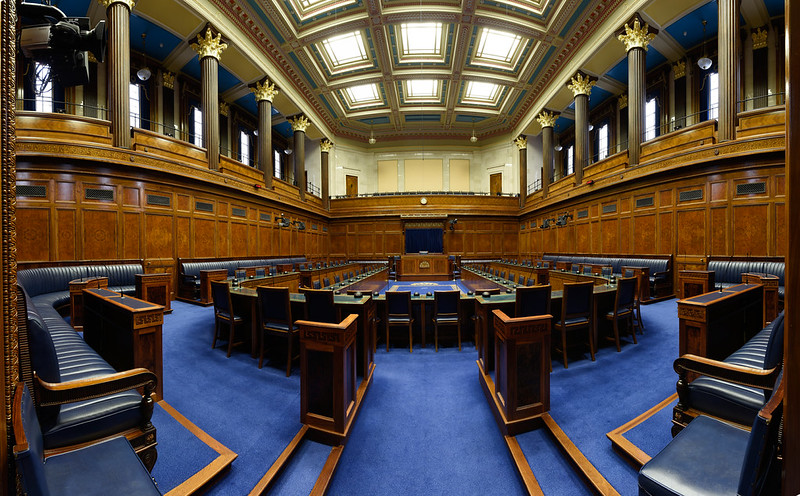
Today, the Assembly debated a motion: ‘Change on these Islands’ brought forward by the Leader of the Opposition, Matthew O’Toole MLA. The motion includes that the Assembly notes: ‘…recent polling which indicates majority support for a new Ireland within the European Union’. You can read the motion in full here.
On Tuesday afternoon, during Private Members’ Business, the Assembly will debate a motion on ‘The Irish Government’s Failure to Cooperate on Legacy Cases’. The motion includes: ‘That this Assembly… welcomes the UK Supreme Court judgement in the Dillon case, which found that the local courts wrongly and inappropriately used the Windsor Framework to strike down provisions of the Northern Ireland Troubles (Legacy and Reconciliation) Act…’ You can read the motion in full here:
Parliamentary Planner

House of Lords
During oral questions on Monday, the UK Government is expected to respond to a question on: ‘what steps they are taking to maintain regulatory flexibilities and innovation in fields such as novel foods and precision fermentation in the proposed EU-UK sanitary and phytosanitary agreement to harmonise food-related standards’.
The European Affairs Committee continues its inquiry into Dynamic Alignment on Tuesday morning. Giving evidence this week are Tom Bradshaw, President, National Farmers' Union; Richard Ballantyne, Chief Executive, British Ports Association; John Powell, Chief Executive, British Meat Processors Association and Professor Emily Lydgate, Professor of Environmental Law & Co-Director, UK Trade Policy Observatory, University of Sussex. You can watch the evidence session here:
This week, peers will continue their debate on the King’s Speech with a debate on Thursday focusing on foreign affairs, international relations and defence.
House of Commons
At oral questions in the House of Commons on Wednesday, the Minister for Science, Innovation and Technology is expected to respond to a question on: What discussions she has had with the science and technology sector on closer regulatory alignment with the EU. A further question has been tabled asking the Minister: What comparative assessment she has made of the competitiveness of the (a) UK and (b) EU science and technology sectors.
On Thursday, questions tabled to the Department for Business and Trade include: what steps the Department is taking to help small and medium-sized businesses trade with European nations.
European Parliament
On Tuesday, the European Parliament will debate a report on ‘EU cybersecurity and preparedness in view of advanced AI systems’. Also on Tuesday, MEPs will debate a report on: ‘Opportunities and challenges presented by a comprehensive artificial intelligence strategy for EU trade’, which will be followed by a vote on the report on Wednesday.
UK Government to introduce European Partnership Bill
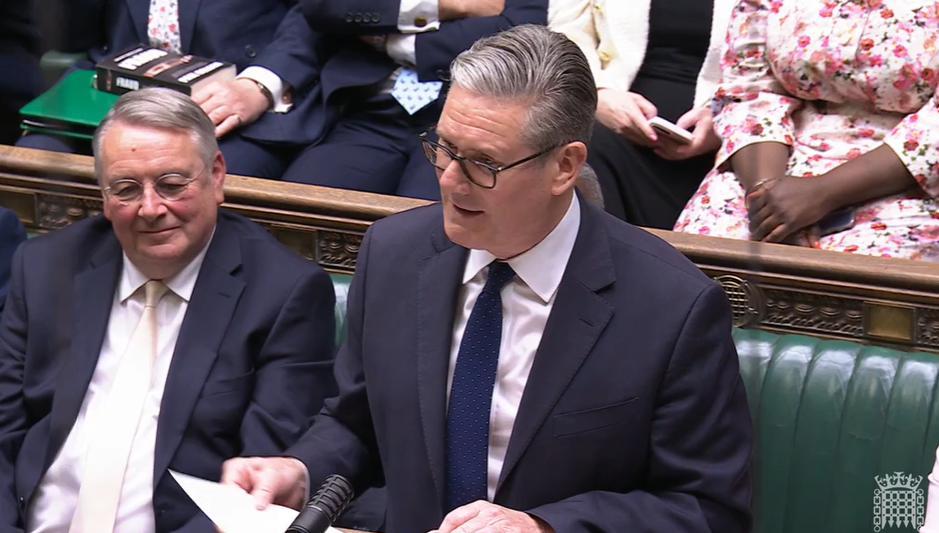
As announced in the King’s Speech last Wednesday, the UK Government’s legislative programme will include a new European Partnership Bill which the Government has said will: “…help deliver the manifesto commitment to improve the UK’s trade and investment relationship with the EU by facilitating the implementation of new deals agreed with the EU now and in the future.” This includes deals on electricity, emissions trading and a sanitary and phytosanitary (SPS) agreement.
In its background briefing notes to the King’s Speech, the UK government underlined that an SPS agreement will remove: “… a broad and wide-ranging set of requirements for goods and plants moving from Great Britain to Northern Ireland, because the same regulations will be followed across the UK.”
With regards linking the UK and EU emission trading schemes, the Government said that this would: “…support industry confidence to invest in new technologies and jobs, and to decarbonise more quickly and efficiently. It will also create the conditions for mutual exemptions from respective Carbon Border Adjustment Mechanisms (CBAM)…”
During the House of Commons Debate on the King’s Speech, and responding to comments made by Jim Allister MP, the Prime Minister said: “It is in our economic interests, our national interests and our defence interests to be closer to Europe. Of course we will navigate carefully, taking on board the issues in Northern Ireland, as he would expect…”
You can read the debate in full here:
Lords debate Economic growth, trade and EU partnership
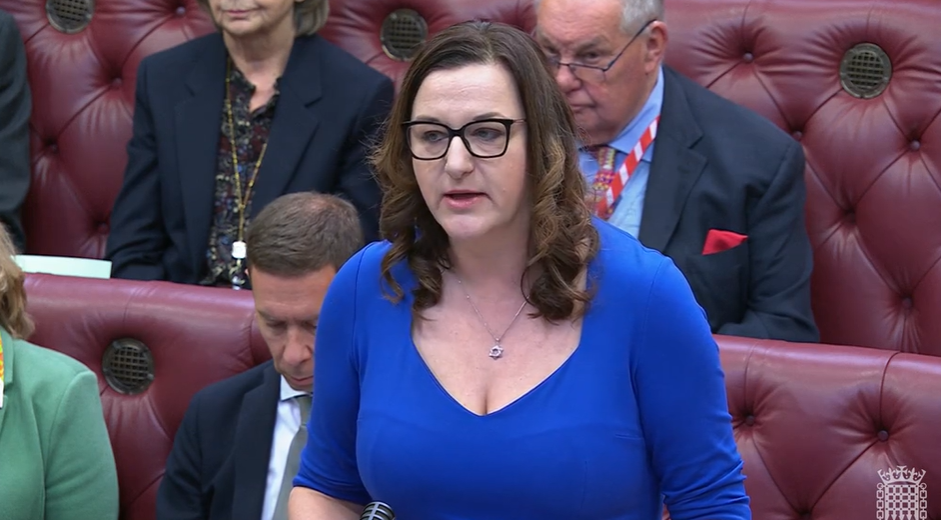
The European Partnership Bill was also discussed in the House of Lords on Thursday, 14 May, as peers commenced their debate on the Kings Speech. The Parliamentary Secretary in the Cabinet Office, Baroness Anderson, reflected on the Government’s work to date to secure “…a closer and more stable relationship with our largest trading partner, the EU.”
Baroness Anderson told the House that an SPS agreement would protect and support trade within the UK’s internal market by simplifying movements of agrifoods between GB and NI, and “aligning Great Britain with standards already established in Northern Ireland”. She explained that: “The Windsor Framework will work alongside the SPS agreement, continuing to address Northern Ireland’s unique circumstances by upholding the Good Friday agreement and providing Northern Ireland’s unique dual market access to both the UK internal market and the EU single market.” She also noted previous announcements of £16.6 million for a ‘one stop shop’ regulatory support service for businesses and funding for the work of InterTrade UK.
Contributing to the debate, Lord Murphy of Torfaen discussed the importance of involving the devolved administrations in negotiations on the European Partnership Bill. Lord Murphy observed that as a result of his Independent Review of the Windsor Framework: “… money has come to Northern Ireland...” However, he added: “…we also need more money to ensure that those recommendations are put into practice, and that all political parties in Northern Ireland are involved in it.”
Winding-up the debate, the Financial Secretary to the Treasury, Lord Livermore told peers that the Government was: “…already making significant progress on agri-food, electricity, emissions trading and Erasmus…” He added however, that there is a: “… strategic imperative for deeper integration between the UK and the EU, and we must look towards a new and stable future relationship.”
Lord Livermore concluded: “Where it is in our national interest to align with EU regulation, including in the single market, the Bill will enable us to do so...”
You can read the transcript of the debate in full here.
UK Government issues Explanatory Memorandum on the EU Commission’s Industrial Accelerator Act
On 8 May, the Department for Business and Trade published an Explanatory Memorandum(EM) on the EU Commission’s proposal for an Industrial Accelerator Act (published 4 March 2026).
The proposal introduces new procurement, subsidy and investment rules and focuses on strategic areas of Energy-intensive industries; Net-zero technologies and Automotive supply chains. The EM outlines the “potential implications for the UK economy due to the deeply integrated nature of UK-EU supply chains.”
The EM also notes that under the proposal, future regulations relating to sustainability labelling requirements for construction products would apply to Northern Ireland under the Windsor Framework, although this: “will only impact Northern Ireland if and when a delegated act of this nature is adopted by the European Commission.”
UK–EU food and drink deal discussed as Environment Secretary visits Balmoral Show
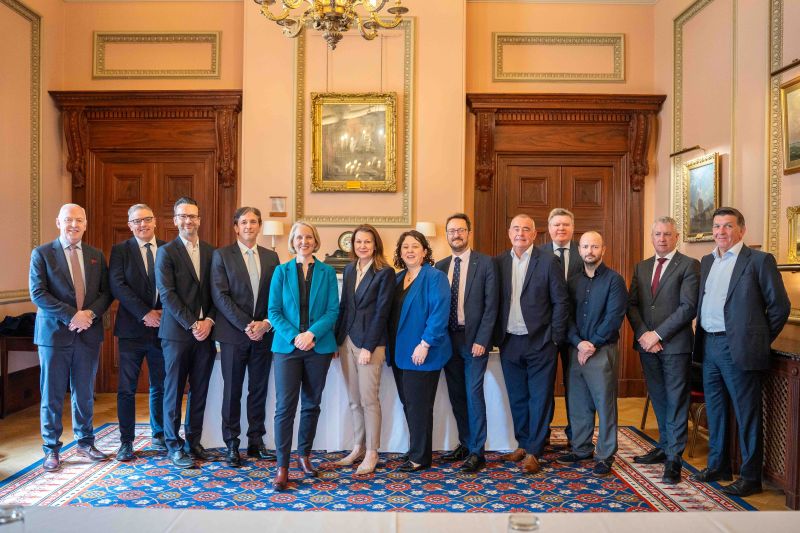
Attending the Balmoral Show last Thursday, the UK Environment Secretary, Emma Reynolds MP, met with farmers, growers and businesses to discuss the benefits of the new UK–EU food and drink deal. The visit also followed the UK Government’s announcement that it would introduce The European Partnership Bill.
In a press release issued in advance of the visit, the Environment Secretary said: “Northern Ireland’s food and drink businesses deserve a better deal. That means protecting the UK internal market, supporting businesses and giving families more choice, availability and value across Northern Ireland.”
Meanwhile, the Northern Ireland Office Parliamentary Under Secretary of State, Matthew Patrick MP, said that the deal: “… will provide real benefits for consumers, helping to ensure availability and cut costs at a time when many are facing cost of living pressures.”
During the visit, the Environment Secretary and the Minister for Biosecurity, Borders and Animals, Baroness Hayman, also engaged in a roundtable discussion with members of the Confederation of British Industry.
In case you missed it…

-
The Assembly’s Research and Information Service (RaISe) published a new research briefing earlier today re: Impact of EU Type-Approval Requirements on Small Vehicles in Northern Ireland.
-
The UK Government published an Explanatory Memorandum on 15 May re: Report from the Commission to the European Parliament and the Council on the implementation and application of the Trade and Cooperation Agreement between the European Union and the United Kingdom of Great Britain and Northern Ireland.
-
An article published in the Guardian on Monday, 11 May says: EU preparing to offer key concession to UK in new post-Brexit agricultural deal. The article reports that “European officials have conceded that the UK can keep its ban on live animal exports as part of any joint deal on food and agricultural products”.
-
An article published by the Guardian on 12 May: Youth mobility scheme disagreement hampering reset of UK-EU relations. The article reports that a“Deal was expected by end of month but talks hit buffers over cap on number of people entering UK and tuition fees.”
-
In a BBC online article published on 11 May, Europe Editor, Katya Adler explores: ‘Britain at the heart of Europe': How Starmer's plans are going down in the EU.
-
A Politico article published on 14 May says: UK must drop ‘red lines’ for real EU reset, Brussels warns.
-
In its recent ‘Testing the Temperature’ series published on 15 May, Queen’s University Belfast presents its recent polling and report: What do voters in Northern Ireland think about the Windsor Framework and UK-EU Relations? The report was covered by a number of media outlets including: RTE; the Irish Times, TheIndependent and The Belfast Telegraph.
-
On the 15 May, the House of Commons Library issued a research briefing on: The EU Entry/Exit system and EU travel authorisation system.
-
A further House of Commons briefing issued on 12 May examines the: UK–EU Agreement on Gibraltar: Draft text and next steps.
-
The Scottish Parliament Information Centre (SPICe Spotlight) published a new article on The King’s Speech on 13 May, which takes a closer look at The European Partnership Bill.
-
On 14 May, the UK Constitutional Law Association published an article from Professor Colin Murray: Hollowing out Northern Ireland’s Post-Brexit Rights Protections in Re Dillon [2026].
-
The Guardian published an ‘Explainer’ on 17 May: Where does UK-EU relationship stand and how might bid to rejoin bloc be received?
-
An article by the Institute for Government on 14 May states: Keir Starmer’s EU “reset” failed to convince.
-
A Newsletter article published on 17 May says: Delayed funding and post-Brexit barriers undermining native woodland in NI:


