Brexit and Beyond
11 May 2026

Last Thursday, the Specialised Committee on the Implementation of the Windsor Framework met in Brussels – we take a look at what was discussed by UK and EU officials.
We cover last week’s Assembly debate on voluntary and community sector funding and look ahead to what’s coming up in the Assembly this week, as well as the State Opening of the UK Parliament and the 2026 King’s Speech on Wednesday.
As always, we link you through to the news stories and items of interest you may have missed.
- Assembly Round-up
- Assembly debates voluntary and community sector funding
- This week in the Assembly…
- Parliamentary Planner
- Specialised Committee on the Implementation of the Windsor Framework meets in Brussels
- UK Government publishes Explanatory Memorandum on Cyber Resilience Act
- UK Supreme Court hands down judgment in Dillon case
- Trade and Cooperation Agreement Partnership Council update
- In case you missed it…
Assembly Round-up

Our regular weekly round-up of Brexit, EU and international focused debates and Committee evidence sessions at the Assembly.
Assembly debates voluntary and community sector funding
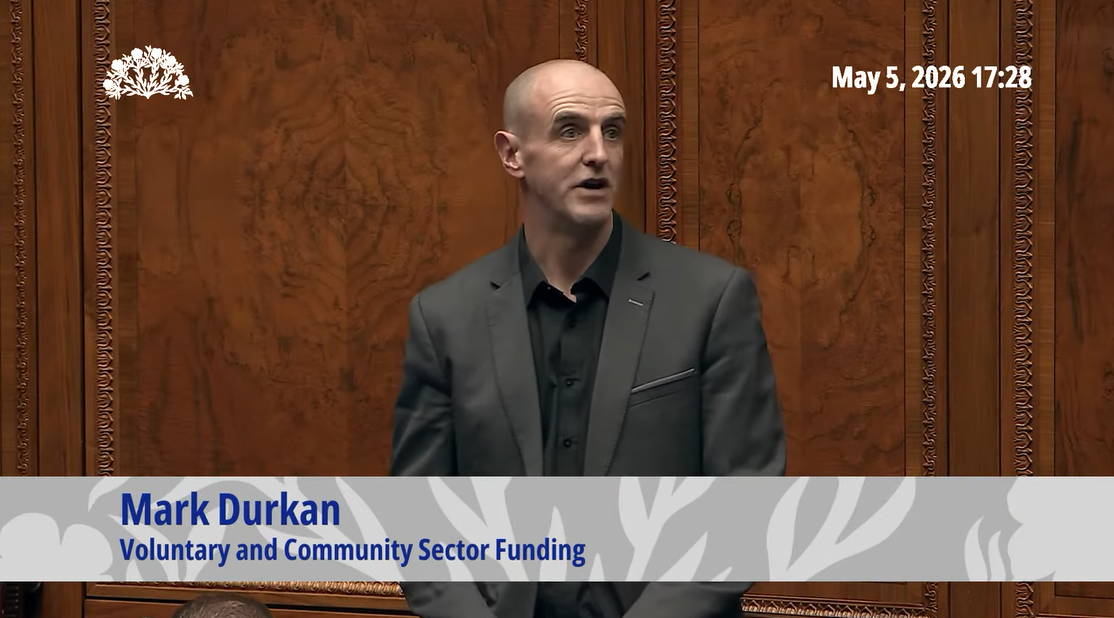
During Private Members’ Business on Tuesday, the Assembly debated a motion brought forward by Matthew O’Toole MLA and Mark Durkan MLA on voluntary and community sector funding.
The motion included that this Assembly: ‘…regrets that many organisations have been forced to scale back or withdraw services and lay off valued staff due to the mishandling of the Local Growth Fund by the British Government’ and ‘notes that the Northern Ireland Executive has realised savings from European Structural and Investment Fund succession without reinvestment in community and voluntary services…’ You can read the motion in full here:
Two amendments to the motion, the first from Diane Forsythe MLA, Harry Harvey MLA and Brian Kingston MLA and the second from Colm Gildernew MLA, Declan Kearney MLA and Sinéad Ennis MLA, were also selected for debate.
Moving the motion, Mark Durkan MLA highlighted European Structural Funds (ESF) which he said had: “…provided stable, strategic investment in Northern Ireland's communities.” He noted that ESF had been subject to match funding by the Northern Ireland Executive, describing this as “… a statement of intent that said, ‘Tackling economic inactivity, supporting people into work, addressing inequality and strengthening communities are central priorities of devolved government’.”
Concluding his remarks, Mr. Durkan urged the Northern Ireland Executive: “… to re-establish the principle that made European structural funds so effective here: long-term commitment matched with deliberate political choice.”
Moving the first amendment, Diane Forsythe MLA said that: “…ensuring stability and sustainability of services and volunteers is critical to ensuring that the support infrastructure is there for the people who need it.” However, she underlined what she described as: “The unprecedented challenges facing our departmental budgets…” adding that: “We cannot be in a situation where funding coming from the UK Government duplicates aims already covered by Executive programmes…”
Referencing the Local Growth Fund directly, Ms. Forsythe said that the UK Government: “… need to step up, fund it properly, restore the fund's full aims and remove the capital/revenue split.”
Colm Gildernew MLA moved the second amendment, telling Members that: “Under EU membership, the North received, on average, £40 million a year from the European social fund to support those vital employment programmes. This year, under the local growth fund, the North will receive only £9·2 million”. Citing the decision by the UK Government to change the funding model to one that focused on capital funding, Mr. Gildernew said that this had: “…plunged many community and voluntary sector organisations into crisis, with many now facing closure…”
Responding to the debate, the Finance Minister, John O’Dowd MLA said that: “…it simply cannot fall to the Executive to fill the gaps that have been created by the British Government.”
Mr. O’Dowd said that his proposals for the draft Budget for 2026 to 2030 had: “…been developed against the backdrop of an exceptionally constrained financial position”, but that he had written to Executive Colleagues: “…asking them to consider what opportunities there are in Departments to support the sector.”
The Minister told the Assembly that the Northern Ireland Office (NIO) would shortly be launching a consultation on its local growth fund investment plan and encouraged: “…anyone with an interest to contribute to that consultation.”
The question on the first amendment was put to the Assembly and agreed. You can read the debate in full via the Official Report.
The NIO consultation, seeking views on the proposed three-year investment plan for the new Local Growth Fund in Northern Ireland and as referenced by the Finance Minister, launched on Friday, 8 May. Further information on the consultation and on how to respond can be accessed here.
This week in the Assembly…
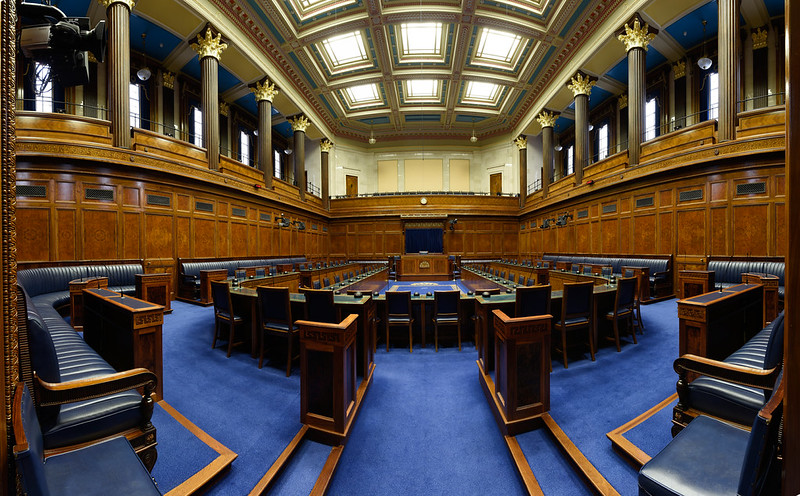
On Thursday, the Committee for Agriculture, Environment and Rural Affairs will hold its weekly meeting at the Balmoral Show. Members will consider a number of written departmental briefings, including EU Animal Health Law Requirements for Camelids and Cervids.
In a press release issued on Friday, 9 May the Minister of Agriculture, Environment and Rural Affairs, Andrew Muir MLA outlined that new identification, registration and record-keeping rules are being introduced in Northern Ireland for the keeping of camelid and cervid animals, including alpacas, llamas and deer. The new measures are required under the European Union Animal Health Law (AHL) and apply in Northern Ireland under the Windsor Framework. Further information is available here:
Parliamentary Planner

The House of Lords and the House of Commons will resume business following the State Opening of Parliament on Wednesday, 13 May.
The UK Government’s proposed policies and legislation for the coming parliamentary session will be set out in the King’s Speech on Wednesday. It is expected to include legislation required to implement agreements (including the SPS agreement) currently being negotiated between the UK and the EU.
In the House of Lords on Thursday,14 May the Parliamentary Secretary in the Cabinet Office, Baroness Anderson and the Financial Secretary to the Treasury, Lord Livermore will move a motion on Economic growth, trade and EU partnership.
Specialised Committee on the Implementation of the Windsor Framework meets in Brussels

Co-chaired by officials from the European Commission and the UK Government, the Specialised Committee on the Implementation of the Windsor Framework met in Brussels on Thursday, 7 May.
The Committee, which is made up of senior officials from the UK and the EU, welcomed progress on the implementation of the Windsor Framework and noted remaining work to be undertaken.
The Committee also observed that the functioning of sanitary and phytosanitary (SPS) inspection facilities and individual labelling requirements was satisfactory, while also noting the positive direction in the provision of information in the general SPS certificates. The Committee said that progress should continue on issues including full compliance of certificates, box-level labelling, and ensuring that flexibilities are applied for compliant goods only.
The co-chairs also underlined: “…the robust ongoing preparatory work for the interplay between the Windsor Framework SPS provisions and the future EU-UK SPS Agreement.”
The Committee further referenced ongoing discussions at a technical level on customs duties of business to consumer parcels.
The Committee has concluded its work relating to the exchange of views on the implications of the EU’s Artificial Intelligence and Cyber Resilience Acts for the proper functioning of the Windsor Framework. The EU previously proposed that both acts should be added to Annex 2 of the Windsor Framework. The co-chairs will now report to the Joint Committee co-chairs on the Specialised Committee’s work on this area.
You can read the Committee’s Joint Statement in full here:
UK Government publishes Explanatory Memorandum on Cyber Resilience Act

On Tuesday, 5 May the UK Government’s Department for Science, Innovation and Technology issued an Explanatory Memorandum (EM) on the EU Cyber Resilience Act. The publication of the EM follows a proposal from the EU in April 2025 that the act should be added to Annex 2 of the Windsor Framework.
The EU Cyber Resilience Act which entered force in December 2024, introduces cybersecurity requirements for hardware and software products with digital elements, such as smart devices and routers, ensuring that they are designed, developed, and maintained securely.
The EM sets out the key obligations and impacts for manufacturers under the act. It further states that an exchange of views between the UK and the EU on whether the act will apply under the Windsor Framework remains ongoing and will require a decision at the Joint Committee. The Joint Committee previously delegated responsibility for the exchange of views to the Specialised Committee on the Implementation of the Windsor Framework (see above).
UK Supreme Court hands down judgment in Dillon case
The UK Supreme Court ruling on the appeal of the Secretary of State for Northern Ireland against the Dillon decision of the Northern Ireland Court of Appeal was handed down on Thursday, 7 May. The judgment was covered by a number of media outlets, including: BBC NI, the Newsletter and theIrish News.
The Supreme Court judgment was discussed in the Assembly on 11 May during Matters of the Day, which you can watch here.
Trade and Cooperation Agreement Partnership Council update
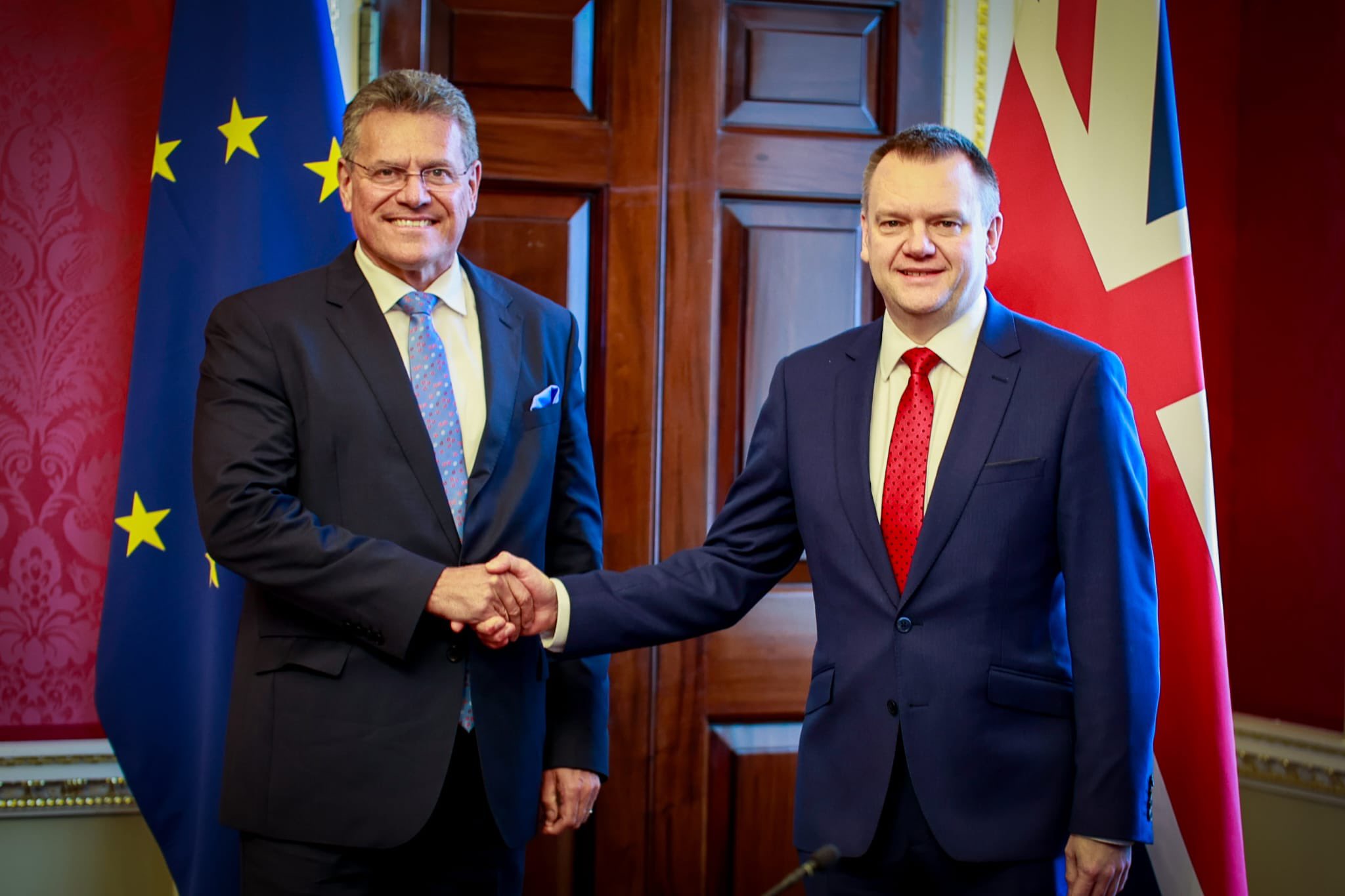
Last week, the Trade and Cooperation Agreement (TCA) Partnership Council published the minutes of its fourth meeting which took place on 2 February 2026.
The meeting was co-chaired by the Rt Hon Nick Thomas-Symonds MP, Paymaster General and Minister for the Cabinet Office, and Maroš Šefčovič, European Commissioner for Trade and Economic Security and Interinstitutional Relations and Transparency. The Assembly’s First Minister and deputy First Minister participated in the meeting as part of the UK delegation.
Both the UK and the EU delegations reflected on deliverables since their last meeting in 2024, including progress on Erasmus+ as well as continuing negotiations on a Sanitary and Phytosanitary (SPS) agreement and Emissions Trading Systems (ETS) linkage.
Further issues discussed included: global steel overcapacity; Carbon Border Adjustment Mechanisms (CBAM); Cyber Security Cooperation; fisheries and the need to strengthen economic security. You can read the minutes in full here:
In case you missed it…

-
The House of Lords Library published a research briefing on 7 May, exploring what announcements the government could make in the King’s Speech on 13 May about foreign affairs. The paper includes a section on UK-EU relations and regulatory alignment.
-
The Federation of Small Businesses published a new report: Ticket to Trade: Making EU trade easier for SMEs on the 5 May which warns that: ‘Red tape, rising costs, and complex rules are pushing small firms out of EU markets’.
-
An article published in the Guardian on May 5: ‘EU trade deal could force UK to restrict use of weedkiller linked to cancer’.
-
A BBC NI report by Business and Economics Correspondent, John Campbell published on 9 May explores: ‘How EU deal could cut NI electricity prices’.
-
An article published in the Independent on 8 May: ‘Prolonged uncertainty’ of Brexit sent waves of financial volatility across Europe, research finds’ explores research undertaken by the University of Surrey that analysed more than two decades of stock market data from across the EU.
-
An article in the Telegraph published on 7 May says: ‘Starmer to seek even closer ties to EU.’
-
Politico reported on 7 May: EU to appoint Jukka Salovaara as new ambassador to UK.
-
A new blog post by UK in a Changing Europe, published on 6 May, explores: ‘The UK-EU SPS agreement and devolution’.
-
Professors David Phinnemore and Katy Hayward will host the ‘Post-Brexit Clinic at Queen's’ on 15 May. The online event will include analysis of developments and the findings of the most recent Lucid Talk polling on the Protocol/Windsor Framework. More information on the event and how to attend is available here:
-
The European Movement Ireland published its EU Poll 2026 on Wednesday, 6 May. The annual poll presents research findings on attitudes to the EU across the island of Ireland and was widely reported on by local media outlets, including the Irish News, the Newsletter and the Belfast Telegraph.
-
Reporting on the Prime Minister’s speech earlier today, Politico says: Keir Starmer leaves door open to ditching his Brexit red lines.


