Brexit and Beyond
06 May 2026

In this week’s edition, we cover the First Minister’s update to the Assembly on The Executive Office's engagement with the EU. We also catch up on the European Affairs Committee’s latest evidence session, where peers explored dynamic alignment and devolution with academics from Queen’s University Belfast and Cardiff University.
While the UK Parliament is prorogued until 13 May and the Scottish Parliament and Senedd Cymru are dissolved pending the 7 May elections, we continue to keep you up to date on the debates and discussion topics coming up in the Assembly this week.
As always, we link you through to the news stories and items of interest you may have missed.
- Assembly Round-up
- First Minister updates Assembly on Engagement with EU
- Members’ Statements
- Windsor Framework Committee takes evidence on proposed EU regulations
- Windsor Framework Committee visit to Brussels and Westminster
- This Week in the Assembly…
- Committee explores Dynamic Alignment and Devolution
- Dillon Judgment to be handed down this week
- Lords Committee seeks further detail on Erasmus+ programme
- UK Government consultation on updating the minimum emission standard for new road vehicles
- In case you missed it…
Assembly Round-up

Our regular weekly round-up of Brexit, EU and international focused debates and Committee evidence sessions at the Assembly.
First Minister updates Assembly on Engagement with EU
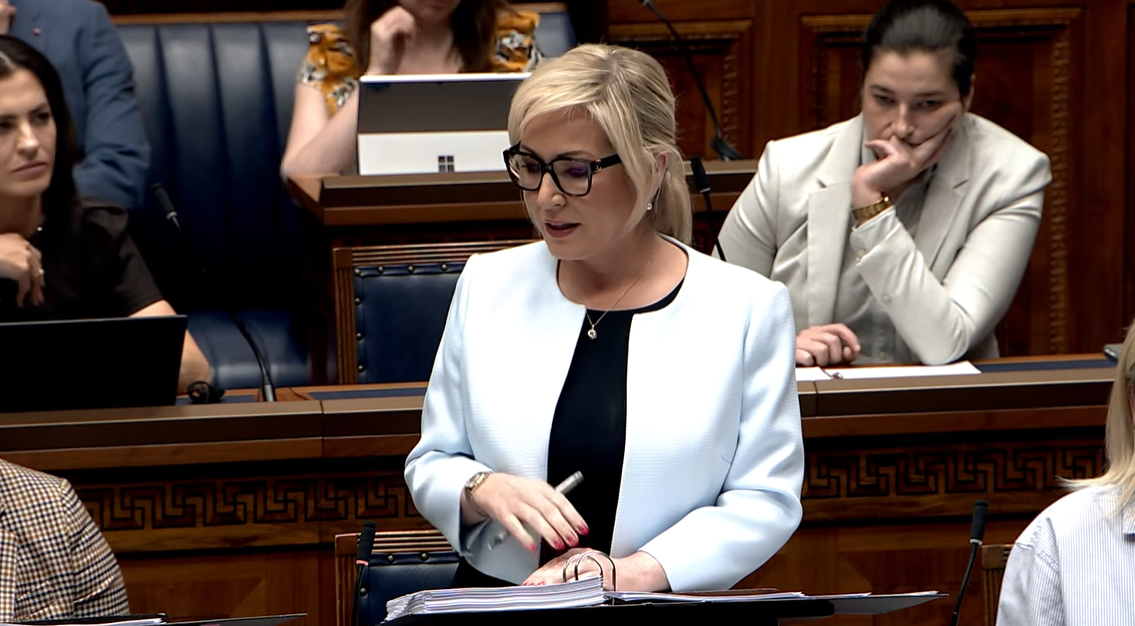
The First Minister was in the chamber on Monday for Question Time, when she provided Members with an update on The Executive Office’s work with regards relations with the European Union. Ms. O’Neill told Members that: “Engagement with the European Union remains an important priority, given our unique situation under the Windsor framework.” The First Minister detailed ongoing engagement alongside the deputy First Minister through Withdrawal Agreement Joint Committee meetings; the Interministerial Group on UK-EU Relations and through bilateral discussions with the Minister for the Cabinet Office.
Regarding legislation to implement agreements currently being negotiated between the UK and EU, Ms. O’Neill said that The Executive Office had engaged with the Minister for the Cabinet Office, Nick Thomas-Symonds MP: “… on the substance of the legislation that is to be introduced, because we want to have early sight of it so that we are able to influence it.”
The First Minister added that she welcomed the fact: “… that enhanced discussions are taking place at British Government and EU level to improve relationships, to provide stability and to iron out barriers, where they occur, for businesses and consumers alike.”
On opportunities to build relationships through the forthcoming Irish Presidency of the Council of the EU, the First Minister said: “Across all sectors, there will be a huge amount of engagement during that six-month period, and we want to have a part in that.” She noted that she had made that representation directly to the Taoiseach, the Tánaiste and to the Minister for Foreign Affairs and Trade. You can read the First Minister's response in fill via the Official Report.
Members’ Statements
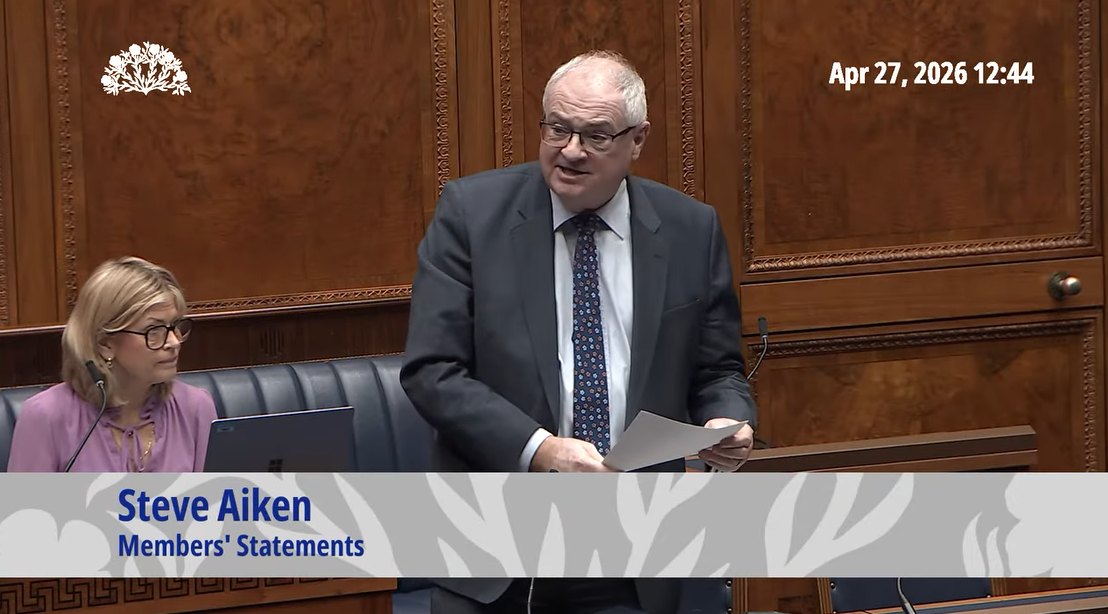
On Monday during Members’ Statements, Dr. Steve Aiken MLA discussed the recent Windsor Framework Democratic Scrutiny Committee (DSC) visit to Brussels where Members held a series of meetings. He noted that discussions had included the forthcoming UK-EU summit, the sanitary and phytosanitary (SPS) agreement and youth movement. Dr Aiken also referred to EU plans to remove customs duty relief from low-value parcels from July 2026. You can read Dr. Aiken’s statement in full here.
Windsor Framework Committee takes evidence on proposed EU regulations
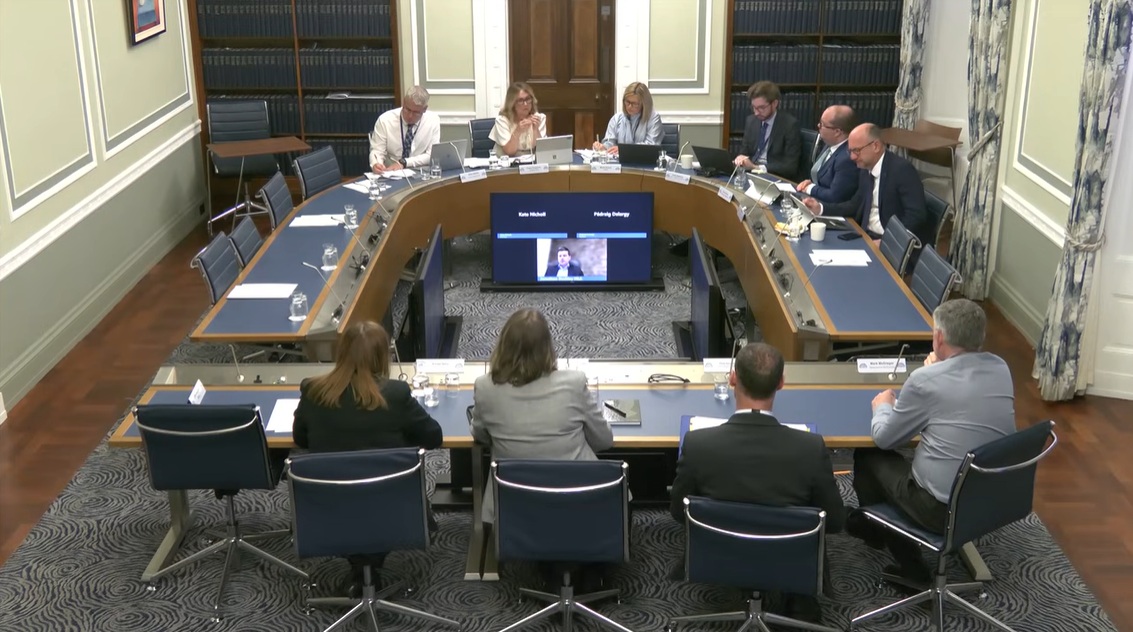
At its meeting on Thursday, 30 April, the Windsor Framework Democratic Scrutiny Committee (DSC) heard departmental evidence on a proposed EU Regulation regarding the monitoring and control of drug precursors (DPCs). The European Commission has stated that the proposed EU Regulation is part of a wider EU Drugs Strategy and Action Plan which has been developed in response to: “…the security, health, social and environmental challenges linked to the trafficking and use of illicit drugs.” The proposal aims to prevent the use of precursors for drug production: “…while modernizing and simplifying controls for legitimate businesses”. The Committee agreed to monitor the proposed EU act, and you can find out further information via the Committee’s EU Law Scrutiny Tracker.
Members also heard departmental evidence on a proposed EU Regulation regarding the simplification and strengthening of food and feed safety requirements. This proposal is part of the European Commission’s Vision for Agriculture and Food, which aims to: “…reduce unnecessary regulatory burdens while maintaining high standards for food and feed safety, and for the protection of human and animal health, and the environment.” The Committee again agreed to monitor this proposed EU act, and further info can be found here.
Windsor Framework Committee visit to Brussels and Westminster
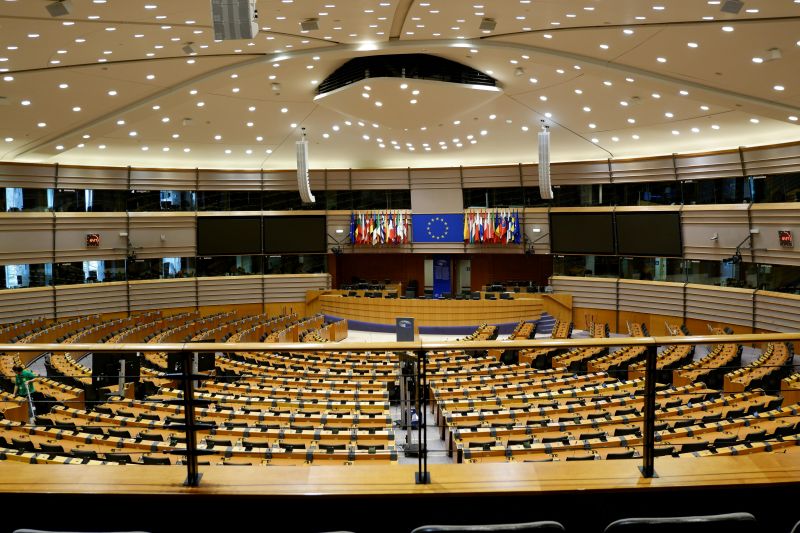
Members of the Windsor Framework Democratic Scrutiny Committee (DSC) visited Brussels from Monday 20 to Wednesday 22 April 2026. The agenda included meetings with MEPs and officials from key institutions engaged in the EU legislative process and provided Members with an opportunity to explore relevant proposed EU acts in the European Commission Work Programme for 2026.
The Committee also met with the Permanent Representation of Ireland to the EU, ahead of Ireland’s upcoming six-month Presidency of the Council of the European Union which will begin on 1 July 2026, to develop a greater understanding of the role of the Presidency. Members also met with the Office of the Northern Ireland Executive in Brussels, and the UK Mission to the EU.
On Tuesday 28 and Wednesday 29 April, Members of the DSC travelled to Westminster to engage with the UK Government on its recent responses to Lord Murphy’s Independent Review of the Windsor Framework and the House of Lords Northern Ireland Scrutiny Committee’s report on Strengthening Northern Ireland’s voice in the context of the Windsor Framework. The Committee also met with Members of both the Northern Ireland Scrutiny Committee and the House of Commons Northern Ireland Affairs Committee.
This Week in the Assembly…
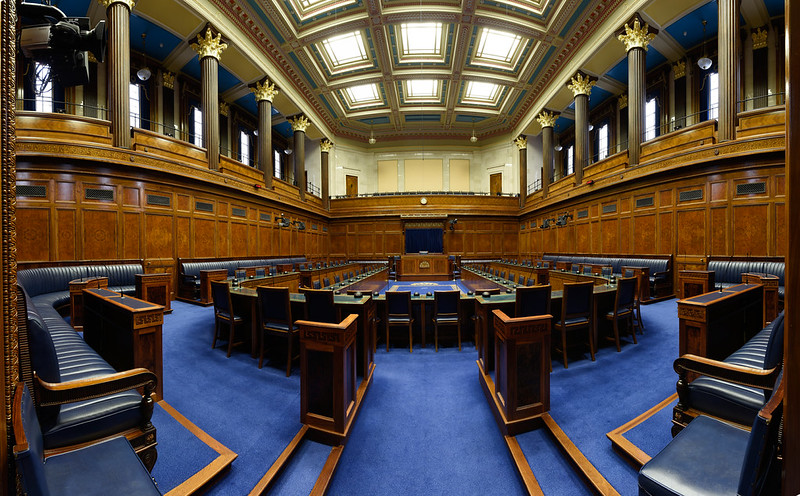
On Tuesday, during Private Members’ Business, the Assembly debated a motion on Voluntary and Community Sector Funding.
The motion included that this Assembly: ‘regrets that many organisations have been forced to scale back or withdraw services and lay off valued staff due to the mishandling of the Local Growth Fund by the British Government’ and ‘notes that the Northern Ireland Executive has realised savings from European Structural and Investment Fund succession without reinvestment in community and voluntary services…’ You can read the motion in full here:
Committee explores Dynamic Alignment and Devolution
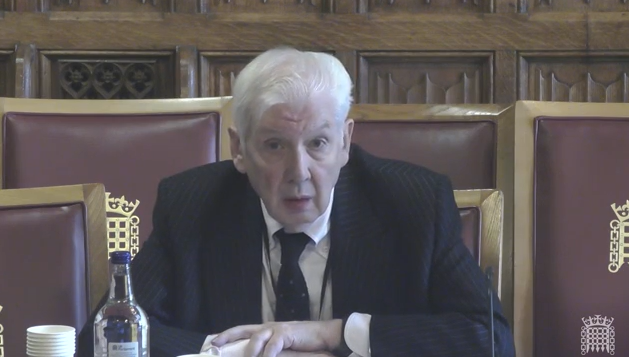
At its meeting on Tuesday, 28 April, the House of Lords European Affairs Committee continued its inquiry into Dynamic Alignment with evidence from Lord Bew, Emeritus Professor of Irish Politics, Queen’s University Belfast; Professor Jo Hunt, Cardiff School of Law and Politics, University of Cardiff; and Dr Lisa Claire Whitten, Research Fellow, School of Law, Queen’s University Belfast.
The session discussed how agreements on SPS, emissions trading and participation in the EU internal electricity market engage devolved competence, what role should be played by devolved governments and parliaments, and the interaction with the Windsor Framework.
Dr. Whitten noted that the UK Government has published a list of 76 EU laws expected to be included within the SPS agreement, observing that: “...almost all of them engage devolved competence in whole or in part.” She added that while international relations is a reserved competence: “…the implementation will very much be within devolved departments and devolved policy-making.”
Lord Bew told Members that the impact of an SPS agreement on Northern Ireland would be: “…basically benign and not problematic if what we believe the Government are negotiating in terms of the reset comes about.” Dr Whitten also noted that the agreement is expected: “...to significantly reduce barriers to trade in agri-food goods from Great Britain to Northern Ireland”. However, she pointed out that, “The scope of EU applicable law under the Windsor Framework is significantly broader than the scope of EU law that is likely to apply under the three prospective new arrangements.”
Professor Hunt emphasised the importance of intergovernmental structures in ensuring devolved governments can feed into new arrangements. She told Members: “…we need to ensure that there are properly built-in opportunities for the Scottish Government and Welsh Government to be feeding into that UK Government line.” She also noted that the ability of the Senedd and Scottish Parliament to hold their governments to account is restricted where intergovernmental structures do not meet as regularly as they should. You can watch the evidence session in full here:
Dillon Judgment to be handed down this week
The UK Supreme Court gave notice last Thursday, that its judgment on the appeal of the Secretary of State for Northern Ireland against the Dillon decision of the Northern Ireland Court of Appeal will be handed down on Thursday, 7 May.
The appeal, which was heard by the UK Supreme Court in October 2025, concerns the legality of the Northern Ireland Troubles (Legacy and Reconciliation) Act 2023 (the "Legacy Act"), which granted conditional immunity from prosecution for Troubles-related crimes and halted civil claims.
The Northern Ireland Court of Appeal had previously found in 2024, that the Legacy Act violated human rights, specifically in relation to Articles 2, 3, and 6 of the European Convention on Human Rights (ECHR) and that it had further breached Article 2 of the Windsor Framework, resulting in a “diminution of rights” for victims.
In Dillon, the UK Supreme Court may make clear the effect of Article 2(1) of the Windsor Framework (and the related EU and Treaty mechanisms) on Acts of Parliament which extend to Northern Ireland.
Lords Committee seeks further detail on Erasmus+ programme

In a letter published on 29 April, the Chairperson of the House of Lords European Affairs Committee, Lord Stirrup asked the UK Government to provide further information on its Explanatory Memorandum with regards the Erasmus+ programme (previously covered in the 20 April edition of Brexit and Beyond).
Citing the UK Government’s £570m contribution to the 2027 Erasmus+ programme, the Committee has asked for more detailed information on the estimated total size of the grants available to UK participants.
Further questions raised by the Committee include: the potential impact of the UK’s participation in Erasmus+ on its post-Brexit replacement, the Turing Scheme; whether or not the Government has any early assessments of the scale of interest among UK stakeholders in participation in Erasmus+ ; and how and when the government will assess whether the UK’s participation has offered ‘value for-money’. You can read the letter in full here:
UK Government consultation on updating the minimum emission standard for new road vehicles

The UK Department for Transport launched a consultation on 13 April seeking views on a proposal to update the minimum emission standard to Euro 7 for new vehicles, in line with the EU.
The consultation document notes that current EU standards apply in Northern Ireland under the Windsor Framework.
As well as improving air quality; supporting the zero emission vehicle transition and reducing administrative burdens for manufacturers, the Department has stated that one of the policy objectives of the proposal is to: “…implement the government’s commitment to align with EU type approval regulations where possible, to minimise and avoid regulatory divergence between Great Britain and Northern Ireland.”
Regular readers will note that we have previously reported on issues relating to type approval schemes for new cars, including an Economy Committee evidence session with representatives from the National Franchised Dealer Association (NFDA) in July 2025 and following a House of Lords debate on dual vehicle approval schemes in November 2025.
You can access further information, including background, the proposed implementation approach, implementation dates and on how to respond to the consultation here: The consultation will close on 25 May 2026.
In case you missed it…

-
The Assembly’s Research and Information Service (RaISe) published a new research paper on 29 April re: The end of EU customs duty relief for small value goods in Northern Ireland.
-
On 4 May, the UK Government issued a Joint statement following a meeting between the President of the European Commission, Ursula von der Leyen, and UK Prime Minister Keir Starmer.
-
The BBC reported on 3 May, UK joining Ukraine loan scheme would be good for EU ties, Starmer says.
-
On 30 April, the Northern Ireland Office published a press release re: The British-Irish Intergovernmental Conference (BIIGC) which was held on April 30 at Hillsborough Castle. A British-Irish Intergovernmental Conference Joint Communiqué was also issued and is available here:
-
On Monday, 4 May, the Independent reported: Starmer accused of ‘unpicking Brexit’ as UK faces paying EU £1bn a year after ‘reset’. The article sets out that the UK will have to make annual payments into European budgets for the first time since Brexit to secure the reset with the EU. The story has been covered in by number of media outlets, including LBC and The Times.
-
The BBC’s Newscast discussed: The Brexit Campaign 10 Years On, during its latest podcast on Monday, 4 May.
-
In a new UK in a Changing Europe blog post: ‘Global turmoil increases case for EU-UK alignment on medicines security’ published on 30 April, Mark Samuels outlines his argument for greater UK-EU cooperation to ensure that access to medicines across Europe are as shielded as possible from geopolitical shocks.
-
UK in a Changing Europe will hold an online lunchtime event on 26 May, when ahead of the next UK-EU summit, a panel of experts will discuss last year’s summit – one year on. You can find out more information and on how to join here:
-
A press release issued by the UK Government on 29 April announces: Tobacco and Vapes Bill becomes law. The Minister for Health in Northern Ireland, Mike Nesbitt MLA also issued a press release welcoming the ‘landmark Act’.


