Brexit and Beyond
20 April 2026

In this week’s edition, we cover last week’s Assembly debate on the continuation of PEACEPLUS funding, and the House of Lords European Affairs Committee's evidence session on dynamic alignment with the Norwegian and Swiss Ambassadors to the UK.
The UK and the EU finalised a deal on Erasmus+ on 15 April, we provide an overview of the agreement.
Brussels was the venue for last week's EU/UK Forum annual conference, we take a closer look at the agenda and give a flavour of the key note speeches from the President of the European Parliament, Roberta Metsola, European Commissioner Maroš Šefčovič, and UK Government Minister Nick Thomas-Symonds MP.
Our regular ‘Parliamentary Planner’ section highlights upcoming debates and discussion topics at Westminster this week and as always, we link you through to the news stories and items of interest you may have missed.
- Assembly Round-up
- Assembly debates the continuation of PEACEPLUS Funding
- UK and EU secure final Erasmus+ deal
- SPS, dynamic alignment and security top the agenda at EU/UK Forum annual conference
- UK Government responds to Lords Committee on the Tobacco and Vapes Bill
- European Affairs Committee hears evidence from Norwegian and Swiss Ambassadors on dynamic alignment
- Business and Trade Committee launches new inquiry on UK trade with the EU
- Parliamentary Planner
- In case you missed it…
Assembly Round-up

Our regular weekly round-up of Brexit, EU and international focused debates and Committee evidence sessions at the Assembly.
Assembly debates the continuation of PEACEPLUS Funding
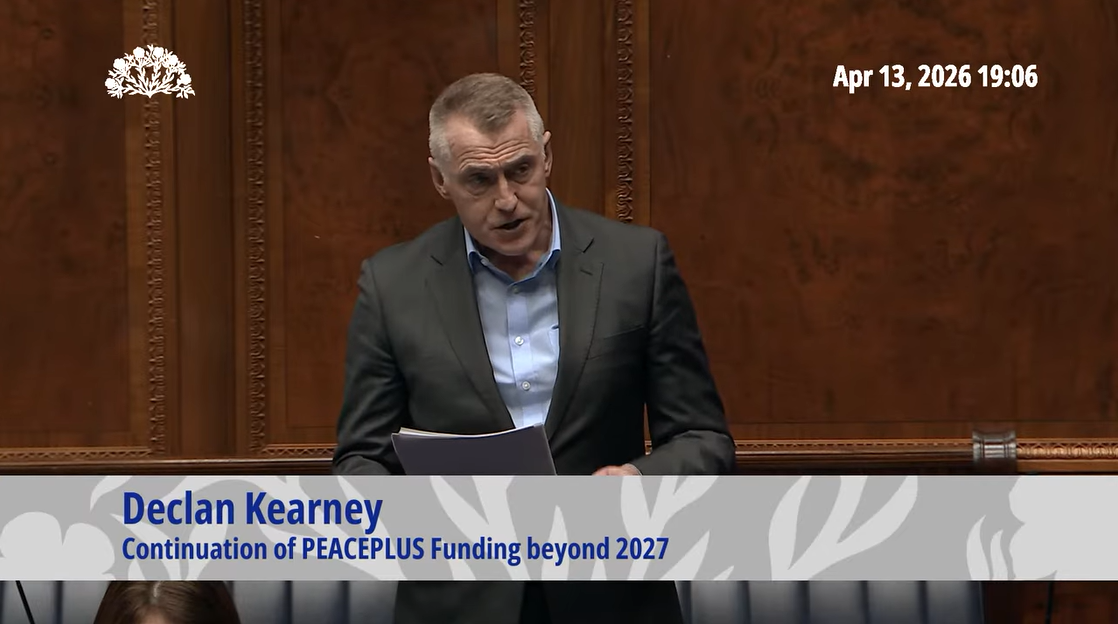
On Monday, during Private Members’ Business, the Assembly debated a motion on the ‘Continuation of PEACEPLUS Funding beyond 2027’. You can read the full text of the motion here.
Moving the motion, Declan Kearney MLA told Members that over £1.1 billion of PEACE PLUS funding has been invested since 2021 and that: “…programmes have empowered and supported young people and vulnerable groups and promoted peacebuilding and inclusion work across our society.”
Mr. Kearney noted that current EU budgetary proposals infer that from 2028: “…PEACE PLUS will be delivered only through allocations from the British and Irish Governments, with no proposed central allocation from the European Union.” He told Members that the loss of the EU contribution to PEACE PLUS “will have hugely negative implications for this region.”
Responding to the motion, Phillip Brett MLA said that while his party recognised the tangible benefits that PEACE PLUS funding has delivered to communities across Northern Ireland: “…it is not an EU grant, as some have suggested. It is heavily funded by the UK Government to the degree of 75% and, indeed, the Northern Ireland Executive here in Belfast.”
Speaking in support of the motion, Stewart Dickson MLA expressed his disappointment that The Executive Office was not present for the debate. He told the Assembly: “I would like the First Minister and deputy First Minister to hear the message from the Chamber this evening, and I would like them to make decisions about PEACE PLUS and make the case for a ring-fenced central allocation directly at the highest level..."
Supporting the motion, The Leader of the Opposition, Matthew O’Toole MLA said that PEACEPLUS had been: “…extraordinarily important for community groups and voluntary organisations that have benefited from it in the border counties and across the North.”
He further discussed the recent loss of the ‘European Social Fund’ and its successor programme, ‘The Shared Prosperity Fund,’ noting that the replacement Local Growth Fund: “…with an emphasis on capital as opposed to resource… has created an extreme problem for local organisations.”
Observing that PEACE and INTERREG programmes have provided €3.39bn of direct funding into communities in Northern Ireland and the six border counties since 1995, Timothy Gaston MLA argued that more attention needs to be paid to outcomes delivered and value for money. Mr. Gaston told Members, “If the money continues, which the motion acknowledges, and there is a future scheme, I want to see better value for money being delivered in the projects selected by local authorities.”
In his winding-up speech, Colm Gildernew MLA told Members that: “Programmes such as Peace IV and PEACE PLUS have delivered real and lasting changes to communities that have suffered greatly as a result of the conflict.” He said that while confirmation in principal that funding would be extended beyond 2027 was welcomed: “…we urgently need to see proposals for a replacement scheme being brought forward, and, crucially, we need confirmation of the quantum of funding that is likely to be provided.”
The motion was put to the Assembly and agreed. You can read the full debate via the Official Report.
UK and EU secure final Erasmus+ deal

On Wednesday, 15 April, the UK and the EU signed the legal text which secured the UK’s participation in the Erasmus+ programme in 2027.
A UK Government press release states that it expects over 100,000 people to benefit in the first year alone, noting that this will include: “…apprentices on placements in leading European companies, school groups taking part in cultural exchanges, and organisations collaborating on new cross-border initiatives.”
Re-entry into Erasmus+ was one of the commitments agreed at the first UK-EU Summit in May 2025. The UK will contribute around £570m to the programme in 2027. An Explanatory Memorandum from HM Treasury states that this is a 30% discount on the default financial contribution for participation, and that the UK will receive most of the contribution back to distribute amongst UK beneficiaries.
The agreement also provides a review clause for UK participation in Erasmus+, to take place ten months after it joins the programme.
The British Council is set to resume the role it held from 2014-2020 as the National Agency for Erasmus+ in the UK and has set up a new webpage, where those who want to find out more can register for regular updates.
You can read the press release in full here as well as the Explanatory Memorandum submitted on the 15 April by HM Treasury.
SPS, dynamic alignment and security top the agenda at EU/UK Forum annual conference
The EU/UK Forum, a joint initiative by Forum Europe and Encompass, held its annual conference in Brussels on Thursday, 16 April. The Forum intends to provide a platform for discussion, debate and information exchange on EU-UK relations.
Providing the opening keynote address, the President of the European Parliament, Roberta Metsola spoke about the broader development of the EU-UK Partnership, noting to delegates that: “We need to find a way forward that respects the choice of the British people but that can respond to today’s challenges in a realistic and pragmatic way.” She added: “This is not a question of whether we are going for the Swiss or the Norwegian model … I think we need to be talking about a uniquely British model. Because the United Kingdom is not any other third country. It is a former European Union member and needs to be treated as such.”
Turning her focus to current discussions and negotiations, the President said that an SPS agreement: “…would mean in practical terms fewer lorries stuck at the border, it would mean lower costs. Linking our carbon markets would give firms clearer rules before they commit to a new factory or upgrade a plant. And an agreement on energy and electricity would help guarantee an affordable stable and predictable supply, exactly what we need to power the shift towards artificial intelligence.”
The European Commissioner for Trade and Economic Security; Interinstitutional Relations and Transparency, Maroš Šefčovič addressed the conference via a pre-recorded video message. He told delegates that: “The EU and the UK remain like-minded partners and close allies.” Reflecting that the Trade and Cooperation Agreement had been in force for five years, he said that it was functioning well: “…and remained the most ambitious agreement ever concluded by the EU with a third country.”
The Commissioner noted recent agreements on reciprocal access to fisheries waters, extended energy cooperation, the competition agreement and the UK’s re-entry to Erasmus+. In advance of this year’s UK-EU Summit, Mr. Šefčovič said that the aim was to conclude: “…ongoing negotiations on the Youth Experience Scheme, and on establishing a common Sanitary and Phytosanitary (SPS) Agreement, as well as linking our emissions trading systems.”
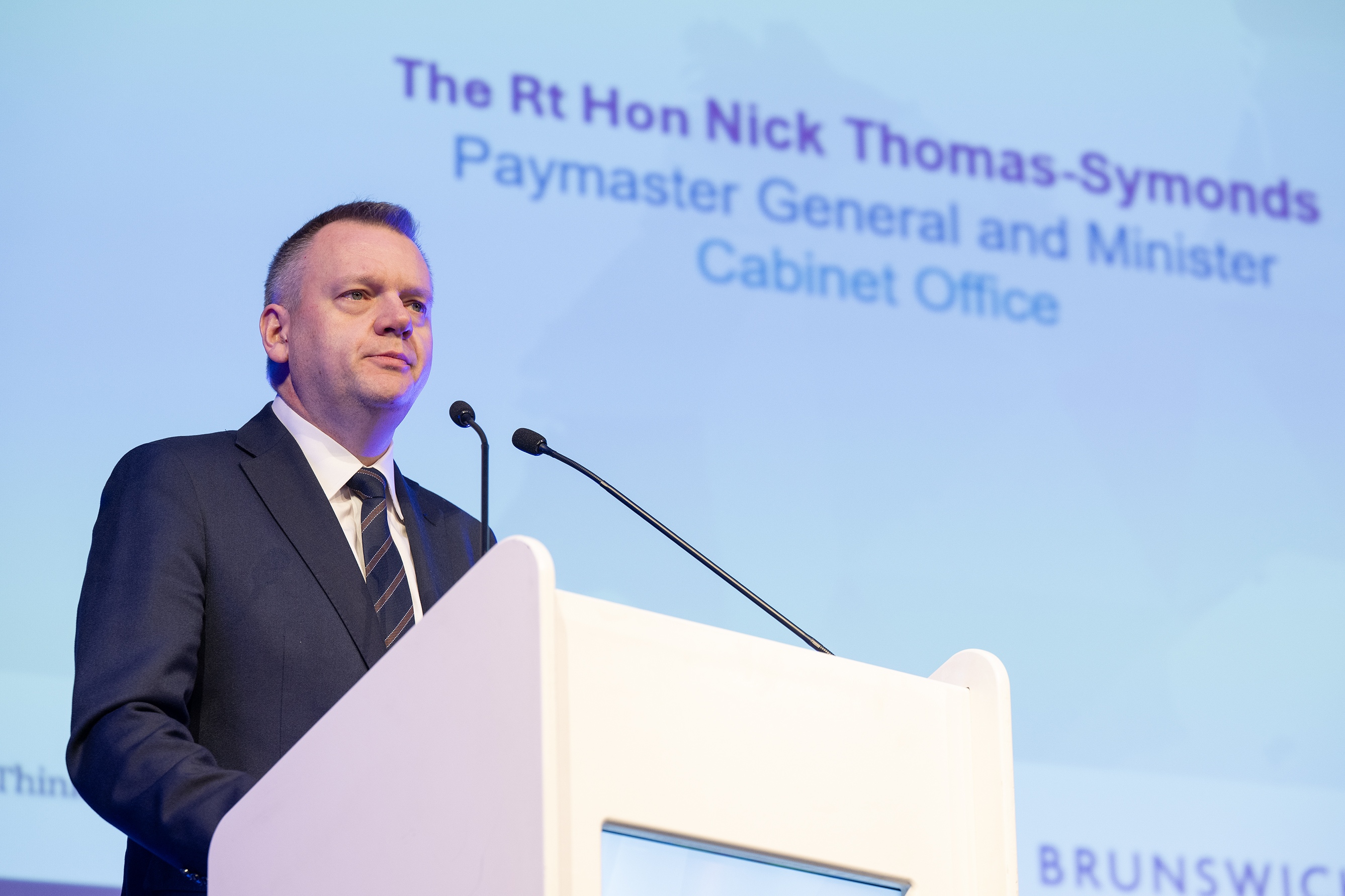
During his keynote address, the Minister for the Constitution and European Union Relations, Nick Thomas-Symonds MP told delegates: “We are moving forward to build a strong and lasting UK-EU partnership that delivers real benefits for the British people and citizens in Europe too.”
Addressing global instability, Mr. Thomas Symonds said that: “There is no British security without Europe and there is no European security without Britain.” He added that the Security and Defence Partnership that was agreed in 2025: “…is the cornerstone of our new approach, building on the foundation of our firm NATO first policy.”
Sharing what he described as: “…some of the statistics that illustrate the impact of Brexit…”, Mr. Thomas Symonds told delegates: “Since 2023, British businesses have had to navigate over 1million multi-page export health certificates just to keep their goods moving to the European Union and Northern Ireland. That paperwork has resulted in costs up to £210million and is currently hindering nearly 95 thousand UK exporters.” The Minister underlined that: “Where divergence is an active hindrance, the UK will choose to align, and we will do so deliberately to remove those bureaucratic barriers and the Brexit paperwork tax that affects everyone with an interest in EU-UK trade.”
This year’s conference also included panel discussions on Growing Europe’s Economy, and on Security and Defence, as well as ‘fireside chats’ with: the UK Ambassador to the European Union, Lindsay Appleby; Mike Clancy, General Secretary of the Prospect Trade Union and UK Chair of the Domestic Advisory Group; Luisa Santos, Deputy Director General at Business Europe and EU Co-Chair of the Domestic Advisory Group as well as Irish MEP, Barry Andrews.
You can watch the conference in full here.
UK Government responds to Lords Committee on the Tobacco and Vapes Bill
In March, the House of Lords Northern Ireland Scrutiny Committee wrote to Baroness Merron, Parliamentary Under-Secretary of State at the Department of Health and Social Care, seeking clarification on the applicability of the Tobacco and Vapes Bill in Northern Ireland. This followed the submission of detailed opinions by some EU Member States after the UK Government had notified certain provisions in the Bill related to Northern Ireland on the EU’s Technical Regulation Information System (TRIS).
Baroness Merron’s response to the Committee, published last week, emphasised that notification through the TRIS system: “…is a standard process and not an approval process.” She added that: “The Commission and Member States may comment, but they do not play a role in approving the UK’s legislation in respect of Northern Ireland.”
Baroness Merron said that the government had: “… provided a comprehensive response to the opinions received on the TRIS notification, setting out the reasons why the Smoke-free Generation policy is fully compatible with our international treaty obligations in Northern Ireland.” She concluded that: “The Government’s position remains that the Smoke-free Generation policy measures in the Bill are compatible with the Windsor Framework and will apply in Northern Ireland.” You can read the full UK Government response here.
European Affairs Committee hears evidence from Norwegian and Swiss Ambassadors on dynamic alignment
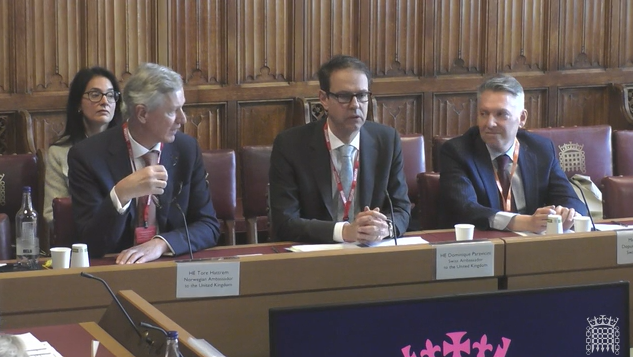
The House of Lords European Affairs Committee met on 14 April for the second oral evidence session of its inquiry on dynamic alignment. The Committee heard evidence from HE Tore Hattrem, Norwegian ambassador to the UK; HE Dominique Paravicini, Swiss ambassador to the UK; and Alberto Groff, deputy head of mission for the Swiss embassy in the UK.
The session discussed, among other issues, the evolution of current arrangements for dynamic alignment with the EU for Norway and Switzerland respectively; the processes by which alignment happens in practice where the European Commission is seeking to come up with new or amending legislation; and the impact of dynamic alignment on the Norwegian and Swiss economies and trade relations with other countries. The ambassadors emphasised the importance of having “an alert system in Brussels” to help shape decisions.
Business and Trade Committee launches new inquiry on UK trade with the EU
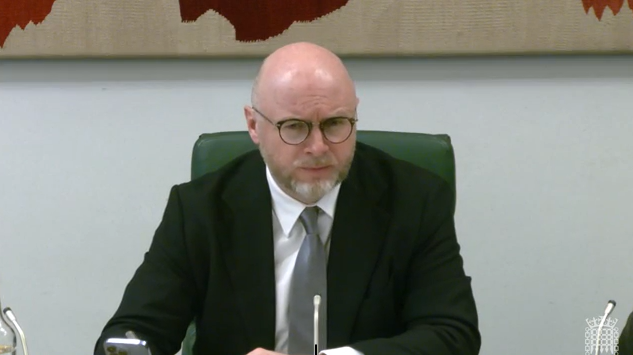
On 10 April, the House of Commons Business and Trade Committee announced a new inquiry on ‘UK trade with the EU’. The Committee has described its Call for Evidence as part of a 'stocktake’ of the UK’s economic relationships that will review the full scope of deeper alignment options and evaluate the trade-offs and constraints with the new free trade agreements the UK has now signed. It intends to examine:
- Whether the UK has a coherent strategy for its economic relationship with the EU The state of negotiations on the reset — and whether progress is being delivered
- The trade-offs the Government is making between access to EU markets and alignment with other partners
- The implications for trade, energy cooperation and economic security
You can find out further detail about the inquiry here. The ‘Call for Evidence’ will remain open until 18 May 2026.
Parliamentary Planner

House of Commons
Today, the Foreign Affairs Committee took evidence on its inquiry into the UK/EU Treaty on Gibraltar, you can watch the evidence session here.
During questions to the Foreign, Commonwealth and Development Office on Tuesday, a question has been tabled asking if the Minister will publish a timetable for the implementation of the UK-EU Treaty in respect of Gibraltar. The Minister is also expected to update Members on what progress her department has made with Cabinet colleagues on resetting the UK's relationship with the European Union.
Questions to the Cabinet Office Minister on Thursday include: What steps he is taking to improve relations with the EU; what recent discussions he has had with his EU counterparts on the future EU-UK relationship; and on what steps he is taking with Cabinet colleagues to increase trade with the EU.
House of Lords
The European Affairs Committee will continue taking evidence on its inquiry into Dynamic Alignment on Tuesday, when it hears from the CBI, Bruegel, the British Chambers of Commerce, Flint Global and the Growth Commission. You can watch the evidence session here.
Also on Tuesday, the International Agreements Committee will take evidence on its inquiry into: Trade in a turbulent world: how should the UK deploy its trade instruments? Although agreements with the EU and the European Economic Area are out of the inquiry’s scope, the Committee is seeking evidence on which of the trade agreements the UK has signed with third countries since leaving the EU are considered to be particularly effective or well utilised.
Further details on the inquiry can be found here and the ‘Call for Evidence’ remains open until 22 May 2026. You can watch next week’s evidence session here.
In case you missed it…

-
The EU entry-exit scheme (EES) launched in full on10 April and was back in the headlines last week with lengthy delays reported at airports across Europe. A number of media outlets covered the story including The Guardian, the BBC, The Independent and the Financial Times Meanwhile over the weekend, The Independent, The Mirror and The Telegraph (behind a paywall) amongst other outlets reported that Greece had dropped biometric checks for UK tourists.
-
On 17 April, HM Revenue & Customs published a policy paper on ‘The Customs (Northern Ireland) (EU Exit) (Amendment) Regulations 2026’ explaining the legislative changes that will make it easier for businesses to claim a repayment or remission of Customs Duty when bringing goods into Northern Ireland.
-
On 7 April, the UK Government published Explanatory Memorandum on the Government's summary of a proposal for a regulation amending Regulation (EU) 528/2012 as regards the extension of certain data protection periods.
-
On 14 April, UK in a Changing Europe published the sixteenth edition of its regulatory divergence tracker - UK-EU Divergence Tracker Q1 2026 – which outlines how UK and EU rules and regulations have aligned or diverged in the period January-March 2026.
-
In a blog published on 16 April, Senior Researcher at UK in a Changing Europe, Joël Reland argues that the UK government’s plans for closer EU alignment may prove more difficult than anticipated.
-
Catherine Barnard, Professor in European Union Law and Employment Law at the University of Cambridge, joined Ruth Fox and Mark Darcy on the Hansard Society podcast on 17 April to discuss what it means for the UK to dynamically align with some EU rules, and what role should be played by the UK parliament.
-
In a UK in a Changing Europe blog published on 8 April, Catherine Barnard and Denzil Davidson explain why negotiations on a youth experience scheme between the UK and the EU are so complex.
-
An article published in The Guardian on Sunday 19 April reports: UK seeks EU deals on steel and EVs in push for closer economic ties
-
On 17 April, the BBC published an article from its Europe editor Katya Adler on a recent interview with the UK's minister for EU relations, Nick Thomas-Symonds MP. The article reports the Minister as saying that the UK is adopting an "ambitious" and "ruthlessly pragmatic" approach to becoming closer to its European neighbours - in sectors of UK national interest.
-
Politico’s Brussels Playbook Podcast (3 April) also featured an interview with the Minister for the Constitution and European Union Relations, Nick Thomas-Symonds: Can Britain and the EU get a Brexit reset deal over the line?
-
In a new blog published today, Jannike Wachowiak, researcher at UK in a Changing Europe, makes the case for a UK-EU resilience partnership to help both sides better prepare for and respond to certain crises.
-
The Ulster Farmers’ Union published the latest edition of its Brussels in Brief on Friday 17 April.
-
In its ‘The Farming Blog’ published on April 8, The Department for Environment, Food & Rural Affairs explores Improving EU trade: what you need to know.
-
On Friday 10 April, the House of Commons Library published a briefing paper outlining the purpose of a Carbon Border Adjustment Mechanism (CBAM), the UK Government plans for a UK CBAM, the impact of the EU CBAM, and international trade considerations.


