Engagement Newsletter
April 2026
Welcome to the April edition of the Assembly Engagement Newsletter!
Each month, we bring you opportunities to connect with the work of the Assembly, contribute your views, and take part in events that help shape decision‑making. Whether you’re interested in learning more about how laws are made, sharing your perspective through consultations, or getting involved in outreach activities, this newsletter is your gateway to understanding and influencing the issues that matter across Northern Ireland.
What is Plenary?
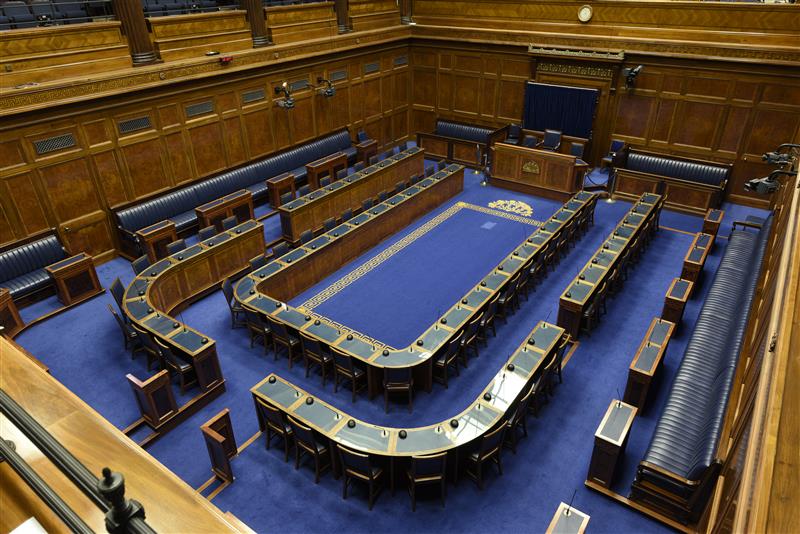
Plenaries are when MLAs meet in the Assembly Chamber to debate proposed bills and motions and to ask questions during question time and on ministerial statements. These meetings are usually held on Mondays and Tuesdays with the public welcome to attend in the Public Gallery. Plenary sittings are also streamed live on the Assembly website.

Legislation
The Assembly has the power to make laws for Northern Ireland. A proposal for legislation is referred to as a “Bill” until it is passed by the Assembly and given Royal Assent. At this stage it becomes an Act of the NI Assembly. Ministers, Committees and individual Members can propose to introduce a Bill to the Assembly. If the Speaker believes that the proposals are within the Assembly’s competence, the Bill is introduced and debated by MLAs.
To date 31 Bills have been passed or are making their way through the legislative process in this current mandate. You can see a list of Bills and what stage they are at here.
Committee Reports
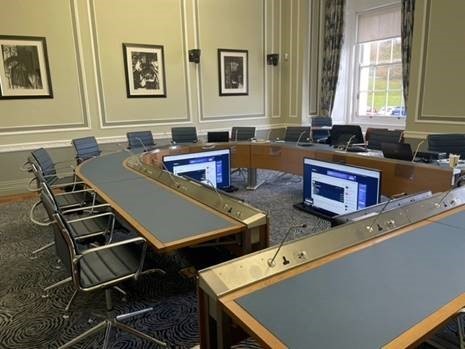
Committees are groups of MLAs who look at specific subjects such as health, education, justice and more. Committee members come from different political parties. They hold inquiries, scrutinise legislation, and hear the views of people to help with their inquiries and recommendations.
The RHI (Closure of Non‑Domestic Scheme) Bill was introduced by the Economy Minister on 6 October 2025 and passed its Second Stage on 20 October 2025. It was then referred to the Committee for the Economy to gather evidence and provide its views as part of the legislative scrutiny process. The Committee completed its work on 25 February 2026 and has now published its Committee Stage Report on the Bill.
Criminal Justice (Sentencing etc) Bill

The Criminal Justice (Sentencing etc) Bill sets out to:
- Provide a statement of the principles and purposes of sentencing;
- Make provisions about sentencing guidance;
- Make provision to enable the courts to include community requirements with suspended sentences;
- Set statutory starting points for life sentence tariffs for murder;
- Make provision for unduly lenient sentences arrangements to extend to all Crown Court sentences;
- Introduce ‘Charlotte’s Law’, which makes provision for increased sentences where a killer fails to disclose the location of their victim’s remains; provides for an proportionate reduction in that increase if a subsequent disclosure is made; and includes provision equivalent to ‘Helen’s Law’, requiring the Parole Commissioners to take failure to disclose into account when considering a prisoner’s release on licence;
- Introduce a statutory aggravator model for hate crime, which identifies protected characteristics for this purpose;
- Introduce a vulnerable victim aggravator, where the offender knows or ought reasonably to have known the victim was vulnerable;
- Introduce a new offence of assaulting a person delivering a public service, performing a public duty or providing a service to the public, or a person assisting such a person, along with a corresponding statutory aggravator for more serious offences; and,
- Introduce increases to the maximum penalties and minimum disqualification periods for offences causing death or serious injury by driving; as well as making provision so that driving disqualification periods will normally be served after release from prison.
As part of the Assembly’s normal legislative processes, the Criminal Justice (Sentencing etc) Bill has been referred to the Committee for Justice for scrutiny.
The Committee is seeking your views on the objectives, proposals and potential consequences of the Bill. Your views will help to inform the Committee’s consideration of the Bill.
Please note, you can choose which parts of the survey you wish to respond to. You do not have to complete the whole survey and can choose which sections or individual pages to complete.
The online survey closes on Friday 8th May.
Balmoral Show 2026

Come and say hello to us at this year’s Balmoral Show from 13–16 May! Our team will be onsite every day to chat about the work of the Northern Ireland Assembly, share information on how you can get involved, and showcase the opportunities available throughout the year. Whether you’re visiting with family, friends, a school, or a community group, we’d love you to stop by and meet the team.
Assembly Explained Workshops
Assembly Explained workshops and outreach sessions offer an accessible way for community groups and organisations to learn how the Northern Ireland Assembly works and how they can get involved. Delivered online, at Parliament Buildings or as an outreach session, they explain the role of MLAs, committees and the law‑making process, while highlighting practical ways to share views, take part in consultations and engage with Assembly business
To book, or to find out more, please click the link below.
Get in Touch
To find out more about the work of the NI Assembly Participation & Outreach Team please email engagement@niassembly.gov.uk


