Brexit and Beyond
2 November 2026

The Assembly was in recess last week but there was plenty of EU-related discussion at Westminster, as MPs debated farming and food supply and peers debated railway regulations. Meanwhile, speculation swirled as to what’s on the table for the forthcoming summit between the UK and EU, and what might lie in store for the longer-term relationship. We bring you up to speed with the latest developments and look ahead to what’s coming up this week.
- MPs debate domestic farming and food supply
- Full steam ahead on railways regulations
- Westminster Brief
- UK to align with EU emissions standards for new cars
- UK Government responds to consultation on CE marked medical devices
- This week in the Assembly
- Parliamentary planner
- In case you missed it...
MPs debate domestic farming and food supply
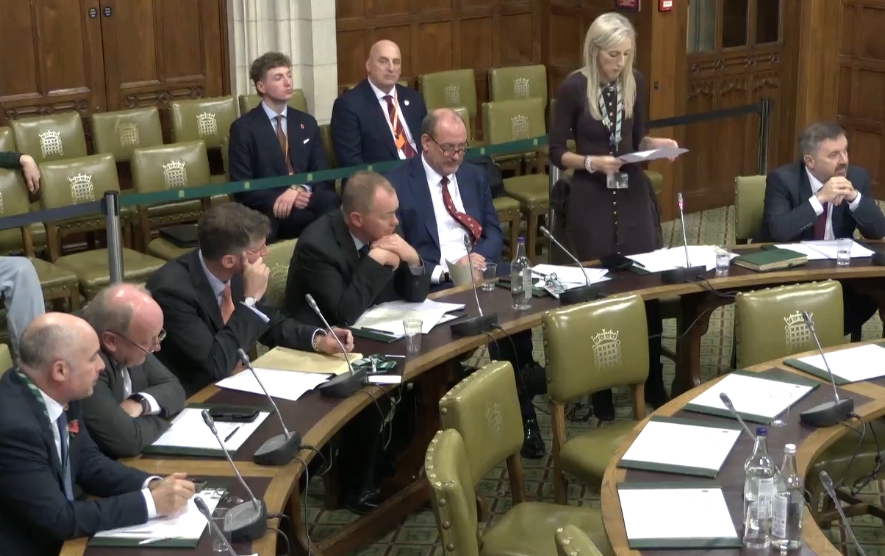
Carla Lockhart MP opened a Westminster Hall debate on Domestic Farming and Food Supply on Tuesday 27 October.
Alongside other issues facing farming businesses, Ms. Lockhart highlighted examples of how farmers in Northern Ireland are required to follow different rules to those in other parts of the UK: “England has legislation to allow precision breeding. Work is progressing on cattle TB vaccinations in Great Britain, while Northern Ireland remains subject to the EU prohibition … There are also differences in the rules governing mycotoxins in cereals and additional requirements on organic production.” She also referenced arrangements for supply of veterinary medicines to Northern Ireland (as previously discussed in our 1 December 2025 edition).
Stephen Morgan MP, Parliamentary Under-Secretary of State for Environment, Food and Rural Affairs, responded to the debate. He told Members that the proposed SPS agreement between the UK and EU would remove the need for almost all SPS checks and certificates for goods moving from GB to NI. He added: “I know Northern Irish farmers welcome the deal. They see the benefit in removing checks on used agricultural machinery such as tractors, which are often bought from Great Britain. As another example, seed potatoes will be easier to bring in, and Northern Irish farmers will be operating under the same rules, for example on pesticides, as the rest of the UK.”
You can read the debate in full here.
Full steam ahead on railways regulations
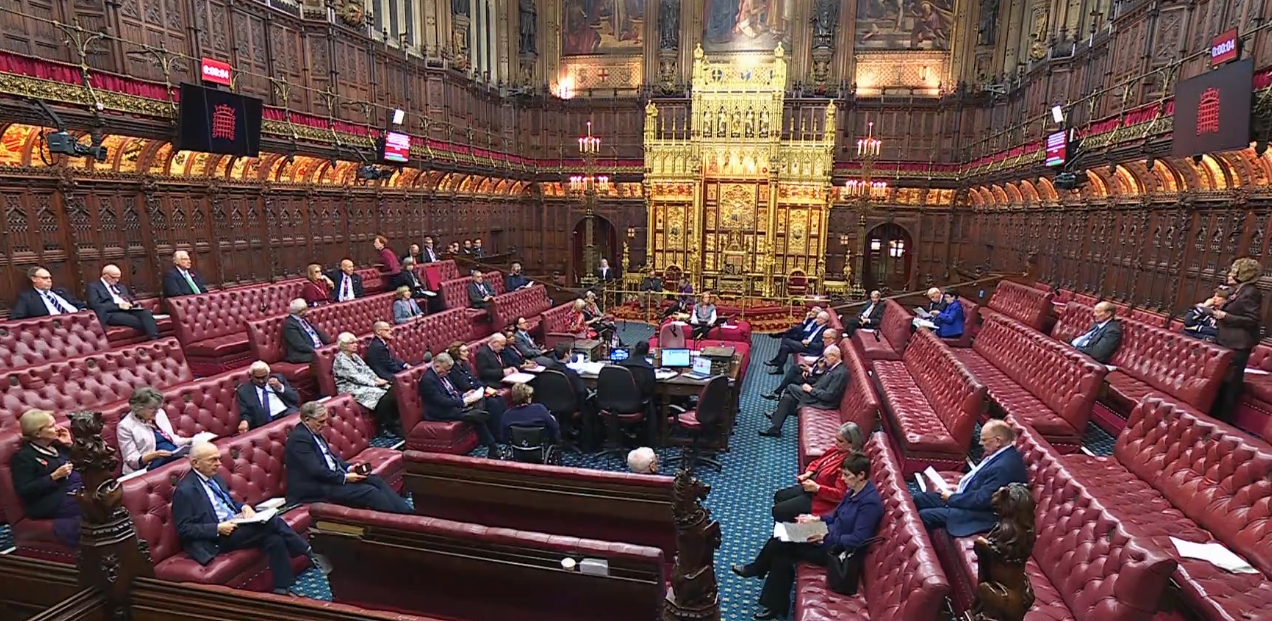
The House of Lords agreed a motion last Wednesday to approve the Railways (Interoperability in Northern Ireland) (Convention on International Carriage by Rail) (Amendment) Regulations 2026.
The Minister for Rail, Lord Hendy of Richmond Hill, explained to peers that the draft regulations implement the UK’s obligations under the Windsor Framework with regard to rail interoperability (i.e. making sure that trains, railway infrastructure and railway equipment can operate safely and effectively across connected rail networks). He noted that the regulations create a dedicated framework for Northern Ireland in order to apply EU directive 2016/797 on rail interoperability.
Baroness Hoey moved an amendment to the motion, to regret that the draft regulations “were not subject to a public consultation on the proposed divergence in rail regulations between Great Britain and Northern Ireland”.
Baroness Hoey told the House: “It is also constitutionally an outrage that a part of this country should be reduced by laws we do not make and cannot change, and yet that is what we are doing tonight. There has been no consultation … the Minister, whether he likes these regulations or not, is obliged to implement them because of the Windsor Framework.”
Responding to the debate, Lord Hendy noted that the Government had carefully considered whether a formal public consultation was appropriate but, seeing as the regulations implement obligations that the UK has already entered into, “...there was limited policy discretion available regarding the fundamental policy outcome.” He assured peers, however, that the Government had worked with organisations most closely affected by the legislation, including the Department for Infrastructure, Translink, the Office of Rail and Road, the Rail Safety and Standards Board, and conformity assessment bodies.
Baroness Hoey’s amendment was defeated following a division. You can read the debate in full here. The debate also received coverage in the News Letter: Rail law update prompts fresh debate on NI-GB ‘divergence’ post-Brexit.
Westminster Brief
During Home Office Questions on Monday, Shabana Mahmood MP was asked for her assessment of the potential merits of the UK joining the EU pact on migration and asylum. Responding, Ms. Mahmood told the House that: “The EU asylum pact has yet to resolve the challenges of returns within Europe, and currently those returns are not happening at scale, so the pact is not a silver bullet.”She added that the Government is “always thinking about how we can work more collaboratively with our partners in Europe on law enforcement co-operation and data sharing”, noting this would likely be the subject of much discussion at the next UK-EU summit.
Meanwhile, in the House of Lords, the Treasury Minister responded to a question on the VAT retail export scheme, or “tax-free shopping”. This scheme was withdrawn in Great Britain at the end of the Brexit transition period on 31 December 2020. The Cyber Security and Resilience (Network and Information Systems) Bill also completed its Report stage in the Lords on Monday: readers will recall that the Assembly agreed to grant legislative consent for the bill following debate on Monday 19 October, as covered in the previous edition of Brexit and Beyond.
Baroness Twycross, Parliamentary Secretary at the Cabinet Office, responded to a question in the House of Lords on Tuesday afternoon regarding what steps the Government is taking to improve joint working between the UK Government and the devolved governments in the delivery of public services. Baroness Twycross noted that while the majority of public services are devolved, the UK Government was: “…committed to a collaborative relationship with the devolved governments on how we deliver effective public services.” Sheadded that the PM would chair a meeting of the National Economic Council in Scotland on Friday (30 October), “…for further talks on empowering the regions across the UK through deeper devolution.”
At Question Time on Tuesday, the Minister for Intergovernmental Relations and European Relations, Hamish Falconer MP, told Members that the UK would reassociate with Erasmus+ from 1 January 2027, with applications opening in November 2026. Regarding talks on security and defence co-operation with the EU, Mr. Falconer confirmed that this would be an important part of the UK-EU summit on 20 November.
During Prime Minister’s Questions on Wednesday, the Leader of the Opposition, Kemi Badenoch MP, asked the Prime Minister whether or not he wants a referendum on rejoining the European Union. Mr. Burnham told MPs: “The red lines in our manifesto, including those on freedom of movement, will stay firmly in place for the whole of this Parliament…” The Prime Minister added that he would do everything he could: “…to get a better deal for Britain—a better deal for farmers and food producers, less red tape on our exporters, more support for our steel and our car industries, more control of migration.”
UK to align with EU emissions standards for new cars
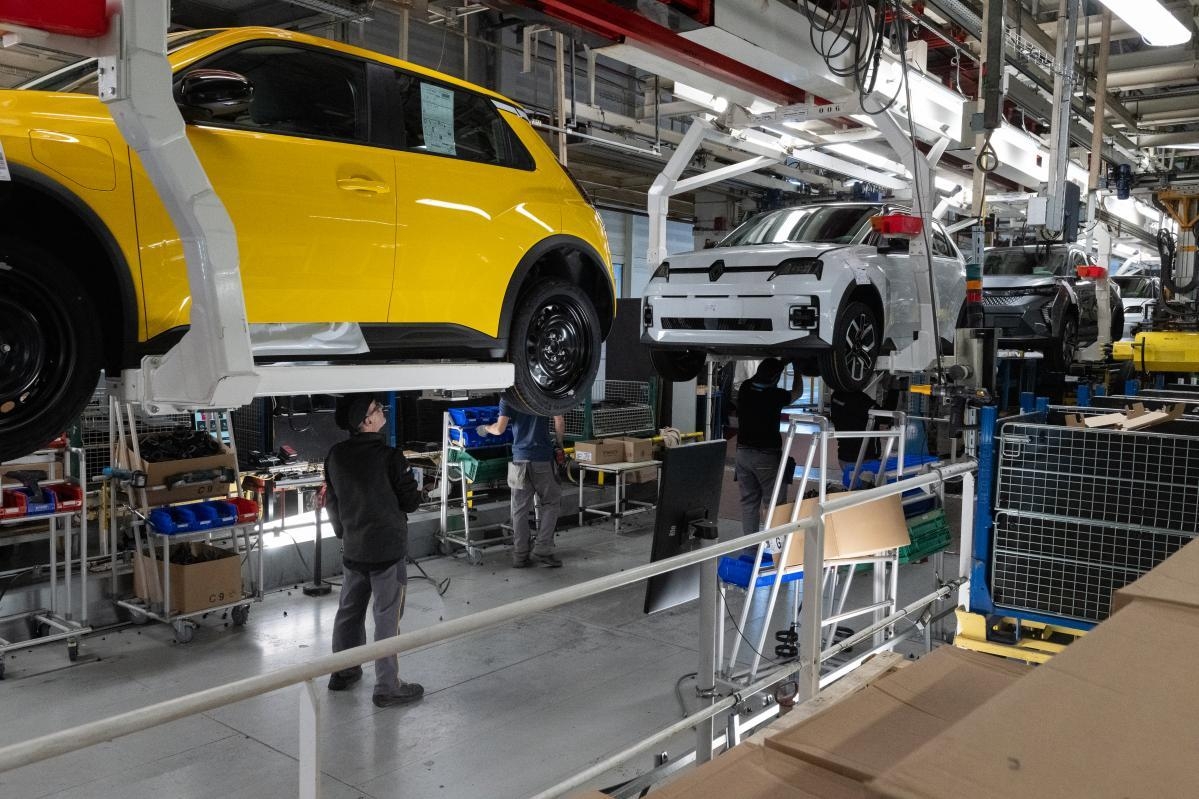
On Tuesday, 27 October, the UK Department for Transport published the Government response to its consultation on Updating the minimum emission standard for new road vehicles.
The Government confirmed that it will proceed with updating the minimum emission standard for new road vehicles in Great Britain to Euro 7, applying to new light-duty vehicle models from 29 November 2027 (one year after the corresponding implementation date in the EU). The consultation response explains, “This approach will limit disruption to manufacturers’ existing product programmes and offer flexibility as they transition to Euro 7, while reaching alignment with Northern Ireland and the EU from the implementation date for all new vehicle registrations.”
The consultation, originally launched in April 2026, sought views on updating the minimum emission standard to Euro 7 for new vehicles, in line with the EU. As well as seeking to improve air quality, support the zero emission vehicle transition and reduce administrative burdens for manufacturers, one of the stated policy objectives was to: “…implement the government’s commitment to align with EU type approval regulations where possible, to minimise and avoid regulatory divergence between Great Britain and Northern Ireland.” Under the Windsor Framework, current EU emissions standards apply in Northern Ireland.
We previously discussed road vehicle type approvals and emissions standards for new cars in our 20 October 2025 newsletter. A briefing paper by the Assembly’s Research and Information Service (RaISe) provides further background.
UK Government responds to consultation on CE marked medical devices
The UK Government published its response to the targeted consultation on the indefinite recognition of CE marked medical devices in Great Britain on 21 October.
A press release from the Medicines and Healthcare products Regulatory Agency explains that the Government “will continue to accept CE marked medical devices on a long-term basis” in Great Britain. A CE mark means devices have been assessed and approved for the EU market.
The Government response explains that this will provide “continued patient access to medical devices, while reducing the administrative burden on medical device manufacturers who already comply with EU regulations.” Noting that separate arrangements apply in Northern Ireland under the Windsor Framework, the Government response also adds that proposals “…will support convergence across the United Kingdom, where devices must bear the CE mark for Northern Ireland.”
This week in the Assembly
At Question Time today, the Minister for the Economy, Dr. Caoimhe Archibald MLA provided an update on work to develop a local equivalent of the British Industrial Competitiveness Scheme.
On Tuesday, Members will debate a Private Members’ Motion on Barriers to Remote Working across the Island of Ireland during plenary. (This follows a recent Member’s Statement delivered by Pádraig Delargy MLA on Cross-border Working: Double Taxation, as covered in the 12 October edition of Brexit and Beyond.)
Parliamentary planner

House of Commons
At its meeting on Tuesday, the Environment, Food and Rural Affairs Committee will continue its inquiry into biosecurity and animal welfare. Representatives from the National Farmers Union, the British Veterinary Association, the Veterinary Medicines Directorate, The Pirbright Institute and the Animal and Plant Health Agency will provide evidence to Members at the meeting.
Among the topics for Committee scrutiny is the potential SPS agreement with the EU. You can watch Tuesday’s meeting live here.
House of Lords
The Cyber Security and Resilience (Network and Information Systems) Bill will return to the House of Lords today (2 November) for its third reading.
In case you missed it…

- The Prime Minister met with the First Ministers of Scotland and Wales at the National Economic Council in Glasgow on 30 October. A UK Government press release reports: PM’s message to Devolved Governments: “Work with me to empower every single part of the UK. A transcript of the PM’s remarks at the Council is also available on Gov.uk.
- The Assembly’s Research and Information Service has published a Research Paper, The UK-EU reset and the role of devolution (2 November).
- The European Commission is expected to announce its annual Commission Work Programme on Wednesday, 4 November. Rapporteur reports that this year’s programme is likely to focus on implementing existing legislation rather than bringing forward new initiatives.
- Following last week’s EU-Canada Summit in Montréal, Politico reports (30 October): 8 things we learned at the EU-Canada summit. The European Council published a Joint Statement from the summit, Canada and the European Union Building Together an Alliance for the Future.
- The Guardian reports (1 November) that the UK Government is prepared to offer cheaper university fees for EU students in return for access to the ‘Made in Europe’ scheme, ahead of this month’s summit with the EU: UK willing to spend £450m a year on EU students if it can join Made in Europe scheme.
- Multiple media outlets reported comments made by the Prime Minister in an interview with the Sunday Times, regarding freedom of movement with the EU. The Sunday Times reported (25 October 2026): Andy Burnham is open to adopting EU free movement (paywall). The BBC also noted the comments: Burnham open to 'honest discussion' on EU free movement.
- Politico reports (30 October): EU open to flexibility on euro and Schengen if UK tries to rejoin.
- Simon Usherwood, Professor of Politics & International Studies at The Open University, discusses potential euro membership for the UK in a blog article, Obligations and understandings: the UK and the Euro(updated 29 October 2026).
- The House of Lords European Affairs Committee has published a letter from Hamish Falconer MP, Minister for Intergovernmental Relations and European Relations on the UK-EU Framework Participation Agreement on Civilian Crisis Management Operations (27 October 2026). The letter indicates that a Framework Participation Agreement (FPA) to facilitate potential UK participation in the EU’s civilian Common Security and Defence Policy (CSDP) Missions could be signed in the coming weeks.
- The European Affairs Committee has also published a letter from Stephen Morgan MP, Parliamentary Under-Secretary of State at the Department for Environment, Food and Rural Affairs on Annual Fisheries Negotiations for Fishing Opportunities in 2027.
- The Veterinary Medicines Directorate (VMD) has issued a press release (30 October) explaining that GB and NI online retailers of veterinary medicines will need to use two separate logos to verify that they are registered with the VMD.
- The NIBusinessInfo.co.uk website has published a survey (26 October) on behalf of the UK Department of Energy Security and Net Zero (DESNZ), seeking industry views on ‘Proposed EU changes to energy labelling & tyre regulations’.


