Brexit and Beyond
16 June 2026

Just before publication of this week’s Brexit and Beyond, it was announced that the second UK-EU summit will be held on 22 July in Brussels. The date was agreed by Prime Minister Keir Starmer and President of the European Council, António Costa, at their meeting today at the G7 Summit in Evian. We will keep you updated on further details...
Also, this week, we report back on debates in the House of Lords and look at oral evidence provided to the Northern Ireland Scrutiny Committee and European Affairs Committee.
As Ireland continues preparations for the start of its Presidency of the Council of the European Union on 1 July, we take a look at the Irish Government’s policy programme.
Our regular ‘Parliamentary Planner’ section highlights upcoming debates and discussion topics at Westminster and the Scottish Parliament this week, and as always, we link you through to the news stories and items of interest you may have missed.
- Assembly Round-up
- Committee report calls for greater government support for cultural touring in the EU
- Lords committee discusses scrutiny arrangements for dynamic alignment agreements
- Westminster Brief
- Committee holds first evidence session on ‘Article 2 of the Protocol/Windsor Framework’ Inquiry
- Irish Government publishes its 'Policy Programme' for Council Presidency
- This week in the Assembly
- Parliamentary Planner
- In case you missed it…
Assembly Round-up
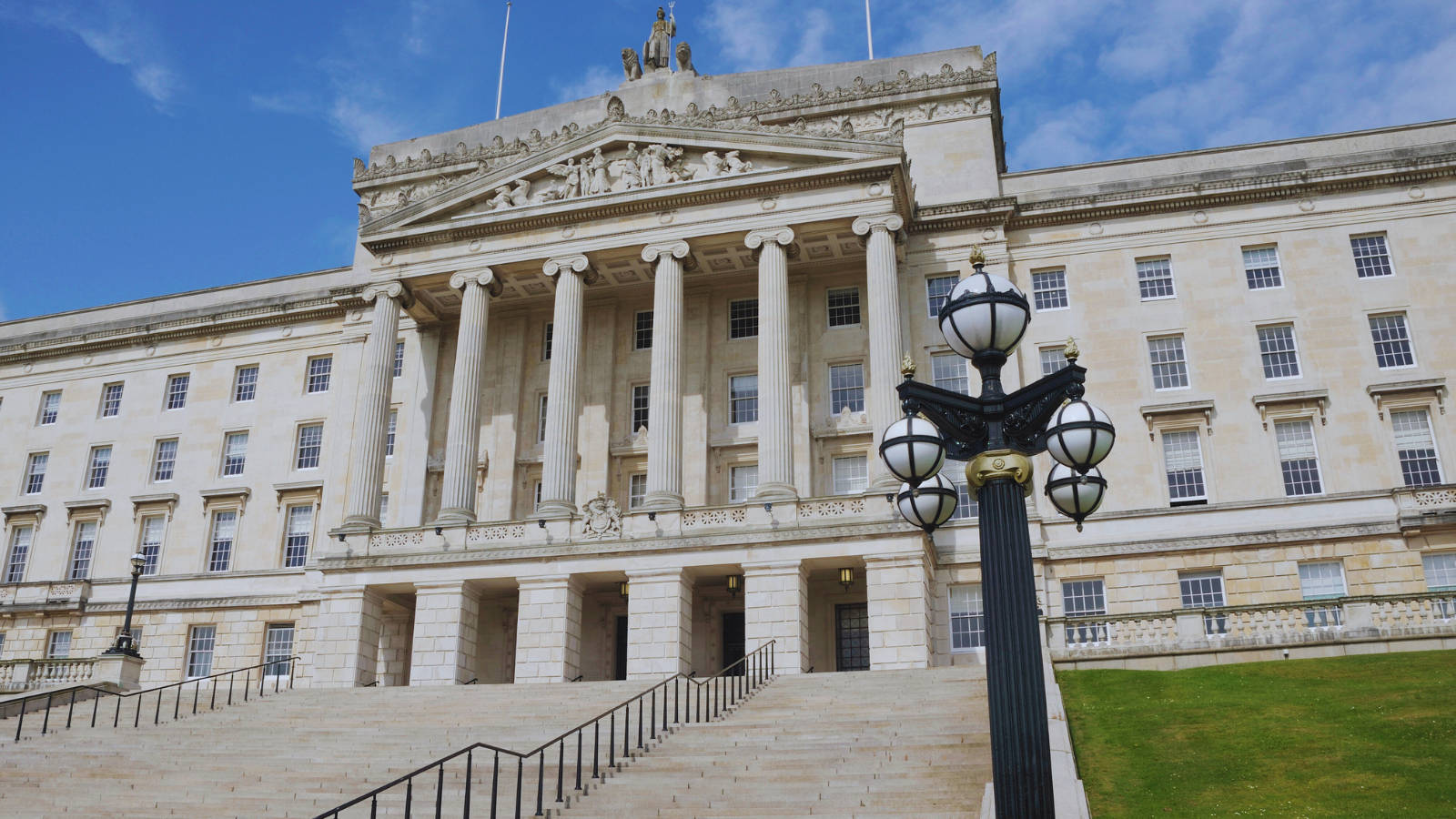
Our regular weekly round-up of Brexit, EU and international focused debates and Committee evidence sessions at the Assembly.
During Members’ Statements on Monday, 8 June, Dr. Steve Aiken MLA discussed the impact of the EU Customs Fee for small parcels and the Greenhouse Gas Emissions Trading Scheme (Amendment) (Extension to Maritime Activities) Order 2026. Dr. Aiken told the Assembly that despite questions to the Northern Ireland Office, the Cabinet Office and the Secretary of State directly on what the likely costs will be, “there has been no answer, apart from, ‘We're working on it’.” You can read Dr. Aiken’s statement in full here.
Committee report calls for greater government support for cultural touring in the EU

On Monday, 15 June, the House of Commons Culture, Media and Sport Committee published its report on 'Cultural touring in the EU'with Committee Members calling on government to work with the EU to break down barriers to touring and boost domestic support for performers.
The report follows an evidence session with representatives from the performing arts/music sectors earlier this year and which we covered in the 9 February edition of Brexit and Beyond.
The report outlines how barriers fall into three categories: cross-border travel and work, movement of goods, and transport and logistics. It calls on the government to negotiate with the EU and member states, and to boost support for performers unilaterally.
Speaking on the launch of the Committee report, Chairperson, Dame Caroline Dinenage MP said: “The impact on livelihoods is being felt not just by established performers, but also by the stars of tomorrow who are being denied the opportunities to further their careers like others before them.”
She added that this was: “… not about renegotiating Brexit, it’s about addressing the issues that weren’t covered off in the first place and finding new ways to support our touring artists.”
Dame Dinenage concluded that the: “…government can also do much more at home to reduce the burden on touring performers and provide them with the advice and support they need to shine on the world stage.”
Lords committee discusses scrutiny arrangements for dynamic alignment agreements
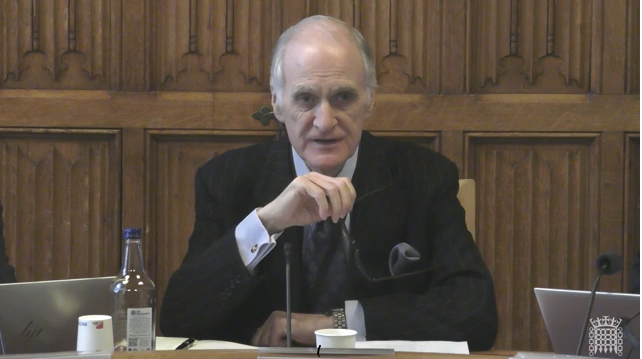
The House of Lords European Affairs Committee heard evidence on Tuesday, 9 June, regarding parliamentary scrutiny of UK dynamic alignment with EU rules. At this week’s session, Dr Ruth Fox and Matthew England from the Hansard Society, and Professor Holger Hestermeyer, Professor of International and EU law at the Diplomatic Academy, Vienna, provided evidence to the Committee. The panel discussed the limitations of current scrutiny procedures for international agreements and how these could be improved.
Dr Fox highlighted outstanding questions over how the UK Government would accommodate devolved perspectives in dynamic alignment arrangements. Referencing the forthcoming European Partnership Bill, she noted choices over whether the legislation grants powers to implement EU law in devolved areas to devolved ministers, to UK Government ministers only, or to a combination of both.
The Committee also heard evidence from the Earl of Kinnoull, former Chair of the Lords European Affairs Committee, and from Sir Bill Cash, the former Chair of the House of Commons European Scrutiny Committee.
You can watch the full evidence session here.
Westminster Brief
In the House of Lords on Tuesday, Baroness Hoey moved a motion to regret the process that led to the Ecodesign for Energy-Related Products and Energy Information (Household Tumble Dryers) Regulations 2026. The motion included that: the alignment with Northern Ireland the regulations seek to achieve requires the UK to follow EU law, and they will lead to increased costs and lower efficacy associated with heat pump tumble dryers.
The relevant EU legislation, which applies in Northern Ireland under the Windsor Framework, prohibited shops from buying in convector and vented tumble dryers from July 2025 with a ban on the sale of remaining stock taking effect in March 2026.
Opening the debate, Baroness Hoey, told peers that from January 2027, the UK Government’s regulation will ban the sale of convector and vented tumble dryers in England, Scotland and Wales. She said that: “While some people may say that they might be cheaper to run—there are real disputes about that—there is no doubt that heat pump tumble dryers are markedly more expensive to buy than conventional tumble dryers.”
Regarding the new UK wide regulation, Baroness Hoey argued: “…we must see that what is really going on is an object lesson in relation to the problems with the Government’s much more ambitious dynamic alignment project to avoid divergence with Northern Ireland, as set out in the European partnership Bill.” She also criticised the use of the negative assent procedure for the new regulations.
Contributing to the debate, Lord Davies of Brixton said: “The shift in European rules about such equipment that is already under way has taken the decision away from us. It is nothing to do with Brexit; it is about our position in the world economy. We do not make them. We buy them from elsewhere, and other people are not prepared to produce something that does not have a mass market.”
Responding to the debate, The Minister of State, Department for Energy Security and Net Zero, Lord Whitehead said: “The regulations form part of a long-standing framework that seeks to improve the energy performance of products, reducing bills for consumers and supporting a more secure and efficient energy system.”
Regarding alignment with the EU, Lord Whitehead said: “Our guiding principle is the appropriate regulatory landscape for UK consumers and businesses, removing unnecessary barriers to trade and ensuring protections for the UK’s internal market.”
The house divided and Baroness Hoey’s motion was disagreed. You can read the debate in full here.
Committee holds first evidence session on ‘Article 2 of the Protocol/Windsor Framework’ Inquiry
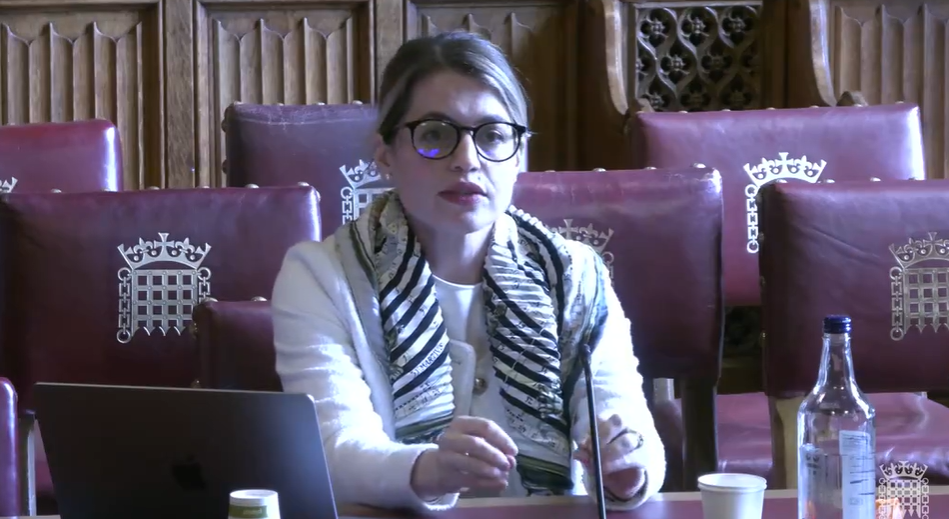
On Wednesday, 10 June, the House of Lords Northern Ireland Scrutiny Committee held the first oral evidence session of its inquiry into ‘Article 2 of the Protocol/Windsor Framework’. Providing evidence were Dr Eleni Frantziou, Associate Professor in Public Law and Human Rights at Durham Law School, Durham University; Professor Brice Dickson, Emeritus Professor in the School of Law at Queen's University Belfast and; Professor Colin Murray, Professor of Law and Democracy at Newcastle University.
Witnesses explained the background to Article 2 and its relationship to the Belfast/Good Friday Agreement, its status in UK law, and the impact of the Supreme Court judgment in the Dillon case, among other matters. The witnesses also discussed how Article 2 contains two distinct obligations, firstly regarding non-diminution of rights and secondly for dynamic alignment with the six directives listed in Annex 1 of the Windsor Framework. You can read the transcript of the evidence session here.
Irish Government publishes its 'Policy Programme' for Council Presidency
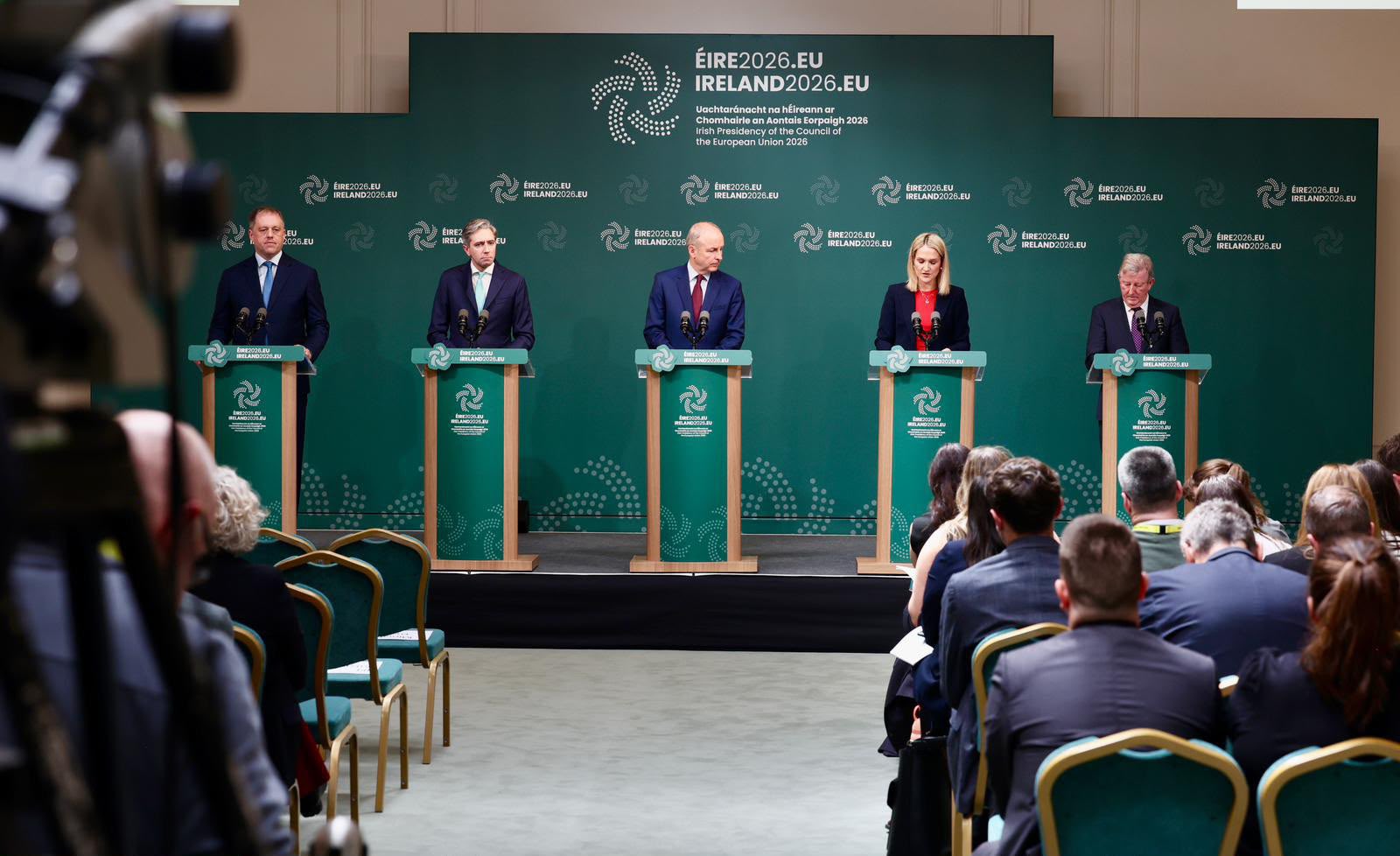
On Wednesday, 10 June, the Irish Government set out its priorities for the Presidency of the Council of the European Union, as Ireland prepares to take up the Presidency for the eighth time on 1 July.
The Government’s policy programme underlines three pillars that it says will be the central themes for the Presidency: Competitiveness – fostering prosperity and wellbeing; Values- upholding the indispensable foundation of our Union and; Security- protecting our citizens.
With regards relations with the UK specifically, the programme highlights that the United Kingdom: “…remains a key partner for the EU.” It adds that the Irish Presidency will: “…ensure continued implementation of existing agreements, namely the Withdrawal Agreement, including the Windsor Framework for Northern Ireland, and the EU -UK Trade and Cooperation Agreement.” As well as: “…supporting the finalisation of negotiations for the next EU-UK Institutional Summit and we will advance the outcomes of this Summit.”
The programme also places “…a particular focus on measures to strengthen the safety of children online” and commits to ensuring that: “…the voices of children are heard in developing online safety measures.” This aspect was highlighted in coverage by several media outlets including Euractiv, The Irish Times and The Irish Independent, who also noted Ireland’s commitment to: “…strengthen the EU’s capacities in cloud computing and artificial intelligence (AI), and to advance the Union’s positions on responsible digital governance.”
You can read more on the Irish Government’s priorities and, upcoming events, as well as welcome messages from: the Taoiseach Micheál Martin; the Tánaiste Simon Harris; the Minister for Foreign Affairs and Trade, Helen McEntee and; the Minister of State for European Affairs, Thomas Byrne here.
This week in the Assembly
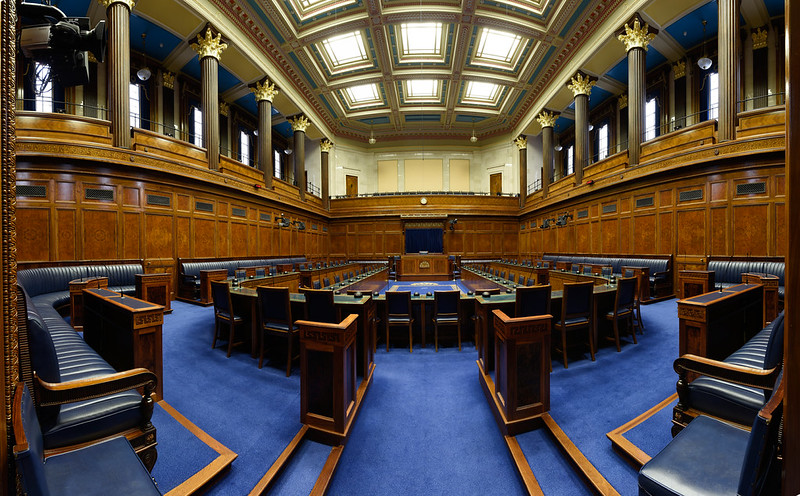
Earlier today, the First Minister, Michelle O’Neill MLA provided a statement to Members on the fifteenth institutional meeting of the North/South Ministerial Council (NSMC) and the thirty-first plenary meeting of the North/South Ministerial Council, both of which were held at the NSMC joint secretariat office in Armagh on 8 May 2026.
On Thursday, the Committee for Agriculture, Environment and Rural Affairs will continue its evidence sessions on the Areas with Natural Constraints (Payments) Bill, when Members will take evidence from the Ulster Farmers' Union, Sheep Taskforce and the NI Sheep Association. You can watch Thursday’s meeting live here.
Parliamentary Planner

House of Lords
The European Affairs Committee continued to take evidence today on its Dynamic Alignment inquiry. This week, evidence was provided by: Mark Copley, Chief Executive Officer at Energy Traders Europe; Adam Berman, Director of Policy and Advocacy at Energy UK; Jack Pardoe, Head of Policy at Octopus Energy; Kathryn Porter, Energy Consultant at Watt-Logic and Dr Silke Goldberg, Partner and Global Head of ESG/Sustainability at Herbert Smith Freehills Kramer LLP, and Professor of Energy Law in the North Sea, Faculty of Law at University of Groningen. You can watch Tuesday’s meeting here.
Meanwhile, on Wednesday, the Northern Ireland Scrutiny Committee will hear from Geraldine McGahey OBE, Chief Commissioner at Equality Commission for Northern Ireland and Louise Conlon, Chief Executive at Equality Commission for Northern Ireland on its ‘Article 2 of the Protocol/Windsor Framework’ inquiry. You can watch the meeting live here.
House of Commons
During oral questions on Thursday, the Minister for the Department for Culture, Media and Sport is expected to respond to a tabled question asking what steps her department is taking to help support UK artists touring in Europe.
Scottish Parliament
During, plenary on Thursday, there will be a Ministerial Statement marking the 10th Anniversary of the UK Referendum on EU Membership.
In case you missed it…

- A Bloomberg article reported on 13 June: ‘One part of U.K. is enjoying a Brexit boost 10 years after vote’. (Behind a Paywall). The article focuses on Northern Ireland and the impact of dual market access. This article was also carried by a number of other media outlets, including the Irish Examiner.
- In an ITV video published on 11 June, local reporter, Jordan Moates explores Brexit's economic impact of the past ten years across Northern Ireland.
- In a blog post published on 11 June by UK in a Changing Europe, Professor Nicola McEwen reflects on:Brexit ten years on: devolution.
- An article by Anand Menon for Time Magazine on 13 June examines: ‘Why Brexit Still Haunts British Politics’.
- An article published in the Guardian on Sunday, 14 June, How Brexit has made Britain poorer – in charts, states that: ‘Forecasters were wrong about an immediate recession but right that we would be worse off outside the EU’.
- An article published in The Telegraph on 12 June states: Rejoining the EU makes total sense for Labour. That doesn’t mean it’s a good idea. (Behind a paywall).
- Kings College London issued a news release on 12 June: The Brexit vote 10 years on: study shows desire for closer EU relationship – but trade-offs temper rush to rejoin. The article outlines: "…research undertaken by Ipsos, the Policy Institute at King’s College London, and UK in a Changing Europe and compares attitudes today with those in 2016 and at various points since, as well as revealing public opinion on the future shape of the UK-EU relationship…”
- UK in a Changing Europe published a new blog post: ‘Brexit ten years on: public opinion’ on 8 June, in which Professor John Curtis examines how public opinion has changed over the past decade.
- The Department for Business and Trade has launched a new survey today, in which it is seeking views from the battery sector on the upcoming EU Battery Passport requirements. From February 2027, new EU Battery Passport requirements will apply to all batteries, subject to certain exclusions, placed on the EU market. This will also apply to all batteries that have been subject to preparation for re-use, repurposing or remanufacturing.
- HM Revenue & Customs published its: UK overseas trade in goods statistics April 2026: import and export data on 12 June.
- A briefing from the House of Commons Library, updated 12 June, reports Statistics on UK-EU trade.
- The Scottish Parliament Information Centre (SPICe Spotlight) posted a new Explainer Blog on Monday 15 June which explains the background to ‘assimilated law’ and looks at how it can be amended.


