Brexit and Beyond
26 May 2026

In this edition of Brexit and Beyond, we look back at last week’s Assembly business including Questions to the Economy Minister.
In Westminster Brief, we cover relevant questions to UK Government Ministers and report back on last week’s House of Lords European Affairs Committee session on dynamic alignment which focused on SPS.
As always, we link you through to those news stories and items of interest you may have missed.
- Assembly Round-up
- Westminster Brief
- Dynamic Alignment Inquiry shines spotlight on SPS
- European Affairs Committee publishes written evidence on Dynamic Alignment Inquiry
- Preparation for Ireland’s Presidency of the Council of the European Union enters final phase
- In case you missed it…
Assembly Round-up

Our regular weekly round-up of Brexit, EU and international focused debates and Committee evidence sessions at the Assembly.
The Economy Minister, Caoimhe Archibald MLA, was in the chamber on Tuesday for Question Time where she responded to a question regarding any discussions she has had with the UK and Irish Governments on the potential re-coupling of the Single Electricity Market with the Great Britain energy market.
The Minister told the Assembly that she supported efforts to improve electricity trading arrangements and welcomed: “…the ongoing UK-EU discussions on a potential electricity agreement to improve cross-border trading arrangements.” However, she pointed out that any change would require an agreement between the UK Government and the EU.
Asked for an assessment on how changes to steel tariff regimes affect manufacturing and construction industries here, the Minister said that her department had been monitoring evolving trade regimes in Britain and in the EU. She added that the department had been engaging with local businesses to identify impacts and risks relating to tariffs and that she had raised concerns with the Minister for State, Chris Bryant MP.
The Minster told Members that she had been clear in her engagement with the UK Government that: “… our economy and our downstream manufacturing and construction industries cannot be collateral damage in policy choices that are being made to protect the wider primary steel sector in Britain.”
On Monday, 18 May, the Leader of the Opposition, Matthew O’Toole MLA moved a motion: ‘Change on these Islands’. The motion included that the Assembly notes: ‘…recent polling which indicates majority support for a new Ireland within the European Union’. You can read the motion in full here. An amendment, tabled by Eóin Tennyson MLA and Paula Bradshaw MLA was also selected for debate.
The Assembly voted on the amendment, resulting in 16 Ayes in support and 43 Noes against. A vote on the Opposition Motion resulted in 33 Ayes and 34 Noes and as with the amendment, was negatived. You can read the full debate via the Official Report.
Westminster Brief
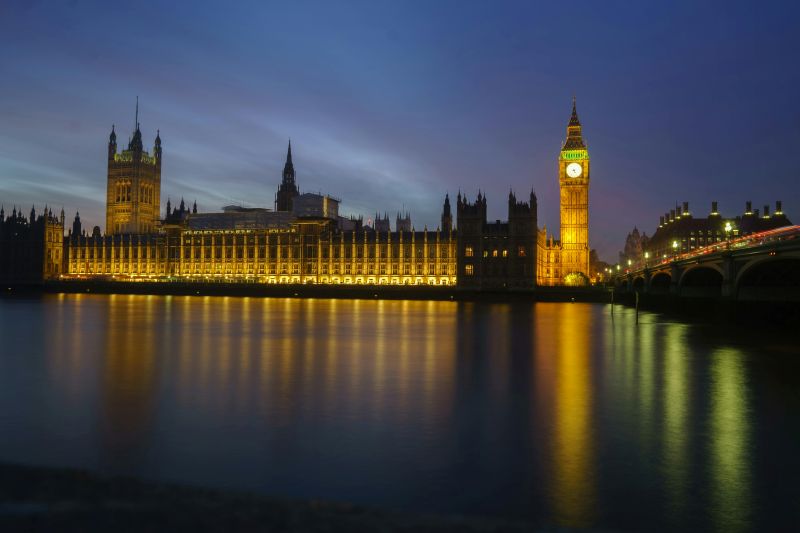
In the House of Lords last Monday, Baroness Hayman of Ullock, the Parliamentary Under-Secretary of State at the Department for Environment, Food and Rural Affairs (DEFRA) responded to questions on the EU-UK SPS Agreement.
Baroness Hayman told peers that the EU had accepted that as part of the SPS agreement, there would be some areas in which the UK will retain its own rules. While still subject to ongoing negotiations, she said that the government had been: “…clear about the importance of being able to support the use of new and innovative technologies such as novel foods.”
Baroness Hayman stated that the government is: “...working extremely closely with all those who would be impacted...” by the SPS agreement, including meeting very regularly with farmers, producers, hauliers and supermarkets. She cited her recent visit to Northern Ireland where she said she had held a: “…big business roundtable with Northern Ireland producers”. She observed that at the roundtable, “…there was a very positive response from businesses regarding the potential opportunities that will arise from this.”
In the House of Commons last Wednesday, the Secretary of State for Science, Innovation and Technology, Liz Kendall MP was asked if she would guarantee that: ‘Britain will not align with any EU tech rules, including the AI Act.’ Ms. Kendall told Members that while the government wants to ensure a closer relationship with the EU, she was also clear that: “… we will continue our pragmatic, not dogmatic, approach to regulation, because Britain is the second country in the western world in AI, and we want to retain those benefits to grow the economy and create good jobs throughout the country.”
During questions to the Department of Business and Trade last Thursday, the Minister for Trade, Chris Bryant MP outlined the steps his Department is taking to help small and medium-sized businesses trade with European nations. Mr. Bryant told the House that this was being accomplished by: “… taking down tariff and other trade barriers in our EU-UK summit, reducing red tape in individual countries, enabling easier business travel and allowing the mutual recognition of professional qualifications, both across the EU and bilaterally.”
Dynamic Alignment Inquiry shines spotlight on SPS
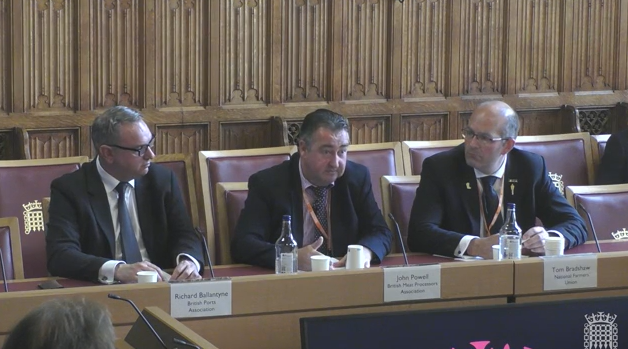
Continuing the oral evidence sessions on its Dynamic Alignment Inquiry, last Tuesday the House of Lords European Affairs Committee heard from: Tom Bradshaw, President, National Farmers' Union; Richard Ballantyne, Chief Executive, British Ports Association; and John Powell, Chief Executive, British Meat Processors Association.
Opening last week’s session, Richard Ballantyne told the Committee: “…breaking down barriers with our nearest trading partner is positive and a good move.” However, he queried what this would mean in terms of the provision of borders infrastructure and designated points of entry: “…is there going to be a compensation regime from the Government to finance either modifications or indeed the bulldozing of a lot of those facilities if they are not needed at all?”
John Powell told the Committee that for his sector: “…the [SPS] agreement is vital…” He described the costs involved in producing and certifying Export Health certificates (EHCs) as well as the consignment costs of moving products from the UK to the EU. He told peers, “Since December 2020, 1.45 million of these EHCs have been produced. That is equivalent to 1,500 certifier years and has cost nearly £300 million, a cost that the companies have incurred.” Mr. Powell explained what would change as a result of an SPS agreement, observing that: “…the removal of documentation would immediately result in a massive reduction of costs.”
Tom Bradshaw noted examples of where the UK has: “...taken advantage of regulatory autonomy in some areas, particularly around plant protection products, gene editing and the TB vaccine work.” He emphasised the importance of having the correct transition arrangements in place for plant protection products, and to be able to continue the research and development required for the UK to be world-leading in particular areas. Mr. Bradshaw told the Committee: “Part of the negotiation needs to be to challenge the EU: where we have taken advantage of regulatory autonomy, why is their system not keeping up with ours when it comes to approving new products or letting gene editing be approved?”
Mr. Bradshaw also underlined the importance of ensuring effective consultative mechanisms with stakeholders and devolved governments regarding future EU legislative proposals, and the need for arbitration mechanisms to deal with potential future disagreements. You can read the full transcript here.
In a second evidence session, the Committee heard from Professor Emily Lydgate, Professor of Environmental Law & Co-Director, UK Trade Policy Observatory, University of Sussex and Catherine McBride OBE, CEO Great British Business Council.
The witnesses discussed what would be the key requirements for parliamentary scrutiny of an agreement, and mechanisms for dispute resolution. The session also looked at the extent of current regulatory divergence between the UK and EU, and how the UK could influence decisions by the EU. You can read the full transcript here.
European Affairs Committee publishes written evidence on Dynamic Alignment Inquiry
On 20 May, the House of Lords European Affairs Committee published the list of written evidence received in relation to its inquiry on Dynamic Alignment.
Evidence provided to the Committee includes submissions from a number of local stakeholders, organisations and political parties:The Equality Commission for Northern Ireland; the Northern Ireland Human Rights Commission; the Ulster Farmers’ Union;Traditional Unionist Voice (TUV) and Prof David Phinnemore (Professor of European Politics at Queen's University Belfast).
You can read the full list of submissions here:
Preparation for Ireland’s Presidency of the Council of the European Union enters final phase
In a press release issued on 19 May, the Irish Government’s Minister for Foreign Affairs and Trade, Helen McEntee TD, and the Minister of State for European Affairs, Thomas Byrne TD provided an update on preparations for Ireland’s Presidency of the Council of the European Union which will commence on 1 July.
Minister McEntee said that the Irish Government was finalising policy priorities for the Presidency, informed by extensive engagement with its European partners and stakeholder groups in Ireland. She noted that: “...Ireland will work closely with our European partners to help build momentum behind that agenda and support practical outcomes that benefit people, businesses and communities across the European Union.”
The press release explains that Ireland will host 22 informal Ministerial meetings as part of the Presidency, alongside a summit meeting of the European Political Community and an informal meeting of the European Council.
While the press release does not allude to Ireland’s policy programme for the Presidency, beyond that this will be published in June, additional reporting by Press Association(PA) states that priorities are expected to be: “...broadly based around competitiveness, values and security.” PA further reports: “Senior figures in the Government and Northern Ireland’s Executive have put the presidency forward as a chance to advance EU-UK relations, as well as an opportunity for ‘pragmatic engagement’ on issues affecting Northern Ireland.”
In case you missed it…

-
An article published in the 19 May edition of Farming Life states: 'It is time for the Prime Minister to listen to the people actually producing our food' - Robin Swann calls for 'Fair Deal' for Farmers.
-
In an opinion piece, published in today’s Newsletter, Owen Polley says: Labour’s manoeuvring on EU won’t fix post-Brexit Irish Sea border trade problems (behind a paywall).
-
In a blog posted on 21 May by UK in a Changing Europe, Professor Hussein Kassim asks: A year since the EU-UK summit: where are we now?
-
A Guardian article published on 22 May says: UK pitched single market for goods with EU in pursuit of deeper trade ties. The news story was also reported byPolitico and the BBC.
-
An editorial published in the Irish Times on 25 May states: The EU should be prepared to go the extra mile, if there is willingness in London.
-
BBC online reported on 25 May, Brexit red tape costs hit food firms. The article discusses: ‘Devon sausage makers and fish traders have spoken about their Brexit frustrations as ministers weigh up closer alignment with EU food rules to cut red tape’.
-
“It was only in Belfast and Dublin that I have ever been recognised in the street”:The Financial Times published an interview with the European trade commissioner, Maroš Šefčovič, on 22 May: ‘The EU’s ‘Mr. Fixit’. The article looks back at Commissioner Šefčovič’s role in Windsor Framework negotiations and refers tocurrent negotiations on a UK-EU Youth Experience Scheme. (may be behind a paywall).
-
In an article published on 23 May, The Independent states: EU could fast-track Britain’s membership if UK decided to reverse Brexit. The article quotes Sandro Gozi MEP, chair of the European Parliament delegation to the EU-UK Parliamentary Assembly, as telling the Independent: ‘…the European Union would see a request to rejoin from the UK as a “major victory for the European project”, insisting that there would be a way to fast-track it.’
-
In a 22 May podcast, PoliticsHome asks Could the UK rejoin the EU? The podcast includes a discussion with Professor Anand Menon, director of the think tank UK in a Changing Europe, along with the former Conservative Minister Steve Baker.
-
The House of Commons Library issued a research briefing on 21 May which explores Progress on UK free trade agreement negotiations since Brexit.
-
UK in a Changing Europe and Flint Global will hold an online and in-person event on Tuesday 23 June: Ten years on: the future of UK-EU relations. The all day event will include keynote speakers and panel discussions, Further information is available here.


