Brexit and Beyond
27 April 2026

In this week’s edition, we report back on last week’s European Affairs Committee evidence session on dynamic alignment. We also update on recent correspondence between the Northern Ireland Scrutiny Committee and the UK Government on customs duties on small parcels. In Westminster Brief, we cover EU-related questions to the Foreign, Commonwealth and Development Office and the Cabinet Office.
We also look ahead to upcoming debates and discussion topics in the Assembly and at Westminster this week, and as always, we link you through to the news stories and items of interest you may have missed.
- European Affairs Committee – Dynamic Alignment inquiry continues
- Lords Committee seeks further clarification on small parcels customs duties
- Westminster Brief
- Destination Dublin for Annual All-Island Stakeholder Forum
- This week in the Assembly
- Parliamentary Planner
- In case you missed it…
European Affairs Committee – Dynamic Alignment inquiry continues
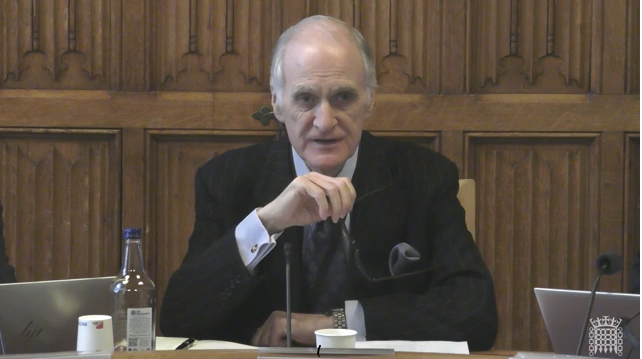
The House of Lords European Affairs Committee continued its inquiry into Dynamic Alignment on Tuesday. In the first session, the Committee took evidence from William Bain, Head of Trade Policy, British Chambers of Commerce (BCC); John Foster, Chief Policy and Campaigns Officer, Confederation of British Industry (CBI) and Ignacio García Bercero, Senior Fellow, Bruegel, former Director in DG Trade, European Commission.
William Bain described to the committee how an agreement on sanitary and phytosanitary (SPS) regulation would bring practical benefits to BCC members, noting the: “enormous extra costs injected into the system” which could potentially be removed by an SPS agreement. Referencing the interplay between the SPS agreement and the Windsor Framework, Mr. Bain hoped that one tangible difference would be: “the removal of the “not for EU” labelling, which has been a significant problem for wholesalers and retailers.”
John Foster observed that the benefits from the agreement would depend both on what is agreed and also how effectively it is implemented: “If you can get broad product coverage, if you can reduce the mutual recognition of certification inspection and if you get a deal that works fundamentally for Northern Ireland, your economic benefit will be far greater.” He explained that CBI members are clear that businesses can benefit from alignment, but that four key features need to be in place: alignment to be pursued in a way that is strategic and prioritized; the importance of proportionate parliamentary scrutiny; meaningful input from business and civil society; and the need to strengthen UK influence upstream into the European Union, including for regulator-to-regulator channels.
Mr. Foster told the Committee that the devolved nations’ perspectives are “absolutely vital” because of the exposure of particular sectors to the agreements being negotiated between the UK and EU. He cited the relevance to the agri-food, seafood and energy sectors in Scotland and to steel and agriculture in Wales. With regards Northern Ireland, Mr. Foster said: “…the concerns of our members will be particularly acute if, for example, Northern Ireland is not explicitly accounted for in how deals are devised.”
In the second evidence session, the Committee heard from Sam Lowe, partner and head of trade and market access practice, Flint Global, and Shanker Singham, Chair of the Growth Commission and CEO of the Competere Group.
Shanker Singham told Members that the advantages of an SPS dynamic alignment agreement would: “…clearly include a reduction in process, particularly for trade between GB and the EU; an example is the agri-food trade flowing from GB to the EU and GB to Northern Ireland.” However, he suggested this would be outweighed by the economic costs of alignment with the EU, owing to: “the impact of anti-competitive regulation”.
During his evidence to the Committee, Sam Lowe said: “... we are already de facto aligning dynamically in many areas…” He told the Committee: “Generally, we do not want to diverge. We have seen this in other areas in relation to product standards, where we attempted to introduce a different approach in the UK and it failed. That was largely because we are talking about areas where there is a singular approach across Europe and where UK divergence only imposes cost.”
Mr. Lowe explained: “… What we are actually asking for is for the EU to recognise our dynamic alignment and, in doing so, to treat our exporters better…” He noted that this is “…a much more difficult conversation and is the conversation that we are actually having.”
You can access a transcript of the evidence session in full here:
Lords Committee seeks further clarification on small parcels customs duties

The House of Lords Northern Ireland Scrutiny Committee has sought further information from the UK Government on the impact of the European Union’s plans to remove customs duty relief from low-value parcels entering the EU and to introduce a handling fee for goods ordered directly from non-EU countries.
Last Wednesday, the Committee published a letter from Lord Livermore, Financial Secretary to the Treasury, in which he estimated that 75-85% of parcels moved between Great Britain and Northern Ireland do so using either the UK Carrier Scheme or the UK Internal Market Scheme and would be exempt from any customs duty charged. The letter was also discussed at the meeting of the Assembly’s Finance Committee on 15 April.
The Committee Chairperson Lord Carlile responded to Lord Livermore on 22 April, asking for his assessment of the impacts on businesses and consumers of the removal of the duty relief for small parcels not covered by the UK Carrier Scheme or the UK Internal Market Scheme and on how the Government will minimise those impacts. Lord Carlile also requested further information on planned engagement with industry stakeholders. You can read the letter in full here.
Regular readers will recall that we have discussed charges on small parcels and EU customs reform in previous editions of Brexit and Beyond, most recently on 30 March and on 2 March 2026.
The UK Government also announced at the November 2025 Budget that it will be removing customs duty relief on low value imports entering the UK, from March 2029 at the latest. Its consultation on the design of new customs arrangements relating to the low value imports closed on 6 March 2026. Similar to EU plans, the change to customs arrangements aims to respond to a boom in e-commerce, and to support fair competition between online retailers and high street businesses.
Westminster Brief
During questions to the Foreign, Commonwealth and Development Office last Tuesday, the Minister of State for Europe, North America and Overseas Territories, Stephen Doughty MP outlined the timetable for the implementation of the UK-EU treaty in respect of Gibraltar. Mr. Doughty told the House that while it was a complex process, it was his understanding that: “… provisional application of the treaty will be possible from 15 July, which will secure the key benefits of the treaty for the people of Gibraltar, including the fluid border, allowing businesses and working people more certainty and prosperity.”
During topical questions, the Minister updated Members on the progress made in removing the Brexit barriers to trade. The Minister explained that the UK Government and EU continue to discuss challenges faced by manufacturers on both sides at the Trade Specialised Committees (part of the governance structure for the UK-EU Trade and Cooperation Agreement) and that they would have the chance to discuss many of the issues further at the next UK-EU Summit. You can read the full transcript here.
Responding to a range of questions to the Cabinet Office regarding UK-EU relations on Thursday, the Paymaster General and Minister for the Cabinet Office, Nick Thomas-Symonds MP told Members: “We are making good progress with the EU in our strategic partnership in a changing world. It is a strategic partnership that is good for bills, good for borders and good for jobs.”
Reflecting on the recent Erasmus+ agreement with the EU, the Minister said that it would: “… provide tens of thousands of opportunities, particularly for young people.” Speaking on a sanitary and phytosanitary (SPS) agreement, Mr. Thomas -Symonds told the House that it will mean: “…we will be able to export to the EU products that we are currently unable to export, and will take away costs and fees that businesses have to pay.”
Asked how he intended to ensure that proper parliamentary scrutiny is given to improving relations with the EU, the Minister noted that there would be legislation going through parliament later in the year, adding that the bill will: “…have appropriate scrutiny, as will our relationship with the EU going forward.” You can read the full transcript here.
Destination Dublin for Annual All-Island Stakeholder Forum
The EU-UK Follow-Up Committee of the European Economic and Social Committee (EESC) has announced that the Annual All-Island Stakeholder Forum will be held in Dublin on 10th June 2026.
The forum brings together a wide range of business, worker and civil society stakeholders from across the island of Ireland to share insights and expertise through plenaries and break-out discussions on common concerns post-Brexit. The discussions are translated into recommendations for the EU-UK Follow-Up committee to share with relevant EU and UK institutions, as well as with the Irish Government as it commences its Presidency of the European Council.
This year’s forum: ‘Reset and Recharge: All-island contributions to a resilient EU-UK relationship’ will include keynote addresses from Her Excellency Kara Owen, British Ambassador to Ireland and from Thomas Byrne, TD, Minister of State for European Affairs of Ireland.
Professor David Phinnemore, Queen’s University Belfast and Colin McCabrey, InterTrade Ireland are scheduled to lead on a session: ‘Reflections on the Reset’ while a further session will examine ‘Recharge: Cross-sectoral and all-island insights on energy security & just transition in the UK-EU relationship’.
You can access the full programme here and register to attend either in-person or online here. Registrations will close on Friday 5 June.
This week in the Assembly
Today, during Members' Statements, Dr. Steve Aiken MLA discussed the recent Windsor Framework Democratic Scrutiny Committee (DSC) visit to Brussels where Members held a series of meetings. He noted that discussions had included the forthcoming UK-EU meeting on the reset, the sanitary and phytosanitary (SPS) agreement and youth movement.
At Question time today, the First Minister updated Members on the work of The Executive Office with regard to relations with the European Union.
On Thursday, The Windsor Framework Democratic Scrutiny Committee (DSC) will take evidence from Department of Health officials on proposals for regulations on monitoring and controlling drug precursors, and on the simplification and strengthening of food and feed safety requirements. You can read the full agenda here:
Parliamentary Planner

House of Commons
During questions to The Treasury on Tuesday, the Minister is expected to respond to a question on what steps she is taking to support businesses to trade globally. Meanwhile, on Thursday, questions to the Department of Business and Trade include: what steps the Minister is taking to reduce trade barriers with the European Union.
House of Lords
The European Affairs Committee will continue its inquiry into Dynamic Alignment when it takes evidence from Lord Bew, Professor Emeritus, Queen’s University Belfast, Dr Lisa Claire Whitten, Research Fellow, Queen’s University Belfast, and Professor Jo Hunt, Professor of Law, University of Cardiff.
European Parliament
Today, the European Parliament’s Committee on Constitutional Affairs will hold an exchange of views with Maroš ŠEFČOVIČ, Commissioner for Trade and Economic Security; Interinstitutional Relations and Transparency.
In case you missed it…

-
On 21 April, the UK Government issued a press release on New EU rules for pet travel for GB residents which will apply to the non-commercial movement of pet dogs, cats and ferrets entering the EU from Great Britain. Euro News covered the story – noting that the changes effectively close a loophole open since Brexit meaning pet owners whose main home is not in the EU, will have to get new documents for every trip.
-
The Cabinet Office is inviting UK civil society organisations to register for observer status for the upcoming meeting of the UK-EU Trade and Cooperation Agreement (TCA) Civil Society Forum on 27 May 2026.
-
An article published in the Independent on Friday, 24 April states: Former Brexit boss says Britain should rejoin EU after failed ‘heady promises’. The article reports on a piece written for The Times ( behind a paywall) by Philip Rycroft, former permanent secretary at the Department for Exiting the European Union. The Guardian also covered Mr. Rycroft’s comments.
-
The Italian media outlet la Repubblica published an in-depth interview with Nick Thomas-Symonds on 26 April, focusing on issues such as dynamic alignment, security and the upcoming UK-EU Summit.
-
A Politico article from 22 April states: Don’t count on the Brexit reset to slash UK food prices. The article reports that, “Many of the food and drink firms supposedly benefiting from an [SPS] agreement are skeptical of the government’s claims.”
-
Reporting on last week’s European Affairs Committee meeting on dynamic alignment, the Guardian headline reads: UK agriculture deal with EU will not remove all red tape, peers told.
-
The Trade Specialised Committee on Goods published the minutes from its November 2025 meeting on 21 April. The Specialised Committee is a joint forum for discussion of Goods market access issues between the UK and the EU, and is part of the governance structure for the UK-EU Trade and Cooperation Agreement.
-
A new blog post published on 24 April by UK in a Changing Europe: The road to the next UK-EU summit runs through Switzerland.
-
In a further blog post published on 21 April by UK in a Changing Europe, The challenges for EU alignment: a chemicals case, Chloe Alexander argues that changes to the regulation of chemicals show some of the obstacles facing the government in delivering a coherent policy of closer regulatory alignment with the EU.
-
An article published in the Observer on Sunday 26 April states: Rejoin EU to boost economy and revive premiership, Starmer urged.
-
An article in Carnegie Europe from 23 April states Closer EU-UK ties could help address urgent European concerns. But is the EU ready for rapprochement with the United Kingdom?
-
On 21 April, the Interministerial Group for Trade issued a Communiqué from its recent meeting on 4 March 2026.
-
The Interministerial Group for Safety, Security and Migration published a Communiqué on 22 April regarding its meeting on 12 November 2025.


