Brexit and Beyond
23 March 2026

In this edition we reflect back on the seventh meeting of the UK-EU Parliamentary Partnership Assembly (PPA) which took place on Monday 16 and Tuesday 17 March at the European Parliament in Brussels.
Following the UK Government announcement on Monday, 9 March urging local businesses to prepare for smoother GB-NI and EU trade, we take a closer look at the legislation in scope for a future SPS agreement and media reactions.
The House of Lords European Affairs Committee published a ‘call for evidence’ last week on its new inquiry into ‘Dynamic Alignment’ – we look at what is included in the terms of reference.
As well as looking ahead to what’s on the Assembly agenda, our regular ‘Parliamentary Planner’ section highlights upcoming debates and discussion topics at other legislatures this week.
As always, we link you through to the news stories and items of interest you may have missed.
- UK-EU Parliamentary Partnership Assembly meets in Brussels
- Defra publishes legislation in scope for UK-EU SPS Agreement
- European Affairs Committee launches new inquiry on Dynamic Alignment
- Chancellor of the Exchequer sets out principles for alignment with EU regulation
- Three more Common Frameworks fully implemented
- UK-Ireland Summit 2026
- Assembly Round-up
- Windsor Framework Committee takes evidence on new EU Regulation
- This week in the Assembly…
- Parliamentary Planner
- In case you missed it….
UK-EU Parliamentary Partnership Assembly meets in Brussels
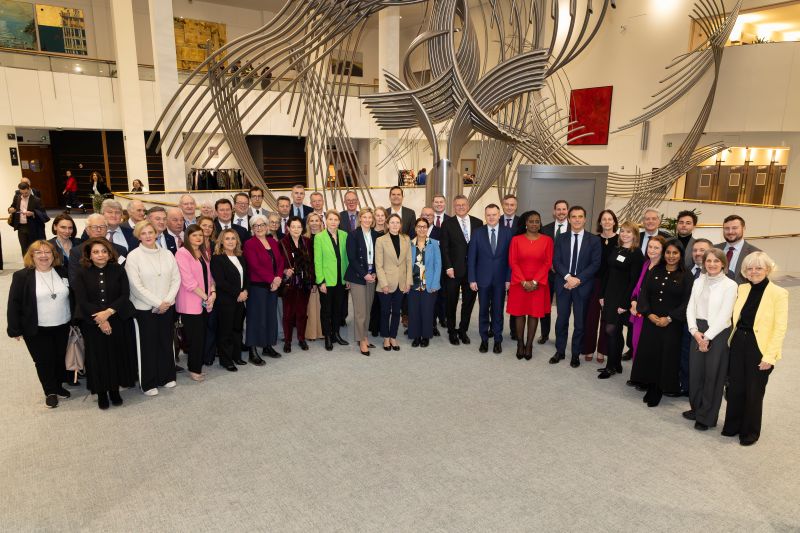
The seventh meeting of the UK-EU Parliamentary Partnership Assembly (PPA) took place on Monday 16 and Tuesday 17 March at the European Parliament in Brussels.
The PPA is able to make recommendations to the Partnership Council which oversees the Trade and Cooperation Agreement (TCA) and is composed of delegations from the UK Parliament and Members of the European Parliament. Ciara Ferguson MLA and Brian Kingston MLA, attended from the Assembly.
The Seventh meeting was opened on Monday by the Co-Chairs, Marsha de Cordova MP and Sandro Gozi MEP, both of whom welcomed the progress made in deepening EU-UK cooperation. The Co-Chairs noted ongoing discussions on joint key initiatives, including agreements on SPS, a youth experience scheme and the linking of Emissions Trading Systems.
A key agenda item on Monday was an exchange of views on the ‘State of Play’ within the Partnership Council, between The Rt Hon Nick Thomas-Symonds MP, Minister for the Constitution and European Union Relations and HE Maroš Šefčovič, the European Commissioner on Trade and Economic Security, Interinstitutional Relations and Transparency. The Minister and the Commissioner are Co-Chairs of both the TCA Partnership Council and the Joint Committee on the Implementation of the Withdrawal Agreement.
In his opening remarks to delegates, Nick Thomas-Symonds emphasized the progress made in strengthening relations since the UK-EU Summit in 2025. He added that, he and Commissioner Šefčovič had recently:
The Minister further underlined that work had started on: “…delivering an enhanced, comprehensive version of the one-stop-shop regulatory support service to help businesses trade across the UK and EU markets and benefit from Northern Ireland’s unique dual market access.”
Looking ahead to the forthcoming UK-EU summit, Mr. Thomas Symonds said that by working through the PPA: “…we ensure that the reset in our relations is not a moment in time, but a permanent shift towards a more constructive and prosperous strategic partnership.”
Commissioner Šefčovič noted to delegates that last year’s EU-UK summit: “…marked a new chapter in our relationship.” However, he underlined that while both teams were working hard on negotiations regarding an SPS area and a linkage of Emissions Trading Schemes, a number of issues remained, notably on dynamic alignment. The Commissioner said it is: “…our ambition to create a common SPS area and remove SPS certificates and controls through the UK’s dynamic alignment with EU SPS rules.” He added that: “…through the interplay of the SPS agreement and the Windsor Framework, these benefits would be extended to the corresponding movement between Great Britain and Northern Ireland.”
At the close of proceedings on Monday, delegates took part in breakout group discussions on: EU-UK Digital cooperation; Research and innovation: State of Play of EU-UK Cooperation and on EU-UK relations: Mobility and youth opportunities. The European Parliament Research Service (EPRS) provided briefing papers on all three discussion areas which you read via the hyperlinks above. A summary of the breakout group discussions is available here:
On Tuesday, during contributions from delegates, Ciara Ferguson MLA welcomed the agreement on Erasmus+ and encouraged the UK Government and the European Commission to work towards finalising a Youth Experience Scheme. She also underlined the need to ensure a dedicated ringfencing of PEACEPLUS funding.
In his contribution, Brian Kingston MLA raised blockages faced by a number of sectors under the Windsor Framework. He told delegates that the Windsor Framework: “…must not be an end point, it must be an ongoing priority to work to remove friction and unnecessary bureaucracy.”
Discussions throughout the two day session also included contributions from senior EU and UK Government representatives on: the local and regional dimensions of EU-UK relations; Economic security and trade resilience and Security and defence cooperation.
You can access videos of the full proceedings as well as the agenda, Joint Statement by EU-UK Parliamentary Partnership Assembly Co-Chairs and the Recommendation on Strengthening the EU-UK Strategic Partnership here:
While in Brussels, Assembly representatives Ciara Ferguson MLA and Brian Kingston MLA also attended the 13th meeting of the Committee of the Regions UK Contact Group. The meeting brought together Members of the European Committee of the Regions and representatives of local and regional authorities and devolved parliaments from the United Kingdom to discuss the state of play of the EU-UK relations at a local level. You can find the meeting agenda and watch a video of the meeting in full here.
Defra publishes legislation in scope for UK-EU SPS Agreement
Following the announcement on Monday, 9 March urging local businesses to prepare for smoother GB-NI and EU trade, the Department for Environment, Food & Rural Affairs (Defra) has published the EU legislation in scope with regards a UK-EU SPS Agreement. The news story advises that businesses may need to take action to comply with these requirements, while adding that it expects in many cases, that these rules will replace and not add to current rules.
The article sets out a comprehensive list of the areas under which the UK is expected to align with EU law, including: Food Hygiene & Safety of Foods of Animal Origin; Feed Products and Hygiene; Animal health, breeding, welfare, transport and slaughter as well as regulatory alignment in relation to plant health, plant protection products and Veterinary Medicines.
Defra underlines that it is separately considering what transitional arrangements may be required for those sectors that will find it more challenging to implement the necessary changes ahead of the agreement entering into force. It further notes that once negotiations have concluded it will update with detailed and practical guidance for businesses. You can read the full article and the listed legislation in scope here.
In a blog article published on 11 March by UK in a Changing Europe, Joël Reland considers why the UK government’s announcement of the EU legislation ‘in scope’ for the SPS agreement is significant, both for UK businesses and politically. Meanwhile an article from the National Farmers Union on 9 March calls for transitional measures as the UK prepares to align with EU rules. Industry magazine The Grocer further states in a March 19 article: Food Sector ‘unprepared’ for EU reset deal.
Defra’s ‘Call for Information’ on the UK-EU SPS Agreement launched on 9 March and will close on 23 April. You can find out more and share our views here.
European Affairs Committee launches new inquiry on Dynamic Alignment
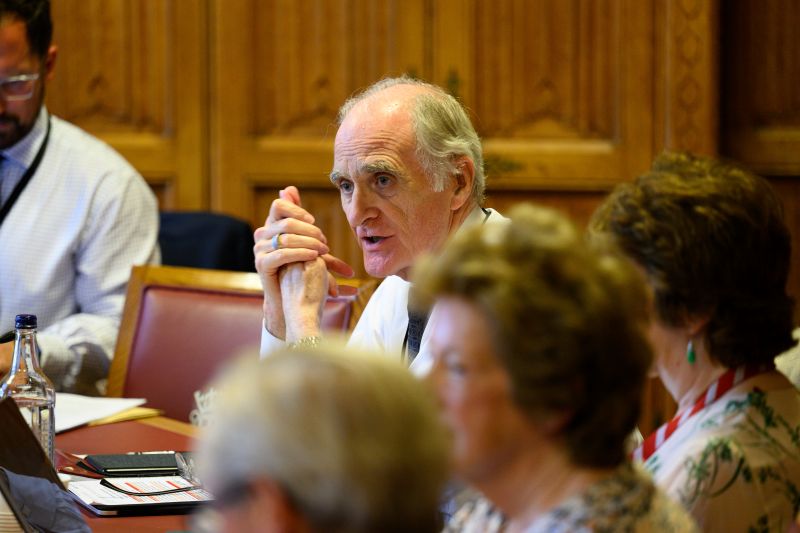
The House of Lords European Affairs Committee launched a ‘Call for Evidence’ last week for its new inquiry on Dynamic Alignment with areas of EU Law.
Highlighting the EU-UK pursuit of current agreements on SPS, Emissions Trading Schemes linkage and the UK’s participation in the EU’s internal electricity market, the Committee sets out that its inquiry aims to investigate issues raised by dynamic alignment including: what dynamic alignment is and how it is likely to operate; arrangements for parliamentary scrutiny and implications for the UK’s devolved administrations and legislatures.
In a press release issued by the Committee, its Chairperson, Lord Stirrup said: “The introduction of dynamic alignment will be a significant change to the nature of the UK-EU relationship established under the 2020 Trade and Cooperation Agreement (TCA). It will have important implications for the role of Parliament and its scrutiny of our laws, and will likely set precedents for any future agreements that might extend UK dynamic alignment to further areas."
Lord Stirrup also explained that: “…the Committee’s work aims to support the House’s consideration of the Government’s ‘reset’ or ‘dynamic alignment’ Bill, which is expected to be introduced later this year.”
The Committee will hold its first evidence session on Tuesday, 24 March and the ‘Call for Evidence' will remain open until 30 April 2026. You can watch this week’s evidence session here and find out more about the Call for Evidence here.
Chancellor of the Exchequer sets out principles for alignment with EU regulation
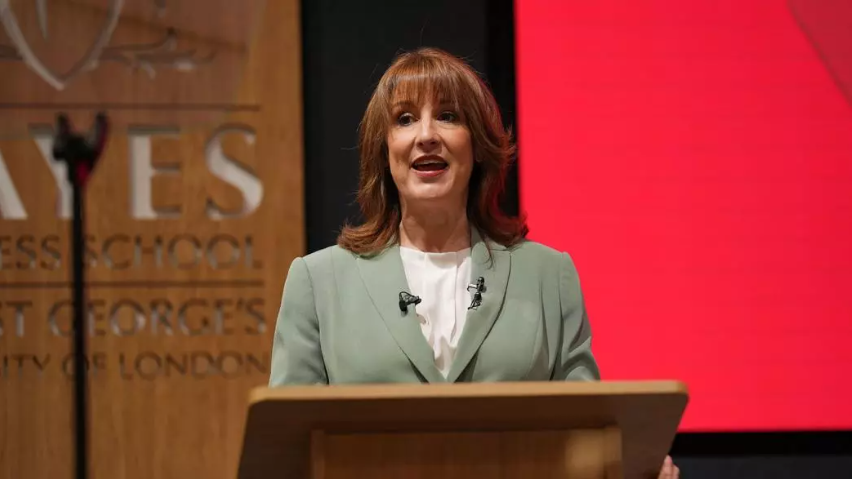
In her 2026 Mais Lecture on 17 March, the Chancellor of the Exchequer, the Rt Hon Rachel Reeves MP, set out new National Interest Principles that will guide where the UK Government seeks to align with EU regulation: “First – that a decision to align should mean higher growth and investment, more jobs and consumer benefits for the long term. Second – that the future direction of policy should be sufficiently stable and compatible in terms of values and objectives. And third – that the UK’s economic and national security and resilience should be preserved or enhanced.”
You can read the Chancellor’s speech here. A news story from the UK Treasury published on 17 March states: Chancellor’s growth plan sets key principles for UK-EU alignment.
Three more Common Frameworks fully implemented
On 19 March, the Cabinet Office updated its list of Common Frameworks that have been approved and fully implemented by the UK and devolved governments. Three more Common Frameworks were fully implemented last week, including the Late Payment Common Framework; the Blood Safety and Quality Common Framework; and the Organs, Tissues and Cells (apart from embryos and gametes) Common Framework. You can read the full updated list and the individual Common Frameworks here:
UK-Ireland Summit 2026
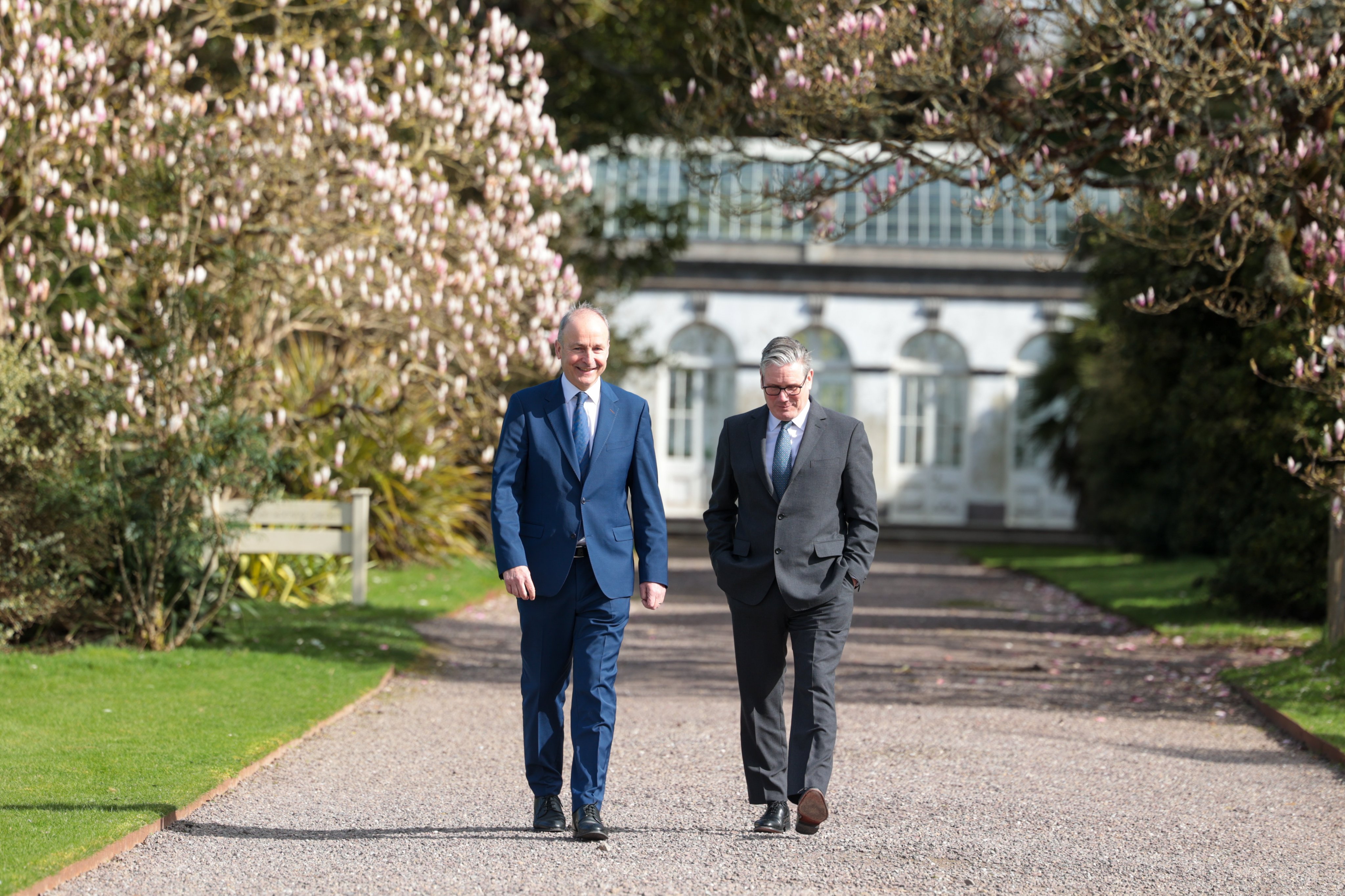
The UK Prime Minister Keir Starmer and the Taoiseach Micheál Martin met in Cork on 12-13 March 2026 for the second UK-Ireland Summit. A joint statement by the Taoiseach and Prime Minister set out how the UK and Irish Governments will work together to: “nurture our vibrant economies, protect our seas, and strengthen our friendships and partnerships for the generations to come.” The Summit received widespread media coverage including the BBC, UTV, RTE (here and here) and the Irish Times.
Assembly Round-up

Our regular weekly round-up of Brexit, EU and international focused debates and Committee evidence sessions at the Assembly.
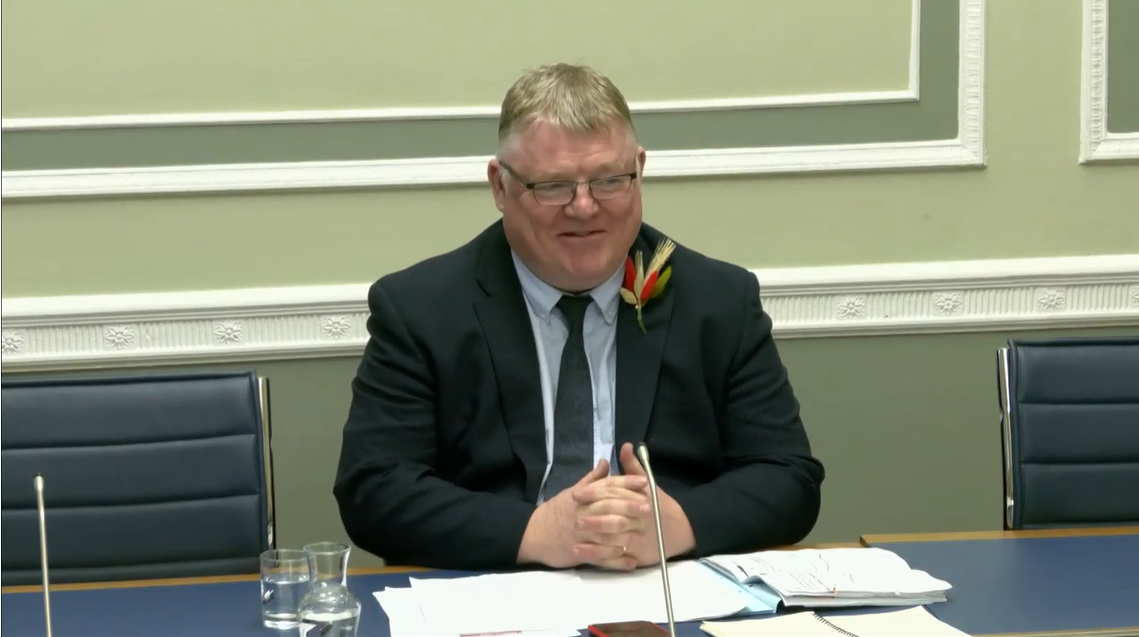
Declan McAleer MLA swapped his Committee position for a witness seat on Monday, when he briefed Agriculture, Environment and Rural Affairs Committee colleagues on his Private Member’s Bill, the Areas with Natural Constraints (Payments) Bill. The Bill is designed to provide payment support to farmers working on challenging, marginal land: predominantly livestock and grass-based farms operating under higher costs, lower productivity, and fewer alternatives compared to lowland or arable farms.
The Agriculture Act 2020, one of the main pieces of legislation regulating local agriculture post EU exit, contains provisions to allow the modification of the basic payment scheme to include a payment for Areas with Natural Constraints (ANCs). However, to date, the power to make regulations to provide for ANC payments has not been exercised by the Minister of Agriculture, Environment and Rural Development. The current Private Member’s Bill places a statutory duty on the Department to do so. You can read more about the Bill including the Explanatory Memorandum here and watch Monday's evidence session in full here:
Windsor Framework Committee takes evidence on new EU Regulation
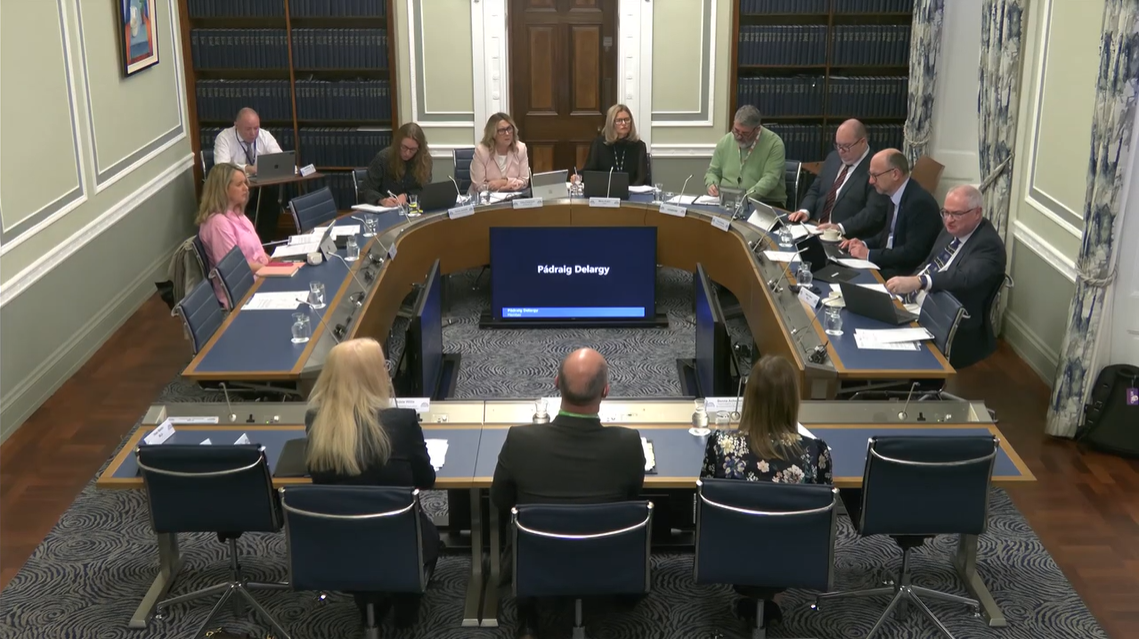
The Windsor Framework Democratic Scrutiny Committee met on Thursday, when Members took evidence from Departmental officials on Regulation (EU) 2026/405 on detergents and surfactants, which repeals Regulation (EC) No 648/2004. At its previous meeting on 12 March, following initial evidence from Departmental officials, Members agreed that it would hold an Inquiry into this particular replacement act. The Committee also submitted a number of follow-up questions to the Department, specifically in relation to how many companies in Northern Ireland would be directly impacted by the regulation.
During last week’s evidence session, Departmental officials told Members that statistics provided by the UK Department for the Environment, Food and Rural Affairs (Defra) for the 2022-2025 period show that Northern Ireland accounted for less than 1% of the UK detergent trade with both the EU and non-EU markets. They noted that Defra had further provided the Department with a detailed programme regarding their stakeholder engagement on the matter which would include specific engagement with interested parties in Northern Ireland and that alignment with the EU remained Defra’s preferred option.
Officials further advised that it remained their assessment that the regulation is not expected to have a significant direct or persistent impact on communities in Northern Ireland. They added that the extended 42 month transition period before the regulation would take effect here would mean that businesses would have time to build in and that the Defra timetable would align with this timescale.
At last Thursday’s meeting, Members further agreed to write to the Minister for the Constitution and European Union Relations, Nick Thomas-Symonds MP to request that it be kept informed of developments in relation to the wider concept of alignment with the EU. You can watch last Thursday’s meeting in full here
This week in the Assembly…
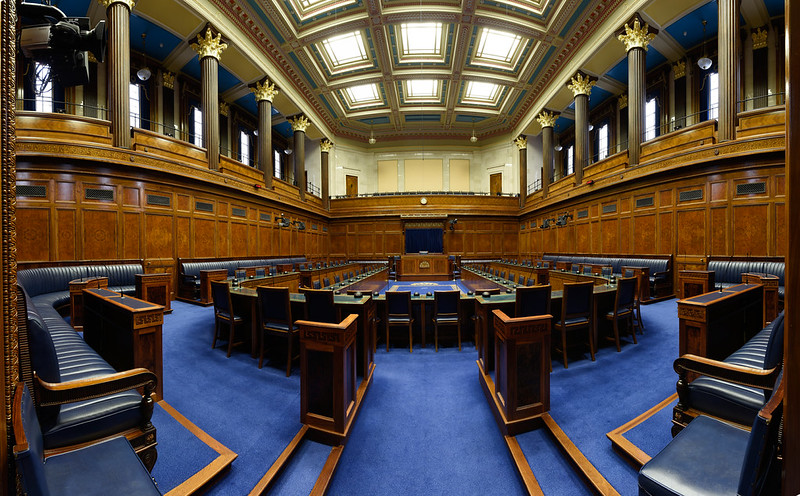
Today, Declan McAleer MLA moved the Second Stage of the Areas with Natural Constraints (Payments) Bill, meanwhile during Question Time, the Economy Minister outlined her recent engagements in the United States and responded to a further question on recent HMRC trade statistics.
On Wednesday, the Assembly’s Committee for the Economy will hear from Departmental Officials on the Enhanced Investment Zone.
Parliamentary Planner

House of Commons
During questions to the Northern Ireland Office on Wednesday, the Minister is expected to respond to a question regarding the potential impact of the EU-Mercosur trade agreement on farmers in Northern Ireland. On Wednesday, a tabled question to the Department of Transport centres upon what discussions the Minister has had with the aviation industry on the potential merits of the UK rejoining the European Geostationary Navigation Overlay Service.
House of Lords
On Tuesday, the European Affairs Committee will take evidence from Professor David Collins, Professor of International Economic Law at City St George’s, University of London and Professor Catherine Barnard, Professor of European Law at University of Cambridge and Senior Fellow, UK in a Changing Europe, on its new Dynamic Alignment Inquiry. You can watch the evidence session here:
On Wednesday, the Chairperson of the Northern Ireland Scrutiny Committee, Lord Carlile, will move that the House takes note of the Report from the Northern Ireland Scrutiny Committee : Northern Ireland after Brexit: Strengthening Northern Ireland’s voice in the context of the Windsor Framework.
In advance of the debate on the Northern Ireland Scrutiny Committee’s report, the House of Lords Library has published an In-Focus article summarising the report and subsequent developments.
In case you missed it….

-
The Secretary of State for Northern Ireland has responded to the Chairperson of the House of Lords Committee, Lord Carlile on the current situation regarding dual GB and EU road vehicle type approvals and markings. You can read the Secretary of State’s response here. Lord Carlile has written back to the Secretary of State requesting further details on the implementation timeline for introducing mandatory dual vehicle type approval. You can read that letter here.
-
A number of media outlets, including: Politico; The Guardian; The Telegraph (behind a paywall) and The Financial Times (behind a paywall) reported last week on emerging tensions between the UK and the EU on University tuition fees for EU students in the UK.
-
The UK Treasury published a policy document on 12 March re: the Joint EU-UK Financial Regulatory Forum
-
On March 13, the UK Treasury published the Minutes from the Fifth Trade Specialised Committee on Customs Cooperation and Rules of Origin Meeting which took place on 16 October 2025.
-
In an article published on 18 March, The Economist reports: Britain’s chancellor starts a tilt towards Europe.
-
An article published in The Guardian on 20 March reports on comments made by the UK trade minister Chris Bryant following the Parliamentary Partnership Assembly meeting in Brussels last week: ‘We need to think much bigger’: trade minister calls for greater ambition in UK-EU reset.
-
An article published by Politico on 19 March states: Downing Street dismisses Sadiq Khan’s call to reverse Brexit. The BBC and The Independent also reported on comments made by the London Mayor to the Italian news outlet - la Repubblica.
-
On 17 March the UK Treasury issued a Joint statement from Finland, the Netherlands, and the United Kingdom on joint defence financing and procurement
-
A news release issued by Chatham House on 17 March reports on a speech delivered by the President of Finland: Brexit was ‘a colossal mistake’, says President Stubb of Finland – but Europe should build a flexible partnership with the UK.
-
On March 12, the UK Government published a policy overview of the UK Emissions Trading Scheme (UK ETS) policy, the role of the UK ETS in the decarbonisation of the UK, and how the UK ETS Authority is developing the scheme.
-
On March 18, Defra launched a consultation on potential amendments to the Persistent Organic Pollutants (POPs) Regulation 2026. The consultation also provides an opportunity for respondents to share evidence regarding related amendments adopted or proposed by the EU, including their potential suitability for GB and any implications for the functioning of the UK internal market, particularly where different requirements may apply in Northern Ireland under the Windsor Framework.
-
On March 18, Defra published a policy paper re: Written records of annual fisheries consultations between the UK and the EU.


