Brexit and Beyond
17 February 2026

Discussion and debate on Brexit, EU and international related affairs continued at the Assembly last week, with a motion on a UK-EU Customs Union taking place last Monday, as well as statements on recent North South Ministerial Council meetings.
We report back on last week’s Commonwealth Women Parliamentarians Conference which took place in Parliament Buildings, and we highlight this week’s visit to London by the EU Parliament’s Committee on Culture and Education.
We also cover the UK Government’s response to the Northern Ireland Scrutiny Committee report on the Windsor Framework, as well as remarks by the Chancellor Rachel Reeves on the UK-EU relationship.
As always, we take a look ahead to what’s happening in the Assembly this week and highlight the stories you may have missed.
- Assembly Round-up
- Assembly debates UK-EU Customs Union
- Economy Minister updates Assembly on North/South Ministerial Council meetings
- Local Growth Fund concerns raised during ADHD Services debate
- NI Assembly hosts Commonwealth Women Parliamentarians Conference
- UK Government responds to Lords committee report on Windsor Framework
- Education and the arts top of the bill as European Parliament Committee visits London
- Chancellor discusses closer alignment with the EU at Bruegel’s 20th anniversary event
- This week in the Assembly
- In case you missed it…
Assembly Round-up

Our regular weekly round-up of Brexit, EU and international focused debates and Committee evidence sessions at the Assembly.
Assembly debates UK-EU Customs Union
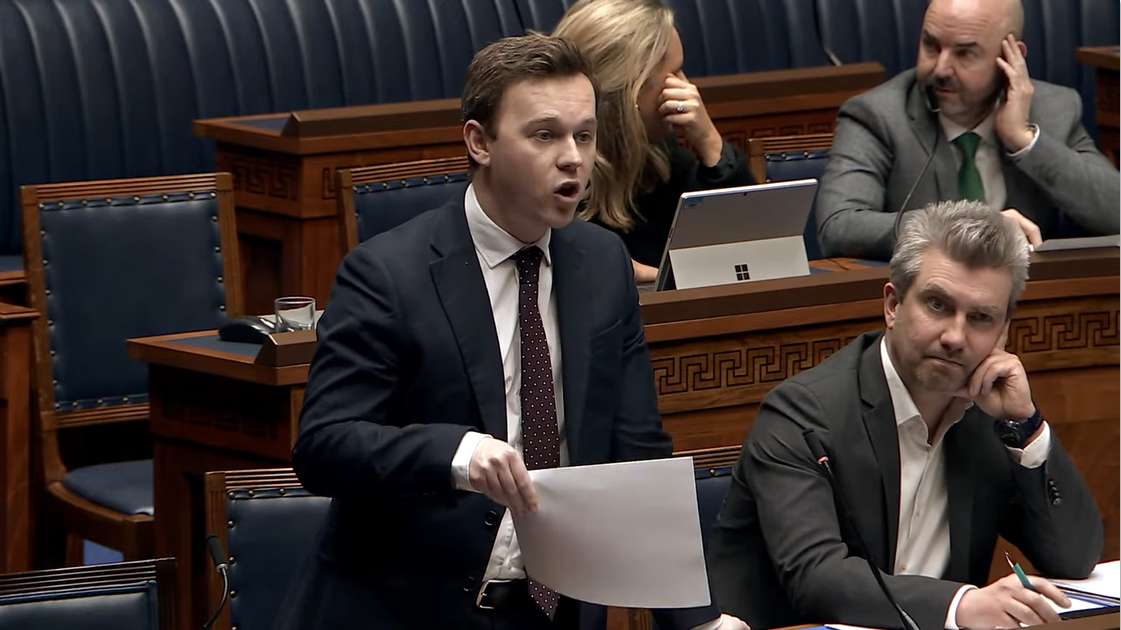
On Monday, 9 February during Private Members’ Business, the Assembly debated a motion on an UK-EU Customs Union.
Moving the motion, Eoin Tennyson MLA told Members that Brexit had “…put up new barriers to trade, shrunk the economy and left people and public services worse off.” Mr. Tennyson continued: “We know all too well that Northern Ireland, as a divided society, can function only on the basis of sharing and interdependence. Our people and businesses trade and interact daily on a North/South and an east-west basis.”
Contributing to the debate, Ciara Ferguson MLA said: “Whilst we recognise the value of this well-intentioned motion, which emphasises the need to reduce checks through custom arrangements, our overall focus remains on looking beyond that and towards a return to full EU membership through unification. At all times, we must be focused on finding solutions to minimise the frictions created by Brexit and maximise the opportunities of dual market access.”
David Brooks MLA opposed the motion and outlined issues associated with the Windsor Framework, including the availability of veterinary medicines in Northern Ireland: “We believe that the Government should be radical in moving on from the Windsor framework, rather than tinkering around the edges or merely treating the symptoms.” He added: “If alignment on food, plants and animal products is now envisaged, the Government should immediately halt the construction of border control posts at our ports. Such an agreement removes any supposed justification for such facilities, yet the work continues regardless.”
Responding in opposition of the motion, Diana Armstrong MLA said: “The irony of today's motion is striking.” She added that the Windsor Framework: “… entrenches regulatory divergence from Great Britain, imposes layers of bureaucracy, disrupts supply chains and places long-term economic constraints on the people of Northern Ireland.”
Speaking in support of the motion, the Leader of the Opposition, Matthew O’Toole MLA said: “We think that Northern Ireland should be back in Europe, and we think that the only plausible route to that end is a new Ireland.” Mr. O’Toole concluded: “I think that a UK-EU customs union is a logical and desirable outcome. Whether the unstable politics of the UK will allow that is another question.”
Winding up the debate, Kate Nicholl MLA said: “Right now, the issue that people are facing that we are trying to deal with is the inability of businesses to trade as well they could and the need to make things easier for them. That is not just about Northern Ireland but about the UK in general.” She urged Members to support the motion, stating that: “Backing a UK-EU customs union would send a strong message that cooperation and good trade agreements are not weaknesses but are very much strengths.”
The Assembly divided, resulting in 44 Ayes in support of the motion against 23 Noes, the motion was therefore agreed. You can watch the full debate via niassembly.tv.
Economy Minister updates Assembly on North/South Ministerial Council meetings
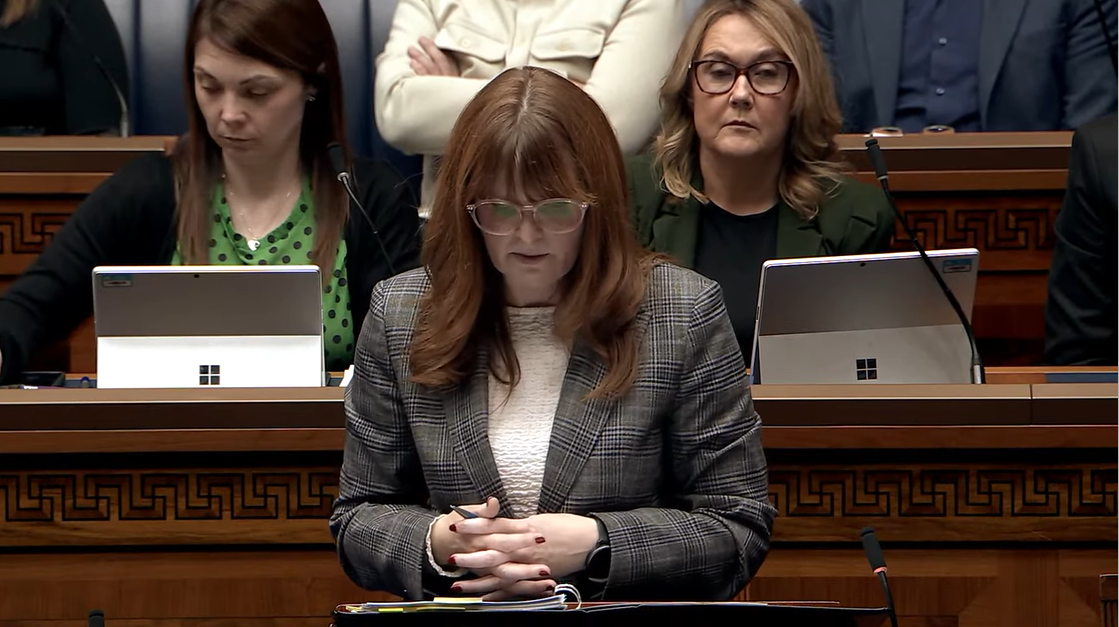
On Monday, the Minister for the Economy Dr Caoimhe Archibald MLA updated Members on the recent meetings of the North/South Ministerial Council (NSMC) in trade and business development and the North/South Ministerial Council (NSMC) in tourism, both of which took place in Armagh on 28 January 2026.
On the NSMC trade and business development meeting, the Minister told the Assembly that Ministers had welcomed and noted the overall achievements of InterTradeIreland since the previous sectoral meeting in April 2025. This included exceeding its target of over 55,000 businesses benefiting from trade support by the end of October 2025, as well as its contributions to small and medium-sized companies through programmes such as ‘Trade Missions @ Home’.
The Minister further relayed the Council’s commendations to IntertradeIreland, Enterprise Ireland and Invest NI in hosting the twenty-eighth TCI global conference which took place in Dublin in October 2025. She told Members that the conference had brought: “… together over 230 delegates from more than 25 countries, including world-leading cluster experts, policymakers and business leaders.”
You can read the Minister’s statement in full here:
Turning to her update on the NSMC tourism meeting, the Minister told the Assembly that the Council had noted: “… Tourism Ireland's forward focus on increasing the value of overseas tourism; sustainably supporting economies, communities and the environment; and market diversification by expanding strategic source markets, stimulating demand for new and existing routes and strengthening strategic partnerships.”
The Council also received a presentation on the collaboration to maximise benefits from golf tourism by Fáilte Ireland, Tourism NI and Tourism Ireland and on how the agencies are working collaboratively to promote economic growth across the island. You can read the Minister’s Statement here:
Local Growth Fund concerns raised during ADHD Services debate
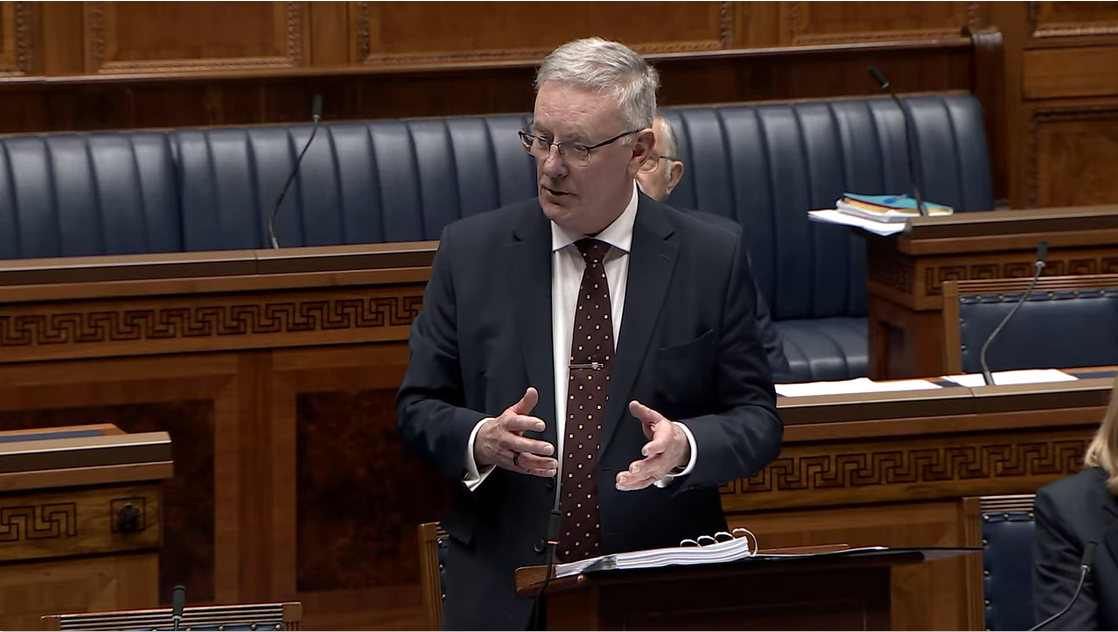
During a Private Members’ Business debate on Monday afternoon, regarding ADHD Services, Colin McGrath MLA highlighted what he described as: “…the UK Government’s disgraceful cut to the local growth fund.” Contributing to the debate, Mark Durkan MLA said that he: “…recognized, respected and was so grateful for the contribution of our voluntary and community sector in many areas, of which this [ADHD Services] is one." He agreed with Mr. McGrath that the sector was: “…facing swingeing cuts with the new local growth fund.”
Responding to the debate on Monday, the Health Minister, Mike Nesbitt MLA, addressed concerns regarding the local growth fund and specifically referenced the UK government’s decision to implement a 30:70 resource (revenue) to capital split in the fund. The Minister reiterated that: “…the Executive are as one in requiring a rebalance of the 30:70 split between resource and capital.” He told Members that the Executive were asking the UK Government to look at its decision again. You can read the debate in full here:
The Northern Ireland Executive had previously issued a press release at the end of January on the funding split in the Local Growth Fund, stating: “With one voice, we are urging the Minister [Steve Reed, the Secretary of State for Ministry of Housing, Communities and Local Government] to rectify the profile of the Local Growth Fund here with a more favourable Resource allocation immediately.”
The issue was also addressed in a letter to the Secretary of State from the First and deputy First Ministers which, as reported by the Irish News, said: “From the outset, our sector, along with the Executive, has been unequivocal: a capital-heavy programme is not what Northern Ireland needs. Investment should prioritise people and frontline services, not bricks and mortar at the expense of human potential.”
The House of Commons Northern Ireland Affairs Committee also raised the capital-revenue split of the Fund in a letter to the Secretary of State for Northern Ireland and the Secretary of State for Housing, Communities & Local Government in January 2026. The Committee argued that: “The 70-30 capital-revenue split …amounts to a 64% funding cut to the voluntary and community sector (VCS), delivering programmes to tackle economic inactivity.” The Committee added that the sector had already seen: “… its funding halve as part of the transition from the European Social Fund to the UK Shared Prosperity Fund.”
NI Assembly hosts Commonwealth Women Parliamentarians Conference
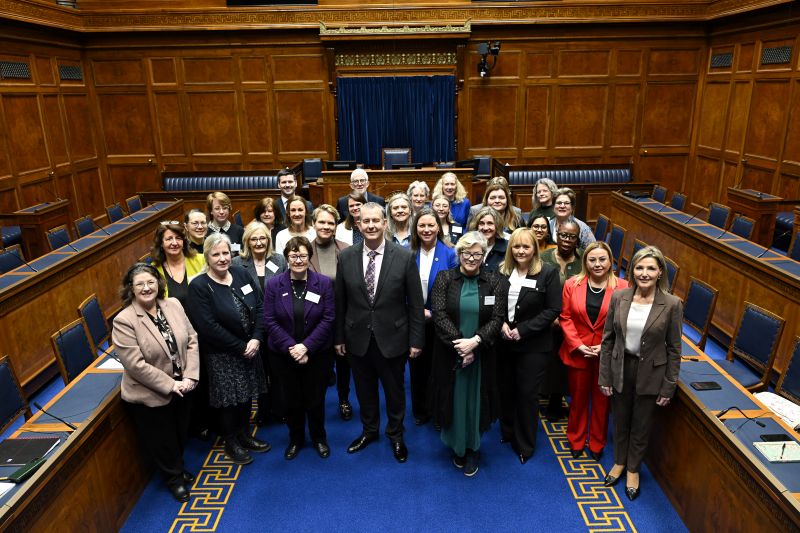
The 12th Commonwealth Women Parliamentarians (CWP) British Islands and Mediterranean Regional (BIMR) Conference was held in Parliament Buildings from 8-10 February. The event brought together women parliamentarians to discuss the theme Power & Peace: Protecting Our Mental Health in Public Life. Delegates explored the personal and institutional challenges faced by women in political life, with a strong focus on wellbeing, resilience and sustainable leadership.
The delegation was welcomed to Parliament Buildings by the Assembly Speaker and President of the Commonwealth Parliamentary Association (CPA) Northern Ireland Assembly branch, Edwin Poots MLA, and by Michelle McIlveen MLA, member of the BIMR CWP Steering Committee.
The conference programme included keynote addresses, expert-led panels and skills-based sessions. You can find further information, including a video from those who took part in the event here:
UK Government responds to Lords committee report on Windsor Framework
The UK Government responded to recommendations in the House of Lords Northern Ireland Scrutiny Committee’s report on Strengthening Northern Ireland’s Voice in the context of the Windsor Framework, in a joint letter from the Secretary of State for Northern Ireland and the Minister for the Cabinet Office and Paymaster General. The Government welcomed the report and noted the overlap between some of the Committee’s recommendations and those made in Lord Murphy’s Independent Review of the Windsor Framework.
The response emphasized the Government’s approach to stakeholder engagement. It noted that the Governments’ position in meetings of the Joint Committee is informed by stakeholder views, including via: “UK/EU joint engagement every quarter with business and civic representatives”.
Among other issues, the response addressed points raised by the Committee regarding transparency of decision making in UK-EU bodies forming the governance structures for the Windsor Framework, and the Northern Ireland Executive’s engagement with these bodies. It also argued that the interplay between agreements reached as part of the UK-EU Common Understanding (specifically on SPS, emissions trading and electricity) and the Windsor Framework would see: “…benefits flow through to Northern Ireland and support intra-UK trade”.
Education and the arts top of the bill as European Parliament Committee visits London
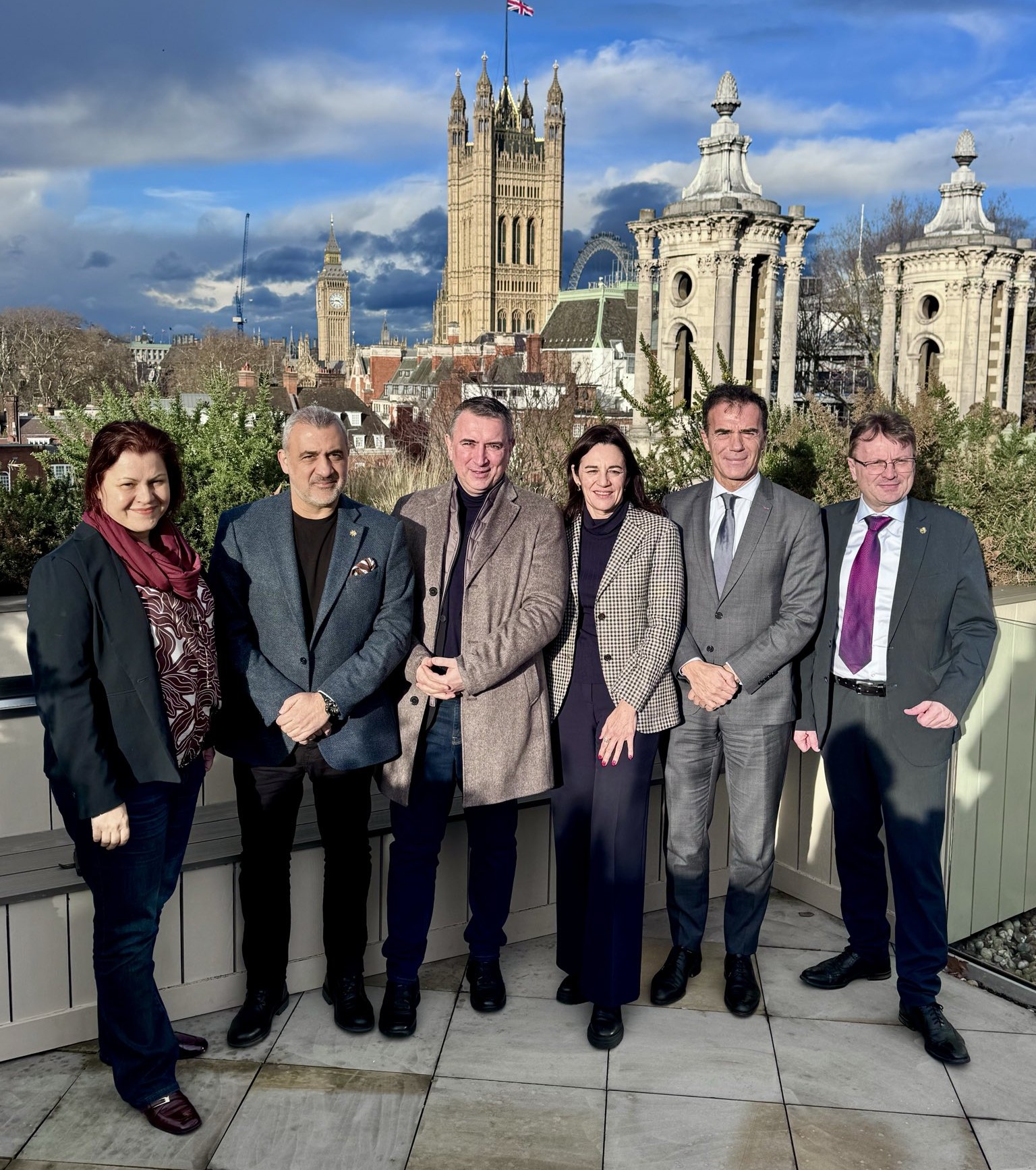
On Monday, the European Parliament’s Committee on Culture and Education began a three-day visit to London, where Members will meet representatives of the UK Government, Parliament, universities, cultural institutions, creative sector, students and youth organisations.
The agenda includes talks about the process of bringing the UK back into EU-funded programmes, such as Erasmus+, for the post-2027 period. A Committee press release adds that MEPs also: “…wish to take stock of negotiations on the EU-UK reciprocal youth experience scheme, of barriers to cultural collaboration between the EU and the UK as well as the practical challenges facing touring artists.” We covered the latter issue in last week’s Brexit and Beyond, where we reported on the House of Commons Culture, Media and Sport Committee’s evidence session on the current state of play regarding performing arts touring in the EU.
Committee Member and Chair of the visiting delegation, Laurence Farreeng MEP, referenced the UK’s return to the Erasmus+ programme from 2027, stating: “It is now up to us to go further, to facilitate the mobility of young people and remove the obstacles faced by touring artists. It is in this spirit that the delegation will engage in in-depth dialogue with our British partners." You can read the press release in full here:
Chancellor discusses closer alignment with the EU at Bruegel’s 20th anniversary event
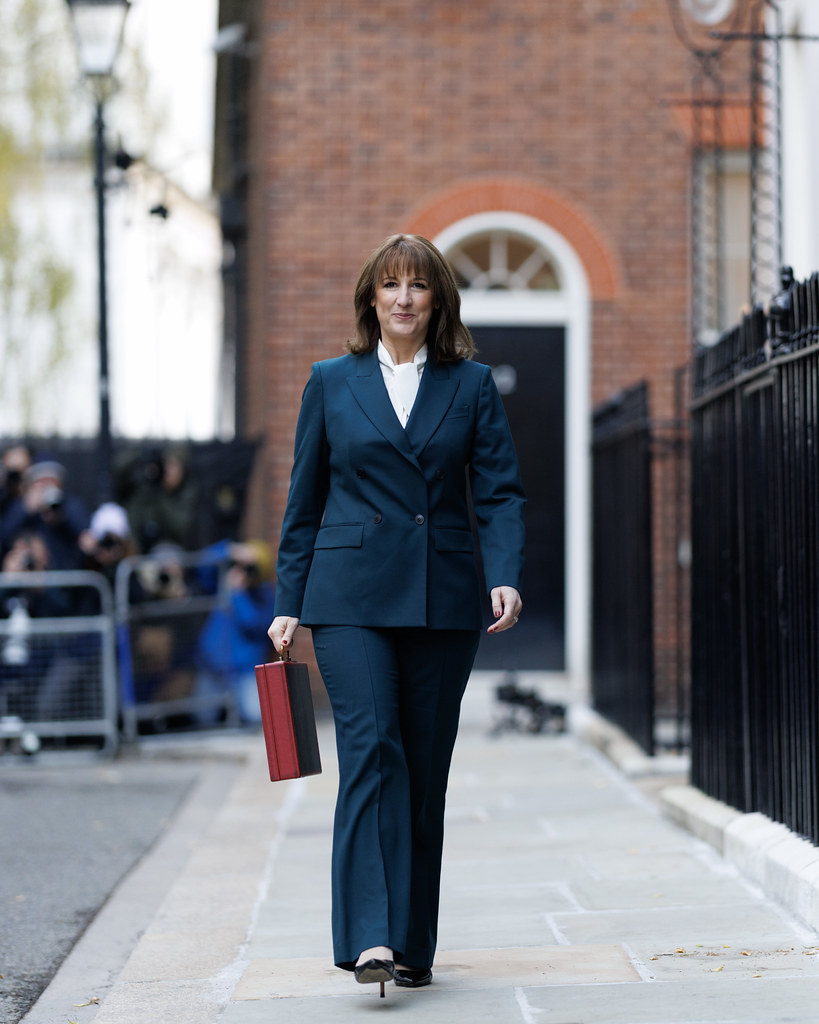
The Chancellor of the Exchequer, Rt Hon Rachel Reeves MP joined Jeromin Zettelmeyer, Director of the European think tank Bruegel, at an event last week to mark Bruegel’s 20th anniversary.
The event was organised in partnership with the London School of Economic’s European Institute and focused on the topic of: ‘Security in Europe: how will it affect growth and competitiveness?’
The Chancellor addressed the role of the EU and the UK in a “new” multilateral system and discussed progress made since the UK-EU summit in 2025. The Chancellor explained that the growth plan for the UK Government was: “…to remove barriers for businesses that stop them from investing, trading and enhancing productivity.”
Noting that the UK Government and the EU had agreed the re-entry of the UK into the Erasmus+ programme in 2027, she stated that the government was working hard to implement: “what was agreed at the summit…on SPS…on energy trading around CBAM, on electricity trading and on an ambitious youth mobility scheme.” The Chancellor added that: “…further integration will require further alignment.”
The Chancellor’s remarks were covered by a number of media outlets including: The Guardian, the BBC, Politico and the Telegraph.
As well as the discussion with the Chancellor, the event also included panels focusing on ‘Governance and financing of defence’ and ‘Rearmament, procurement and modernisation of EU and UK defence capabilities’. You can watch the full event here:
This week in the Assembly
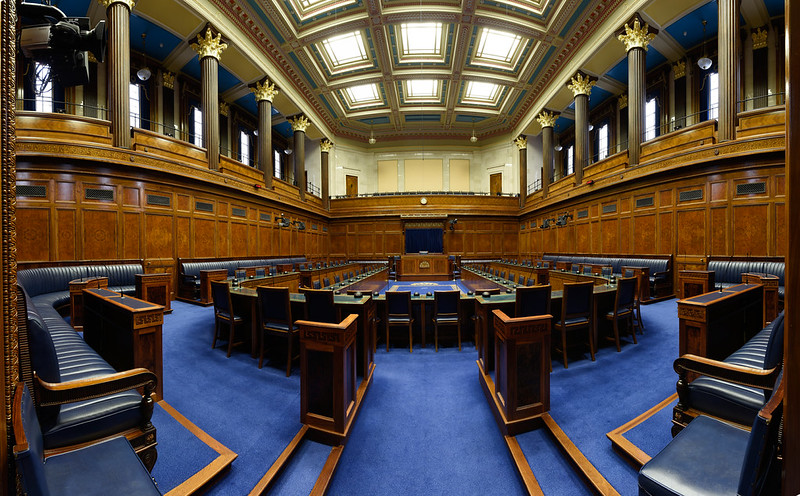
On Monday, the Minister of Finance delivered a statement on the North South Ministerial Council’s (NSMC) Special EU Programmes Body Sectoral meeting.
On Monday afternoon, the Minister of Agriculture, Environment and Rural Affairs brought forward a motion to propose that: The draft Greenhouse Gas Emissions Trading Scheme (Amendment) Order 2026 is approved.
On Tuesday, the Local Growth fund is back on the agenda, with the Minister for Communities expected to respond to a question on the impact that the proposed delivery of the fund will have on the Community and Voluntary Sector, particularly for services in the Foyle constituency.
On Thursday, the Committee for Agriculture, Environment and Rural Affairs will consider a Statutory Instrument (SI) on: The Greenhouse Gas Emissions Trading Scheme (Amendment) (Extension to Maritime Activities) Order 2026. Members will also consider a departmental written briefing, providing an update on the Fruit & Vegetable Aid Scheme in Northern Ireland .
In case you missed it…

-
On Sunday, 15 February, the Independent reported on the Prime Minister’s speech at the Munich Security conference: Starmer doubles down on closer links with EU as he says Britain is ‘turning its back’ on Brexit years.
-
The UK Government released a statement on 15 February re: the Prime Minister’s meeting with President of the European Commission, Ursula von der Leyen. The statement notes: “ Both leaders reaffirmed their commitment to continue work that will bolster our collective defences in the face of growing threats to European security.”
-
The UK Government has also published the full text of the Prime Minister’s speech at the Munich Security Conference on 14 February.
-
A UK Government press release issued on 13 February by the Ministry of Defence says: UK spends over £400 million on long-range weapons as cooperation scales up with European allies.
-
In a press release, updated on 12 February, the Council of the European Union states: Council gives final green light to new customs duty rules for small parcels.
-
On 11 February, the House of Lords Northern Ireland Scrutiny Committee published a letter from the Secretary of State on concerns it had raised regarding the: EU Carbon Border Adjustment Mechanism and Northern Ireland. The Committee also published its response to the Secretary of State, noting that it: “…remained unconvinced by your arguments that its introduction does not pose problems or raise any uncertainty for Northern Ireland with regard to the movement of goods and, perhaps most importantly, electricity.”
-
On 10 February, the UK Government opened a consultation on draft secondary legislation relating to the UK’s Carbon Border Adjustment Mechanism (CBAM). It also published a policy summary explaining how CBAM will operate, as provided for in the primary legislation and based on the draft secondary legislation.
-
On 10 February, the Belfast Telegraph published an article on: Post-Brexit rules on new vehicle markings impacting car sales in NI, says industry. (may be behind a paywall).
-
On 11 February, the Independent published an article by travel correspondent, Simon Calder, regarding: Warning of four-hour waits at passport control this summer as chaotic EES rollout continues.
-
In an ‘Opinion Piece in The Guardian on 10 February, Philipa Neill asks: The EU is working on a blanket ban of ‘forever chemicals’. Why isn’t Britain? Chemistry World focuses on the same topic in its February 10 article: Probing PFAS policies in the UK and EU.
-
An article published on 10 February in Politico reports: UK has two months to save its steel industry, says Tata exec.
-
In a UK in a Changing Europe blog post published on 11 February, Rachel Brooks discusses Student mobility after Brexit.
-
On 11 February, the Centre for European Reform’s Unpacking Europe podcast discussed: Will 2026 be the year to reset the reset?
-
The House of Commons Environment, Food and Rural Affairs Committee published a report on 5 February on UK-EU agritrade: making an SPS agreement work.
-
On 24 February, UK in Changing Europe will host a lunchtime event on: Financial services the UK-EU relationship (online), followed on 25 February by an afternoon conference on UK-EU alignment and divergence (in-person only, in London).
-
A press release from the Northern Ireland Office on 13 February states: Connect Fund awards nine community projects over £80,000.


