Brexit and Beyond
12 January 2026

Welcome back, readers, to our first newsletter of 2026! In this edition we bring you up to speed on latest developments in UK-EU relations, including agreement on UK participation in Erasmus+ and negotiations around a Sanitary and Phytosanitary (SPS) agreement. We look ahead to Assembly plenary debates and Committee business this week and highlight recent announcements, consultations and commentary.
- UK Government responds to Independent Review of the Windsor Framework.
- UK-EU negotiations: Erasmus+ and participation in the EU internal electricity market .
- UK and EU working towards Sanitary and Phytosanitary (SPS) agreement and linking Emissions Trading Schemes.
- Let the data flow.
- Call for Evidence on Vehicle Approval Types.
- House of Commons debates meat exports to the EU.
- Introduction of CBAM.
- Council of the EU agrees to levy customs duty on small parcels.
- This week at the Assembly...
- Parliamentary Planner.
- In case you missed it...
UK Government responds to Independent Review of the Windsor Framework
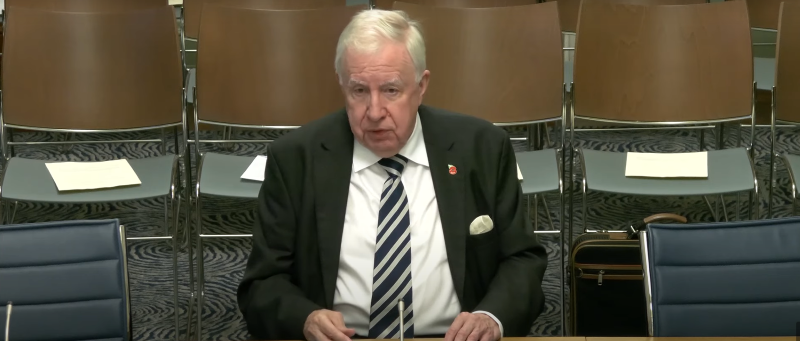
The UK Government published its response to Lord Murphy’s Independent Review of the Windsor Framework on 16 December. The Government accepted all the recommendations of the Review. In particular, it announced it would provide an enhanced ‘one stop shop’ service providing Windsor Framework guidance and support for businesses. The service will be backed by the £16.6 million of funding announced at the November 2025 Budget to boost trade within the UK internal market, and the service “…will begin operation within the next financial year”.
The Government also agreed to allow the Assembly’s Windsor Framework Democratic Scrutiny Committee (DSC) greater discretion over the timelines that apply to its work within the two-month democratic scrutiny period. The Government stated it would develop a ‘triage’ process to identify EU regulatory proposals which are relevant to Northern Ireland at an early stage, which would support the work of the DSC.
UK-EU negotiations: Erasmus+ and participation in the EU internal electricity market

The UK and EU announced a package of agreements on 17 December 2025, including concluding negotiations for the UK to join the Erasmus+ programme in 2027. HM Paymaster General and Minster for the Cabinet Office, Nick Thomas-Symonds, told the House of Commons that the programme would open up opportunities for students to study, train, work or volunteer abroad and provide professional development opportunities for teachers, youth workers and those working in the sports sector.
The UK and EU also concluded exploratory talks on the UK’s participation in the EU’s internal electricity market on 17 December 2025. The UK Government and European Commission published a policy paper setting out the outcomes of the exploratory talks and parameters for the UK’s possible participation. A joint statement by Minister Thomas-Symonds and the European Commissioner for Trade and Economic Security, Maroš Šefčovič, explained, “The European Commission and the United Kingdom will now work towards negotiating the United Kingdom’s participation in the internal electricity market of the European Union and set out the necessary framework for that participation.”
UK and EU working towards Sanitary and Phytosanitary (SPS) agreement and linking Emissions Trading Schemes (ETS)
The joint statement by Minister Thomas-Symonds and Commissioner Šefčovič on 17 December 2025 also set an aim to conclude other negotiations on the Youth Experience Scheme, on establishing a common Sanitary and Phytosanitary (SPS) Area and on linking the UK and EU Emissions Trading Systems (ETS) by the time of the next EU-UK summit in 2026.
It was widely reported on 6 January that the UK Government is preparing new legislation that would provide overarching powers enabling the UK to align with the EU legislation. Politico reported that the bill would establish a legal framework for UK-EU alignment in areas including food standards, animal welfare, pesticide use, the EU’s electricity market and carbon emissions trading. The Financial Times reported that the bill could be introduced as soon as February.

On 19 December 2025, the European Commission renewed the UK’s data adequacy status. The renewal means that personal data can continue flowing freely and safely between the European Economic Area and the UK. The agreement will run until 27 December 2031 when there will be a possibility to renew it again. Lord Ricketts, Chair of the House of Lords European Affairs Committee, welcomed the decision as giving “welcome stability to the digital relationship between the UK and EU”.
Call for Evidence on Vehicle Approval Types

The UK’s Department for Transport announced a Call for Evidence on 18 December 2025 on Dual marking vehicles under the GB type-approval scheme.
Evidence from the National Franchised Dealers Association to the Assembly’s Economy Committee previously highlighted the impact on the NI motor industry regarding new vehicles being approved for the GB market but not the NI market. While manufacturers must obtain approval under the GB type approval scheme to sell vehicles in Great Britain, new vehicles sold in Northern Ireland need to be approved to EU requirements and marked to show they have the necessary approval. (Readers will recall this issue has been discussed in previous editions of Brexit & Beyond, including our 24 November 2025 and 1 December 2025 newsletters.)
The Department for Transport’s Call for Evidence explains, “We are aware that some manufacturers are choosing not to mark vehicles approved under both [GB and EU] schemes with the EU approval number, preventing their sale in NI. We want to understand why this is happening and what can be done to ensure all vehicles sold in the UK are dual marked.”
The House of Commons held a Westminster Hall debate on 7 January 2026 on Meat Exports to the EU. Opening the debate, David Chadwick MP described the ongoing difficulties faced by farmers and producers in Great Britain exporting meat products to the European Union and emphasised the need for a settled Sanitary and Phytosanitary (SPS) agreement.
Responding to the debate, the Parliamentary Under-Secretary for Business and Trade, Kate Dearden MP noted that negotiations on the SPS agreement had already begun and the deal would “…deliver real benefits, scrapping export health certificates for most consignments … and ending routine SPS border control checks so that fresh meat moves faster with less paperwork”. The Minister noted the Government “…are not seeking a customs union with the EU”, but rather, “a practical alignment where it makes sense”.
Introduction of CBAM
The EU’s Carbon Border Adjustment Mechanism (CBAM) came into force on 1 January 2026. The Guardian reported on 21 December 2025 that the UK Government was unsuccessful in obtaining an exemption from CBAM for UK manufacturers, meaning exporters will need to provide a detailed paper trail of carbon emissions generated during the manufacturing process.
Council of the EU agrees to levy customs duty on small parcels
The Council of the EU agreed on 12 December 2025 to apply a fixed customs duty of €3 on small parcels valued at less than €150 entering the EU. The measure would apply from 1 July 2026. The Council explained that the measure is a response to the current situation whereby small parcels sent via e-commerce “enter the EU duty free, leading to unfair competition for EU sellers, health and safety risks for consumers, high levels of fraud and environmental concerns.” The Council decision is a temporary measure which will stay in place until permanent arrangements to eliminate the customs duty relief threshold for such parcels come into force.
The UK Government responded to a House of Lords Written Question on 5 January 2026 on whether the change in rules would apply to Northern Ireland. The Written Answer stated, “The facilitations under the Windsor Framework remain in place for goods entering Northern Ireland. We will continue to engage with the EU to give certainty over future arrangements and ensure businesses are informed ahead of any changes.” It also noted the Chancellor had announced the removal of the £135 customs duty relief at the November 2025 Budget, with a consultation on new arrangements currently underway.
This Week in the Assembly...
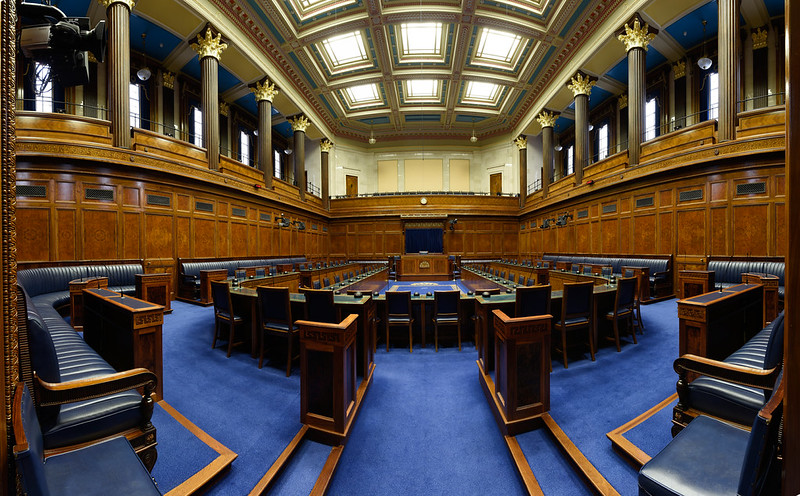
The Assembly will hold a vote on a Private Members’ Motion on Observer Status in the European Parliament on Monday, 12 January. The Assembly debated the motion on 8 December but (as discussed in our previous newsletter) a valid petition of concern was presented in relation to the motion, meaning the vote could not take place until a date after 22 December.
On Monday, 12 January, the Assembly will also debate a Private Members’ Motion on Establishing an EU Office in Belfast.
On Tuesday, 13 January, the Assembly will debate a Private Members’ Motion on Rejecting the New EU Customs Fee on Small Parcels.
On Thursday, 15 January, the Assembly’s Committee for Agriculture, Environment and Rural Affairs will take evidence from departmental officials on the Greenhouse Gas Emissions Trading Scheme (Amendment) Order 2026.
You can watch plenary sittings and Committee meetings of the Assembly live or via catch-up on niassembly.tv/
Parliamentary Planner

On Tuesday, 13 January the Business and Trade Committee will hear oral evidence on UK trade with the US, India and EU. The Committee has invited witnesses from a range of sector bodies including the Road Haulage Association, who previously provided evidence to the Economy Committee of the Northern Ireland Assembly on 5 November 2025.
There is a Westminster Hall debate on UK relations with France on Wednesday, 14 January from 4-4.30pm.
In case you missed it...

-
The British Chambers of Commerce published The EU Reset: A Business Manifesto on 22 December 2025. The report drew on a survey of 989 businesses and set out 25 recommendations to improve UK-EU trade in the short, medium and long-term. The report was covered in the Guardian, (Keir Starmer told closer EU trade ties ‘strategic necessity’ for UK firms, 22 December 2025).
-
Politico reports that “post-Brexit trade barriers are emerging faster than British negotiators can remove them” (Britain plays whack-a-mole with EU red tape, 5 January 2026) and explains how new rules taking force in 2026 could impact upon British businesses.
-
Jill Rutter, writing for the Institute for Government, asks, Will Keir Starmer’s ‘EU reset’ deliver in 2026? (7 January 2026)
-
In an article on the UK in a Changing Europe blog, New year, same old Brexit trade-offs (6 January 2026), Joel Reland argues that despite the UK’s wish to align more closely with the EU, the EU will not allow the UK to ‘cherry pick’ further access to the single market without accepting freedom of movement and making budgetary contributions
-
A Politico article reports on operation of the new Entry/Exit System for the Schengen area and requirements for border checks, reporting: Airports and EU clash over new border control rules (12 January 2026)
-
The Independent Monitoring Authority (IMA) published a report on The Evolution and Challenges of the EU Settlement Scheme (EUSS) on 22 December 2025
-
The UK Government and European Commission published a joint statement following the 17th meeting of the Specialised Committee on Citizens’ Rights on 18 December 2025.
-
The Marine Management Organisation has highlighted additional rules coming into force on 10 January 2026 that will impact UK vessels fishing in the waters of EU Members States. New EU Illegal, Unreported and Unregulated fishing regulations also came into force last week, for which the Marine Management Organisation “has been working with all UK Fishing Administrations to help industry prepare and be compliant”.
-
The Department for Science, Innovation and Technology published an Evaluation of UK participation in the Horizon 2020 programme on 29 December 2025.
Upcoming events
-
UK in a Changing Europe is hosting a ‘Lunch hour’ online seminar on 30 January 2026 to discuss UK-EU relations in 2026
-
InterTradeIreland is hosting a webinar for SMEs on 14 January to understand the current Windsor Framework situation and ICS2.


