Brexit and Beyond
08 December 2025

In this week’s edition, we include an update from the Specialised Committee on the Implementation of the Windsor Framework, which was issued following its meeting on 3 December. We also take a look back at last week’s Committee for Agriculture, Environment and Rural Affairs meeting, when Members received a briefing from the Minister, Andrew Muir MLA.
In what was a busy week for EU and Brexit related discussions in the House of Commons, we highlight questions to the Foreign, Commonwealth and Development Office and the Cabinet Office, as well as a Westminster Hall debate on the supply of veterinary medicines to Northern Ireland.
In our regular ‘Assembly round-up’ we report back on other EU and Brexit related issues discussed in the Assembly last week and look forward to what’s on the agenda this week. Our new ‘Parliamentary Planner’ section highlights upcoming debates and discussion topics at other legislatures. And as always, we link you through to news stories and items of interest you may have missed.
- Meeting of Specialised Committee on the Implementation of the Windsor Framework.
- Minister Muir briefs Committee for Agriculture, Environment and Rural Affairs.
- Assembly Round-up.
- This week in the Assembly.
- Westminster Brief.
- Parliamentary Planner.
- In case you missed it...
Meeting of Specialised Committee on the Implementation of the Windsor Framework
Following its meeting on Wednesday, 3 December, the Specialised Committee on the Implementation of the Windsor Framework issued a press release, outlining further progress in the sanitary and phytosanitary (SPS) area and welcoming: “…the reduction of the frequency of SPS identity checks from 10 to 8%, which will lead to a smoother flow for agri-foods in the context of the Northern Ireland Retail Movement Scheme.”
Co-chaired by officials from the European Commission and the UK Government, the Committee: “…reaffirmed the importance of continued work to deliver the full, timely, and faithful implementation of the Windsor Framework.” It also noted: “…further progress in some areas of the Windsor Framework’s implementation and the important work that remains to be undertaken, in particular to deliver in full the safeguards underpinning the flexibilities for the movement of goods between Great Britain and Northern Ireland.”
The Specialised Committee also discussed the implications of the EU’s Artificial Intelligence and Cyber Resilience Acts for the proper functioning of the Windsor Framework.
You can read the press release in full here:
Minister Muir briefs Committee for Agriculture, Environment and Rural Affairs:

On Thursday, 4 December, the Committee for Agriculture, Environment and Rural Affairs took evidence from the Minister, Andrew Muir MLA which included an update on the Department’s Legislative Programme, current issues and future plans. On the Windsor Framework, the Minister said: “We should be proud of the opportunities that exist for dual market access..” He added that this was something: “…I am very keen to promote.”
The Minister noted to Members that negotiations between the UK and the EU on a Sanitary and Phytosanitary (SPS) agreement were underway. He said that he wanted: “…to see arrangements that allow agri-food goods to move from GB to NI with the least possible friction.” The Minister underlined that he would: “…continue to press the UK Government to pursue the highest achievable level of dynamic alignment with these EU regulations”, adding that this was essential “…for an agreement that is practical, sustainable and implemented swiftly, providing the clarity and certainty that our businesses urgently need.”
In relation to Bovine TB, the Minister told Members that: “..the burden is unacceptable for farming families and for government.” He said that the €6.4m of Shared Island Funding from the Irish Government would: “…support a new cross-border TB initiative...” adding that: “…engagement with farmers continues and details of the regionalisation pilot will be confirmed shortly.”
The Minister also updated the Committee on a number of issues, including: the recent outbreak of Bluetongue, sustainable agriculture; the new rural policy for Northern Ireland, the forthcoming Fisheries and Water Environment Bill, as well as ongoing work on environmental governance. You can watch the evidence session in full here:
Assembly Round-up

Ministerial Statement on the North/South Ministerial Council (NSMC) in the transport sector:
On Monday, 1 December, the Minister for Infrastructure, Liz Kimmins MLA made a statement to the Assembly on the meeting of the North/South Ministerial Council (NSMC) in the transport sector, which was held in Armagh on Thursday, 23 October 2025. The Irish Government’s Minister for Transport, Darragh O’Brien, and the Minister of Health, Mike Nesbitt MLA were also in attendance.
The Minister for Infrastructure updated Members on cross border collaboration and progress on a number of projects including the Donegal Trans-European Transport Network (TEN-T) and N2 road infrastructure project. She also noted progress on the development of a project prioritisation strategy for the all-island strategic rail review. You can read the Minister’s full statement, as well as contributions and questions from Members here:
Debate on Recognising the Importance of Food Security:
On Monday afternoon, Michelle McIlveen MLA moved a Private Members’ motion on ‘Recognising the Importance of Food Security’. The motion included: “an expression of concern that agri-food businesses face significant trading barriers as a result of the Windsor Framework and the application of EU law.” It further condemned: “… the ongoing threat to the critical supply of veterinary medicines from Great Britain from 1 January 2026, as well as uncertainty surrounding new EU rules on deforestation-free products”. You can read the full text of the motion here:
Opening the debate, Ms McIlveen told the Assembly that: “The Windsor framework and the continued application of EU law in Northern Ireland create serious obstacles to food security and business confidence.”
On the issue of veterinary medicine supplies to Northern Ireland, Ms McIlveen said that: “…from January 2026, … anywhere between 10% and 40% of veterinary medicines currently supplied to Northern Ireland could be discontinued”. She added that this: “…affects farmers, feed manufacturers, pet owners, vets, processors and, in fact, everyone who depends on the health and welfare of animals.”
Introducing an amendment to the motion, Declan McAleer MLA said that: “…dual access into the EU single market and the UK internal market is a competitive advantage that no other region in these islands enjoys. It is already opening doors for exporters, particularly in dairy and meat, and we should do everything that we can to maximise that opportunity.”
Commending the amendment, Mr McAleer explained: “Our amendment acknowledges the challenges of Brexit, recognises the opportunities of the Windsor framework, defends the interests of farmers, promotes sustainability without sacrificing food security and calls for clear, practical action to support innovation and investment.”
Speaking on the risks to animal and human health posed by what he described as the: “… ongoing threat to the supply of veterinary medicines…” Patsy McGlone MLA said “…the problems are not the result of a divergence in regulations between Britain and the EU on veterinary medicines; they are the result of a failure of negotiations.” He added that: “…solutions will require compromise from either the EU or the British Government or both…” Adding that: “…It is, however, time for the Executive to step up on the issue and press the British Government for a solution.” The Assembly voted for the amendment to be made, the amended motion passed with 38 Ayes – 19 Noes.
Questions to the Minister for Agriculture, the Environment and Rural Affairs:
The Minister for Agriculture, Environment and Rural Affairs, Andrew Muir MLA was in the Chamber on Tuesday, where he responded to a number of questions on issues including Agricultural Relief and the supply of veterinary medicines.
The Minister said that he had written to the Secretary of State for Northern Ireland and the Secretary of State for Environment, Food and Rural Affairs to highlight concerns about the impact on family farms and succession planning of limiting agriculture and business property reliefs pertaining to inheritance tax to £1 million. The Minister stated that he had: “…put forward alternative mechanisms for consideration, including a clawback option with similarities to the relief available to farmers for capital acquisitions tax in the Republic of Ireland.” He added that: “…since we left the EU, the disparity between North and South has become more acute. That is a result of Brexit and because of decisions by the UK Government, particularly on inheritance tax.” The Minister said that he was: “…conscious of the impact that it has on farmers in Northern Ireland, and I will continue to urge the UK Government to listen and act.”
With regards the issue of veterinary medicine supply to Northern Ireland, the Minister said he welcomed: “…the UK Government’s protecting animal health policy …and its two new support schemes designed to address supply challenges, including unforeseen issues.” He added that he would continue working with the UK Government and the [Veterinary Medicines] working group on governance and oversight to ensure that those schemes deliver their intended outcomes.
The Minister said that while a veterinary medicines agreement was not part of the announcement on the sanitary and phytosanitary (SPS) agri-food agreement in May, there are ongoing discussions now. He said: “If it becomes part of that agreement, that will be welcome. The closer the cooperation between the UK and the EU, the more benefit there will be for all our citizens across the UK.”
This week in the Assembly:
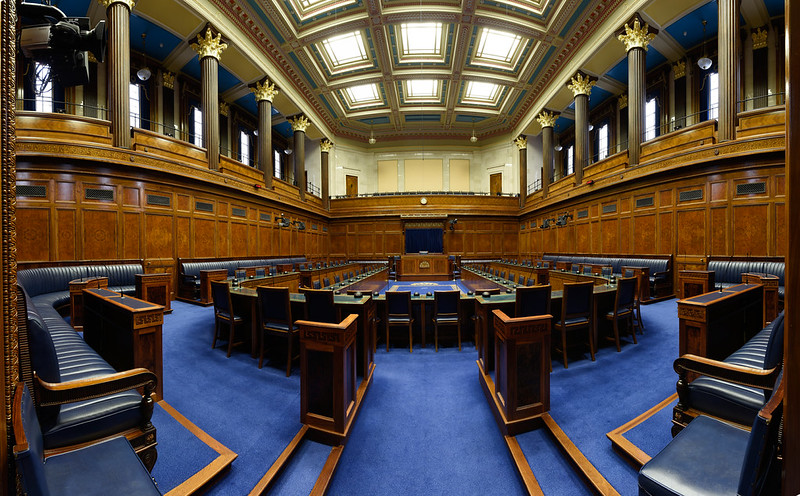
Today, during Private Members’ Business, a motion on Observer Status in the European Parliament was debated by Members. The motion: “…acknowledges that our long-term future would be best served by rejoining the European Union; recognises the democratic deficit as a result of Brexit.” It also: “…supports the request made by Irish MEPs in a recent letter to the President of the European Parliament for observer status in the European Parliament for our locally elected political representatives.” You can read the full text of the motion here:
At the beginning of the debate, the Speaker informed Members that: “…a valid petition of concern has been presented today in relation to the motion. The debate can still proceed, as can the vote on the amendment, which has not been petitioned and, therefore, requires a simple majority. However, the vote on the motion, whether it is amended or not, will not be taken today, as section 42 of the Northern Ireland Act 1998 requires that there must now be a 14-day consideration period. The consideration period for this petition ends on 21 December 2025.
“Following that, on 22 December, only the petition may be confirmed. If the petition is confirmed by 30 Members on that day, the vote on the motion, whether or not amended, will require cross-community support. If it is not confirmed by 30 Members, the vote will require simple majority support. In either case, the vote will not take place until a date after 22 December.”
On Wednesday, 10 December, the First and deputy First Minister will provide an oral briefing to the Committee for The Executive Office.
On Thursday, the Committee for Agriculture, Environment and Rural Affairs will be briefed by Departmental officials on SL1 The Sustainable Farming Investment Scheme Regulations (Northern Ireland) 2026.
Meanwhile, also on Thursday, the Windsor Framework Democratic Scrutiny Committee (DSC) will take oral briefings from Departmental Officials on Regulation (EU) 2025/2439 amending Regulation (EU) 2024/2865 as regards dates of application and transitional provisions. This regulation postpones key deadlines for new chemical labelling rules to 1 January 2028 to provide businesses, especially SMEs, with more time to comply with new formatting, relabelling, advertising, and online sales requirements.
Departmental officials will also brief the Committee on a Proposal for a Regulation amending Regulation (EU) 2023/1115 as regards certain obligations of operators and traders. This amends the EU Deforestation Regulation by simplifying obligations for operators and traders, particularly focusing on reduced reporting for micro/small businesses and downstream players. It aims to delay implementation until late 2026, while maintaining the goal of preventing deforestation-linked products from entering the EU market. The Council of the EU and European Parliament reached a provisional agreement on the proposal on Thursday, 4 December. You can find out more via the Council of the EU and the European Parliament press releases.
You can watch Thursday’s meeting as well as all Assembly debates and Committee meetings live or via catch-up here:
Westminster Brief:
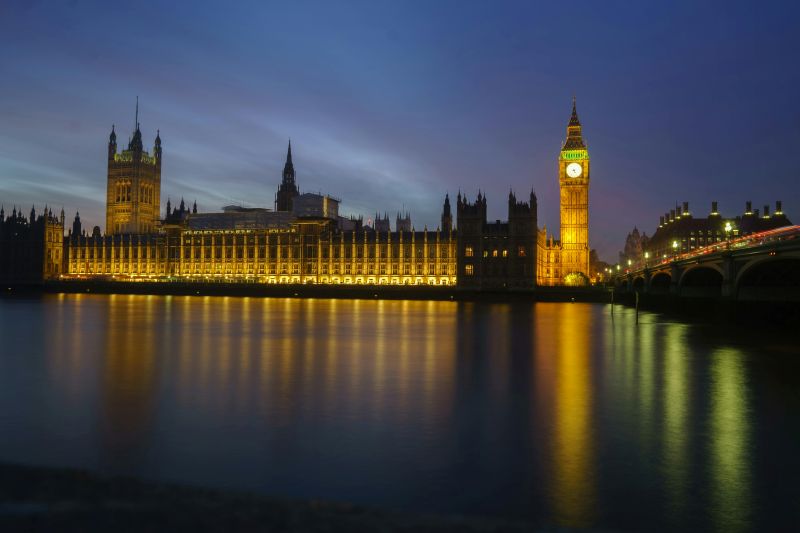
Westminster Hall Debate on supply of veterinary medicines:
At a Westminster Hall Debate on Wednesday, 3 December, Robin Swann MP moved a motion: ‘That this House has considered the supply of veterinary medicines to Northern Ireland’.
Opening the debate, Mr Swann underlined that: “Essential vaccines and treatments may become harder to obtain, increasing disease risk and undermining herd and flock health. Our vets and farmers would be forced into reactive treatment, adding strain to veterinary capacity and raising the risk of avoidable animal suffering and public health impacts.”
Responding to the motion, the Parliamentary Under-Secretary of State for Environment, Food and Rural Affairs, Emma Hardy MP said that: “Safeguarding the supply of veterinary medicine in Northern Ireland after the grace period ends remains a core Government priority…”
In relation to the new Veterinary Medicine Health Situation Scheme, she told MPs that this would allow the government: “…to temporarily authorise an alternative medicine when a discontinuation is expected to lead to a health situation. It is designed to provide a dedicated supply mechanism to address supply issues, should they arise.”
On the issue of insufficient pack sizes and concern among stakeholders that this could lead to cost increases and issues with dispensing veterinary medicines, she said that: “…we have no evidence that pack size changes are a systematic issue…” However, she added that: “…if the situation changes or if new evidence comes to light, we will look to use the schemes we have in place.”
Concluding the debate, the Parliamentary Under-Secretary of State said that she was sure that the Minister, Baroness Hayman, was: “…doing everything she can to listen carefully to concerns and will continue to do so." She added: “Let us continue to discuss this and continue to talk if any issues are raised.” The question was put and agreed too.
The debate included contributions from MPs: The Rt Hon Gavin Robinson; Carla Lockhart; Jim Shannon; Jim Allister; Alex Easton and Gregory Campbell. You can watch the debate in full here:
Westminster Questions:
During questions to the Foreign, Commonwealth and Development Office on Tuesday, 2 December, the Minister of State (Foreign, Commonwealth and Development Office), Stephen Doughty MP told Members, “We are working across Government to build a new strategic partnership with the EU.” Adding that: “Collaborative relationships are key to building this partnership and delivering what the British people want - on growth, the cost of living, security and action to counter irregular migration.”
On EU steel tariffs, the Minister said: “…We need to find a bilateral solution. Any EU measures must, of course, be consistent with the trade and co-operation agreement and uphold summit commitments and, indeed, our Windsor framework obligations.” You can read the full Hansard here:
Meanwhile on Thursday, 4 December, issues relating to Brexit and EU relations dominated questions to the Cabinet Office. In relation to negotiations with the EU on a sanitary and phytosanitary (SPS)agreement, the Parliamentary Secretary to the Cabinet Office, Chris Ward MP told the Commons: “…we are negotiating a bold SPS agreement, the potential benefits of which are huge: reducing unnecessary checks at the border, cutting costs for businesses of around £200 per shipment and, in the long run, boosting the UK economy by around £5 billion a year.” He said that they hoped to have the negotiations concluded by 2027.
Updating Members on an ‘EU Youth Experience Scheme’, Mr Ward said that the government had held several rounds of negotiations with the EU on the matter, which he said would: “…be balanced, capped, time-limited and subject to a visa requirement, and will deliver huge benefits to young people.” He noted that the government was also: “…working on an associate relationship with the Erasmus+ scheme...” adding that: “The exact parameters of that relationship are, of course, part of the negotiations, but we will update the House on it shortly.”
On questions related towards improving EU relations, the Chancellor of the Duchy of Lancaster, Minister for Intergovernmental Relations, and Minister of State, Darren Jones MP said: “We have made significant progress since our historic May summit, including negotiations on a food and drink deal, which will slash red tape for businesses and bring down prices for consumers.” You can read all questions and responses via Hansard:
Parliamentary Planner:

Debates and discussions on Brexit and EU related affairs continue across other legislatures this week.
In the House of Commons on Tuesday, HM Treasury is expected to respond to a question on what assessment has made of the potential impact of leaving the EU on economic growth.
Also on Tuesday, the Environment, Food and Rural Affairs Committee will continue its inquiry into 'Animal and Plant Health', which includes scrutiny of a potential SPS agreement with the EU. Witnesses at Tuesday’s meeting, include Baroness Hayman of Ullcock, Parliamentary Under-Secretary of State at the Department for Environment, Food and Rural Affairs and Mark Thompson, Director, Northern Ireland, Biosecurity, and Trade Programme at Department for Environment, Food and Rural Affairs.
On Tuesday afternoon, during a ‘Ten Minute Rule Motion’, Liberal Democrat MP, Dr Al Pinkerton will: ‘Call for the UK to negotiate a new customs union with the EU, covering most goods but not agriculture, and in which the UK would be consulted during negotiations on new EU trade deals with third countries’. You can watch proceedings of the House of Commons here:
In case you missed it…

-
PA News reports that:‘Little-Pengelly presses Starmer to extend Brexit rule grace periods’ in relation to the distribution of veterinary medicines from Great Britain into Northern Ireland.
-
The Veterinary Medicines Directorate has published webinars to help veterinary professionals, wholesalers and retailers prepare for changes to the supply of veterinary medicines into Northern Ireland.You can find out more here:
-
The Independent reported on Friday 5 December that: ‘Labour voters want Starmer to ditch Brexit red lines and rejoin EU customs union instead of raising taxes’.
-
A BBC article on 5 December says: Starmer rejects EU customs union after Lammy comments.This story was also widely reported by a number of news outlets including: The Financial Times; The Telegraph and Sky News.
-
Meanwhile, on Saturday, a Guardian article asks: ‘The only idea around’: will Labour return to a customs union with the EU?
-
The Guardian also reported on 5 December: ‘UK-EU youth mobility scheme could let tens of thousands live and work abroad’
-
A new SPICe Spotlight blog from the Scottish Parliament published on 5 December, takes a closer look at: ‘UK-EU negotiations on a youth experience scheme and association to Erasmus+’
-
A 5 December news announcement from the European Commission states that: ‘The EU, Norway and the UK agree on fishing opportunities in the North Sea for 2026’
-
A UK Government press release notes that the: UK and Germany have announced plans to work even more closely together to unlock the vast potential of quantum technology.
-
The Department of Transport announces: ‘Plans for direct UK–Germany rail link one step closer’.
-
The Northern Ireland Human Rights Commission is launching its new research report 'Windsor Framework Article 2: Enforcement and Remedies’ on Tuesday 16 December.


