Brexit and Beyond
17 November 2025

In this week’s edition, we take an in-depth look at the House of Lords Northern Ireland Scrutiny Committee’s evidence session on Veterinary medicines and the Windsor Framework. We also provide an overview of the House of Lords European Affairs Committee’s report: ‘Unfinished Business: Resetting the UK-EU relationship’.
In our regular ‘Assembly round-up’ we take a look back at the EU and Brexit related issues discussed in the Assembly last week and look forward to what’s on the agenda this week. Our new ‘Parliamentary Planner’ section highlights upcoming debates and discussion topics at other legislatures. And as always, we link you through to recent news stories and items of interest you may have missed.
- Brexit and Beyond Survey
- House of Lords Northern Ireland Scrutiny Committee takes evidence on Veterinary medicines and the Windsor Framework
- House of Lords European Affairs Committee publishes report on UK-EU reset
- EU-UK negotiations
- Assembly Round-up
- Parliamentary Planner
- Intergovernmental Relations Update
- In case you missed it…
Brexit and Beyond Survey

To ensure that we’re continuing to bring you relevant and helpful information, we are asking our subscribers to take a few minutes to respond to our short ‘Brexit and Beyond Newsletter survey’.
The survey will remain open until 5pm on Monday, 24 November and your response will be invaluable in helping us to shape the content and format of future newsletters so that they better meet your needs and interests.
House of Lords Northern Ireland Scrutiny Committee takes evidence on Veterinary medicines and the Windsor Framework
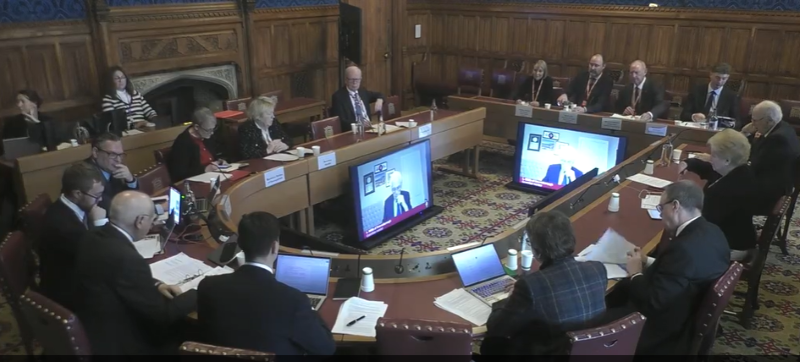
On Wednesday 12 November, the House of Lords Northern Ireland Scrutiny Committee held an evidence session on ‘Veterinary medicines and the Windsor Framework’. Giving evidence to the committee were: Alexander Kinnear, Parliamentary Officer at Ulster Farmers' Union; Kirsten Dunbar, Northern Ireland Branch President at British Veterinary Association, Mark Little, Northern Ireland Branch Honorary Secretary at British Veterinary Association and Bryan Lovegrove, Secretary General at Animal Health Distributors Association.
Setting the scene, Kirsten Dunbar told the Committee that whilst welcoming the work of the Veterinary Medicine Working Group and the development of the Veterinary Medicines Internal Market Scheme and the Veterinary Medicines Health Situation Scheme: “…the situation is still uncertain and the impact will depend on which and how many products are ultimately discontinued.” She added that this was compounded by the fact that: “… front-line practices have not received the detailed Northern Ireland-specific operational guidance that we need to use these schemes consistently and with confidence in day-to-day clinical work once the grace period ends.”
Brian Lovegrove noted to the Committee that currently a farmer can be prescribed vet-strength products (VSP) over the counter by a suitably qualified person (SQP). He said that he was concerned that a lot of discussion in Northern Ireland and in the Windsor Framework is focussed on the vet sector, but that SQPs would be disproportionately affected. He warned that SQPs would not have the same access to alternatives as vets and that at the end of the grace period, SQPs would either have to turn the farmer away or prescribe a larger pack size, adding that this would go against: “… the veterinary medicine regulations, goes against the SQP code of practice…” as overprescribing to the farmer: “… increases the chances of antimicrobial resistance.”
Alexander Kinnear told the committee that there had been disappointment that the issue [of veterinary medicines] had and continues to sit outside of the UK-EU reset negotiations.
Mark Little noted Government estimates that of the 3,000 veterinary medicines currently licensed for supply in Northern Ireland, about 10% to 15% of products will be discontinued – out of which fewer than 20 products would face discontinuation in the category that are likely to result in significant adverse impacts. Mr Little outlined that: “The big point is that we are sitting here in the middle of November, and we still do not know what those 20 products are, due to commercial sensitivity.”
A significant section of the Committee discussion centred upon future requirements that any veterinary medicines entering Northern Ireland from outside the EU would have to go through additional batch testing. Mr Little explained to the Committee that this meant that: “Even if [a medicine] is manufactured in Europe and comes through GB, it is counted as outside of Europe and back in.” He added that this is why it is: “…a better commercialisation for companies, instead of touching soil in Great Britain, to reroute product through Ireland.”
In her final comments to the Committee, Kirsten Dunbar suggested the establishment of an implementation co-ordination group to support the transition. She said that this could support: “…the workability of the schemes via sharing confidential supplier signals, agreeing shared clinical fallback pathways and continuing communications with its SQPs, farmers and animal owners.” She added that this: “… would allow us to be a bit more proactive rather than reactive, because I hope we would get early signs of perhaps a shortage or a new disease coming along…”
You can watch the full evidence session here:
The Veterinary Medicines Directorate also published its Northern Ireland Veterinary Medicines Supplementary guidance on 12 November.
House of Lords European Affairs Committee publishes report on UK-EU reset
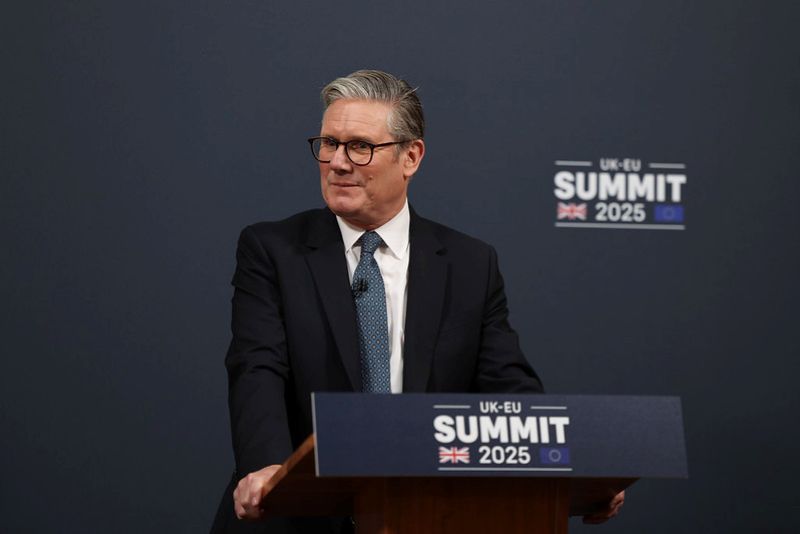
Wednesday 12 November saw the publication of the House of Lords European Affairs Committee’s report on the UK-EU reset.
The report: ‘Unfinished Business: Resetting the UK-EU relationship’ assessed the progress on the Government’s reset objectives in two parts:
- assessing the reset up to and including the May 2025 UK-EU summit; and,
- looking ahead, identifying matters for the Government to consider as it takes forward the summit agenda and looks beyond it, focusing in turn on foreign policy, defence and security issues, including law enforcement cooperation; trade and mobility issues; and overarching implications for Government and Parliament.
The Committee noted in its overall findings that: “The Government's reset of relations with the EU is a process not a single event or a summit, and there is no clarity about the endpoint.”
Further findings and recommendations:
- The Committee welcomes the Security and Defence Partnership (SDP) signed between the UK and the EU in May 2025, recognising the continental security and defence challenges facing the UK and EU and providing a framework for pragmatic partnership cooperation. The success of the SDP will be measured by the degree to which it improves the overall defence and security of Europe.
- Overall, the Government has made progress in achieving its reset objectives. It has negotiated a security pact with the EU. It has also secured the EU's agreement to "work towards" its objectives of a Sanitary and Phytosanitary (SPS) agreement, and an agreement to link the UK and EU Emissions Trading Schemes (ETS).
- The planned new UK-EU agreements on a common SPS area and ETS linkage mean that UK dynamic alignment with EU law is now in prospect. This will have significant implications for Parliament. The Committee looks forward to engaging with the Government on this matter in coming months. It asks the Government to set out how it envisages that a scrutiny system for dynamic alignment would work and how it plans to ensure that Parliament can play a full scrutiny role in this new area of activity.
Speaking after the report’s launch, the Committee Chairperson Lord Ricketts said: “The Government has made a strong start in resetting the UK’s relationship with the EU. But there is still much to be done to turn aspirations into workable agreements of benefit to Britain’s security and economic growth.”
He added that: “The May summit also set the objective of a Sanitary and Phytosanitary (SPS) agreement, to reduce checks on trade in animal and plant products, and a link between the UK and EU Emissions Trading Schemes. But there is a lack of clarity on how these schemes will work, when they will be achieved and the arrangements for parliamentary scrutiny of their impact on the UK economy.”
Lord Ricketts said that there had been less progress on further law enforcement cooperation, help for touring artists, and mutual recognition of professional qualifications. However, he concluded that: “… negotiations are under way with the EU on two programmes which will benefit young people: a youth experience scheme and UK association to the Erasmus+ programme.” You can read the report in full here:
The Committee had previously launched a ‘call for evidence’ in January 2025, to which it received and examined 82 written submissions. It also undertook 15 oral evidence sessions between January and July 2025.
EU-UK negotiations
On Thursday 13 November, the Council of the European Union formally authorised the Commission to open negotiations with the UK on an agreement for a common sanitary and phytosanitary area (SPS) and to link greenhouse emissions trading systems (ETS). You can read the full press release here:
The BBC covered the news in an article ‘Labour to begin talks on admin fees for linking to EU carbon scheme’, while an Evening Standard reported that ‘Starmer and Von der Leyen agree on need for rapid progress on Brexit reset deal’. The UK Government also issued a press release outlining the discussions.
Assembly Round-up

The deputy First Minister was in the Assembly chamber on Monday 10 November where she responded to a question on the supply of veterinary medicine to Northern Ireland following the end of the current grace period in January 2026. The deputy First Minister noted that there had been an indication from the UK government that they are moving in the direction of getting an agreement with the EU, particularly in relation to sanitary and phytosanitary (SPS) measures. She stated that she had raised the issue with the UK government at “every single opportunity” adding that she was calling on the UK Government to: “…act urgently to get the matter resolved immediately and to prevent the grace period from ending and the crisis continuing into 2026.”
During Members’ Statements on Monday, Jemma Dolan MLA highlighted the launch of the ‘Water Enhancements through Sustainable Treatment’ (WEST) project, which she described as: “…really positive news for Fermanagh and our neighbouring counties.” The project, to protect and improve local waterways is a £32 million cross-border initiative between NI Water and Uisce Éireann, funded through the PEACEPLUS programme and managed by the Special EU Programmes Body (SEUPB). Ms Dolan said such projects show: “…the real value of cross-border co-operation, of EU funding and of communities working together to protect what we share.”
On Monday, Daniel McCrossan MLA moved an ‘Opposition Day’ motion on the establishment of an environmental protection agency (EPA), you can read the full motion here:
The Minister for Agriculture, Environment and Rural Affairs, Andrew Muir MLA noted that while he understood that some Members would have concerns around the delay in establishing a new independent EPA, he assured the Assembly that the recent review: “… was critical to understanding the complex environmental governance landscape post EU exit and to charting a practical way forward.” In response to scepticism around the creation of a new environmental protection agency, the Minister said: “… this is not about bureaucracy; it is about delivering effective, accountable and independent environmental protection.”The question was put to the Assembly and the motion passed with 44 ayes to 21 noes.
On Tuesday, the Minister for Agriculture, Environment and Rural Affairs, returned to the Chamber for Question Time. As well as taking further questions on the creation of an independent environmental protection agency, the Minister also responded to questions which included: the Climate Change Act (Northern Ireland) 2022; Bovine Tuberculosis and the supply of veterinary medicines to Northern Ireland.
On the issue of veterinary medicines, the Minister said that he believed that the roll-out of the Veterinary Medicine Health Situation Scheme and the Veterinary Medicines Internal Market Scheme offered: “…sustainable solutions and represent a significant step forward in securing the future of our local veterinary medicines supply.” He added that he would: “…continue to engage with the UK Government and the veterinary medicines working group on the important detail, governance and oversight arrangements to ensure that the schemes deliver the outcomes that they are designed to achieve.”
The Minister was pressed on whether an assessment had been done of the potential cost implications for Northern Ireland practices and farm businesses, the Minister underlined that the matter sits under the direction and control of the Department for Environment, Food and Rural Affairs (DEFRA). He confirmed that he would refer the question directly to DEFRA.
Legislative Consent Motion: Sustainable Aviation Fuel Bill
Also on Tuesday, during a debate regarding the introduction of a Legislative Consent Motion (LCM) on the ‘Sustainable Aviation Fuel Bill', the Minister for the Economy, Dr Caoimhe Archibald said that: “Sustainable aviation fuel production has the potential to generate hundreds of skilled jobs in engineering, logistics and research as the industry grows.”
In support of the motion, David Honeyford MLA noted that: “Excellent research is already being done throughout our universities; our airports and ports are well located; and, uniquely, for us, there is dual market access to the UK internal market and the EU single market.” He added that with the right framework, this could bring a further opportunity here: “…to turn waste and landfill gas into high-value jet fuel instead of into more methane emissions and could create skilled jobs in engineering, logistics and operations that are based here in the emerging industry.”
Commending the motion, Phillip Brett MLA, Chair of the Assembly’s Economy Committee said that during its engagement on the matter: “The [Economy] Committee had noted the potential benefits of the new fuel and the important role that it would likely play in reaching climate change targets.” The motion was passed by the Assembly.
You can catch up on all Assembly debates and Committee meetings either live or via our recorded catch-up service here: or access plenary sittings via the Official Report here:
Departmental Update on Rural Policy Development
On Thursday, the Committee for Agriculture, Environment and Rural Affairs were updated by departmental officials on the progress of Rural Policy Development. Officials underlined that this would be a new Northern Ireland Executive rural policy developed through close collaboration across central and local government, representing a collective approach on how the Executive will seek to address rural needs in the future.
The department noted that it had increased its outreach to gain better understanding of ongoing rural policy work across the UK and Europe. This included, attendance at the recent Rural Futures Network at Newcastle University which brought together a range of practitioners, policy makers and academics from all four UK regions to consider policy approaches. The department also noted its recent participation in the 6th European Rural Parliament in Scotland. Officials added that the event welcomed delegates from over 40 countries: “…to strengthen the diverse voices of rural and island communities across Europe and to ensure that their interests and well-being are reflected in national and European policy.”
Officials further highlighted the importance of co-design and stakeholder engagement for policy development. This included the establishment of three policy co-design working groups under each of the three key strands: Championing rural communities; Understanding rural communities and Supporting rural communities. The working groups submitted their reports in September, and these have now been shared with the Minister. You can watch the evidence session in full here:
Windsor Framework Democratic Scrutiny Committee (DSC) Update:
Also on Thursday, the Windsor Framework Democratic Scrutiny Committee (DSC) agreed to take legal advice and a departmental assessment of the impact of a proposal for a Regulation amending Regulation (EU) 2023/1115 (the EU Deforestation Regulation) as regards certain obligations of operators and traders. The amendment delays the date for compliance by 12 months. Operational obligations will now apply from December 30, 2025, for large operators and traders, and June 30, 2026, for micro- and small enterprises. The Committee further agreed, following proposals from Members, to reach out to both the Ulster Farmers’ Union and the NI Grain Trade Association to make them aware that the proposal had been received by the Committee.
At Thursday’s meeting, the Assembly’s Research and Information Service (RaISe) provided the Committee with a briefing on the European Commission Work Programme 2026. The briefing sought to inform the Committee’s work by identifying those initiatives and proposals in the Commission work programme that might apply in Northern Ireland. You can read the RaISe briefing in full here and watch the Committee meeting in full via niassembly.tv
Coming up in the Assembly this week…
On Monday, the First Minister made a statement to the Assembly on the North South Ministerial Council: Institutional and Plenary Meetings.
At Question Time, the Minister for the Economy, Dr Caoimhe Archibald faced questions on a number of matters, including: the Independent Review of Invest NI.
Members also debated a motion during Private Members’ Business on ‘Challenging the Harm Posed by the Windsor Framework’ – you can read the full text of the motion here:
Meanwhile today, the Minister of Agriculture, Environment and Rural Affairs will bring forward a motion seeking the Assembly’s approval on ‘The draft Farm Sustainability Payment Scheme (Eligibility etc) Regulations (Northern Ireland) 2025’.
The Committee for the Economy will hear from the National Franchised Dealers Association (NFDA) on Wednesday re: car registrations. Regular readers will note that we covered the previous NFDA evidence to the Committee and the Committee’s subsequent correspondence with the Secretary of State in the October 20th edition of Brexit and Beyond.
Parliamentary Planner

A number of Brexit and EU related issues will be discussed and debated across other legislatures this week.
Westminster:
During Northern Ireland Question Time in the House of Commons on Wednesday, the Secretary of State will respond to questions on: progress he has made in supporting
businesses in Northern Ireland that have supply chains in Great Britain; his Department’s assessment on the potential impact of the recent UK-EU agreement on trade from Northern Ireland and on the potential impact of the UK's membership of the European Convention on Human Rights on the Good Friday Agreement.
Also on Wednesday, the House of Commons Northern Ireland Affairs Committee will take evidence from: the Belfast Region City Deal at Queen's University Belfast; Ulster University, the Matrix Panel and the Northern Ireland Chamber of Commerce and Industry on its inquiry into ‘Economic growth in Northern Ireland: new and emerging sectors’.
On Thursday in the House of Lords, Lord Leong will move a motion on the Radio Equipment (Amendment) (Northern Ireland) Regulations 2025.
The Windsor Framework requires that EU Directive 2014/53/EU (“the Radio Equipment Directive”) is implemented in Northern Ireland.
The Regulations aim to adopt common charger standards (like USB-C), require cybersecurity measures for internet-connected devices, and mandate clearer labelling about charging speed and power requirements. These regulations are based on EU directives to ensure products can meet evolving standards and will apply to specific types of equipment as they are placed on the market.
Baroness Hoey will move an amendment to the motion, to insert: “…but that this House regrets that the draft Regulations are being made to give effect to legislation made by the European Commission, without public consultation and without taking account of the needs of small businesses in Northern Ireland.”
Senedd Cymru:
On Wednesday, Plaid Cymru will bring forward a debate on the ‘UK Budget and devolution’.
European Parliament:
The European Parliament will hold its first EU Parliamentary Democracy Forum on Wednesday. The forum will gather Members of EU national Parliaments, MEPs, EU institutions, civil society, youth organisations, and experts. The goal is to share solutions to strengthen EU democracies.
On Thursday, the Committee on Industry, Research and Energy will hold a debate, addressing the negative trade-related effects of global overcapacity on the Union steel market.
Intergovernmental Relations Update
On Tuesday, 11 November, Chris Ward MP, The Parliamentary Secretary, Cabinet Office updated the House of Commons on Intergovernmental Relations which included 57 ministerial meetings between the UK Government and counterparts in Edinburgh, Cardiff, and Belfast. You can read the full text here:
He further noted the Intergovernmental Relations Engagement dashboard which he described as providing: “…transparent information on ministerial meetings between the UK Government and devolved Governments in Scotland, Wales, and Northern Ireland.”
In case you missed it…

• The sixth EU-UK Parliamentary Partnership Assembly (PPA) will be held in London on17-18 November 2025. Members, including representation from the Northern Ireland Assembly, will discuss topics central to the EU-UK relationship. Further information is available here:
• The British-Irish Intergovernmental Conference took place in Farmleigh House on Monday 17 November 2025. Representatives from the UK and Irish Governments discussed a number of issues including: legacy; political stability and British-Irish cooperation. Find out more here:
• RTE reports ‘Post-Brexit record number of Irish passport applications in UK last year’.
• Farmers Weekly reports that Brexit ‘reset’ threatens half of British farmers’ herbicides
• In a new blog post published by the academic think tank ‘UK in a Changing Europe’, Phil Radford explores trade after Brexit and argues that more influential factors than just Brexit explain the UK’s poor economic performance.


