Committee for Agriculture, Environment and Rural Affairs
End of session report 2025-2026
Committee for Agriculture, Environment and Rural Affairs End of Session Report 2025-2026.pdf (809.11 kb)
Remit and Powers
Committee for Agriculture, Environment and Rural Affairs is a Statutory Departmental Committee established in accordance with paragraphs 8 and 9 of Strand One of the Belfast Agreement, under Section 29 of the Northern Ireland Act 1998 and under Assembly Standing Order 48. The Committee has a scrutiny, policy development, and consultation role in respect of the Department for Agriculture, Environment and Rural Affairs and has a role in the initiation of legislation.
The Committee has power:
- to consider and advise on Departmental budgets and annual plans in the context of the overall budget allocation;
- to approve relevant secondary legislation and take the Committee Stage of relevant primary legislation;
- to call for persons and papers;
- to initiate inquiries and make reports; and
- to consider and advise on matters brought to the Committee by the Minister of Agriculture, Environment and Rural Affairs.
Membership
The Committee has nine members, including a Chairperson and Deputy Chairperson, and a quorum of five members. The current membership of the Committee is as follows:
Diana Armstrong MLA (Chairperson)
Declan McAleer MLA, (Deputy Chairperson)
John Blair MLA
Tom Buchanan MLA
Aoife Finnegan MLA
Daniel McCrossan MLA
Michelle McIlveen MLA
Áine Murphy MLA
With effect from 5 January 2026 William Irwin MLA, was replaced by Gareth Wilson MLA, as a Member of the Committee.
With effect from 21 August 2026 Robbie Butler MLA was replaced by Diana Armstrong MLA, as Chairperson of the Committee.
KEY ACTIVITIES, OUTPUTS AND ACHIEVEMENTS
1. This report covers the work of the Committee for Agriculture Environment and Rural Affairs during the 2025 - 26 parliamentary session of 1 September 2025 to 3 July 2026.
PRIMARY LEGISLATION
The Dilapidation Bill
2. The primary aim of the Bill is to provide all Councils with a modern, fit-for purpose Northern Ireland (NI) - wide enforcement regime to deal with the negative impact of dilapidated / dangerous buildings and neglected sites.
3. The Committee held a pre-legislative evidence session with DAERA Officials on 19 June 2025. The Bill was then introduced to the Assembly on 23 June 2025 and completed its second stage on 1 July 2025. The final day of the Committee Stage was 15 May 2026. The Committee considered the Bill at 22 meetings and held 14 oral evidence sessions and ordered its report on the Bill be printed on 12 May 2025. Consideration Stage took place on 16 June, followed by Further Consideration Stage on 30 June. The Final Stage of the Bill took place on 8 September, when it was passed by the Assembly.
4. Overall, the evidence to Committee showed broad support for the Bill’s objective of equipping Councils with modernised and consolidated powers to address dilapidated, dangerous, and neglected buildings in the interest of amenity, public safety, and community wellbeing.
5. While the Committee was broadly content that the Bill addressed the need to update and consolidate existing powers, it highlighted that effective implementation would rely on clear guidance, consistent application across Councils, adequate resourcing, and post-implementation review. The Committee noted that the discretionary nature of the powers, together with the absence of dedicated funding for Councils, may constrain effectiveness in practice.
6. The evidence also highlighted consistent concerns regarding Councils’ capacity and financial sustainability; the need for clarity around definitions and thresholds; the importance of ensuring that powers are applied proportionately and consistently across Council areas; and reservations that the discretionary nature of the powers limiting the Bill’s practical impact.
7. The Department accepted the Committee proposal for a new Clause for Review to allow the Assembly and future AERA Committees to assess the effectiveness of implementation. The Committee also recommended that the Department continues meaningful engagement with local government who need to implement the Bill’s powers effectively and consistently.
8. The Department accepted the Committee’s concern that the EFM did not adequately address potential financial impacts on Councils, and it was amended with revised wording. The Committee also recommended that future EFMs include fuller assessments of direct and indirect financial impacts and that future Bills be accompanied by details of any legislative repeals and replacement provisions at the outset of Committee Stage.
9. The Committee recommended strengthening the Statutory Guidance to provide clearer direction for Councils and the public.
10. The Committee noted that, following recommendation from the Department for Communities, the AERA Minister agreed to amend the title of Clause 11 to avoid confusion with the Defective Premises (NI) Order 1975.
Bills currently at Committee Stage:
The Areas with Natural Constraints (Payments) Bill (Member’s Bill)
11. The Bill proposes the reintroduction of payments to farmers operating in Areas with Natural Constraints (ANCs) to compensate them for all, or part, of the additional costs and income foregone due to farming constraints in ANCs; to alleviate the burden of production costs in these environments; address the reduction in agricultural opportunities; and better promote equality of opportunity for farmers in these areas.
12. The Bill was introduced by Declan McAleer MLA on 16 February 2026. It completed its Second Stage on 23 March 2026 and was referred to the Committee on 24 March 2026. The Committee’s Call for Views closed on 6 July 2026.
13. The Committee took oral evidence from RaISe on the policy aspects and potential issues on 28 May 2026 and from the RaISe Public Finance Scrutiny Unit on the potential cost implications on 4 June 2026. Due to its constrained timeframe until the end of the mandate, the Committee commenced taking oral evidence (UFU, NI Sheep Association and NI Sheep Taskforce) on 18 June 2026, prior to the conclusion of the Call for Views on 6 July 2026.
Hunting with Dogs Bill (Member’s Bill)
14. The Bill proposes to prohibit the use of dogs to hunt, attack, or kill wild mammals and close off any potential loophole where trail hunting is used as a cover for illegal hunting. The Bill was introduced by John Blair, MLA on 27 March 2026. It completed its Second Stage on 26 May 2026 and was referred to the Committee on 27 May 2026. The Committee sought its own legal advice over the summer recess and will commence oral evidence sessions in September 2026.
The Fisheries, Aquaculture and Water Environment Bill (Executive Bill)
15. The Bill covers two main policy areas - Fisheries and Aquaculture; and the Water Environment and aims to develop policies to improve water quality and ecosystem health, promote sustainable fish stocks, and ensure appropriate enforcement measures.
16. The main purpose of the Bill is to update current fisheries legislation to modernise and implement NI’s fisheries policies to ensure that commercial and recreational fishing is undertaken at sustainable levels.
17. Following a Pre-Introductory Briefing from DAERA Officials on 11 June 2026, the Bill was formally introduced on 22 June. On completion of Second Stage on 30 June, the Committee Stage commenced on 1 July, and the first oral evidence sessions are scheduled to commence on 15 September. On 2 July, the Committee agreed to a Motion to Extend the Committee stage to 5 February 2027 which was carried in Plenary on 8 September.
SUBORDINATE LEGISLATION
18. Regarding subordinate legislation, the Committee scrutinised policy proposals (SL1s), Statutory Rules (SRs), and Statutory Instruments (SIs), including approving 14 pieces of secondary legislation. A selection is now outlined.
Sustainable Agriculture Programme (SAP)
19. The DAERA SAP is designed to transition farming to improved environmental sustainability, enhanced productivity, stronger resilience, and an effective functioning supply chain, while providing supporting to the agri-food sector. Related secondary legislation scrutinised included:
- The Farming for Sustainability Innovation Payments Regulations (Northern Ireland) 2025;
- The Farm Sustainability Standards Regulations (Northern Ireland) 2025; and
- Farming with Nature Scheme (Amendment) Regulations (Northern Ireland) 2026.
Dangerous Dogs
20. The Dangerous Dogs (Compensation and Exemption Schemes) (Amendment) Order (Northern Ireland) 2026 removed the legal requirement to have third-party liability insurance in place for prohibited breeds and also introduce a new exemption condition which requires that children under the age of 12 not be left in close proximity to a prohibited breed in a home or private setting without adult supervision.
21. As the third-party public liability insurance benefit provided through the Dogs Trust was due to end on 30 June, the Committee agreed the Minister’s request to an expedited Committee scrutiny process and subsequently agreed that it was content for the Department to make the legislation thus bringing NI in line with the rest of the UK.
Environmental Legislation
22. The Committee scrutinised subordinate legislation stemming from the Climate Change Act (Northern Ireland) 2022, including:
- The Climate Change (Just Transition Commission) Regulations (Northern Ireland) 2026 to establish an advisory Non-Departmental Public Body, the “Just Transition Commission”, to assist NI departments to have regard to the just transition principle when developing and delivering emissions reduction policies included in sectoral plans and climate action plans, in accordance with section 37 of the Act.
- The Environmental Protection (Wet Wipes Containing Plastic) Regulations (Northern Ireland) 2025; and
- Air Quality (Amendment) Regulations (Northern Ireland) 2026.
SRs Prayed Against by the Committee
23. The Committee did not pray against any SRs during this session. However, there was consideration given to praying against The Shellfish Gathering (Conservation) Regulations (Northern Ireland) 2026, which proposed to introduce a closed period each year to prohibit the taking of periwinkles from the inter-tidal area during the period 1 January to 30 April, in any year. On 15 January 2026, the Committee had agreed the SR, subject to the report of the Examiner of Statutory Rules, following evidence from Officials that the ban would have limited impact on the industry.
24. However, stakeholders then provided contrary evidence of impact thus leading the Committee to undertake further scrutiny and take evidence from industry and from DAERA Officials in response. Following the evidence session the majority of the Committee Members present agreed to put down a Prayer of Annulment.
25. In response the Minister revoked the SR and submitted a new SL1 proposing to introduce an annual closed period within the confines of the Strangford Lough Special Area of Conservation, rather than the full intertidal area. There was then no need for the Committee to move its Prayer of Annulment Motion. This process demonstrated the effectiveness of the role of the Committee in scrutinising subordinate legislation.
LEGISLATIVE CONSENT MOTIONS (LCM)
Biodiversity Beyond National Jurisdiction (BBNJ) Bill
26. On 11 December 2025, the Committee agreed to support the Minister in seeking the Assembly’s endorsement of the LCM. Following publication of the Committee report on 12 December 2025, the LCM was debated in Plenary on 12 January 2026.
27. The Bill facilitates the UK’s implementation of the international BBNJ Agreement under the United Nations Convention on the Law of the Sea, covering marine genetic resources, area-based management tools, and environmental impact assessments in Areas Beyond National Jurisdiction (ABNJ).
28. It provides provision for the designation of Marine Protected Areas in ABNJ; regulates the sharing and use of marine genetic resources including marine DNA for use in medicinal research; and amends existing regulatory regimes.
Second Biodiversity Beyond National Jurisdiction (BBNJ) Bill
29. On 22 January 2026, the Committee agreed to support the Minister in seeking the Assembly’s endorsement of the LCM which was then debated in Plenary on 26 January 2026.
30. At the House of Lords Report Stage on 12 January the UK Government secured agreement to a series of amendments inserting six new clauses into the Bill strengthening arrangements for implementing decisions that affect devolved matters by providing concurrent powers plus a statutory consult mechanism.
31. The Amendments permit Scottish Ministers and DAERA to legislate in parallel to UK Ministers under these clauses to implement decisions taken at the BBNJ Conference of Parties; and the exercise of power under these clauses by a UK Minister must be conducted in consultation with Scottish Ministers and DAERA where they impact devolved competences.
32. The Committee welcomed the amendments to the Bill as it will provide more opportunities for the Assembly to scrutinise the development of the regulations.
COMMITTEE MOTIONS
Over the course of this parliamentary session the Committee has taken three motions to the chamber for debate:
1. A Motion to extend the Committee Stage of the Areas with Natural Constraints (Payments) Bill to 21 January 2027. The Motion was carried in Plenary on 5 May 2026
2. A Motion to extend Committee Stage of Hunting with Dogs Bill to 5 February 2027. The Motion was carried in Plenary on 23 June 2026.
3. A Motion to extend committee stage of Fisheries and Water Environment Bill to 5 February 2027. The Motion was carried in Plenary on 8 September 2026.
INQUIRIES
33. The Committee has not conducted any Inquiries over the course of this parliamentary session.
POLICY SCRUTINY
34. The Committee focused its policy scrutiny by theme to ensure a balance of policy areas, as far as possible, within its extensive remit. Issues for Committee focus were agreed following a Strategic Planning Meeting on 6 November 2025.
35. During this session, the Committee commissioned and considered ten research papers from the Assembly RaISe to inform its scrutiny on a range of topics including Anaerobic Digestion in NI; Odour Assessments - the use of sniff tests by local authorities in England, Wales, Scotland and Ireland; and Aquaculture an overview of the current scale and value of aquaculture within the UK and Ireland. These RaISe papers are published on the Committee webpages.
36. In addition, the Committee also invited interested groups and organisations to brief Members and engaged in external visits to understand the issues first hand and raise the profile of the Committee’s work across NI.
37. The following areas of policy scrutiny are listed alphabetically.
Agri Food
38. The Committee continues to consider the vital importance of food security and recognises the interconnectedness between food, health, the economy, the environment, and sustainability.
39. Regarding Nature Friendly Farming - on 2 October 2025, the Committee took evidence from representatives of the Nature Friendly Farm Network and then visited Dobbs Farm in Carrickfergus to learn more about how farmers cultivate food in an environmentally-friendly way, with reduced use of chemicals and pesticides and sell locally.
40. On 30 April 2026 Committee Members attended the launch of the Economic Impact Assessment report, commissioned by the Northern Ireland Food and Drink Association (NIFDA) highlighting the fundamental role of the sector in driving regional economic growth, sustaining rural communities, and strengthening food security and resilience.
Animal Welfare and Health
41. The Committee has paid particular attention to animal welfare and health considerations including bTB, avian influenza (HPAI), and bluetongue virus. The Committee also examined whistleblower allegations concerning animal welfare and farming practices at AFBI's Hillsborough research farm. The Committee was briefed by AFBI Officials on 29 January 2026 on the issue and then on 5 March 2026 the Committee questioned the Minister on his efforts to restore farmers confidence in the matter.
42. On 27 April 2026, the Committee considered a briefing on the consultation on the Animal Welfare Pathway 2025-2027 aimed at improving animal welfare standards, includes the regulation of rescue and rehoming organisations and a ban on specific aversive training devices.
43. The Committee held an urgent meeting during recess on 10 August 2026 to take evidence from the Minister and his Officials on the DAERA led cattle cull in Co Tyrone in June. The Committee will continue to engage closely in this matter in the next session and awaits the publication of the independent review report.
44. The Committee remains concerned at the longstanding financial, physical, and mental health impacts Bovine TB (bTB) has had on the farming community. The DAERA budgetary challenges of the past year unfortunately remain familiar to the Committee and that despite the projected increase to £56m in the 2025/ 2026 financial year, the level of compensation does not cover the full income lost as it takes time to rebuild a herd, nor account for the emotional distress.
45. The Committee received DAERA briefings on the ‘Bovine Tuberculosis in Northern Ireland: Blueprint for Eradication’ containing actions to reduce herd incidence by 2% by 2030, to halve bTB levels by 2040, and achieve eradication by 2050.The Committee recognises that some actions require further policy development and new or amending legislation.
46. On 2 December 2025, the Committee held an informal meeting with stakeholders on the continuing impact of bTB. On 2 July 2026, the Committee noted the launch (on 3 July) of the 12-week public consultation on Potential Wildlife Intervention Options as part of the Blueprint for Eradication. The Committee looks forward to being briefed on the outcome of the consultation and next steps in due course.
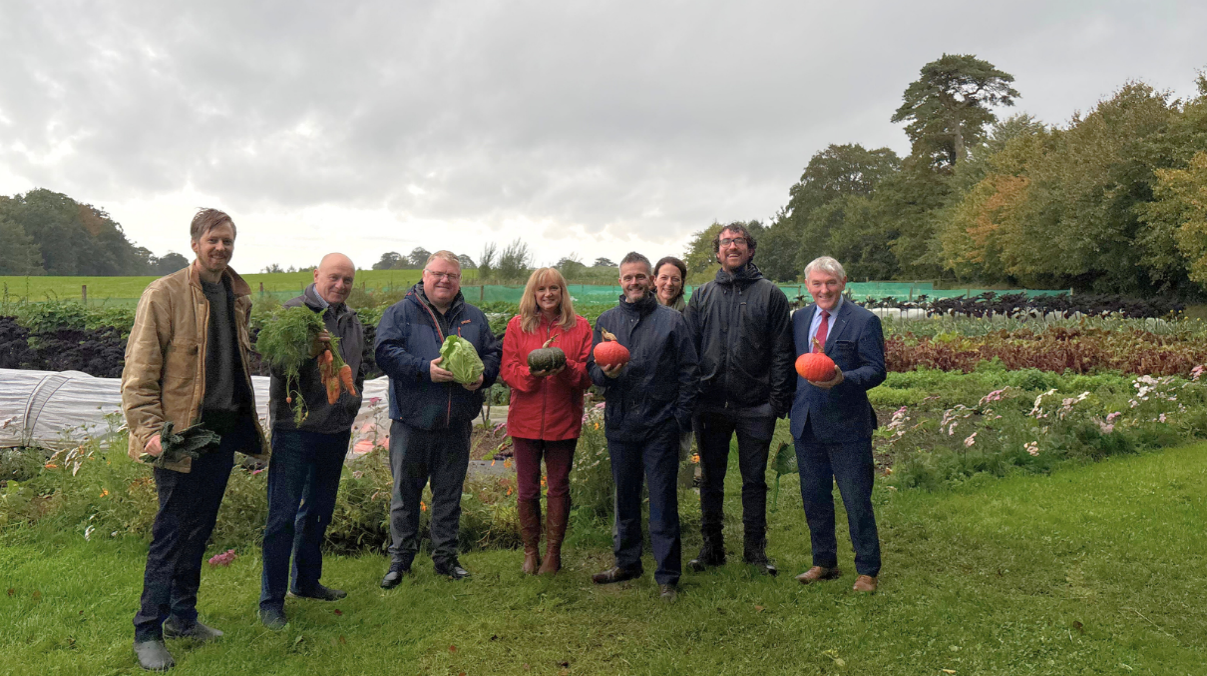
Aquaculture, Marine & Fisheries
47. As stated earlier, the Committee commissioned a RaISe paper on Aquaculture overview – UK and Ireland, on the current scale and value of aquaculture within the UK and Ireland and received an oral briefing from RaISe Officials on 11 September 2025. The Committee also received a briefing on the “All Island Marine Bio-based Refineries for Circular Blue-Bioeconomy” (AIMBIO) collaborative project to accelerate transition to sustainable marine bio-based production systems and identify opportunities for growth and further development of aquaculture in NI.
48. The Committee visited the Lough Neagh Eel Fisheries on 26 March 2026 and heard from the Lough Neagh Fishermen’s Co-operative Society of the challenges facing the industry, including water quality issues in Lough Neagh.
49. The Committee continued to consider fishing workforce issues, and on 25 June 2026 visited Portavogie Harbour, where it took evidence from Northern Ireland Fish Producers Organisation and Northern Ireland Fisherman’s Federation (representing The Anglo-North Irish Fish Producers Organisation). The Committee heard of a range of significant challenges currently facing the fishing industry, including spatial pressures; the loss of access to key fishing areas such as Isle of Man (IOM) waters; concerns regarding proposed Marine Protected Areas (MPAs); workforce, and visa constraints; and rising operational costs. The Committee then contacted the IOM government seeking practical and proportionate solutions that would allow continued access for NI vessels while respecting the IOM’s regulatory framework.
Climate Change
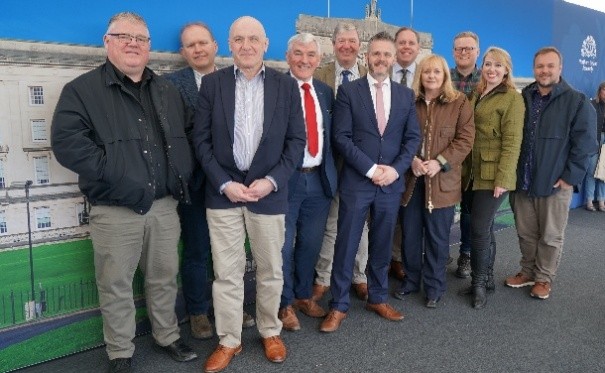
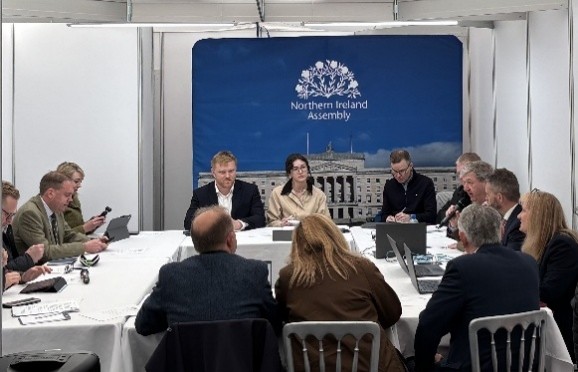
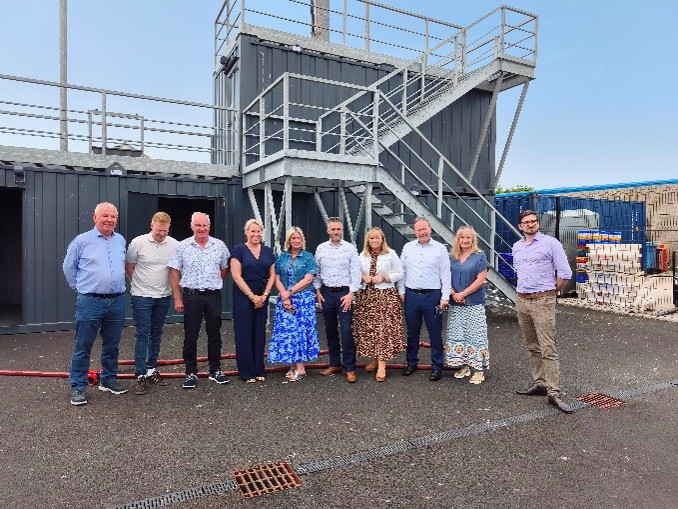
50. The Committee has continued to scrutinise the Just Transition element of the Climate Change Act 2022, including The Climate Change (Just Transition Commission) Regulations (Northern Ireland) 2026. These establish the Just Transition Commission, which will to assist NI departments to have due regard to the just transition principle when developing and delivering emissions reduction policies.
51. The Committee noted that the Commission includes two members from the environmental sector, three members from the agricultural sector and that following the Consultation the Department included a recommendation for a separate representative of the rural community. Over the course of this mandate the Committee heard from Rural Networks and Support Groups of the needs of rural communities and intends to ensure that during the ‘just transition’ rural areas should not be left behind or be disproportionately affected.
52. In relation to NI’s first Climate Action Plan (CAP), a session was planned for June 2026 with DAERA Officials to consider a series of DAERA briefings on agriculture; Land Use - Land Use Change - and Forestry (LULUCF); fisheries and waste. Unfortunately, this did not go ahead as planned and in the forthcoming session the Committee intends to return to these matters.
Environment
53. The Committee continues to monitor the issues at Lough Neagh and on 5 February 2026 it held an oral evidence session with Officials on the progress of the implementation of Lough Neagh Action Plan. It heard that 15 out of 37 actions are completed and the remaining 22 are progressing. It was agreed that any future updates should also include actions by NI Water. Subsequently the Committee held a joint concurrent meeting with the Committee for Infrastructure on 21 April and took evidence regarding actions NI Water is taking to assist the recovery of Lough Neagh.
54. The Committee has continued to engage with the Office of Environmental Protection (OEP) and held an informal online meeting on 5 May 2026 with Professor Robbie McDonald, to discuss the OEP’s role in examining the legal overarching obligations and assessment of how the current NAP Regulations are working. Professor McDonald stressed the importance of dealing with both wastewater and farming pollution together.
55. On 24 June 2026, the Chair sponsored the OEP Launch of the first statutory report on the Executive’s progress in improving the natural environment in accordance with the Environmental Improvement Plan since its approval in September 2024.
56. The remediation of the illegal waste dump at Mobuoy continues to be of concern and the Committee will continue to scrutinise the development of The Mobuoy Remediation Project and looks forward to the completion and implementation of a final remediation strategy.
57. As part of its scrutiny of Waste Management the Committee visited the Enva Recycling and resource recovery facility in Toomebridge on 26 March 2026 to see at first hand its work in specialist waste management and the circular economy in action.
58. The Committee raised concerns with the Minister on the issue of littering/fly tipping on roads and private land, particularly in rural areas. At its meeting on 26 February 2026, the Committee agreed to write to the councils to request details on the approach they are taking in dealing with the issue and also requested details on the Department’s approach. The Committee were pleased that the Minister is committed to the development of NI’s first Litter Strategy.
Farm Payments and Support.
59. The Committee has had numerous evidence sessions with DAERA Officials regarding DAERA’s farm support within the Sustainable Agriculture Programme (SAP).
60. The Committee scrutinised the Farm Sustainability Payment in September 2025, which aims is to encourage farms to become more efficient, resilient, and environmentally and it replaced the current Farm Sustainability Transition Payment on 1 January 2026. Most recently, on 2nd July 2026, the Committee were briefed by officials on the development of the Generational Renewal Policy Response and the Farming for the Generations Scheme, anticipated to launch in November 2026.
61. The Committee will continue to scrutinise the policy and schemes to monitor if they are meeting the aims of farm business continuity, generational renewal and long-term sustainability - to ensure succession planning is a normal part of farm business planning and provide successors with the opportunity to develop skills, knowledge, and experience; and give the opportunity for Farm Business with younger farmers to receive financial support.
NIEA / Forest Service
62. The Committee continued to scrutinise the Department’s efforts to accelerate peatland restoration through the Peatland Strategy Delivery Plan to support the 30by30 nature recovery target.
63. On 2 July 2026, the Committee considered the Forest Service Business Plan 2026/27 which includes the Tree Planting Action Plan outlining actions to enable accelerating woodland creation to achieve afforestation targets of 12% forest cover by 2050. The Committee was pleased to note that the Department has set out a position on managing the challenges arising from potentially competing targets from peatland restoration and afforestation.
NIEA Planning Delays
64. This has been a continuing area of focus for the Committee, having heard evidence from the farming community that delays in proposals for new or replacement agricultural buildings are impacting on farmers efforts to improve water quality and reduce ammonia levels.
65. At its meeting on 5 February 2026 the Committee expressed its ongoing concern about delays to planning applications and it was proposed that the Committee take evidence from the Planning Statutory Consultee Forum at a concurrent meeting with the Infrastructure Committee. This took place on 21 April. The Committee heard the challenges included staffing and financial resources; quality of applications received; IT system issues, and complexity of applications. Officials advised that the findings of the investigation into improving the planning portal IT system would be shared with Members.
66. The Committee will keep a watching brief on relevant planning matters and will monitor the progress of the NIEA Planning Improvement Plan 2025-26 focusing on technical guidance, caseload management, performance monitoring, processes and IT systems, and stakeholder engagement.
Nutrients Action Programme (NAP)
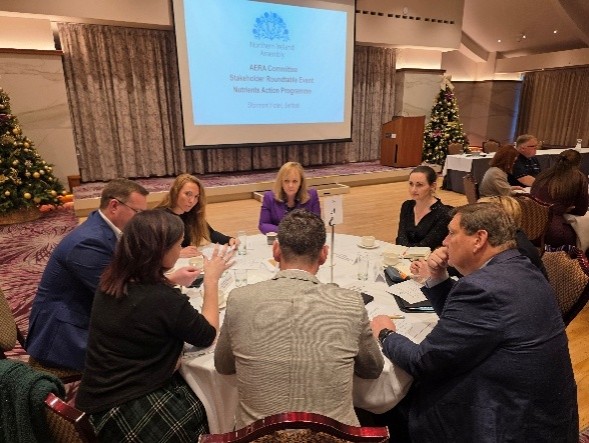
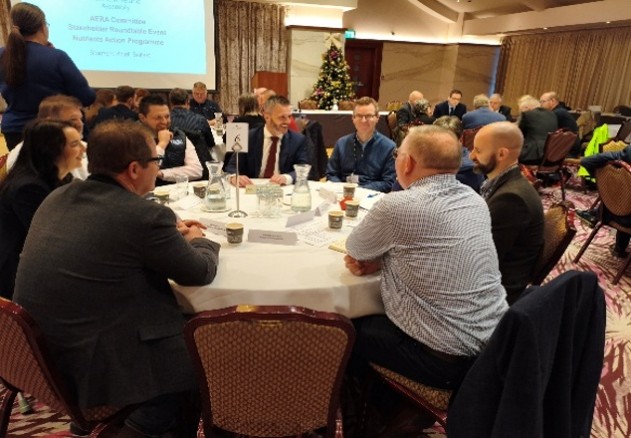
67. On 13 November 2025, Committee held an informal stakeholder event to allow Members to hear from the environmental and farming sectors on the Department’s Nutrient Action Programme (NAP) 2026-2029. The sectors thanked the Committee for bringing them together to discuss the issues.
68. The Committee was pleased that the Minister recognised the concerns and so set up the Stakeholder Task and Finish Group to bring together farming, food processing and environmental interests that would help develop recommendations for the next Nutrients Action Programme.
69. On 2 July 2026, the Committee held an oral evidence session with Officials providing an update on the launch of the consultation on the Nutrients Action Programme 2027-2030 and will receive further updates in the next session.
Odour Assessments
70. Following a series of complaints from a range of areas concerning odour-related issues, the Committee commissioned a Research paper from RaISe on the use of “sniff tests” by local authorities in Great Britain and the Republic of Ireland, which was presented at the Committee’s meeting on 18 September.
71. Subsequently, the Committee agreed to pursue the matter further and wrote to all local authorities across NI to request information relating to responses and actions relating to odour complaints. The Committee also sought updates from NIEA on its approach to odour assessments and note NIEA officials have begun a project to produce updated NIEA odour guidance.
Rural Affairs
72. The Committee ensured that it did not overlook the rural affairs aspect of its remit and sought updates on the Department’s Tackling Rural Poverty and Social Isolation (TRPSI) Framework as well as improved access to services, transport, and health; and a recognition that policies need to consider the diversity within rural areas.
73. It held an evidence session with the Department’s Rural Policy Unit on 13 November 2025 on the progress of the development of long-term strategic policy proposals titled Rural NI: Our New Approach 2026-2041, which will include a formal review of the Rural Needs Act (NI) 2016. The Committee looks forward to the outcome of the consultation and the way forward.
74. The Committee appreciates the disproportionate impact on rural communities of recent higher fuel costs on access to essential services, employment, and healthcare and the undermining of farm resilience and profitability. On 5 May, in recognition of the crosscutting nature of the issue, it held a joint informal meeting with the Economy Committee to discuss ways to alleviate the impact.
75. While appreciating that fuel price increases are driven by global factors and are largely outside DAERA’s direct remit, the Committee pressed the Minister to call on the UK government to cut fuel duty. The Committee recognises that UK government support is vital given the wider impact on food security given that NI contributes a disproportionality high percentage of the UKs food relative to its size.
Science; Innovation and Energy Creation
76. Over the course of the session the Committee has examined how science and innovation can support a more sustainable, productive, and environmentally responsible agriculture sector in NI. The Committee has continued to scrutinise the benefits of the Small Business Research Initiative, in particular in addressing water quality issues and nutrient management.
77. The Committee examined how Anaerobic Digestion (AD) could contribute to a more sustainable and resilient agri-food sector, by transforming agricultural wastes into renewable energy and reusable nutrient products.
78. The Committee has taken a keen interest in the area of energy creation and at a briefing from Officials on the Waste and Resources Common Framework on 25 September 2025 the Committee heard that the exportation of waste, due to having insufficient infrastructure, is an area of concern as NI is not accessing the financial benefits derived from energy recovery.
79. On 16 December 2025, the Committee was updated by Officials on the Sustainable Utilisation of Livestock Slurry (SULS) Phase 2 and is pleased to note that it continues to have positive feedback from the industry and that the project end date has been extended to September 2028.
80. The Committee, having visited several AD sites over the course of the Mandate, appreciates the potential to develop AD as a means to generate an alternative source of energy
81. At the Balmoral Show on 14 May 2026, the Committee held an oral Evidence session with the QUB Centre for Advanced Sustainable Energy (CASE) and heard of the opportunities for rural communities to benefit from transition to green energy and the scale of opportunity that the production of biomethane through AD could bring to meeting NI energy needs. The Committee highlighted to the NIEA to the need for wider stakeholder engagement to develop a strategic plan in support of AD and green growth.
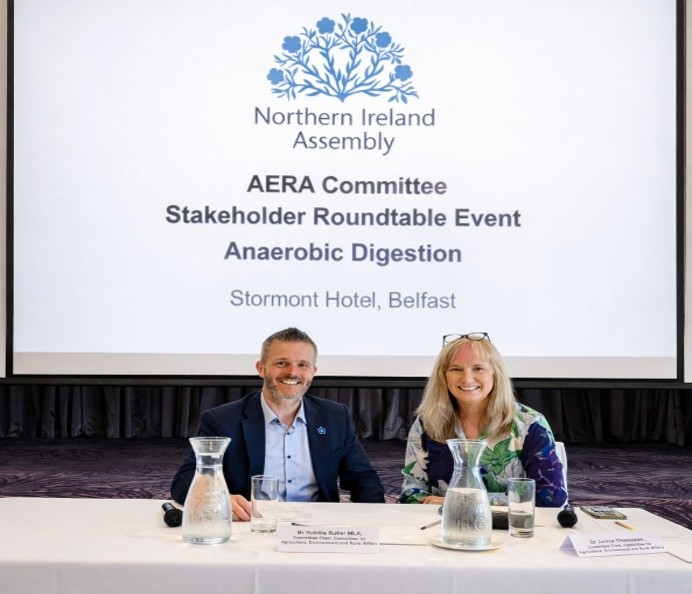
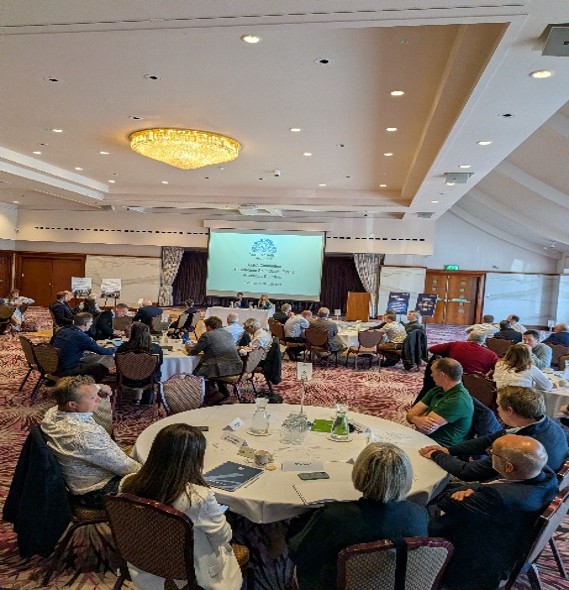
82. The Committee then held a well-received AD stakeholder event at the Stormont Hotel on 4 June 2026 to bring environmental, farming and bioenergy sectors together to inform future policy development and evaluate the use of ADs.
BUDGET SCRUTINY
83. The Committee considered DAERA’s allocations through oral evidence from Officials at June and December monitoring. On 27 November 2025, the Committee held an oral evidence session with DAERA Officials on the December Monitoring Round and on the 29 January it considered the DAERA 2025-26 Spring Supplementary Estimate Memorandum and Supplementary Estimate, outlining variances and key drivers of spending changes since the 2025-26 Main Estimate and an explanation of spending trends since 2023-24.
84. The Committee agreed it was not ideal to have a Monitoring Round in December rather than October but recognised that the delay was down to the lateness of the Chancellor’s Autumn Budget Statement. The Committee also regularly considered the revised Outturn and Forecast Outturns documents.
85. The Committee would have welcomed being able to scrutinise a multi-year budget for strategic planning and transformation, as the lack of multi-year budgets has been cited by organisations and rural groups that have come before Committee as a significant issue for forward planning. The Committee did not take a position on the draft multi-year budget at the debate on 11 May 2026 as DAERA Officials had not given evidence to Committee and gave the explanation that they were continuing to work through the draft budget with the Minister.
86. The Committee noted that after providing funding for departmental baselines, oversight bodies etc. there remained £1.3 billion, £1.8 billion, and £2.3 billion, over the three years, to honour previous Executive commitments, including agriculture, agri-environment, fisheries, and rural development.
87. Over this session, the AERA Committee has highlighted the need for long-term ring-fencing of the agri-budget; the desire of young people to get into and stay in farming; the support needed for nature friendly farming and improving the environment; the support needed for the fishing and aquaculture industries; and the need to deal with bTB, given the increasing costs of that programme.
88. The Committee is aware of the continuing budgetary pressures including implementing the Windsor Framework, rural development funding, and climate actions. As in previous years, of concern was the inadequate allocation for tackling bTB and compensation payments (a statutory obligation). The Committee noted that the bTB compensation projection was £47·4 million for 25/26 - an increase of £4·3 million on 24/25 and meant that the overall cost for tackling bTB would reach over £65 million in 25/26.
89. At this point in the mandate the Committee understands that from 1st August the DoF Permanent Secretary has taken on powers in accordance with the Government Resources and Accounts Act (Northern Ireland) 2001 and the Northern Ireland (1998) Act, to authorise departmental spending up to 95% of the total opening Budget for the previous financial year.
90. The Committee understands that Departments are still operating under the February Vote on Account which was agreed as part of the Budget (NI) Act 2026, allowing them to spend 45% of their 2025-26 opening Budget. The Committee will be requesting a Budget briefing from DAERA Officials as soon as possible, regarding what DAERA has been told regarding the UKG allocation for 2026-27.
WINDSOR FRAMEWORK
91. The Committee continues to scrutinise the impact of the Windsor Framework (Implementation) Regulations 2024, as during the session there were currently 19 areas subject to the direction and control of the Secretary of State. It was regularly copied into correspondence between Secretaries of State and the House of Lords NI Scrutiny Committee.
92. The Committee appreciates that it is the role of the Democratic Scrutiny Committee, rather than statutory committees, to examine and consider proposed new EU acts, and proposed and published replacement EU acts. However, the Committee will continue to consider EU exit related issues that fall within the functions of DAERA.
93. The supply of Veterinary Medicines was of particular concern to the Committee and the possible future impacts to animal and human health following the end of the grace period for distribution from GB into NI on 31 December 2025. On 27 November 2025, the Committee considered a written briefing commissioned from the Assembly EU Affairs Manager and were also briefed by the representatives of the North of Ireland Veterinary Association (NIVA). It was pleased to note that the Veterinary Medicines Working Group reported that no major disruption to veterinary medicine supplies occurred immediately after the end of the grace period.
COMMON FRAMEWORKS
94. The previous AERA Committee scrutinised nine of the 15 Common Frameworks (CFs) for which DAERA is the NICS lead. This Committee agreed to arrange evidence sessions with Officials on the six remaining CFs to identify any issues and potential further scrutiny. In this session the Committee scrutinised the following:
- BAT (Best Available Techniques) Emission - the Committee were first briefed on 20 March 2025 and on 26 February 2026 it agreed that it was content with the CF.
- Ozone Depleting Substances & F-Gases - the Committee were also briefed on 20 March 2025 and on 26 February 2026 it agreed that it was content with the CF.
- Waste and Resources Common Framework – following a briefing from Officials on 25 September 2025 the Committee agreed that it was content with the CF.
- Air Quality Common Framework- the Committee were briefed by Officials on 16 October and following further scrutiny on 11 December 2025 it agreed it as content with the CF.
ENGAGEMENT
95. The Committee held 41 meetings in the 2025-2026 Session, of which five were external (and included visits). It received evidence from 244 witnesses from 33 organisations with 26 meetings remaining in public session for the entirety of the meeting, with the remaining having 15 closed sessions dealing with matters such as restricted legal advice and advice from the Assembly Bill Office.
The Committee held two events and five visits throughout the year as detailed below:
Event: Nutrients Action Programme Stakeholder Event - 13 November 2025.
96. The Committee held an informal event at the Stormont Hotel to bring together representatives from environmental; farming and agri food sectors to hear perspectives on the Department’s proposed Nutrient Action Programme (NAP) 2026-2029.
97. The Committee was grateful to the stakeholders that participated in this engaging and constructive event. Attendees were able to explicitly agree on a shared ambition for better water quality and feedback provided was shared with the Department to inform and support the Minister’s policy direction regarding the NAP proposals.
Event: Anaerobic Digestion (AD) Stakeholder Event – 4 June 2026.
98. In order to inform future policy development and also its work evaluating the use of AD the Committee held an informal event at the Stormont Hotel with a range of stakeholders from agricultural, environmental, energy, academic, and government backgrounds to discuss the challenges and opportunities of the use of AD on farms and on an industrial scale.
External Meetings and Visits.
99. 2 October 2025 - Carrickfergus Marina Conference Suite. The Committee held its weekly meeting at the marina and then visited Dobbs Farm outside Carrickfergus. Members learnt more about the benefits being part of the Nature Friendly Farming Network, which encourages practices that restore rural environments, regenerate ecosystems, and protect biodiversity. The Committee then visited Carrick Greengrocers - a community-owned greengrocer selling as much locally grown and in-season food as possible.
100. 23 October 2025 - Titanic Hotel, Belfast. The Committee held its weekly meeting at the Titanic Hotel and was briefed by Officials on the Wildfires in NI Strategic Framework 2025-2030.
101. 26 March 2026 - Lough Neagh Fishermen’s Co-Operative Society, Toomebridge. The Committee held its weekly meeting at the Co-Operative Society in Toomebridge and were briefed on issues related to eel regulation and DAERA financial support. Members were also briefed by the Northern Ireland Meat Exporters Association, ABP Food Group and Dunbia on the issue of proposed changes to the Sheep Carcase Classification legislation.
Members then visited Enva, a company providing recycling and resource recovery services, to learn more about the recycling of household appliances.
102. 14 May 2026 - Balmoral Show, Eikon Centre. The Committee held its weekly meeting at the Show and took evidence from the Centre for Advanced Sustainable Energy (CASE), on renewable energy and the development of a circular and sustainable economy.
103. Committee Members also took part in an informal meeting with Members of the UK Parliament’s Environment, Food and Rural Affairs (EFRA) Select Committee to discuss the implications of the conflict in Iran on fuel and fertiliser prices; and the impact of agriculture and the food industries on waterways and loughs.
104. 25 June 2026 - Portaferry Hotel. The Committee held its weekly meeting at the Portaferry Hotel and heard evidence from the Northern Ireland Fish Producers’ Organisation (NIFPO) and the Anglo North Irish Fish Producers’ Organisation (ANIFPO) on current issues facing the fishing industry, including sustainability, workforce challenges, access to markets and the impact of regulatory changes. The Committee then had an opportunity to visit the seal sanctuary at the Exploris Aquarium before travelling to Portavogie Harbour to meet local fishermen, allowing them to hear first-hand about the day-to-day realities of the industry and the challenges facing local fleets.
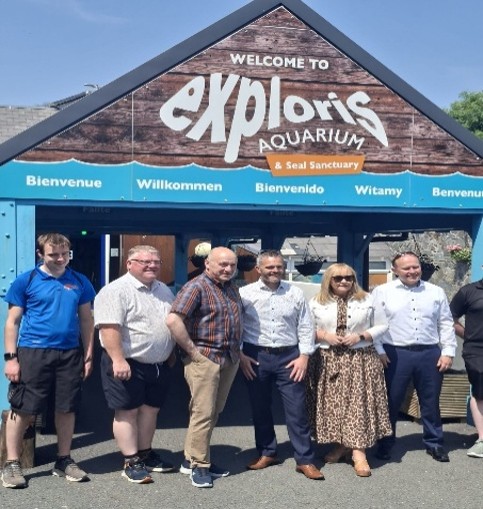
A range of Informal Meetings were held, including:
105. 03 November 2025 - The Chair and Deputy Chair held an informal meeting with the Ulster Farmers’ Union to discuss a vote of no confidence in the Department that has been unanimously passed by the Ulster Farmers’ Union Executive committee meeting on 29 October 2025.
106. 2 December 2025 - Members held an Informal discussion with stakeholders to hear of the continuing impact of Bovine TB (bTB) on the farming community and contribute to the Committee’s ongoing scrutiny of the Department’s work to tackle the disease and support affected farmers.
107. 15 May 2026 - Members of the Committee held an Informal discussion with Members of the Economy Committee on the impact on farmers and rural communities of rising price of fuel and fertiliser.
108. 12 May 2026 - Members of the Committee and representatives from the Office for Environmental Protection (OEP) had an informal online discussion between regarding its report on the Nutrient Action Programme Regulations (2019).
109. 14 May 2026 - Members of the Committee and Efra Committee held an informal round table discussion regarding areas of common interest at the Balmoral Show.
110. 26 May 2026 - A number of Committee Members held an Informal discussion with representatives from Bonds Glen Environmental Group to discuss concerns regarding what it describes as destruction of Sperrin AONB and Special Area of Conservation.
111. 8 June 2026 - Members of the Committee, Departmental Officials, and representatives from NIMEA, Dunbia, ABP Food Group and UFU had an informal meeting to discuss ongoing concerns regarding SL1- The Sheep Carcase Classification and Price Reporting Regulations (Northern Ireland) 2026.
112. 15 June 2026 - Members of the Committee and representatives from the UFU had a meeting to discuss the economic impact and animal welfare implications for NI pig producers affected by ongoing uncertainty around supply contracts for Sofina Foods.
113. 3 August 2026 - The Chair and Deputy Chair had an informal online meeting with the Minister and his Officials to discuss the issues of concern to Members and the public regarding the DAERA-led cattle cull in Co. Tyrone on 29 June 2026.
Concurrent meetings
114. 21 April 2026 - The Committee held a joint meeting with the Committee for Infrastructure and took evidence from NI Water on the Lough Neagh Emerging Findings Report and a Briefing from the Planning Statutory Consultee Forum on its role and responsibilities.
115. 21 May 2026 - The Committee held a joint meeting with the Committee for Communities and the Committee for Infrastructure to take a briefing on the Sustainable Places Programme.
The Priorities for the Next Session are:
- The Committee Stages of: The Areas with Natural Constraint (Payments) Bill; The Hunting with Dogs Bill; and The Fisheries, Aquaculture and Water Environment Bill;
- Nutrients Action Programme 2027-2030;
- Remediation Strategy for the Mobuoy Site;
- Progress of the Lough Neagh Report and Action Plan;
- Planning application delays and Ammonia Strategy;
- Support for farmers and rural communities;
- Just Transition – Climate Change;
- Bovine TB; and
- Water Environment for matters within its remit.
Committee Expenditure
- Details of Committee expenditure for the session are contained at Appendix A.
Contact Details
- Anyone wishing to contact the Committee for Agriculture, Environment and Rural Affairs should do so at the following addresses:
The Clerk to the Committee for Agriculture, Environment and Rural Affairs
Room 417
Parliament Buildings
Stormont
Belfast
BT4 3XX
Email: committee.agriculture@niassembly.gov.uk
ANNEX A
Committee for Agriculture, Environment & Rural Affairs
Expenditure for the period 1 September 2025 – 31 August 2026
|
Budget area |
Details |
Expenditure |
|
Committee Travel - committee members and staff travel and subsistence in relation to visits and meetings outside Parliament Buildings |
Includes the cost of committee visits (incorporating five Committee meetings held outside Parliament Buildings) to:
|
£404.51 |
|
Printing of committee reports |
Includes the cost of committee reports on: |
£ N/A |
|
Advertising – the cost of public notices relating to committee inquiries, the committee stage of Bills and meetings held outside Parliament Buildings |
Includes the cost of public notices in relation to:
|
£2662.82 |
|
Specialist Advice - the cost of specialist advisers appointed by the committee and commissioned research, also the cost of drafting Standing Orders |
Specialist adviser to the Committee on [issue/inquiry to which the advice related] |
£ N/A |
|
Refreshments & Hospitality |
Includes the cost of all refreshments and hospitality provided by the committee; to include meetings, working lunches, seminars and any other such expenditure. |
£3955.23 |
|
General expenses |
Includes the cost of seminars (excluding refreshments and hospitality); room hire; witness expenses; gifts provided by the committee during visits; and conference fees for members. |
£502.00 |
|
Total Expenditure |
£7524.56 |
|


