Brexit and Beyond
07 September 2026

In this edition of Brexit and Beyond, we look ahead to the EU and Brexit related discussions taking place in Westminster this week.
We report back on last Tuesday’s House of Lords debate on plant health regulations, where peers discussed broader impacts of the Windsor Framework. Meanwhile, in the House of Commons last Wednesday, MPs debated a motion on ‘EU Membership Referendum: Impact on the UK’.
The UK Government also published Explanatory Memoranda last week on a number of proposed and delegated European regulations which would apply in Northern Ireland under the Windsor Framework.
As always, we link you through to the recent news stories and items of interest you may have missed.
- Parliamentary Planner
- Westminster Brief
- MPs debate the impact of the EU Membership Referendum
- You say tomato: Lords debate Plant Health regulations
- New Explanatory Memorandums from UK Government unpack proposed EU regulations
- In case you missed it...
Parliamentary Planner

In the House of Commons on Tuesday, the Minister for the Cabinet Office, Louise Haigh MP, is expected to respond to a question on what recent discussions she has had with her EU Counterparts on the future EU-UK relationship.
Meanwhile in the House of Lords, again on Tuesday, the Parliamentary Under-Secretary of State at the Department for Environment, Food and Rural Affairs, Baroness Hayman will move that the Plant Health, Seeds, Seed Potatoes and Plant Propagating Material (Amendment) (Northern Ireland) Regulations 2026 is approved. This instrument makes amendments to Northern Ireland domestic regulations in the areas of plant health, seeds, seed potatoes and plant propagating material. This will ensure that DAERA has the powers to enforce regulations which apply in Northern Ireland as a result of the implementation of the Windsor Framework.
Lord Dodds will move an amendment to the motion: “…but that this House regrets that the Plant Health, Seeds, Seed Potatoes and Plant Propagating Material (Amendment) (Northern Ireland) Regulations 2026 implement provisions of EU law on part of the United Kingdom without public consultation; and do not help resolve the fundamental problems created by the Northern Ireland Protocol and Windsor Framework.”
Westminster Brief
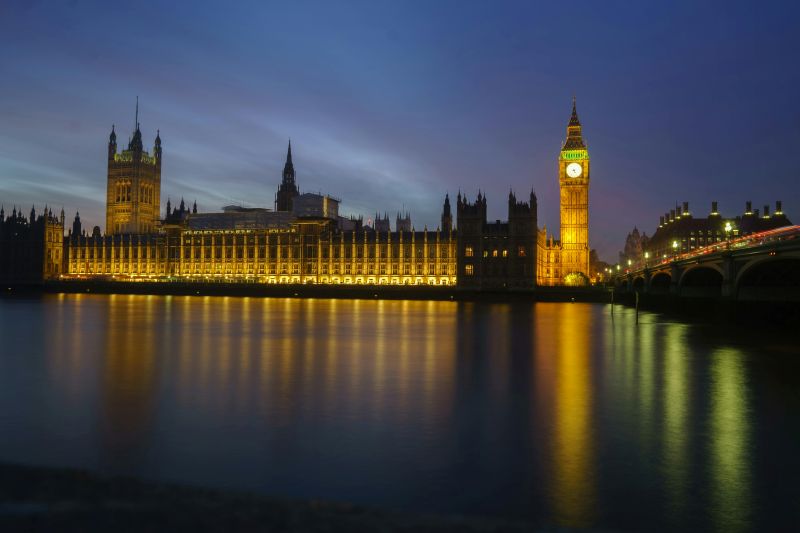
It was a busy week for Brexit and EU related affairs, as MPs and Peers returned to Westminster following summer recess.
At Question Time on Tuesday, 1 September, the new Minister for Intergovernmental Relations and European Relations, Hamish Falconer MP, responded to questions on EU Foreign and Security Co-operation. He told MPs: “There is no British security without Europe and no European security without Britain.” The Minister added that both he and the Foreign Secretary were “pressing British interests in relation to steel, ‘Made in Europe’ and on a whole range of really important questions.”
Following his first statement to Parliament on Tuesday on the Direction of Government, the new Prime Minister, Andy Burnham recognised the work of his predecessor Sir Keir Starmer, telling MPs that he had: “...changed the conversation with Europe when he came into office.” The PM added that he hoped that further progress would be made at the next UK-EU summit, which he indicated may take place in November.
In a week of firsts for the new Prime Minister, at Wednesday’s PMQs Mr. Burnham discussed issues facing British farming and British steel. He told MPs that: “The ‘Made in Europe’ agenda could pose significant problems for British steel…” Again, looking ahead to the summit, the Prime Minister said that he believed it was imperative that: “…we work hard to get a good deal for British steel and for British farming as part of that new deal…”
In the House of Lords on Tuesday, the Parliamentary Under-Secretary of State, Department for Digital, Culture, Media and Sport, Baroness Twycross responded to a question on a report commissioned by her department on ‘The economic benefits of touring and impact of EU exit’.
Acknowledging that the report provided new evidence of the impact on UK artists, Baroness Twycross told peers: “We will ensure that its findings inform our engagement with European partners as we continue to pursue practical improvements for touring artists.” She further noted that, according to the report, the loss of Gross Value Added (GVA) to the EU was significantly greater than the loss to the UK, adding that: “…reducing the current touring barriers through policy or regulatory changes could generate a range of economic and cultural gains for both sides—it would be mutually advantageous.”
MPs debate the impact of the EU Membership Referendum
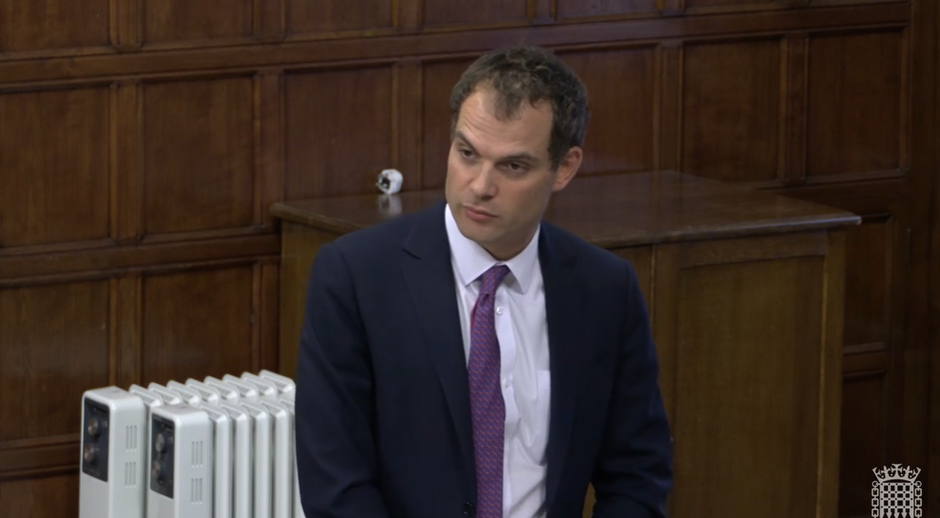
In a Westminster Hall debate on Wednesday, Pete Wishart MP moved a motion on the ‘EU Membership Referendum: Impact on the UK’. During the debate, MPs discussed the impact of Brexit on the UK economy, issues around a reduction in trade as well as tariff and quota measures brought forward by the EU. Contributing MPs also raised the ongoing difficulties faced by touring artists in Europe, the effect of Brexit on the agricultural and fishing sectors and issues centering upon security and defence.
With direct reference to the Windsor Framework, Jim Shannon MP told MPs that: “…it leaves a border in the Irish sea, dividing us from our biggest market and tearing at the economic and constitutional fabric of our country.” On dynamic alignment, Mr. Shannon said: “If the mainland innovates and cuts red tape, Northern Ireland is legally forbidden from joining them because we are chained to the EU customs code. That is not the best of both worlds; it is economic partition.”
Responding to the debate, the Minister for Intergovernmental Relations and European Relations, Hamish Falconer MP described the Windsor Framework as: “…an incredibly complex arrangement that seeks to preserve the delicate balance in Northern Ireland.” Referencing Jim Shannon’s contribution, the Minister said that he understood: “…the criticisms…” adding however, that in relation to Northern Ireland: “…it is the one part of the UK that benefits from both, and I want to see that benefit maximised to the absolute fullest.”
Concluding his remarks, Mr. Falconer told MPs: “…our relationship with Europe is absolutely vital for our economy.” Noting that experienced businesses in all constituencies have found exports and recruitment harder since Brexit, the Minister said that he would “…like to reassure the House that it is my intention during my time in this role to make it easier for the whole of the UK.”
You can read the debate in full here and access a House of Commons Library briefing which was produced in advance of the debate here.
You say tomato: Lords debate Plant Health regulations
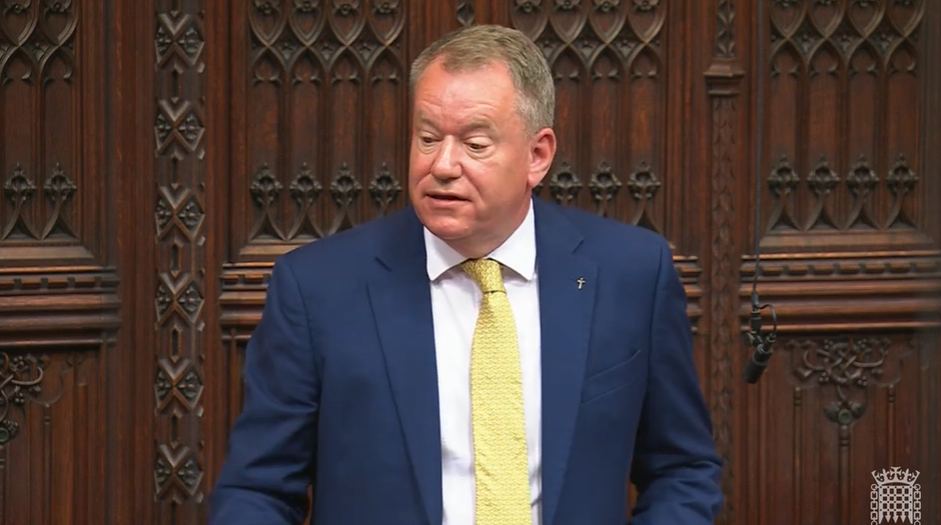
Lord Frost moved a motion to regret the Windsor Framework (Retail Movement Scheme: Plant Health) (Amendment) Regulations 2026, in the House of Lords on Wednesday 2 September.
The Regulations align import controls for tomatoes, ginger and peppers in Great Britain with those in the EU, after the EU updated its import requirements for pest control reasons. The UK Government explains in its Explanatory Memorandum to the Regulations that alignment is required so that goods remain eligible to move from GB to NI under the Northern Ireland Retail Movement Scheme.
The debate covered issues beyond the immediate substance of the Regulations, as Lords discussed the broader impact of the Windsor Framework.
Opening the debate, Lord Frost told peers that the Regulations raise “major issues of principle”, arguing that Windsor Framework arrangements are leading to a loss of national power: “This SI and all those like it make clear that not only does the Windsor Framework abrogate the Government’s lawmaking capacity in Northern Ireland but it also means that, in practice, there is a huge incentive for GB to follow the EU in all the areas covered by the Windsor Framework.”
Responding to the debate on behalf of the Government, Baroness Hayman described the Regulations as: “...a small, technical change so that businesses can continue to benefit from the Northern Ireland retail movement scheme’s simplified arrangements.” She added that the Government will: “...continue to engage closely with traders, to ensure that any future arrangements support smooth trade to Northern Ireland.”
Baroness Hayman also referred to the review of implementation of the Trade and Co-operation Agreement, which is due in 2026. She told peers: “At the meeting of the EU-UK Partnership Council on 2 February, the UK and the EU agreed that the review of the implementation had been largely completed via commitments undertaken at the 2025 UK-EU summit on the common understanding. Both sides are continuing to engage with stakeholders, and we will announce the conclusion of the review later this year.”
You can read the debate in full here.
New Explanatory Memorandums from UK Government unpack proposed EU regulations
Last week the UK Government published an Explanatory Memorandum (EM) on a proposed regulation from the European Commission, relating to simplification and better use of digital options for energy labelling and tyre labelling. The proposal would amend existing regulations listed in the Windsor Framework. The EM notes that although the proposed measures are expected to reduce costs for businesses and market surveillance authorities in the EU, or for traders selling to NI or exporting to the EU, “…there is a possibility that businesses operating across GB and NI might face higher costs due to regulatory divergence and the need to comply with separate requirements.”
An EM discussing Delegated Regulations on pollutants and emission limits, relating to the EU’s type-approval framework for motor vehicles, explains that these regulations are technical amendments to the Euro 7 framework. It advises that they can be: “viewed as necessary technical amendments to set out and provide clarity on the details of the technical requirements of the standard ahead of its mandatory application in the EU and Northern Ireland.”
A further EM relates to a Delegated Regulation on drug precursor chemicals (DPCs) – chemicals which may be used for the illicit manufacture of narcotic drugs or psychotropic substances. As outlined in the EM, the proposed regulation (which would apply in Northern Ireland under the Protocol/Windsor Framework) adds nine precursors to a list of scheduled substances in existing EU regulations so that they are subject to applicable control and monitoring measures. The EM explains that control of these nine DPCs in Northern Ireland will require businesses that handle them, and do not already have a relevant licence, to obtain new licences. However, “significant impacts on businesses in Northern Ireland are not anticipated, as many operators are already familiar with the DPC licensing regime.”
The UK Government also published an EM on a proposed regulation on temporary trade-liberalisation measures applicable to Armenian products. The EM advises that the proposal is not expected to give rise to any regulatory divergence between GB and NI and its practical effect in Northern Ireland is expected to be limited.
In case you missed it...

- There was widespread coverage last week of President Macron’s visit to the UK and his meeting with the Prime Minister Andy Burham, including articles in The Independent, Reuters andEuronews. The UK Government also published a press releaseon 3 September, outlining discussions between the two leaders.
- On 4 September, the Northern Ireland Office published a speech by the Secretary of State for Northern Ireland, Chris Bryant MPwhich was delivered at the 2026 British-Irish Association Conference in Oxford. With regard to the Windsor Framework and an SPS deal with
- the EU, Mr. Bryant told attendees that he wanted to: “…exploit those opportunities by making it easier to move goods from Great Britain to Northern Ireland, securing an SPS deal with the European Union that will remove paperwork and processes for most food and drink, and set up a new one-stop shop which will better equip businesses to navigate the Windsor Framework and sell goods in Northern Ireland.”
- In a new blog post ‘A new European chapter for Gibraltar’ published on 4 September by UK in a Changing Europe, Jamie Trinidad KC explains how the implementation of the UK-EU Agreement in respect of Gibraltar agreed by the UK and EU will affect both Gibraltar and Spain and the border between the two.
- On 4 September, the Culture, Media and Sports Committee published the UK Government’s response to its cultural touring in the EU report which was published in June 2026.


