Brexit and Beyond
30 March 2026

In this week’s edition, we cover the House of Lords debate on the Northern Ireland Scrutiny Committee Report: Northern Ireland after Brexit: Strengthening Northern Ireland’s voice in the context of the Windsor Framework.
We also provide an overview of the European Affairs Committee’s first evidence session on its new inquiry into Dynamic Alignment.
We cover recent developments for customs treatment of parcels entering the EU as well as continuing UK-EU negotiations on a Youth Experience Scheme.
As always, we link you through to the news stories and items of interest you may have missed.
We’ll be taking a short break over the Easter recess period, but will be back with the next edition of Brexit and Beyond on Monday 20 April.
- House of Lords debate Northern Ireland Scrutiny Committee report
- House of Lords Committee Evidence Session on Dynamic Alignment
- European Parliament and Council agree reforms for customs treatment of parcels entering the EU
- Youth Experience Scheme negotiations continue…
- Committee publishes findings from follow-up Windsor Framework Inquiry
- Assembly Round-up
- Members' Statements
- Areas with Natural Constraints (Payments) Bill moves to Committee Stage
- Questions to the Economy Minister
- In case you missed it….
House of Lords debate Northern Ireland Scrutiny Committee report
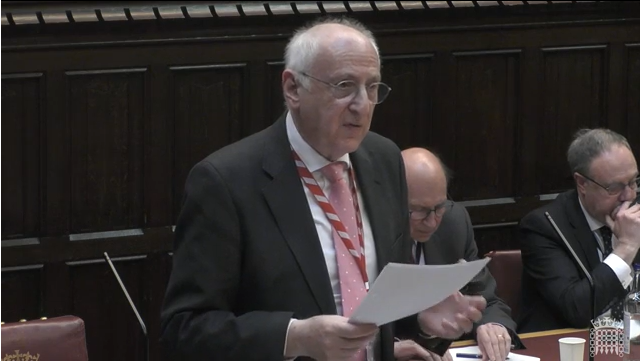
On Wednesday, the House of Lords Northern Ireland Scrutiny Committee Chairperson, Lord Carlile moved that the Grand Committee take note of the Report from the Northern Ireland Scrutiny Committee: Northern Ireland after Brexit: Strengthening Northern Ireland’s voice in the context of the Windsor Framework.
In his opening remarks, Lord Carlile described the Windsor Framework as: “…a complex amalgam of diplomacy, politics and sheer necessity, conjured from shakily designed foundations.” He noted to Members that the Committee report: “…endorsed proposals to ensure that Northern Ireland’s voice is enhanced at an early stage of every relevant part of the EU’s complex legislative process.”
Lord Carlile told Members that the Committee was grateful to the UK Government for its response to the report, noting as a positive development the government’s acceptance of the recommendation in Lord Murphy’s Report of the creation of a one-stop shop for Windsor Framework-connected inquiries. The Committee had echoed this recommendation in its report, citing that it could act as: “… somewhere businesses can access relevant information, relating to EU laws which apply in Northern Ireland…”
Contributing to the debate, Lord Murphy of Torfaen told the House that: “you could not put a cigarette paper” between his Independent Review of the Windsor Framework and the Committee’s report. He urged action on the recommendations, “…the sooner the better, particularly on the one-stop shop”, and observed that: “the SPS agreement is absolutely vital.”
Baroness Foster discussed issues raised through Intertrade UK, including concerns from the Road Haulage Association (RHA) that the: “ increasing administrative and regulatory burden associated with moving goods from GB to NI is acting as a deterrent to operator participation.” Baroness Foster outlined recommendations made by the RHA, including: the introduction of a trusted haulier scheme, removal of the £2million threshold for the UK internal market scheme, as well as moving the determination of “at risk” goods from the Irish Sea border to the point of sale. She told the House that these recommendations would: “…go some way to help mitigate the problems of the Windsor Framework.”
Baroness Ritchie told the House: “ I want to see businesses being able to avail themselves of the dual market access, which means the Government, the Northern Ireland Executive, the Northern Ireland Assembly and the EU utilising and promoting the benefits of dual market access.” She further referenced the need to see the successful conclusion of UK-EU SPS negotiations, resolution on the supply of veterinary medicines and the implementation of legislation to mandate that vehicles placed on the market in Britain must hold GB and EU type approvals and markings to enable their sale in both Britain and Northern Ireland.
Responding to the debate on behalf of the Government, The Parliamentary Secretary, Cabinet Office, Baroness Anderson underlined the Government’s ongoing commitment to the Windsor Framework and protecting the UK internal market. She told Members that those commitments: “… guide our reset with the EU, and they are our guiding approach to securing a vital new agreement with the EU that will smooth trade flows of agri-food goods.”
On the one-stop-shop, Baroness Anderson advised that it would be operational in the next financial year. She added that progress had been made on the issue of veterinary medicines and that the UK government was taking forward a new phase of the Trader Support Service. She also noted that the government had agreed to provide funding for three additional posts in the Office of the Northern Ireland Executive in Brussels.
Concluding her remarks, Baroness Anderson said, that while there is more to be done to ensure that Northern Ireland’s voice is heard in London, Belfast and Brussels: “…the Windsor Framework really does provide the best basis for that, and we are committed to working alongside our partners in the Northern Ireland Executive and the EU institutions as we take it forward…” The motion was agreed. You can read the debate in full here.
House of Lords Committee Evidence Session on Dynamic Alignment
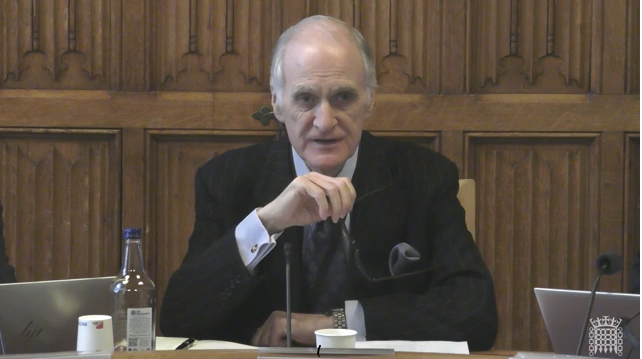
On Wednesday, the House of Lords European Affairs Committee held an initial evidence session on its new inquiry on Dynamic Alignment. Providing evidence to the Committee, were Professor David Collins, Professor of International Economic Law, City St George’s, University of London and Professor Catherine Barnard, Professor of European Law, University of Cambridge, and Senior Fellow, UK in a Changing Europe.
Opening the evidence session, the witnesses discussed the different forms that dynamic alignment can take in terms of how a country agrees to follow the latest EU law in a particular area. Professor Barnard noted the Northern Ireland Protocol / Windsor Framework as one example where alignment is: “...almost automatic, subject to the Stormont Brake and the applicability motion”.
Professor Collins outlined potential risks associated with bilateral dynamic alignment. He suggested his: “...biggest concern as a lawyer” would be the impact on trade agreements that the UK has negotiated since leaving the EU, with the possibility that, “Signing up to dynamic alignment with the EU would probably transgress the SPS chapter of the CPTPP” (Comprehensive and Progressive Agreement for Trans-Pacific Partnership). However, Professor Barnard observed this may present a less serious problem than first appears as, “There is a good chance that the EU will also sign up to CPTPP”.
The Committee discussed the ability to shape decisions under bilateral dynamic alignment. Professor Barnard cited the example of Norway in ensuring the right national experts can provide informal input into new proposals from the European Commission: “It is extremely important that the work of UKMis [the UK Mission to the EU] is there already, but one of the lessons from Norway is that they put a huge amount of resource into their equivalent of UKMIs, which is a very large embassy, to try to find out what is coming down the track.”
Professor Barnard also noted that although the UK Government is responsible for international agreements, “a lot of the proposals in this area cut across the work of the devolved administrations … there needs to be some quite good thinking about how the mechanism works between Westminster and the devolveds.”
You can read the transcript of the evidence session here. The Committee’s next evidence session is at 11am on Tuesday 14 April, when it will hear evidence from the Swiss and Norwegian Ambassadors to the UK.
European Parliament and Council agree reforms for customs treatment of parcels entering the EU

Last Thursday, the European Parliament and the Council of the European Union reached an informal agreement on reform of the EU Customs Union. A press release from the European Commission welcomed the “historic agreement”.
While the Commission and Member States had already agreed to introduce a temporary €3 customs duty from July 2026 for small parcels valued at less than €150 entering the EU, last week’s agreement also introduces a handling fee on goods imported into the EU “to compensate for the increasing costs for customs authorities”. The Commission will determine the value of the handling fee in a delegated act and the amount of the fee will be based on the minimum costs faced by customs authorities when processing goods.
A new EU Customs Authority (EUCA) will be established and will manage the EU Customs Data Hub as a single digital interface for all customs operations in the EU. The Commission press release explains that the Data Hub will be launched for e-commerce in 2028 and will open for all other businesses in 2031, becoming mandatory in 2034.
The reforms are a response to the rapid growth in e-commerce which has led to an influx of low-value items entering the EU in parcels directly shipped to consumers. The Council has previously stated that “such parcels currently enter the EU duty free, leading to unfair competition for EU sellers, health and safety risks for consumers, high levels of fraud and environmental concerns.”
The UK Government has previously stated that the removal of customs duty relief for low-value imports into the EU will not affect facilitations under the Windsor Framework, “meaning that goods moving between Great Britain and Northern Ireland can continue to move under the UK Carrier Scheme and the UK Internal Market Scheme without the need to pay duty.”
Youth Experience Scheme negotiations continue…

Reports in a number of media outlets last week highlighted sticking points in UK-EU discussions on the details of a Youth Experience Scheme. The terms of the scheme are currently being negotiated following a preliminary agreement at last May’s UK-EU Summit. Reports suggest that the UK wants participant visas to be capped and time limited but this is opposed by the EU.
However, the Financial Times and other outlets reported over the weekend that: “Brussels is offering Britain an “emergency brake”-style mechanism to control any big surge in young people travelling to the UK under a new youth mobility scheme.” The Financial Times reports that a compromise: “…could be reached where both sides have the right to suspend the allocation of youth visas if numbers using the scheme became unacceptably high.”
Recent reports also suggest that the EU has proposed, as part of the Youth Experience Scheme negotiations, that European students should pay ‘home’ fees rather than the current international rate for university tuition fees. The Guardian reported earlier this month that a British source had: “…described the idea of a reduction in tuition fees as a “non-starter”. Russell Group issued a press release on the 26 March noting that: “Granting home fee status to EU students who wish to study here, as called for by the EU, would exacerbate the already significant financial challenges universities are facing.”
In its 29 March article, the Financial Times quoted a UK government spokesperson who said of the suggested ‘emergency brake’ mechanism: “ We will not give a running commentary on ongoing talks. We are working together with the EU to create a balanced youth experience scheme which will create new opportunities for young people to live, work, study and travel.”
Committee publishes findings from follow-up Windsor Framework Inquiry
On 26 March, The House of Lords Northern Ireland Scrutiny Committee published key findings from its short follow-up inquiry on ‘Strengthening Northern Ireland’s Voice in the Context of the Windsor Framework’.
The inquiry sought to examine the effectiveness of recent announcements made in the Government’s response to the Committee’s Report: Northern Ireland after Brexit: Strengthening Northern Ireland’s voice in the context of the Windsor Framework, and to Lord Murphy’s Independent Review of the Windsor Framework. Members also took evidence from Northern Ireland business representatives who reported areas of progress re: business engagement on the design of the new One Stop Shop, and the formation of a new Northern Ireland Business Stakeholder Group, as well as on continuing areas of concern.
You can read the key findings here, as well as transcripts from the two follow-up evidence sessions. The link further includes a letter from Nick Thomas-Symonds MP, Minister for the Cabinet Office regarding an: Update on the Government’s progress in establishing the One Stop Shop: Business Engagement and Implementation Framework and a follow-up letter from the Committee Chairperson, Lord Carlile summarising evidence from the follow-up inquiry and requesting further detail on the One Stop Shop.
Assembly Round-up

Our regular weekly round-up of Brexit, EU and international focused debates and Committee evidence sessions at the Assembly.
Members' Statements

Last Monday during Members’ Statements, the deputy First Minister, Emma Little Pengelly MLA spoke about her recent visit to Washington DC during St. Patrick’s week which she said offered: “…unparalleled opportunities to build connections, establish relationships and promote and champion Northern Ireland.” The deputy First Minister told Members that she had engaged with hundreds of people, including the President and members of his cabinet, leaders on both sides of the aisle in the Senate and the House, business leaders, investors, young people and those with an interest in Northern Ireland. You can read the full statement here.

Meanwhile, during Members’ Statements on Tuesday, Ciara Ferguson MLA discussed her recent participation, alongside Brian Kingston MLA, in the UK-EU Parliamentary Partnership Assembly and the Committee of the Regions UK Contact Group meeting, which took place in Brussels on 16 and 17 March.
Ms. Ferguson said that issues discussed included: PEACE PLUS; participation of the North in ERASMUS+; other youth mobility initiatives and economic partnerships. She told Members: “We stand to benefit from deeper engagement with the European Union as a result of dual market access. Events such as the Parliamentary Partnership Assembly are an opportunity to strengthen that engagement.” You can read the full statement here and in case you missed it, you can read our coverage of the two -day visit, in last week’s Brexit and Beyond.
Areas with Natural Constraints (Payments) Bill moves to Committee Stage

During Private Members Business on Monday, Declan McAleer MLA moved the Second Stage of the Areas with Natural Constraints (Payments) Bill. The Bill is designed to provide payment support to farmers working on challenging, marginal land: predominantly livestock and grass-based farms operating under higher costs, lower productivity, and fewer alternatives compared to lowland or arable farms.
We provided an overview of Mr. McAleer’s evidence on the Bill to the Agriculture, Environment and Rural Affairs Committee, in last week’s Brexit and Beyond.
Moving the motion on Monday, Mr. McAleer told Members that: “The Bill is not only about financial assistance but about rural stability and environmental stewardship.” He added that targeted investment in disadvantaged areas: “…has existed since the UK Agriculture Act 1947, and, today, Scotland and the South of Ireland continue to have ANC [Areas with Natural Constraints] schemes.”
Speaking in his capacity as the Ulster Unionist spokesperson on agriculture, environment and rural affairs, Robbie Butler MLA told the Assembly that: “The reality is that, since Brexit, farmers in Northern Ireland have not had access to established and specified EU funding streams that recognise the specific challenges faced by farmers in disadvantaged areas. That funding provided a degree of stability and predictability that is now sorely lacking.” Mr. Butler added that in other jurisdictions: “…support has not only continued but, in some cases, strengthened.”
The Minister of Agriculture, Environment and Rural Affairs, Andrew Muir MLA outlined existing support through the sustainable agriculture programme, which he said had been: “…co-designed with agriculture and environmental stakeholders, including hill farmers' representatives, through the agricultural policy stakeholder group, thus ensuring a robust and inclusive development process.” He added that additional support was available to those farming in areas of natural constraint through the beef sustainability package and the Farming with Nature package. The Minister told the Assembly that the Bill would: “…create a legal requirement on my Department to establish a new ANC scheme, regardless of affordability or competing priorities.”
The Assembly divided to vote on the motion, resulting in 41 Ayes and 37 Noes. The Bill will now move to Committee Stage where it will be considered in more detail. You can read the full debate on the Second Stage of the Bill here.
Questions to the Economy Minister

The Economy Minister, Dr. Caoimhe Archibald was also in the Chamber on Monday, when she outlined her recent engagements in the United States. The Minister told Members that while on the West Coast, she had: “… positioned the North as a competitive, innovative and strategically positioned economy…” She noted: “The visit also delivered tangible outcomes, including the announcement that mobile security company iVerify will double its headcount in Belfast.”
Outlining her assessment of the latest HMRC regional trade statistics, the Minister said that: “The latest figures show that goods exports from here have grown over the year and are up by 1.1% from 2024, with a notable increase of 4.3% in exports to the EU and continued growth in trade with the South. Trade with Britain is up by 0.7% over the year.” She added that: “The benefits of having dual market access is also a key message when we are undertaking international engagements…International investors show strong interest in that unique trading arrangement, which gives local firms and those that are investing here from a manufacturing perspective access to the British market and all 27 EU member states' markets.”
In case you missed it….
-
On 26 March, the UK Government published a news story on Entry/Exit System: ‘New EU border checks for Brits this Easter’.
-
Last week the UK Government published written evidence on two proposals from the European Commission, in the form of an explanatory memorandum on rules on medical devices and an explanatory memorandum on ‘Level Playing Field for Open Competition’.
-
The UK Government has published a number of Communiques in relation to recent Interministerial Group meetings on: Health and Social Care; Elections and Registration and Finance.
-
On 26 March, HM Treasury published the European Union Finances Statement 2025: Statement on the implementation of the Withdrawal Agreement. This is the fifth edition in the publication series and it gives a breakdown of the invoices received from the EU, setting out payments made in 2025. The Statement also provides a forecasted estimate of the UK’s total outstanding liability.
-
On 27 March, the Department for Business and Trade published a ‘Comprehensive and Progressive Agreement for Trans-Pacific Partnership (CPTPP)-European Union (EU) joint ministerial statement.’
-
In an article published on 29 March, Politico reports: Keir Starmer wants to strike a pick-and-choose deal for access to the EU single market. But he faces an uphill battle convincing Brussels.
-
The IPaper reported earlier today: EU to force UK to pay up to access cheaper electricity under Brexit reset.
-
A press release issued today by the Council of the EU says: Council greenlights talks on electricity and cohesion deals, as well as UK’s participation in Erasmus+ for 2027


