Brexit and Beyond
09 March 2026

In our regular Assembly Round-up, we report back on last week’s motion on the Irish Presidency of the Council of the European Union, as well as the Agriculture, Environment and Rural Affairs Committee’s evidence session on the Greenhouse Gas Emissions Trading Scheme (Amendment) (Extension to Maritime Activities) Order 2026.
We take a look at last week’s Northern Ireland Scrutiny Committee meeting in the House of Lords, when Members held the first of two evidence sessions for their follow-up inquiry on Strengthening Northern Ireland's voice in the context of the Windsor Framework.
We also highlight findings from the House of Commons Foreign Affairs Committee’s report, ‘From a Common Understanding to Common Ground: Building a UK-EU Strategic Partnership fit for the future’.
As well as looking ahead to what’s on the Assembly agenda, our regular ‘Parliamentary Planner’ section highlights upcoming debates and discussion topics at other legislatures this week.
As always, we link you through to the news stories and items of interest you may have missed.
There will be no newsletter next week but we’ll return with the next edition of Brexit and Beyond on Monday 23 March.
- Assembly Round-up
- Assembly debates motion on the Irish Presidency of the Council of the European Union
- Minister updates the Assembly on the recent British-Irish Council Energy ministerial meeting
- AERA Committee takes further evidence on the Greenhouse Gas Emissions Trading Scheme (Amendment) (Extension to Maritime Activities) Order 2026.
- Windsor Framework Democratic Scrutiny Committee update
- Westminster Brief
- UK-EU reset lacks “direction, definition and drive” says Foreign Affairs Committee
- Northern Ireland Scrutiny Committee takes follow-up evidence on Strengthening Northern Ireland's voice in the context of the Windsor Framework.
- UK Government issues Communiqué on the Inter-Ministerial Group for Environment, Food and Rural Affairs
- Businesses in Northern Ireland urged to prepare for smoother GB-NI and EU trade
- Managing policy divergence within the UK internal market: update to Senedd committee
- This Week in the Assembly…
- Parliamentary Planner
- In case you missed it…
Assembly Round-up

Our regular weekly round-up of Brexit, EU and international focused debates and Committee evidence sessions at the Assembly.
Assembly debates motion on the Irish Presidency of the Council of the European Union
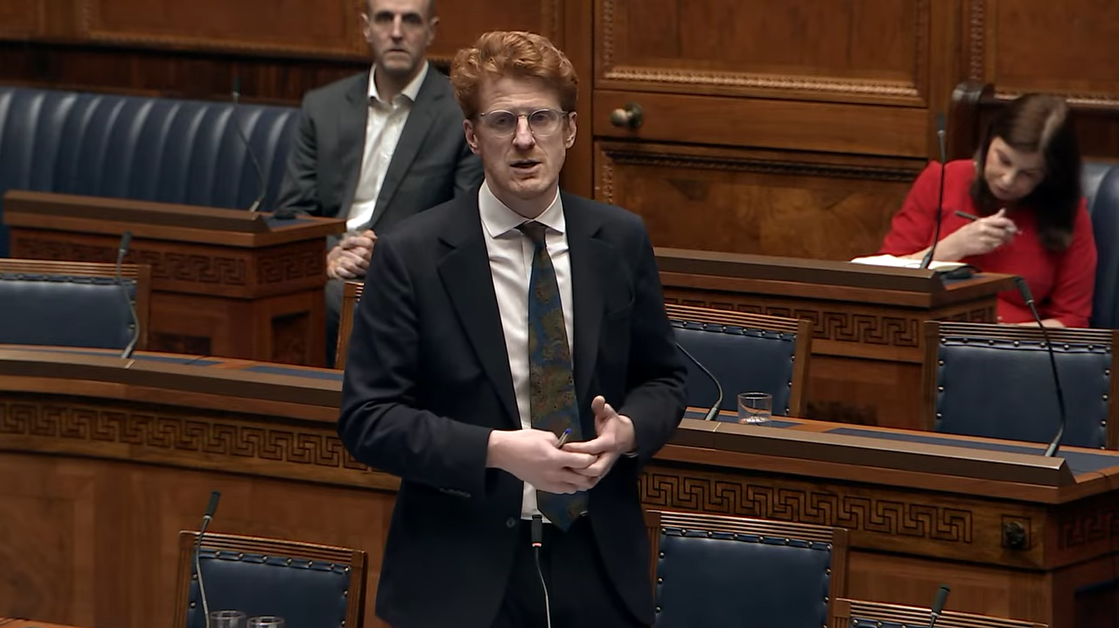
On Monday afternoon, during Private Members’ Business, the Leader of the Opposition, Matthew O’Toole MLA moved a motion calling on the Assembly to note: “…that Ireland will hold the presidency of the Council of the European Union from July 2026; recognises that this presents a significant strategic opportunity for Northern Ireland, including in addressing ongoing practical issues arising from Brexit…” You can read the full text of the motion here.
Opening the debate, Mr. O’Toole told Members that through European Membership and cooperation: “…the people of this island, with all their different diversities and traditions — and, indeed, the people of these islands: the UK and Ireland together — could move on from an extraordinarily difficult, tragic and often bitter and violent past towards something better and more productive. That can still be our future.”
Commending the motion to the House, the Leader of the Opposition told Members: “The best future for Northern Ireland is in a new Ireland back inside the European Union. Even if you do not agree with me on all those things, there are so many huge opportunities for our people, our young people, our workers, our businesses and our communities to engage with Europe and to start with delivering benefits from the Irish presidency.”
Moving an amendment to the motion, Dr. Steve Aiken MLA told the Assembly that his party: “…welcomes the fact that Ireland will take the helm of the presidency of the Council of the European Union later this year. It comes at a time of great strategic opportunity, not just for Northern Ireland but for the rest of our nation, Ireland and the European Union.” He told Members that security and defence issues would be a priority for the EU during the presidency, and that: “Bringing the United Kingdom and the EU closer, using defence procurement, energy security and, through ERASMUS, higher education and research, will be of great benefit to us in Northern Ireland.” You can read the amendment in full here:
Contributing to the debate, Ciara Ferguson MLA welcomed Ireland’s forthcoming presidency of the Council of the EU, telling Members that Ireland will have: “...the opportunity to steer Council's agenda and its legislative and policymaking process.” Referencing that Ireland’s presidency would begin ten years after the Brexit referendum, she told Members: “…Brexit has been economically, socially and politically detrimental to Ireland and all its people.”
Welcoming the motion, Stewart Dickson MLA said: “ The presidency has real potential to help resolve some of the lingering practical difficulties of Brexit; strengthen east-west and North/South cooperation; open doors; and strengthen the already excellent work in areas such as research, energy, skills and cross-border public services…” He told Members that his party would be abstaining on a vote on both the motion and the amendment, which he said focused on different constitutional avenues for strengthening Northern Ireland’s relationship with the EU.
Speaking in opposition to the motion, David Brooks MLA said: “We will continue to make the case for the full restoration of Northern Ireland's place in the United Kingdom, including the removal of the application of EU law in our country and of the internal Irish Sea border that it has created.” He added that while he wished Ireland well with the presidency and hoped: “…that it fosters only better relations…That presidency has no remit here, however. If Ireland wants to assist the people of Northern Ireland, it should start by removing EU interference in our jurisdiction and its imposition on our sovereignty.”
In her winding-up speech, Sinead McLaughlin MLA told Members: “We need to recognise that economic progress increasingly depends on cooperation rather than isolation. North/South collaboration is already embedded in everyday life, whether that is in energy markets, higher education, healthcare cooperation or supply chains." She concluded: “Ireland's presidency offers Northern Ireland a moment to demonstrate that we are serious about economic growth, serious about stability and serious about cooperation.”
The main question was put, resulting in 28 Ayes and 31 Noes. The main question was therefore negatived. You can watch the debate in full here:
Minister updates the Assembly on the recent British-Irish Council Energy ministerial meeting
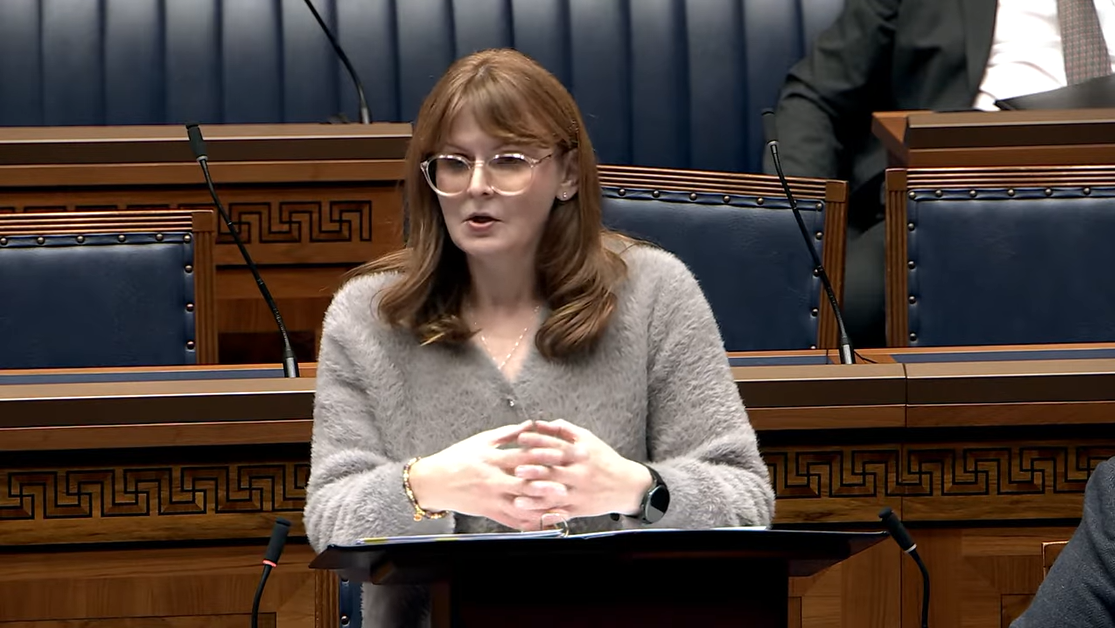
On Monday, the Minister for the Economy, Dr Caoimhe Archibald updated Members on the recent British-Irish Council ministerial meeting on energy, which was held in London on Thursday, 12 February.
Dr. Archibald told the Assembly that Ministers had discussed and reviewed the 'BIC Energy Work Sector 2022-2025' policy report which covered the themes: decarbonising heat; offshore renewables, including wind, marine, grid and interconnection; new and emerging technologies, including hydrogen and carbon capture in storage; and local and community energy. She said that the policy report: “…demonstrates the real value of the work sector in sharing learning, identifying challenges early and building momentum together across these islands.”
Responding to a question on what progress has been made towards linking the UK emissions trading scheme (ETS) with the EU ETS ahead of Ireland's forthcoming EU presidency, the Minister said that the linking of the two schemes is a work in progress between the British Government and the EU. She added that: “… It will be a positive initiative and will be very welcome…”
You can read the Ministers Statement in full here:
AERA Committee takes further evidence on the Greenhouse Gas Emissions Trading Scheme (Amendment) (Extension to Maritime Activities) Order 2026
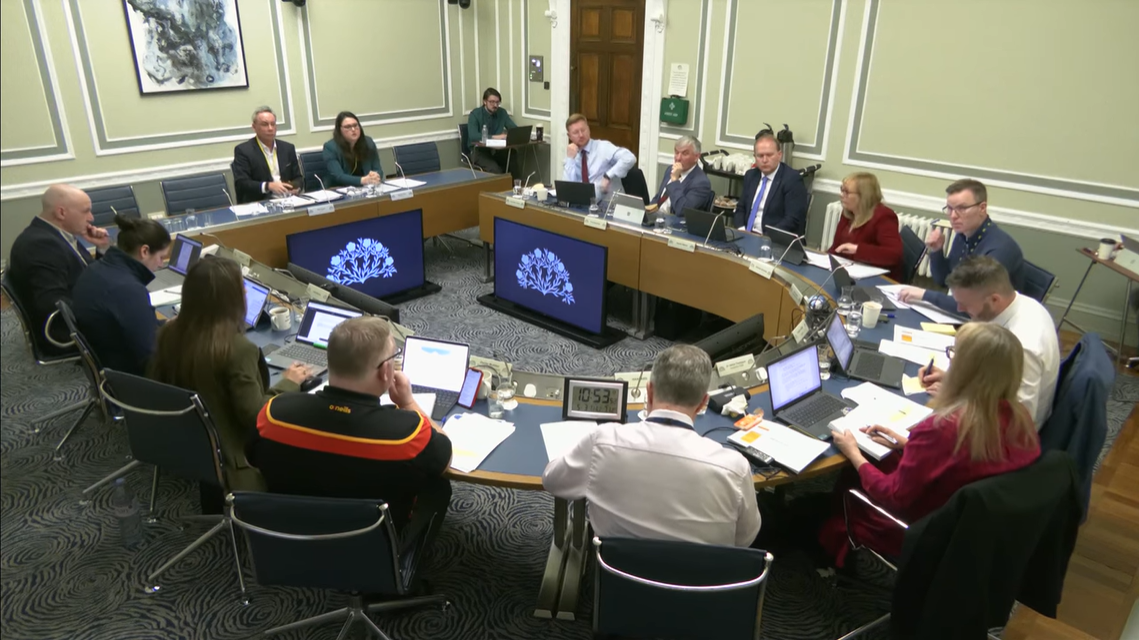
At its meeting on Thursday, the Committee for Agriculture, Environment and Rural Affairs took evidence from representatives from Stena Line and the UK Chamber of Shipping on the Greenhouse Gas Emissions Trading Scheme (Amendment) (Extension to Maritime Activities) Order 2026. Thursday’s evidence session was a follow-on from a briefing delivered by departmental officials that took place on 19 February and which we covered in 23 February edition of Brexit and Beyond.
Katrina Ross, Policy Director at the UK Chamber of Shipping, told the Committee that the shipping sector had invested in new technologies to increase freight capacity in Northern Ireland while reducing energy usage. However, she explained to Members that vessels cannot yet access alternative fuels, onshore power or adequate grid capacity to reduce emissions at berth.
Ms. Ross highlighted that: “The current UK ETS proposals risks raising costs for passengers and communities, diverting capital away from decarbonisation and harming Northern Ireland’s competitiveness, before essential infrastructure is in place.” She also told the Committee that there were evidence gaps in quantifying the Northern Ireland specific impacts and that precise consumer modelling is challenging.
Paul Grant, Trade Director (Irish Sea North) at Stena Line, reiterated Ms. Ross’ concerns regarding the lack of infrastructure and the limited supply and cost of alternative fuels. While the EU ETS has a revenue recycling mechanism designed to reinvest funds into the decarbonization of the maritime sector, Mr. Grant pointed out that there is: “…no dedicated revenue recycling mechanism to reinvest the UK ETS proceeds into maritime transition.” He suggested that the proposed scheme therefore: “…risks functioning primarily as a tax rather than a practical decarbonisation incentive in the short term.”
Mr. Grant told the Committee that, as approximately 90% of goods entering or leaving Northern Ireland, move by sea: “…the impact of rising costs will have a disproportionate impact on Northern Ireland…” He referenced the exemption from the UK Emissions Trading Scheme (UK ETS) provided to ferry services to Scotland's islands and specific peninsular communities, as well as for fishing and fish-processing vessels, to avoid increased passenger costs. He said that there was: “…a legitimate argument that Northern Ireland’s reliance on maritime connectivity is comparable in structural terms to that of Island communities in Scotland where the exemptions recognise the absence of alternatives.”
The Committee also held an evidence session at Thursday’s meeting with the Minister, Andrew Muir MLA and the Department’s Permanent Secretary Katrina Godfrey. Members raised the previous evidence session, particularly in relation to an assessment on the specific impacts of the ‘Order’ on Northern Ireland. The Permanent Secretary told the Committee that an impact assessment had been completed and published in November 2025. She told Members that it was: “…accompanied by an additional Northern Ireland study that was undertaken to supplement the wider impact assessment and it showed…marginal impact.”
The Committee agreed to hold a meeting with Departmental officials to discuss and seek further clarification. The meeting took place earlier today and can be viewed here.
The Minister is scheduled to propose during plenary tomorrow that the draft Greenhouse Gas Emissions Trading Scheme (Amendment) (Extension to Maritime Activities) Order 2026 be approved.
You can watch Thursday’s Agriculture, Environment and Rural Affairs briefing here:
Windsor Framework Democratic Scrutiny Committee update
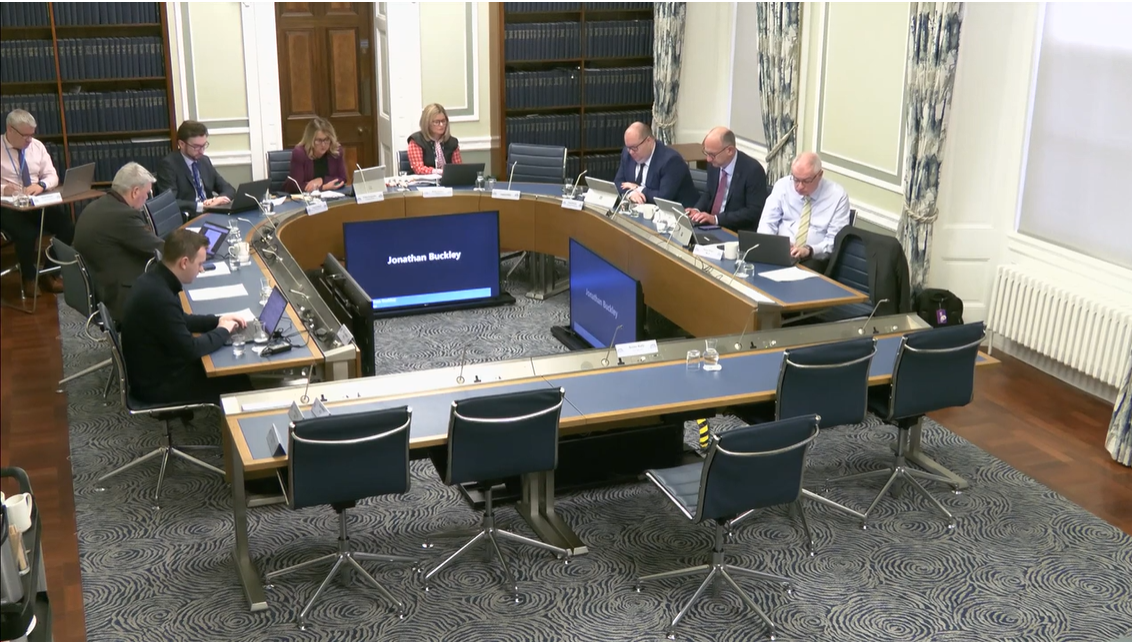
At its meeting last Thursday, the Windsor Framework Democratic Scrutiny Committee (DSC) considered legal advice and evidence from DAERA on Regulation (EU) 2026/471 as regards certain market rules and sectoral support measures in the wine sector and for aromatised wine products, and as regards certain labelling rules for spirit drinks. It was previously notified of and considered the proposed EU act. The Committee decided not to hold an inquiry into this published replacement EU act.
Members also heard legal advice and oral evidence from the Department for Infrastructure on a proposed Regulation as regards the simplification of technical requirements and testing procedures for motor vehicles. The Committee decided to monitor the proposal.
More information about the proposed EU acts can be found on the EU Law Scrutiny Tracker on the Assembly website. You can watch last week’s full DSC meeting here:
Westminster Brief
A round-up of Brexit and EU related issues discussed at Westminster last week.
UK-EU reset lacks “direction, definition and drive” says Foreign Affairs Committee
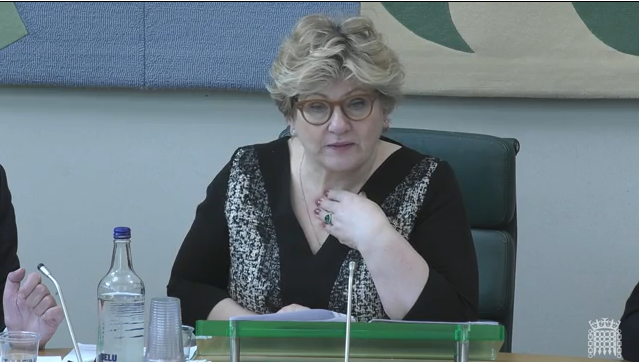
The House of Commons Committee on Foreign Affairs released its report: ‘From a Common Understanding to Common Ground: Building a UK-EU Strategic Partnership fit for the future’ on Wednesday, 4 March.
The Committee press release underlines that the report found that: “…the Government’s UK-EU reset lacks clear strategic priorities, resulting in the appearance that the EU has achieved more concrete progress towards their most pressing demands than the UK has.”
The Committee described the UK-EU summit in May 2025 as a “a starting point” for improved relations with the EU, but was critical of the UK Government’s: “… failure to clearly identify its strategic priorities and to present and secure a coherent roadmap on the future of the UK-EU relationship…”
The report calls for a White Paper with a coherent vision for the future of the UK-EU relationship and for a new Commons EU scrutiny committee.
The Committee noted that trade barriers with the EU continue to be a major issue for many sectors and called on the government: “...to give businesses and investors clarity and certainty… and to set out what further proposals it intends to make to improve trade relations with the EU.” Whilst welcoming the UK-EU Security and Defence Partnership, the Committee urged: “…both sides to resume talks on enhanced UK involvement in EU defence industrial initiatives as a strategic imperative.”
The Committee Chairperson, Emily Thornberry MP, commented: “While it is positive that the Government now acknowledges the damage Brexit has done to UK business and trade, it isn’t enough to just identify the problem and vaguely call for more ‘alignment’. We need to work towards concrete, practical and deliverable solutions in tandem with our EU partners.”
The report garnered significant traction across a number of media outlets including in: The Guardian, Politico, The Independent, The Financial Times and The Irish Times.
You can read the Committee report in full here.
Northern Ireland Scrutiny Committee takes follow-up evidence on Strengthening Northern Ireland's voice in the context of the Windsor Framework
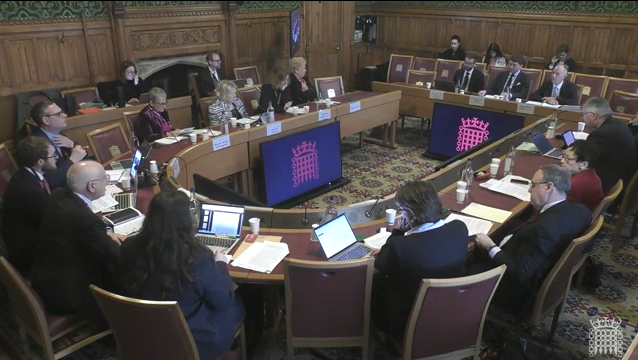
On Wednesday, 4 March, the House of Lords Northern Ireland Scrutiny Committee held the first of two evidence sessions on a follow-up inquiry re: Strengthening Northern Ireland's voice in the context of the Windsor Framework.
The Committee inquiry follows the Government’s formal response to the Committee’s October 2025 report and recommendations.
At Wednesday’s meeting, the Committee took evidence from: Stuart Anderson, Director of Public Affairs and International Relations at Northern Ireland Chamber of Commerce and Industry; Mr. Alexander Kinnear, Parliamentary Officer at Ulster Farmers' Union and Roger Pollen, Head of FSB Northern Ireland at FSB Northern Ireland.
The evidence session focused on the establishment of a ‘One Stop Shop’ advice service to assist businesses navigating the Windsor Framework. The ‘One Stop Shop’ was recommended in Lord Murphy’s Independent Review of the Windsor Framework and agreed to in the UK Government’s response. The session also discussed the new Northern Ireland Business Stakeholder Group convened by the Cabinet Office, as well as general issues in relation to business experience and engagement with the Windsor Framework.
Following the meeting, the Committee Chairperson, Lord Carlile wrote to the Secretary of State for Northern Ireland, The Rt Hon Hilary Benn MP and the Minister for the Cabinet Office, The Rt Hon Nick Thomas-Symonds MP to request an update on the Government’s progress in establishing the ‘One Stop Shop’, including detail of its proposed implementation framework and any engagement with businesses which has taken place as part of this work. You can read the letter here and watch last week’s evidence session in full here:
UK Government issues Communiqué on the Inter-Ministerial Group for Environment, Food and Rural Affairs
On 5 March, the UK Government published a Communiqué on the recent Inter-Ministerial Group for Environment, Food and Rural Affairs meeting which took place on Thursday 5th February 2026 by video conference.
The meeting was attended by Ministers from the UK Government, the Scottish and Welsh Governments and was chaired by the Minister of Agriculture, Environment and Rural Affairs, Andrew Muir MLA.
Ministers discussed engagement and progress on the EU-UK SPS Agreement negotiations. Devolved Ministers noted: “…the good engagement and emphasised the importance of being meaningfully engaged throughout the negotiations by the UK Government.”
Ministers also agreed the importance of maintaining effective border and biosecurity arrangements whilst the SPS Agreement is being negotiated and implemented, as well as identifying that the: “…process for bringing forward relevant legislation was a significant issue with devolved legislatures requiring time to process and scrutinise regulations to properly implement the agreement.” You can read the full read-out from the meeting here:
Businesses in Northern Ireland urged to prepare for smoother GB-NI and EU trade

A press release issued by the UK Government this morning, states that: “Negotiations underway on UK-EU deal to make trade easier, cheaper and quicker, with Northern Ireland at the heart of the talks.”
The statement includes comments from the Northern Ireland Secretary of State Hilary Benn MP who said: “Today marks a significant milestone for Northern Ireland as the UK moves towards an SPS Agreement with the EU. This will make it easier, cheaper and quicker for British businesses to export and import food, animals and plants.”
He added: “This agreement will not only reinforce Northern Ireland’s unique dual market access, but also ensure that we continue to uphold our commitments under the Good Friday Agreement while securing a better economic future.”
The press release further states that the government is working toward a mid-2027 start date for the new agreement and includes further comments from the Environment Secretary Emma Reynolds MP and the Ulster Farmers’ Union President William Irvine.
To help preparations, the government has also launched a six-week Call for Information to understand how it can best support businesses to prepare for new arrangements. You can access the call for information here and read the press release in full here.
Today’s announcement has been covered by Press Association and published in a number of local media outlets including the Belfast Telegraph.
Managing policy divergence within the UK internal market: update to Senedd committee

The Legislation, Justice and Constitution Committee of Senedd Cymru discussed progress on common frameworks and changes to the operation of the UK Internal Market Act, during an evidence session on 2 March.
Wales’s Deputy First Minister and Cabinet Secretary for Climate Change and Rural Affairs, Huw Irranca-Davies MS, told the Committee that last year’s UK Government review of the UK Internal Market Act represented “a useful step forward, because it’s underpinned by our ambition for the common frameworks to be the primary vehicle for managing the internal market.”
The Deputy First Minister noted that that following the review, the UK Government has committed to enact exclusions to the market access principles in the UK Internal Market Act, where there is agreement by the four nations within the bounds of the common frameworks. The Deputy First Minister pointed out, “This is a change from what was going on previously, which required a separate application, with the UK Government alone deciding”.
However, the Deputy First Minister emphasised the importance of agreeing internal guidance across all four Governments on the approach and the process to be followed, where the Welsh Government has been “pushing heavily for four nations guidance, so that all Governments can be working from the same playbook … We need a shared understanding of the evidence required, the timescales involved, the process for reaching agreement.” The Minister added that consistent guidance would enable “real transparency”.
The Committee heard that the governments are hoping to be in a position to publish seven common frameworks prior to dissolution of the Senedd (which will take place on 8 April 2026).
You can read the transcript of the full evidence session here
This Week in the Assembly…
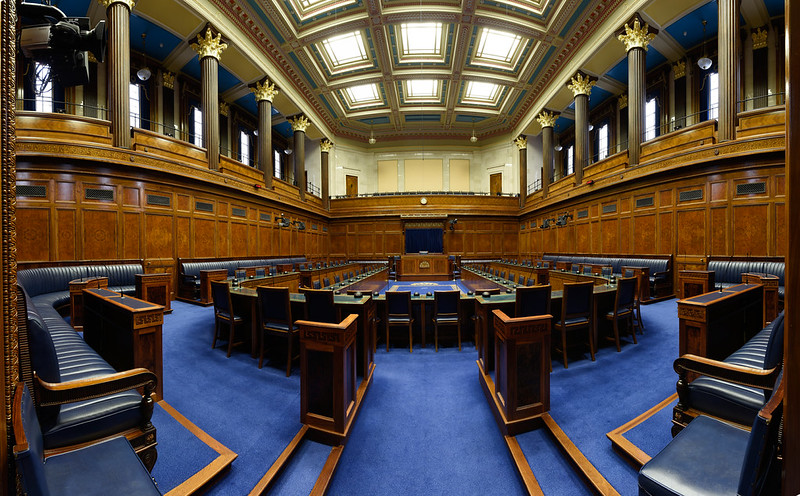
This morning, the Committee for Agriculture, Environment and Rural Affairs took further evidence from departmental officials on the draft Greenhouse Gas Emissions Trading Scheme (Amendment) (Extension to Maritime Activities) Order 2026. The Minister is scheduled to propose during plenary tomorrow (Tuesday) that the draft order be approved.
The Minister of Agriculture, Environment and Rural Affairs was in the chamber this afternoon for Question Time. Tabled questions included: requests for an update on the UK–EU Sanitary and Phytosanitary Agreement and on Farm Sustainability Payments.
This afternoon, the Leader of the Opposition, Matthew O’Toole MLA moved a motion on ‘The All-Island Economy’, which called on the Assembly to: “…recognise that stronger north-south economic cooperation delivers practical benefits for workers, businesses and communities, and makes economic sense irrespective of constitutional preference…” You can read the full text of the motion and an amendment here:
On Tuesday, during Question Time, the Minister for Communities is expected to respond to a question requesting an update regarding ongoing work to provide employability support to those with disabilities to allow them to gain and retain meaningful employment following the changes to the Local Growth Fund.
Meanwhile on Thursday, the Windsor Framework Democratic Scrutiny Committee (DSC) will take evidence from Departmental Officials on a number of EU regulations and proposals for regulations. You can find further information via the Committee agenda here:
Parliamentary Planner

Our regular guide to EU and Brexit related debates, questions and Committee evidence sessions coming up this week in other parliaments and legislatures.
House of Lords
In the House of Lords on Wednesday, a question has been tabled to ask the UK Government what discussions they have held with the European Union in relation to (1) alignment with the EU Digital Services Act, and (2) greater co-operation on digital services regulation.
Also on Wednesday, the House of Lords Northern Ireland Scrutiny Committee will hold a second evidence session on its Follow-up inquiry on Strengthening Northern Ireland's voice in the context of the Windsor Framework. Evidence will be provided by representatives from the Northern Ireland Retail Consortium, CBI Northern Ireland and Fortior Insight Ltd. You can watch the evidence session here:
On Thursday, in the House of Lords, Lord Whitehead will move that the draft Greenhouse Gas Emissions Trading Scheme (Amendment) (Extension to Maritime Activities) Order 2026 is approved. Baroness Hoey will move an amendment to the motion stating that: "…this House declines to approve the draft Order laid before the House on 13 January because while the Scottish Islands are protected from the Order, Northern Ireland, which is already marginalised from the rest of the UK through the imposition of the Windsor Framework, is denied the same protection...” You can read the amendment to the motion in full, here:
House of Commons
Today, the House of Commons: Business and Trade Committee will take evidence from Chris Bryant MP, Minister for Trade at Department for Business and Trade and departmental colleagues on UK trade with the US, India and EU.
In case you missed it…

-
The Financial Times (may be behind a paywall) reported on Wednesday 4 March that: “The EU will offer to include the UK and Japan and dozens of like-minded partners in its manufacturing targets, in a bid to shield its strategic sectors from unfair competition from China.”
-
Meanwhile, a Guardian article published on March 5 states that: Nissan ‘says Sunderland plant could close’ if UK excluded from Made in Europe rules. The Telegraph reported on 2 March that: British factories warned of chaos under Brussels’ ‘made in Europe’ plan.
-
In a new article: The politics of belonging – why enlargement is now a strategic priority for the EU published on 4 March by the London School of Economics, Vera Spyrakou argues that the success of future EU enlargement depends on maintaining strict democratic standards while implementing the reforms needed to sustain a widening Union.
-
An editorial published by the Irish Times on 4 March, takes a look at EU/UK relations: repairing some of the Brexit damage
-
In advance of the Seventh EU-UK Parliamentary Partnership Assembly (PPA) which will take place on 16 and 17 March 2026 in Brussels, the European Parliamentary Research Service has published an ‘At a Glance’ paper which takes a closer look at EU-UK relations: Mobility and youth opportunities. One of the three breakout groups at the PPA meeting will see participants discussing mobility issues and opportunities for young people.
-
The third EU-UK Counter-Terrorism Dialogue took place in Brussels on 4 March 2026, which aims to strengthen EU-UK strategic cooperation on counter-terrorism. You can read the press release here.
-
The Interministerial Standing Committee (IMSC) has today published a Communiqué from its last meeting which took place via video link on 17 February 2025.


